The British colony of South Australia, established in 1836, offered a fresh start to migrants hoping for a better life. A cohort of settlers buried in a section of St Mary's Anglican Church Cemetery (1847-1927) allocated for government funded burials was investigated to determine their health, with a focus on skeletal manifestations associated with metabolic deficiencies. Findings of St Mary's sample were compared with those published for contemporary skeletal samples from two British cemeteries, St Martin's, Birmingham, and St Peter's, Wolverhampton, to explore similarities and differences. To investigate the changing economic background of the St Mary's cohort, which may have influenced the location of their burial within the cemetery, the number and demographic profile of government funded burials and those in privately funded leased plots were compared. The study sample consisted of the skeletal remains of 65 individuals (20 adults, 45 subadults) from St Mary's Cemetery 'free ground' section. The bones and teeth of individuals in this cohort showed evidence of pathological manifestations, including areas of abnormal porosity in bone cortices in 9 adults and 12 subadults and flaring of metaphyses (one subadult) and costochondral junctions of the ribs (one subadult). Porous lesions of orbital roof bones (Types 3 to 4) were seen on three subadults. Macroscopic examination of teeth identified enamel hypoplastic defects and micro-CT scans showed areas of interglobular dentine. Comparison of St Mary's findings with the British samples revealed that prevalences of manifestations associated with vitamin C deficiency were higher at St Mary's and manifestations associated with vitamin D deficiency were lower respectively. The location of burial pattern at St Mary's Cemetery, from the mid-1840s to1860s, showed differences in the economic status of migrants. This pattern changed from the 1870s, which reflected improvements in the local economy and the economic recovery of the colony.
Objectives: To examine pathological evidence present in a sample of 19th-century settlers to South Australia in the context of an early industrial society. Materials: Skeletal remains of 20 adults and 45 nonadults from the government funded burial site (free ground) of St Mary's Anglican Church Cemetery, gravestones of privately funded burials and local parish records. Methods: Investigation of pathological manifestations of skeletal remains, church records and historic literature. Comparison with similar samples from Britain and from New South Wales. Results: Joint disease seen in 35% of adults. Porosity in bone cortices indicative of vitamin C deficiency seen in 32% of the total sample and porous lesions in the orbit (cribra orbitalia) in 7% of nonadults. Traumatic fractures identified in two adult males. Gastrointestinal conditions were the leading cause of death for nonadults, most adults died of pulmonary conditions. Life expectancy of people buried at the expense of the government was 23.8-42.6 years, those in private burials 57.1 years. Conclusion: Health of migrant settlers from the St Mary's free ground did not differ much from that of a similar population in Britain nor of settlers in New South Wales. Thus, it is characteristic for lower socioeconomic groups in early industrialised societies. Significance: St Mary's sample is a rarity due scarcity of similar Australian skeletal samples. Limitations: Small sample size and lack of similar samples for comparison. Suggestions for further research: Comprehensive investigation of dentitions in St Mary's sample and studies of more skeletal samples of early settlers in other Australian locations.
Tooth enamel and dentine samples from 13 individuals buried in the unmarked 'free ground' colonial section of St Mary's Anglican Cemetery in Adelaide were analysed for oxygen and strontium isotopic composition to assist with the determination of their geographic origin. As the life history of these individuals is not well-documented in the historical record, isotopic data provide important information about migration and mobility in a colonial South Australian population. This was supplemented with further analysis of diet from previously published stable isotope data. While the results are somewhat ambiguous, they suggest that of the 13 individuals in this study, one was probably born in Adelaide, eight in Britain/Ireland, three could have been born in either location; one was born elsewhere. This interpretation supplements and supports the results from the analysis of skeletal morphology, microbiomes, and historical records.
AbstractNineteenth century medical understanding of human metabolism was limited, therefore, the incidence of metabolic deficiencies was not fully recorded. In addition, the transition from agricultural based mode of life to the industrial one significantly changed the pattern of these metabolic deficiencies. They were further altered by colonisation of distant continents. Palaeopathological study of skeletal remains from the early industrialised colonial era allowed light to be shed on the metabolic stresses produced by this new mode of life. Aims of this study were to investigate manifestations of disease in skeletal remains from 65 (20 adults, 45 sub-adults) migrant settlers buried in the “free ground” of St Mary’s Anglican Church Cemetery (1847 to 1927). An area allocated for burials paid for by the South Australian Government. Skeletal manifestations were determined and interpreted in terms of their multiple aetiologies. Findings were compared with those published for two 19thcentury British samples. Skeletal manifestations, commonly related to metabolic deficiencies, were observed. Areas of abnormal porosity of bone cortices were seen in 9 adults and 12 sub-adults, flaring of metaphyses was seen in one sub-adult, flaring of costochondral junctions of the ribs was seen in one sub-adult. Porous lesions of orbital roof bones (Types 3 to 5) were seen on three sub-adults. Micro-CT scans of tooth samples located interglobular dentine in three individuals. Comparison of St Mary’s findings with St Martins, Birmingham, and St Peter’s, Wolverhampton, UK, showed more individuals from St Mary’s had areas of abnormal porosity of bone cortices possibly related to vitamin C deficiency. However, St Mary’s sample displayed fewer changes attributable to vitamin D deficiency as expected in a country with greater UV irradiation. This indicates that, although the early industrialisation produced metabolic stresses, change of the environment through colonisation of new continents altered the distribution of metabolic deficiencies.
For a long time historical research dismissed the account about King Ariarathes IV of Cappadocia's (reigned 220-163 BC) wife being unable to produce an offspring just as a defamatory explanation concocted by later writers to cover subtler political moves. Having palaeopathologically re-examined the biographical record of King Ariarathes IV in the light of a recently proposed diagnosis of thyroid goiter, by multidisciplinarily combining literary and artistic evidence with biomedical knowledge and rationale, this article proposes an endocrinologically originated sexual dysfunction in King Ariarathes IV and offers a new reading of the subsequent shaming of his spouse.
The present SARS-CoV-2-caused COVID-19 pandemic [[1]Grassi T. Varotto E. Galassi F.M. COVID-19, a viral endocrinological disease?.Eur J Intern Med. 2020; 77: 156-157Abstract Full Text Full Text PDF PubMed Scopus (8) Google Scholar] has clearly shown that great health crises can elicit heated political and scientific debates. The history of medicine teaches us how, throughout the centuries, the medical art has seen vicious attacks against pioneers and their discoveries as well as fundamental advances slowed down as a result of such issues. A classic example is that of the Hungarian physician Ignác Fülöp Semmelweis (1818–1865), who understood the role of a lack of physicians' hand hygiene as the cause of puerperal fever but was heavily criticised by some luminaries of that time like Rudolf Virchow (1821–1902) or Carl Edvard Marius Levy (1808–1865) [[2]McIntyre N. Ignác Fülöp Semmelweis (1818-65).J Med Biogr. 2009; 17: 22Crossref PubMed Scopus (3) Google Scholar]. Another one is represented by Girolamo Mercuriale's (1530–1606) dismissal of the 1575–1577 plague of Venice as a minor disease, scorning the far-reaching intuitions and strategies of the local physicians, who just happened not to share his academic status [[3]Palmer R. Girolamo mercuriale and the plague of Venice.in: Arcangeli A Nutton V Girolamo mercuriale: medicina e cultura nell'Europa del cinquecento. Firenze: Olschki, Firenze2008: 51-65Google Scholar]. While in scientific terms, the past of medicine, has always been a battlefield, quite to the contrary, it was specifically during major wars that science managed to fly higher than fights. One example is offered by Napoleon Bonaparte (1769–1821), who, despite his known hatred for the English, had a great admiration for the English physician Edward Jenner (1749-1823) to the extent that, when a plea was to be addressed to the French emperor for the liberation of British prisoners held in France, Jenner was the man to present it [[4]Nixon J.A. British prisoners released by Napoleon at Jenner's Request: (section of the history of medicine).Proc R Soc Med. 1939; 32: 877-883PubMed Google Scholar]. A comparable scenario happened during WW1 at the death of Emil Adolf von Behring (1854–1917), a German, who, despite the bloodbath occurring in France between troops of the British Empire and those of the German Empire – November 1916 had just seen the end of the carnage of the Battle of the Somme costing more than 1 million casualties in total –, received a eulogistic obituary in the prestigious London-based medical journal The Lancet, which praised the scientist's capital discoveries, particularly in his fight against two major infectious diseases, tetanus and diphtheria, and mentioned his research on tuberculosis [[5]ObituaryEmil von Behring.Lancet. 1917; 189: 890Google Scholar]. These two bright examples should stimulate politicians all over the globe to ponder on the universal role of medical discoveries, effectively shielding science from detrimental attacks and protecting its workers from the dangers of an ill-conceived communication. This will likely prove very important in view of the planned vaccination campaign against COVID-19. While a certain degree of conflict may always be part of human transactions, science can and must fly higher than fights that have nothing to do with the goal of improving human health. None.
In 2003 historical (non-Aboriginal) human skeletal remains archaeologically excavated from St Mary’s Anglican Church cemetery in Adelaide, South Australia were reinterred in a concrete subterranean crypt. This paper examines preservation status following 15 years of interment. Skeletal remains placed in sealed plastic bags inside plastic curation boxes provided the best method to ensure physical and chemical preservation. Prefabricated concrete containers offer a cost-effective solution for the reburial of human skeletal remains associated with a range of archaeological contexts, including eroding burial sites, urban development sites, or those derived from earlier archaeological excavations. In relation to Indigenous burial sites, in cases where considered culturally appropriate, onsite crypts allow storage or repatriation of ancestral remains ‘on country’. Concrete crypts provide cultural heritage management professionals and Indigenous communities with stable, dry, long-term burial sites that allow quick and easy access should ongoing management options, Indigenous cultural practices, or future research require re entry into the crypt.
Tensions between constructions of nature and culture are increasingly relevant in the twenty-first century as natural environments near large population centres come under increasing pressure from developers. The western face of the Mount Lofty Ranges, South Australia, is a historically significant cultural landscape where, following European colonisation, landscape use transitioned between 'cultural' and 'natural' according to local economies and changing public perceptions. Historical and archaeological evidence for the evolution of this landscape illustrate the dichotomies between these changing landscape values and growing public appreciation of the aesthetic qualities of this 'green' backdrop to the city of Adelaide. During the 1960s and 1970s the South Australian Parliament passed legislation creating a Hills Face Zone to protect this region from urban development. This paper presents evidence why, fifty years later, this model for landscape management is increasingly relevant as world population growth and urban sprawl extend into natural environments.
This review offers an overview of several devastating historical epidemics and pandemics. The first pandemic ravaging the Middle East and Ancient Egypt was an unidentified “plague” in the late Bronze Age. The plague of Athens was apparently “only” a local epidemic but with fatal consequences for that ancient democracy. Great empires with well-developed trade routes seem to be very susceptible to rapid and devastating spreads as the Antonine Plague, the Plague of Cyprian and the Justinian Plague testify. The great Medieval plague wave in Europe was absolutely devastating, but for the first time it brought along with it substantial containment measures that are still being successfully used today (e.g. isolation, quarantine) as well as the seeds of the development of a new form of medical theory and practice. The blame game that can be observed in the current COVID-19 pandemic has also been seen in previous epidemics and pandemics. Particularly in the case of syphilis, its origin was often attributed to foreign countries. Finally, the paper comparatively stresses the historical importance of an early implementation of a lockdown-based approach as an effective form of controlling epidemic spreads.
Dick was an unusual and amazing person (Figure 1). He had many interests and hobbies, but I’ll remember him most for his unquenchable curiosity, his courage to try things that hadn’t been done befo...
Strontium and oxygen isotopes provide a useful method for provenancing bioapaties, such as teeth and bone. In order for this approach to be successful, regional baseline bioavailable isotope data are required; however, few databases are currently available in Australia. This study measured stable oxygen and bioavailable strontium isotope ratios from low mobility fauna sampled from the major geological and physiographic provinces in Adelaide, South Australia in order to create a database for this region. Bioavailable strontium isotope ratios (87Sr/86Sr) obtained from the predominantly siliciclastic metasediments of the Neoproterozoic Adelaide Geosyncline have a range of 0.7122 ± 0.0001 to 0.7202 ± 0.0001. Cainozoic samples (dominantly terrestrial fluvial/lacustrine and marine carbonate sediments) from the Adelaide Plains have values in the range of 0.7098 ± 0.0002 to 0.7121 ± 0.0001. Samples from the alluvial fan sediments near the Eden-Burnside Fault at the boundary between these regions have values of 0.7131 ± 0.0001 to 0.7143 ± 0.0001. Stable oxygen isotope results range from 9.5 to 4.5‰ δ18OC (VPDB) and do not appear to vary systematically based on elevation, temperature, rainfall or humidity. These results demonstrate that strontium isotopes are potentially a useful tool for provenance studies within the Adelaide area. Oxygen is probably a more appropriate tool for discriminating seasonality rather than location within the study region. This research also suggests that rats are better suited for mapping strontium isoscapes than koalas, and that, while (non-systematic) offsets appear to exist between laser ablation multi-collector inductively coupled plasma mass spectrometry (LA-MC-ICPMS) and thermal ionisation mass spectrometry (TIMS) data, this effect is considerably less than the variation between geological provenances in the region.
A deep learning artificial neural network was adapted to the task of sex determination of skeletal remains. The neural network was trained on images of 900 skulls virtually reconstructed from hospital CT scans. When tested on previously unseen images of skulls, the artificial neural network showed 95% accuracy at sex determination. Artificial intelligence methods require no significant expertise to implement once trained, are rapid to use, and have the potential to eliminate human bias from sex estimation of skeletal remains.
Roonka is one of the most complete excavations of an Aboriginal burial ground in south-eastern Australia. The chronology of the site and the nature of its use have proven difficult to interpret. Previous dating and chronological interpretations of the site have emphasised a chronology of changing use and burial practices, but the nature of the site and the dates obtained do not clearly support these interpretations. We report on the direct dating of human bone from a further ten burials from the main excavation. In order to further investigate the cultural chronology set out by Pretty (1977), samples were selected to cover a range of burial types and preservation states. Comparison of these dates with the previous conventional dates and early AMS dates not only shows the impact of improving technology but demonstrates that multiple burial styles were in use contemporaneously. Moreover, the results suggest that use of the site may have been discontinuous. Consequently, interpretations that assume a chronological sequence for Roonka based on burial practice are not supported, while analyses based on a synchronic interpretation may ignore significant temporal change.
Archival research into episodes of frontier violence in the Kimberley region of Western Australia indicate that the bodies of Aboriginal victims of massacres were frequently incinerated following the event. This paper presents the results of a scientific investigation of a reported massacre at Sturt Creek where burnt bone fragments were identified in two adjacent sites and documents the archaeological signatures associated with the sites. The methodology used to undertake the project brought together three systems of knowledge: the oral testimonies of the descent group originating from a sole adult survivor of the massacre; archival, historical and scientific research. An archaeological survey defined the two distinct sites containing hundreds of fragile bone fragments; a third site was found to be highly disturbed. Scientific investigations included macroscopic and microscopic examination of selected bone fragments by an anatomical pathologist and a zooarchaeologist and X-ray diffraction analysis of sixteen bone fragments. The anatomical pathologist and zooarchaeologist undertook macroscopic and microscopic examinations of selected bone samples to identify morphological evidence for human origin. It was concluded that three bone fragments examined may have been human, and two of the fragments may have been from the vault of a skull. It was concluded that the likelihood of them being human would be strengthened if it was found that the three samples had been subjected to high temperatures. X-ray diffraction analysis of 16 bone fragments provided this evidence. All fragments showed sharp hydroxylapatite peaks (crystallite sizes 9882 nm and 597 nm respectively) and all had been subjected to extreme temperatures of either 600 °C for more than 80 h, 650 °C for more than 20 h, 700 °C for more than 4 h or 800 °C for more than 1 h. XRD analyses were also done on bone samples collected from three cooking hearths at three different archaeological sites. It was found that two of the three samples had been exposed to substantially lower temperatures for a short time period. It was concluded that there was strong pathological and archaeological evidence that the bone fragments were human in origin, but that the evidence was not conclusive. This research also identified archaeological signatures for the identification of massacre sites in similar Australian environments and circumstances.
In mummified animals and humans, soft tissues like skin and muscle become more dense over time due to dehydration. At the same time, bone becomes less dense as marrow is replaced by air. This is a problem for the radiological examination of ancient specimens, as currently used methods such as single-energy CT and MRI rely on density and water content to produce tissue contrast in an image. Dual energy CT with effective atomic number imaging overcomes this problem, as the elemental constituents and consequently effective atomic number of a specimen remain relatively constant over time. This case study of two ancient Egyptian cat mummies demonstrates that effective atomic number imaging can differentiate desiccated soft tissues from low-density bone in ancient remains. Effective atomic number imaging has the potential for superior tissue contrast resolution when compared to single energy CT and can be used to provide new paleoradiological perspectives.
Stable carbon and nitrogen isotope results are presented for a sample of human and faunal bones and food remains excavated from Pompeii. The well-preserved organic remains provide a valuable resource to examine ancient lifeways associated with a Roman city during a distinct period of time associated with the eruption of Vesuvius in AD 79. Isotopic results indicate human diets that are consistent with the archaeological and documentary evidence for diverse dietary intake for all residents of Pompeii consisting of a range of cereals, fruits, vegetables, seafood, and meat from domestic and wild animals. Males had similar animal protein intakes to those of females, but they ingested significantly greater amounts of seafood than females. The great range of dietary variability among and between males and females indicated by the isotopic data suggests the existence of past dietary distinctions based on social role and/or social class. In comparison to other isotopic studies in the region, human diets at Pompeii are similar to those of Danish farmers and coastal Greek colonies in southern Italy (Metaponto) but included greater amounts of marine protein. Carbon isotope values for domestic animals indicate a C-3-based terrestrial diet, while nitrogen isotope values distinguish herbivores from omnivores and carnivores.
 Susan Piddock合作论文数Department of Archaeology;Flinders University;Department of Archaeology, Flinders University14
 Pamela A. Smith合作论文数Department of Educational Psychology, The University of Texas at Austin11
 Maciej Henneberg合作论文数The University of Adelaide10
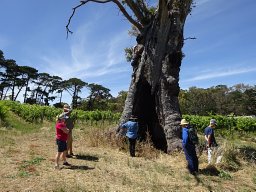 Keryn Walshe合作论文数Science Centre, South Australian Museum10Timothy D Owen合作论文数8pam smith合作论文数6
 Amy Roberts合作论文数Coll Humanities Arts & Social Sci, Flinders Univ S Australia5
 Angela Gurr合作论文数Discipline Anat & Pathol, Univ Adelaide4Timothy Anson合作论文数3bianca petruzzelli合作论文数3
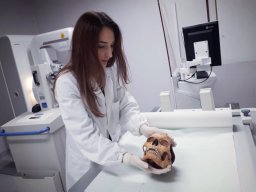 Elena Varotto合作论文数Coll Humanities Arts & Social Sci, Flinders Univ S Australia3
 Michael Carrington Westaway合作论文数Environmental Futures Research Institute, Griffith University;Environmental Futures Research Institute, Griffith University3
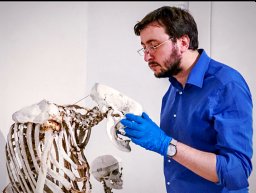 Galassi Francesco M合作论文数GP Practice3
 Habicht Michael E合作论文数Institute of Evolutionary Medicine, University of Zurich3
 Alan Brook合作论文数School of Dentistry, University of Adelaide;Craniofacial Biology Research Group, Adelaide Dental Hospital, University of Adelaide3
 Calogero M. Santoro合作论文数Institute of Higher Research, University of Tarapacá3
 Ian Moffat合作论文数Department of Geological Sciences, The University of British Columbia3Jaliya Kumaratilake合作论文数Department of Animal and Poultry Science, University of Saskatchewan3Andrew Low合作论文数2Ewan Lawson合作论文数2Moya Smith合作论文数2Richard Hunter合作论文数2Antony Morphett合作论文数2
 Jaime Swift合作论文数2Pete Veth合作论文数2
 Stella Ioannou合作论文数Biol Anthropol & Comparat Anat Res Unit, Univ Adelaide2
 Teghan Lucas合作论文数School of Medical Sciences, University of Adelaide2Maddern Todd M合作论文数2
 Judith Littleton合作论文数School of Social Sciences, Faculty of Arts, The University of Auckland2
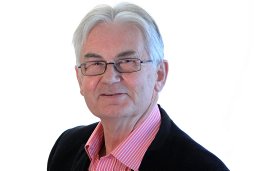 David Bruce合作论文数School of Natural and Built Environments City East Campus, University of South Australia2
 Darren Curnoe合作论文数Research School of Pacific and Asian Studies, Australian National University2Tim Owen合作论文数University of Saskatchewan2
 J Bewes合作论文数2
 Rod Wells合作论文数2
 Matthew C. Mcdowell合作论文数School of Biological Sciences, Flinders University of South Australia2
 Fiona Petchey合作论文数Radiocarbon Dating Laboratory;University of Waikato;Radiocarbon Dating Laboratory, University of Waikato2Graeme Pretty合作论文数2Graham Knuckey合作论文数1l john合作论文数1Barry Craig合作论文数1Andrew Smith合作论文数1John Naumann合作论文数1Robert M. Klaebe合作论文数1Mark Rollog合作论文数School of Civil, Environmental and Mining Engineering, The University of Adelaide1
 Gary M. Heathcote合作论文数1
 Margaret J. Schoeninger合作论文数Department of Anthropology, University of California, San Diego;Center for Academic Research & Training in Anthropogeny1
 Chris G Carter合作论文数Aquaculture Nutrition, Institute for Marine and Antarctic Studies, University of Tasmania1
 Laura Weyrich合作论文数Department of Anthropology, College of the Liberal Arts, Pennsylvania State University1
 Robert Fitzpatrick合作论文数Department of Ecology and Evolutionary Biology, School of Biological Sciences, The University of Adelaide1




