This paper presents a study of the reset step in the multiplicative extended Kalman filter (MEKF). This filter is widely used for spacecraft attitude estimation, which typically involves estimating the attitude and gyro drift in real time using external sensors such as star trackers. The basic idea of the MEKF is to use the quaternion or direction-cosine matrix as the “global” attitude parameterization and a three-component state vector for the “local” parameterization of attitude errors. The true attitude is expressed as the product of the error attitude and the estimate rather than as the sum of the error and the estimate. The reset operation moves the local error to the global variable. This reset does not add new information, but it changes the reference frame for the attitude error covariance. This results in an error-covariance reset that is very different from the measurement update of the error covariance in the MEKF. The effects of using an error-covariance reset in the MEKF are analyzed in this work. The results from this work can be applied to any application involving attitude estimation as part of its process, such as inertial navigation.
A binary Wald sequential probability ratio test that uses the residuals of two norm-inequality-constrained Kalman filters for its likelihood ratio is employed for a class of compound hypothesis tests on non-stationary systems. The hypotheses concern an inequality constraint on the norm of some elements of the system state. Each of the two constrained Kalman filters minimizes the summed squares of its estimation errors subject to one or the other direction of the inequality constraint. This test is applied to the problem of spacecraft conjunction assessment, wherein the constraint concerns the close approach distance between a spacecraft and another space object. The outcome of the test can inform decisions concerning risk mitigation maneuvers by an active spacecraft.
This paper contains a critical comparison of estimators minimizing Wahba’s loss function. Some new results are presented for the QUaternion ESTimator (QUEST) and Estimators of the Optimal Quaternion (ESOQ and ESOQ2) to avoid the computational burden of sequential rotations in these algorithms. None of these methods is as robust in principle as Davenport’s q method or the Singular Value Decomposition (SVD) method, which are significantly slower. Robustness is only an issue for measurements with widely differing accuracies, so the fastest estimators, the modified ESOQ and ESOQ2, are well suited to sensors that track multiple stars with comparable accuracies. More robust forms of ESOQ and ESOQ2 are developed that are intermediate in speed.
Traditionally, attitude estimation has been performed using a combination of external attitude sensors and internal three-axis gyroscopes. There are many studies of three-axis attitude estimation using gyroscopes that read angular rates. Rate-integrating gyroscopes measure integrated rates or angular displacements, but three-axis attitude estimation using these types of gyroscopes has not been as fully investigated. This paper derives a Kalman filtering framework for attitude estimation using attitude sensors coupled with rate-integrating gyroscopes. To account for correlations introduced by using these gyroscopes, the state vector must be augmented, compared with filters using traditional gyroscopes that read angular rates. Two filters are derived in this paper. The first uses an augmented state-vector form that estimates attitude, gyroscope biases, and gyroscope angular displacements. The second ignores correlations, leading to a filter that estimates attitude and gyroscope biases only. Simulation comparisons are shown for both filters. The work presented in this paper focuses only on attitude estimation using rate-integrating gyroscopes, but it can easily be extended to other applications such as inertial navigation, which estimates attitude and position.
This paper shows how satellite owners/operators may use sequential estimates of collision probability, along with a prior assessment of the base risk of collision, in a compound hypothesis ratio test to inform decisions concerning collision risk mitigation maneuvers. The compound hypothesis test reduces to a simple probability ratio test, which appears to be a novel result. The test satisfies tolerances related to targeted false alarm and missed detection rates. This result is independent of the method one uses to compute the probability density that one integrates to compute collision probability. A well-established test case from the literature shows that this test yields acceptable results within the constraints of a typical operational conjunction assessment decision timeline. Another example illustrates the use of the test in a practical conjunction assessment scenario based on operations of the International Space Station.
We propose a Wald Sequential Probability Ratio Test for analysis of commonly available predictions associated with spacecraft conjunctions. Such predictions generally consist of a relative state and relative state error covariance at the time of closest approach, under the assumption that prediction errors are Gaussian. We show that under these circumstances, the likelihood ratio of the Wald test reduces to an especially simple form, involving the current best estimate of collision probability, and a similar estimate of collision probability that is based on prior assumptions about the likelihood of collision.
Many attitude estimation methods are based on an optimization problem posed in 1965 by Grace Wahba. All these methods yield the same optimal estimate, except for inevitable computer roundoff errors. This note shows shows that Shuster’s Quaternion Estimator (QUEST) and Mortari’s Estimator of the Optimal Quaternion (ESOQ) are essentially identical even in the presence of roundoff errors. It also shows some connections between two other algorithms for solving Wahba’s problem: Davenport’s q method and the Singular Value Decomposition (SVD) method.
When facing a conjunction between space objects, decision makers must choose whether to maneuver for collision avoidance or not. We apply a well-known decision procedure, the sequential probability ratio test, to this problem. We propose two approaches to the problem solution, one based on a frequentist method, and the other on a Bayesian method. The frequentist method does not require any prior knowledge concerning the conjunction, while the Bayesian method assumes knowledge of prior probability densities. Our results show that the frequentist method is inferior to the Bayesian method.
 John L. Crassidis合作论文数Department of Mechanical and Aerospace Engineering, School of Engineering and Applied Sciences,38
 Yaakov Oshman合作论文数Department of Aerospace Engineering, Israel Institute of Technology12
 E. Glenn Lightsey合作论文数Daniel Guggenheim School of Aerospace Engineering, College of Engineering, Georgia Institute of Technology10
 J. Russell Carpenter合作论文数10thomas w flatley合作论文数7stephen f andrews合作论文数7
 Yang Cheng合作论文数XAnalytix Systems7
 Itzhack Y Baritzhack合作论文数6
 Daniele Mortari合作论文数Department of Aerospace Engineering, College of Engineering, Texas A&M University5josephine k san合作论文数4P. Maghami合作论文数4
 Ed Seidewitz合作论文数4Peiman G. Maghami合作论文数4james r odonnell合作论文数4m b houghton合作论文数3oscar c hsu合作论文数3arthur m kyle合作论文数3O. Hsu合作论文数3joseph p frakes合作论文数3debra a henretty合作论文数3Vlad Hruby合作论文数3
 John D. Nelson合作论文数Department of Civil & Environmental Engineering, Colorado State University3j n rowe合作论文数2Oscar Hsu合作论文数2joseph sedlak合作论文数2aprille j ericssonjackson合作论文数2cory d dunn合作论文数2robert mccormick合作论文数2Frank Bauer合作论文数2Jj Deily合作论文数2
 Dara Gold合作论文数RAND Corporation2D. Spence合作论文数2T. Roy合作论文数2Donald Chu合作论文数2
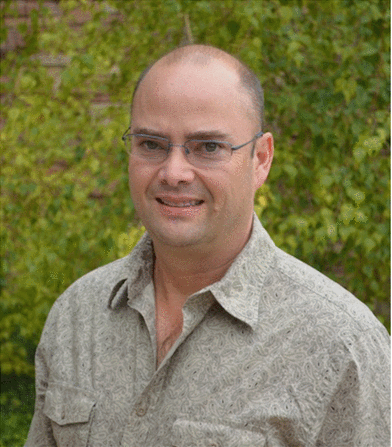 Michael C. Moreau合作论文数2william connolly合作论文数Jefferson Headache Ctr, Thomas Jefferson Univ2
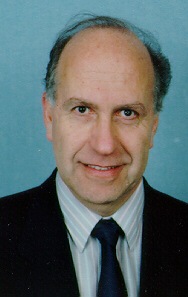 Uri Shaked合作论文数Department of Electrical Engineering-Systems, Tel Aviv University2
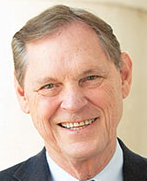 John Junkins合作论文数Department of Aerospace Engineering, College of Engineering, Texas A&M University2
 William M. Folkner合作论文数Jet Propulsion Laboratory2
 Bo J. Naasz合作论文数2Julie K. Thienel合作论文数2Michael Femiano合作论文数2
 Brent W. Barbee合作论文数2J. O'Donnell合作论文数2Malcolm D. Shuster合作论文数Acme Spacecraft Company2
 Richard R. Harman合作论文数2Reid G. Reynolds合作论文数2michael lambertson合作论文数1d mook合作论文数1




