S.da Graça, G.D.Conway, P.Lauber, V.Igochine, A.Gude, D.Curran, I.Classen, D.Borba, M.Garcia-Muñoz, M.Maraschek, A.Silva, F.Serra, M.E.Manso, M. Van Zeeland, N.C.Luhmann Jr., H.K.Park and the ASDEX Upgrade Team 1 Associação EURATOM / IST, Instituto de Plasmas e Fusão NuclearLaboratório Associado, Instituto Superior Técnico/Universidade Técnica de Lisboa, P1049-001,Lisboa, Portugal 2 Max-Planck-Institut fuer Plasmaphysik, Garching, Euratom Association, Germany 3 Physics Department, University College Cork, Cork, Ireland 4 FOM Institute for Plasma Physics Rijnhuizen, 3430 BE Nieuwegein, The Netherlands 5 General Atomics, San Diego, California 92186-5608, USA 6 University of California at Davies, Davies, CA 95616, USA 7 POSTECH, Pohang, Gyeongbuk, 790-784, Korea
The measurement of the fuel mixture remains a very difficult task in thermonuclear plasmas, where the hydrogen isotopes are fully stripped and do not emit line radiation. On the other hand, direct determination of the ion species mix will be essential in the reactor to keep the mixture close to 50/50 and maximize the fusion output. In this paper, the design of fast wave reflectometry for JET is reviewed to show the potential of such a method in the perspective of ITER. The main design elements of the antenna and the detection system, based on vectorial measurements, are reported. The main challenges to such a diagnostic, mainly the intrinsic ion cyclotron emission from the plasma and the extensive use of ion cyclotron radiofrequencies as additional heating, are addressed in detail. The overall design indicates that the proposed system would be able to provide a measurement of the fuel ratio with spatial resolution in the range of few centimeters and temporal resolution in the range of 1 ms in the vast majority of JET scenarios.
S.da Graca, G.D.Conway, P.Lauber, M.Maraschek, D.Borba, S.Guenter, L.Cupido, K.Sassenberg, F.Serra, M.E.Manso, the CFN reflectometry group and the ASDEX Upgrade Team 1 Centro de Fusao Nuclear, Associacao EURATOM / IST, Instituto Superior Tecnico, Av. Rovisco Pais, P-1049-001 Lisboa, Portugal 2 Max-Planck-Institut fuer Plasmaphysik, Garching, Euratom Association, Germany 3 Physics Department, University College Cork, Cork, Ireland
The radial structure of toroidal Alfven eigenmodes (TAEs) is of great importance for comparison with theoretical predictions. A dual-channel fast frequency hopping millimeter-wave reflectometer installed on the ASDEX Upgrade tokamak is capable of measuring density fluctuations from the plasma edge to core, allowing the radial eigenfunction of n = 4 TAE and edge MHD modes to be obtained using phase perturbation and coherence data analysis techniques. The two techniques reveal similar results, and in particular the radial structure of the n = 4 TAE is found to be in good agreement with numerical predictions from linear gyrokinetic simulations. The first results of the radial localization of Alfven cascades are also presented.
ASDEX Upgrade has recently finished its transition towards an all-W divertor tokamak, by the exchange of the last remaining graphite tiles to W-coated ones. The plasma start-up was performed without prior boronization. It was found that the large He content in the plasma, resulting from DC glow discharges for conditioning, leads to a confinement reduction. After the change to D glow for inter-shot conditioning, the He content quickly dropped and, in parallel, the usual H-Mode confinement with H factors close to one was achieved. After the initial conditioning phase, oxygen concentrations similar to that in previous campaigns with boronizations could be achieved. Despite the removal of all macroscopic carbon sources, no strong change in C influxes and C content could be observed so far. The W concentrations are similar to the ones measured previously in discharges with old boronization and only partial coverage of the surfaces with W. Concomitantly it is found that although the W erosion flux in the divertor is larger than the W sources in the main chamber in most of the scenarios, it plays only a minor role for the W content in the main plasma. For large antenna distances and strong gas puffing, ICRH power coupling could be optimized to reduce the W influxes. This allowed a similar increase of stored energy as yielded with comparable beam power. However, a strong increase of radiated power and a loss of H-Mode was observed for conditions with high temperature edge plasma close to the antennas. The use of ECRH allowed keeping the central peaking of the W concentration low and even phases of improved H-modes have already been achieved.
Millimeter-wave reflectometers for performing density fluctuations have traditionally used either tunable fixed frequency (heterodyne and homodyne) systems or multichannel fixed frequency arrangements. Only recently novel systems were brought into operation with the ability to hop from one frequency to another over a large bandwidth, during each plasma discharge, while retaining the quality of fixed frequency phase locked sources. The new broadband fast hopping millimeter-wave reflectometer incorporates frequency synthesizers for both plasma signal and local oscillators, and the receivers are heterodyne producing full phase/amplitude outputs. Two identical systems were recently installed in (ASDEX upgrade tokamak - IPP-MPG Germany) covering the Q band (33–50 GHz) and the V band (50–75 GHz). In the present article the system is described and the particular implementation on ASDEX, using monostatic antenna system, is presented showing the possibility of correlation studies in fully optimized antenna scenarios. With both Q and V channels in operation it was possible to devise several operation schemes that are described here and a result showing the radial localization of magnetohydrodynamic activity is also presented.
5.2. MICROWAVE REFLECTOMETRY 5.2.1. Main activities The activities on microwave reflectometry have been related with the design analysis of the position reflectometer, development of an advanced FM-CW coherent reflectometer and experimental demonstration studies on ASDEX-Upgrade of plasma position/shape measurements in ITER relevant scenarios. Concerning the design analysis of the position reflectometer, the Association EURATOM/IST has led a Physics Integration Task of the Fusion Technology Programme (TW3-TPDSUP) and is now in charge of a new Task (TW5-TPDS-DIARFA) entitled "Experimental assessment of ITER HFS waveguides". Regarding the development of a prototype of a coherent reflectometer, the frequency synthesizer has been completed. Concerning plasma position/shape measurements, a data base has been built to support a neural network approach towards real time density profile evaluation and first results were obtained.
Significant progress has been made on ASDEX Upgrade during the last two years in the basic understanding of transport, in the extension of the improved H-mode in parameter space and towards an integrated operating scenario and in the development of control methods for major performance limiting instabilities. The important features were the understanding of particle transport and the control of impurity accumulation based on it, the satisfactory operation with predominantly tungsten-clad walls, the improved H-mode operation over density ranges and for temperature ratios covering (non-simultaneously) the ITER requirements on ν*, n/nGW and Te/Ti, the ELM frequency control by pellet injection and the optimization of NTM suppression by DC-ECCD through variation of the launching angle. From these experiments an integrated scenario has emerged which extrapolates to a 50% improvement in n T τ or a 30% reduction of the required current when compared with the ITER base-line assumptions, with moderately peaked electron and controllable high-Z density profiles.
The development of diagnostic systems for next step Burning Plasma experiments (BPX) such as ITER requires R&D in some key areas. The International Tokamak Physics Activity (ITPA) Topical Group (TG) on Diagnostics has identified five topics as 'high priority' and these form the focus of the current work of the TG: (i) development of methods of measuring the energy and density distribution of confined and escaping α-particles; (ii) review of the requirements for measurements of the neutron/α source profile and assessment of possible methods of measurement; (iii) determination of the life-time of plasma facing mirrors used in optical systems; (iv) assessment of radiation effects on coils used for measuring the plasma equilibrium and development of new methods to measure steady state magnetic fields accurately in a nuclear environment; and (v) Development of measurement requirements and assessment of techniques for measurement of dust and erosion. This paper presents the recent progress in these areas.
We discuss a method of the turbulence poloidal spectrum measurements, which utilizes conventional fixed frequency O-mode reflectometry. The method is extended to the case of arbitrary plasma density profiles employing the stratified model of radial density distribution. The technique is applied to estimate the poloidal spectrum, amplitude and rotation velocity of density fluctuations in the edge plasma during a standard H-mode discharge on the ASDEX Upgrade tokamak, making use of the available edge reflectometer channels.
This paper reports results on measurements of the density profiles. Here we analyse the behaviour of the electron density for a set of experiments in type I ELMy H-mode discharges in ASDEX Upgrade where the plasma current, plasma density, triangularity and input power were varied. Detailed measurements of the radial extent of the perturbation on the density profiles caused by the edge localized mode (ELM) crash (ELM affected depth), the velocity of the radial propagation of the perturbation as well as the width and gradient of the density pedestal are determined. The effect of a type I ELM event on the density profiles affects the outermost 20-40% of the plasma minor radius. At the scrape-off layer (SOL) the density profile broadens while in the pedestal region the density decreases resulting in a smaller density gradient. This change in the density profile defines a pivot point around which the density profile changes. The average radial velocity at the SOL is in the range 125-150 ms(-1) and approximately constant for all the density layers far from the pivot point. The width of the density pedestal is approximately constant for all the ELMy H-mode discharges analysed, with values between 2 and 3.5 cm. These results are then compared with an analytical model where the width of the density is predominantly set by ionization (neutral penetration model). The width of the density profiles for L-mode discharges is included, since L- and H-mode have different particle transport. No agreement between the experimental results and the model is found.
The current understanding of edge localized modes (ELMs) and the trigger of major disruptions is largely based on phenomenology. The need to better understand the processes underlying these phenomena requires high temporal and spatial resolution diagnostics. Fast diagnostics for the temperature measurements exist, such as the ECE radiometer but, for the plasma density, the existing diagnostics such as Lithium Beam and Thomson Scattering do not have the required high temporal resolution for a period long enough to characterize the entire ELM event. The microwave reflectometry system on ASDEX Upgrade has the capability to measure electron density profiles simultaneously at the low-field and high-field sides, in broadband swept ultrafast (35{mu}s) operation with a spatial resolution of 5mm. In this paper we report on recent results on the effects of type I ELMs on density profiles and on the density pedestal width and ELM affected depth. During the ELM event, three phases are identified: precursor, collapse and recovery. The density pedestal width is found to be approximately constant for all the ELMy H-mode discharges analyzed here, except for high input power discharges, where an increase of the density pedestal width is observed. Major disruptions limit the range of parameters used in the operation of a tokamak, especially density limit disruptions, that limit the maximum usable density. Very abrupt increases of density are observed before the onset of the electron temperature profile erosion, supporting the hypothesis that this erosion is due to convection of the magnetic field. In ITER, during the long steady state flat-top phase of the discharges magnetic measurements may accumulate significant drifts. Plasma position and shape control using reflectometry is being assessed in ASDEX Upgrade for ITER like scenarios with successful results, where it is shown that position measurements from reflectometry compared to magnetic data satisfy the ITER requirements. Combined simulated and experimental data determine the position of the separatrix within 1 cm. (author)
 m e manso合作论文数41
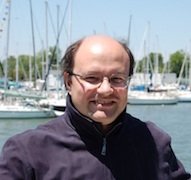 A. Silva合作论文数33Wolfgang Suttrop合作论文数Max-Planck-Institut für Plasmaphysik29
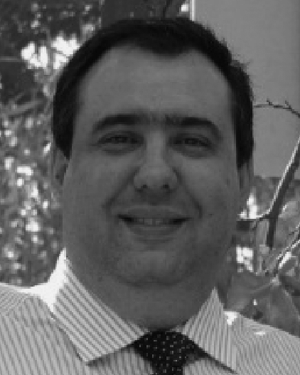 P. Varela合作论文数28l cupido合作论文数european atomic energy community25Marc Maraschek合作论文数25B. Kurzan合作论文数24Conway G D合作论文数22Isabel Nunes合作论文数Lisbon University20O. Gruber合作论文数18V. Mertens合作论文数18
 Hartmut Zohm合作论文数Max-Planck-Institut für Plasmaphysik;Ludwig-Maximilians-Universität München18m manso合作论文数17
 Karl Krieger合作论文数max planck society17Francois Ryter合作论文数Max Planck Institute for Plasma Physics17a kallenbach合作论文数15H. Murmann合作论文数15
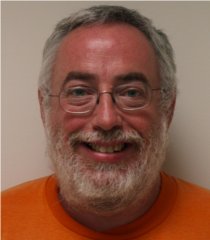 David Coster合作论文数Division of Tokamak Theory, Max Planck Institute for Plasma Physics15B. Scott合作论文数15
 Rudolf Neu合作论文数Department of Mechanical Engineering, Technische Universität München14J Neuhauser合作论文数14J. A. C. Cabral合作论文数14O. Gehre合作论文数13M. Brambilla合作论文数13Wilhelm Sandmann合作论文数13
 P. T. Lang合作论文数13A. Carlson合作论文数13W. Schneider合作论文数13K.-H. Steuer合作论文数13J. Gernhardt合作论文数13h kollotzek合作论文数12U Seidel合作论文数12r drube合作论文数12r merkel合作论文数12g neu合作论文数12
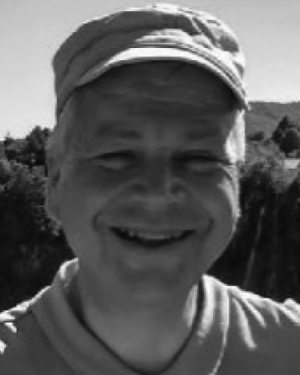 Jeremy Stober合作论文数12G. Raupp合作论文数12
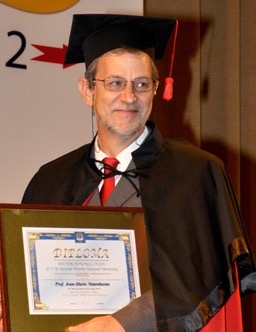 Jean-Marie Noterdaeme合作论文数vakgroep Elektrische Energie, Systemen en Automatisering, faculteit Ingenieurswetenschappen en Architectuur, Ghent University;vakgroep Toegepaste Fysica, faculteit Ingenieurswetenschappen en Architectuur, Ghent University12Eckehart Speth合作论文数12
 J. Schweinzer合作论文数12
 M. Laux合作论文数12A. Herrmann合作论文数12Patrick M Mccarthy合作论文数12H.-U. Fahrbach合作论文数12K. Behler合作论文数12D. Zasche合作论文数12Günter Haas合作论文数12O. Vollmer合作论文数12




