The Open Science Grid (OSG) and the Enabling Grids for E-sciencE (EGEE) have a common security model, based on Public Key Infrastructure. Grid resources grant access to users because of their membership in a Virtual Organization (VO), rather than on personal identity. Users push VO membership information to resources in the form of identity attributes, thus declaring that resources will be consumed on behalf of a specific group inside the organizational structure of the VO. Resources contact an access policies repository, centralized at each site, to grant the appropriate privileges for that VO group. Before the work in this paper, despite the commonality of the model, OSG and EGEE used different protocols for the communication between resources and the policy repositories. Hence, middleware developed for one Grid could not naturally be deployed on the other Grid, since the authorization module of the middleware would have to be enhanced to support the other Grid's communication protocol. In addition, maintenance and support for different authorization call-out protocols represents a duplication of effort for our relatively small community. To address these issues, OSG and EGEE initiated a joint project on authorization interoperability. The project defined a common communication protocol and attribute identity profile for authorization call-out and provided implementation and integration with major Grid middleware. The activity had resonance with middleware development communities, such as the Globus Toolkit and Condor, who decided to join the collaboration and contribute requirements and software. In this paper, we discuss the main elements of the profile, its implementation, and deployment in EGEE and OSG. We focus in particular on the operations of the authorization infrastructures of both Grids.
Network data access services such as OPeNDAP enable widespread access to data across user communities. However, without ready means to restrict access to data for such services, data providers and data owners are constrained from making their data more widely available. Even with such capability, the range of different security technologies available can make interoperability between services and user client tools a challenge. OPeNDAP is a key data access service in the infrastructure under development to support the CMIP5 (Couple Model Intercomparison Project Phase 5). The work is being carried out as part of an international collaboration including the US Earth System Grid and Curator projects and the EU funded IS-ENES and Metafor projects. This infrastructure will bring together Petabytes of climate model data and associated metadata from over twenty modelling centres around the world in a federation with a core archive mirrored at three data centres. A security system is needed to meet the requirements of organisations responsible for model data including the ability to restrict data access to registered users, keep them up to date with changes to data and services, audit access and protect finite computing resources. Individual organisations have existing tools and services such as OPeNDAP with which users in the climate research community are already familiar. The security system should overlay access control in a way which maintains the usability and ease of access to these services. The BADC (British Atmospheric Data Centre) has been working in collaboration with the Earth System Grid development team and partner organisations to develop the security architecture. OpenID and MyProxy were selected at an early stage in the ESG project to provide single sign-on capability across the federation of participating organisations. Building on the existing OPeNDAP specification an architecture based on pluggable server side compo- nents has been developed at the BADC. These components filter requests to the service they protect and apply the required authentication and authorisation schemes. Filters have been developed for OpenID and SSL client based authentication. The latter enabling access with MyProxy issued credentials. By preserving a clear separation between the security and application functionality, multiple authentication technologies may be supported without the need for modification to the underlying OPeNDAP application. The software has been developed in the Python programming language securing the Python based OPeN- DAP implementation, PyDAP. This utilises the Python WSGI (Web Server Gateway Interface) specification to create distinct security filter components. Work is also currently underway to develop a parallel Java based filter implementation to secure the THREDDS Data Server. Whilst the ability to apply this flexible approach to the server side security layer is important, the development of compatible client software is vital to the take up of these services across a wide user base. To date PyDAP and wget based clients have been tested and work is planned to integrate the required security interface into the netCDF API. This forms part of ongoing collaboration with the OPeNDAP user and development community to ensure interoperability.
Enforcing controlled access to resources in cancer research systems, while facilitating resource sharing, among collaborators, is a challenging problem. This is especially challenging when resources are distributed across organizational boundaries and researchers from a distributed set of organizations require access to them. In this chapter, we will present motivating use cases, a software solution, and policies for enforcing access control in lam distributed cancer research systems.
This report summarizes work carried out by the ESG-CET during the period October 1, 2009 through March 31, 2009. It includes discussion of highlights, overall progress, period goals, collaborations, papers, and presentations. To learn more about our project, and to find previous reports, please visit the Earth System Grid Center for Enabling Technologies (ESG-CET) website. This report will be forwarded to the DOE SciDAC program management, the Office of Biological and Environmental Research (OBER) program management, national and international collaborators and stakeholders (e.g., the Community Climate System Model (CCSM), the Intergovernmental Panel on Climate Change (IPCC) 5th Assessment Report (AR5), the Climate Science Computational End Station (CCES), the SciDAC II: A Scalable and Extensible Earth System Model for Climate Change Science, the North American Regional Climate Change Assessment Program (NARCCAP), and other wide-ranging climate model evaluation activities).
In order to ensure interoperability between middleware and authorization infrastructures used in the Open Science Grid (OSG) and the Enabling Grids for E-science (EGEE) projects, an Authorization Interoperability activity was initiated in 2006. The interoperability goal was met in two phases: firstly, agreeing on a common authorization query interface and protocol with an associated profile that ensures standardized use of attributes and obligations; and secondly implementing, testing, and deploying on OSG and EGEE, middleware that supports the interoperability protocol and profile. The activity has involved people from OSG, EGEE, the Globus Toolkit project, and the Condor project. This paper presents a summary of the agreed-upon protocol, profile and the software components involved.
Grid systems have huge and changeable user groups, and different autonomous domains always have different security policies. The attribute based access control (ABAC) model, which is flexible and scalable, is more suitable for Grid systems. This paper describes a method of building a flexible access control mechanism that is based on ABAC and supports multiple policies for Grid computing. Firstly an attribute based multipolicy access control model ABMAC is submitted. Compared with ABAC, ABMAC can describe multiple heterogeneous policies, and each policy is encapsulated without changing its descriptions. Then by extending the authorization architecture of XACML, the paper puts forward an authorization framework that supports ABMAC and is implemented in the Globus Toolkit release 4 (GT4) (Few parts of the authorization framework described in this paper can only be found in Globus Toolkit CVS repository. A more completed authorization framework will be appeared in the Globus Toolkit release 4.2). Basing on the concept of policy encapsulation, the framework provides a flexible and scalable authorization mechanism that can support multiple existing policies in a Grid system. The design and implementation details of GT4 authorization framework are also well discussed.
Computers and the Internet are indispensable to our modern s ociety, but by the standards of critical infrastructure, they are notably unreliable. E xisting analysis and design approaches have failed to curb the frequency and scope of malicious cybe r exploits. A new approach based on complexity science holds promise for addressing the unde rlying causes of the cybersecurity problem. The application of complexity science to cybe rsecurity presents key research challenges in the areas of network dynamics, fault toleranc e, and large-scale modeling and simulation. We believe that the cybersecurity problem is ur gent enough, the limits of traditional reductive analysis are clear enough, and the possibl e benefits of reducing cyber exploits are great enough, that the further development of cybersecu rity-targeted complexity-science tools is a major research need.
The virtualization technologies that underlie the cloud computing infrastructures pose challenges on enforcing security policy when we have a sense of ambiguity concerning the actual physical properties of the resources. On the other hand, the virtual machine managers provide us with better sandboxing, detailed monitoring capabilities and fine-grained access control on the resource usage. As we expect the whole world to virtualize over the next 5-10 years, the presentation will present a forward-looking view on the cloudy road ahead with a focus on the associated security topics.
In this paper, we discuss recent development and implementation efforts by the Earth System Grid (ESG) concerning its security infrastructure. ESG's requirements are to make user logon as easy as possible and to facilitate the integration of security services and Grid components for both developers and system administrators. To meet that goal, we leverage existing primary authentication mechanisms, deploy a "lightweight" but secure OpenID WebSSO, deploy a "lightweight" X.509-PKI, and use autoprovisioning to ease the burden of security configuration management. We are close to completing the associated development and deployment.
The international climate community is expected to generate hundreds of petabytes of simulation data within the next five to seven years. This data must be accessed and analyzed by thousands of analysts worldwide in order to provide accurate and timely estimates of the likely impact of climate change on physical, biological, and human systems. Climate change is thus not only a scientific challenge of the first order but also a major technological challenge. In order to address this technological challenge, the Earth System Grid Center for Enabling Technologies (ESG-CET) has been established within the U.S. Department of Energy's Scientific Discovery through Advanced Computing (SciDAC)-2 program, with support from the offices of Advanced Scientific Computing Research and Biological and Environmental Research. ESG-CET's mission is to provide climate researchers worldwide with access to the data, information, models, analysis tools, and computational capabilities required to make sense of enormous climate simulation datasets. Its specific goals are to (1) make data more useful to climate researchers by developing Grid technology that enhances data usability; (2) meet specific distributed database, data access, and data movement needs of national and international climate projects; (3) provide a universal and secure web-based data access portal for broad multi-model data collections; and (4) provide a wide-range of Grid-enabled climate data analysis tools and diagnostic methods to international climate centers and U.S. government agencies. Building on the successes of the previous Earth System Grid (ESG) project, which has enabled thousands of researchers to access tens of terabytes of data from a small number of ESG sites, ESG-CET is working to integrate a far larger number of distributed data providers, high-bandwidth wide-area networks, and remote computers in a highly collaborative problem-solving environment.
The GridFTP by Allcock, W. (2003) protocol defines a general- purpose mechanism for secure, reliable, high-performance data movement. GridFTP has been widely used for efficiently transferring large volumes of data. It is based on the Internet FTP protocol and thus involves two communication channels: a control channel and a data channel. The commands and responses flow over the control channel, and the data is transmitted over the data channel.
caGrid is a middleware system which combines the Grid computing, the service oriented architecture, and the model driven architecture paradigms to support development of interoperable data and analytical resources and federation of such resources in a Grid environment. The functionality provided by caGrid is an essential and integral component of the cancer Biomedical Informatics Grid (caBIG) program. This program is established by the National Cancer Institute as a nationwide effort to develop enabling informatics technologies for collaborative, multi-institutional biomedical research with the overarching goal of accelerating translational cancer research. Although the main application domain for caGrid is cancer research, the infrastructure provides a generic framework that can be employed in other biomedical research and healthcare domains. The development of caGrid is an ongoing effort, adding new functionality and improvements based on feedback and use cases from the community. This paper provides an overview of potential future architecture and tooling directions and areas of improvement for caGrid and caGrid-like systems. This summary is based on discussions at a roadmap workshop held in February with participants from biomedical research, Grid computing, and high performance computing communities.
This report outlines a preliminary response from DOE researchers to the following three questions: a) what are the key priorities w.r.t. cybersecurity R&D over the next decade? b) what would we recommend, in terms of a program, to address those priorities c) how would a DOE Office of Science program in this area complement other cybersecurity R&D initiatives such as NSF's or other agency programs?
OBJECTIVE:To develop software infrastructure that will provide support for discovery, characterization, integrated access, and management of diverse and disparate collections of information sources, analysis methods, and applications in biomedical research. DESIGN:An enterprise Grid software infrastructure, called caGrid version 1.0 (caGrid 1.0), has been developed as the core Grid architecture of the NCI-sponsored cancer Biomedical Informatics Grid (caBIG) program. It is designed to support a wide range of use cases in basic, translational, and clinical research, including 1) discovery, 2) integrated and large-scale data analysis, and 3) coordinated study. MEASUREMENTS:The caGrid is built as a Grid software infrastructure and leverages Grid computing technologies and the Web Services Resource Framework standards. It provides a set of core services, toolkits for the development and deployment of new community provided services, and application programming interfaces for building client applications. RESULTS:The caGrid 1.0 was released to the caBIG community in December 2006. It is built on open source components and caGrid source code is publicly and freely available under a liberal open source license. The core software, associated tools, and documentation can be downloaded from the following URL: https://cabig.nci.nih.gov/workspaces/Architecture/caGrid. CONCLUSIONS:While caGrid 1.0 is designed to address use cases in cancer research, the requirements associated with discovery, analysis and integration of large scale data, and coordinated studies are common in other biomedical fields. In this respect, caGrid 1.0 is the realization of a framework that can benefit the entire biomedical community.
In many Grid services deployments, the clients and servers reside in different administrative domains. Hence, there is a requirement both to discover each other's authorization policy, in order to be able to present the right assertions that allow access, and to reveal as little as possible of the access policy details to unauthorized parties. This paper describes a mechanism where the client and servers are semantically annotated with policies that protect their resources. These annotations specify both constraints and capabilities that are used during a negotiation to reason about and communicate the need to see certain credentials from the other party and to determine whether requested credentials can be obtained and revealed. The result of the negotiation is a state where both parties have satisfied their policy, constraints for a subsequent interaction or where such interaction is disallowed by either or both. Furthermore, we present an implementation of a prototype, based on the PEERTRUST policy language, and a reasoning engine that is integrated in the Web services runtime component of the Globus Toolkit. The negotiation process is facilitated through the implementation of WSRF-compliant service interfaces for protocol message exchanges.
 Ian Foster合作论文数Department of Computer Science, University of Chicago;Data Science and Learning Division, Argonne National Laboratory18
 Rachana Ananthakrishnan合作论文数Department of Computer Science;Indiana University;Department of Computer Science, Indiana University17
 V. Welch合作论文数Globus Alliance board member;Illinois Trust Institute;NCSA: Security R&D group manager15
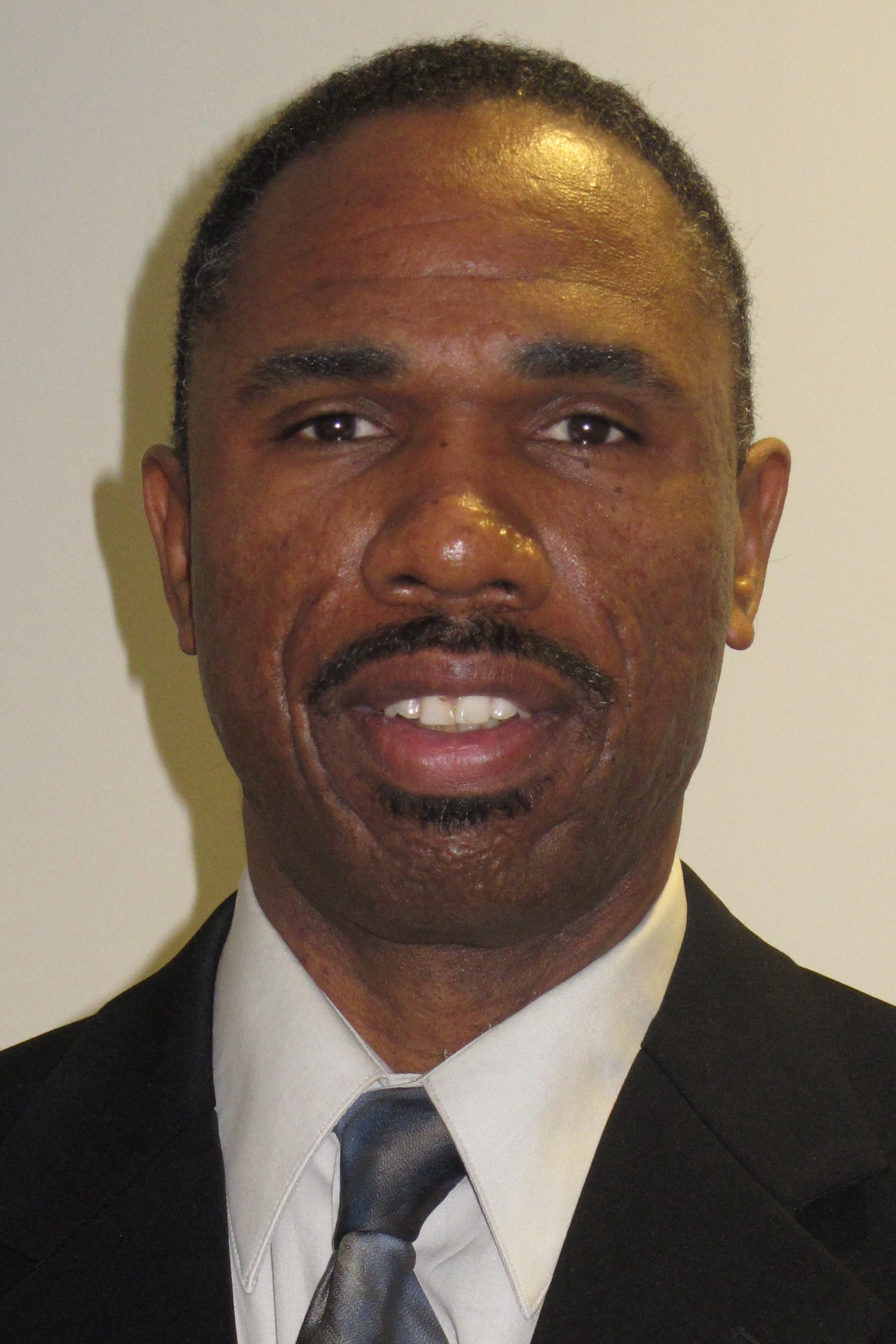 Dean N. Williams合作论文数Lawrence Livermore National Laboratory;DOE BER8
 David Bernholdt合作论文数Computer Science and Mathematics Division, Oak Ridge National Laboratory8Scott Oster合作论文数Software Research Institute (SRI) in the Department of Biomedical Informatics at the Ohio State University7Shannon Hastings合作论文数The Ohio State University
Sorry, no bio available. Please contact the speaker for more information7
David Bernholdt合作论文数Computer Science and Mathematics Division, Oak Ridge National Laboratory8Scott Oster合作论文数Software Research Institute (SRI) in the Department of Biomedical Informatics at the Ohio State University7Shannon Hastings合作论文数The Ohio State University
Sorry, no bio available. Please contact the speaker for more information7 Joel Saltz合作论文数Department of Biomedical Informatics, College of Engineering and Applied Sciences, Stony Brook University;Department of Computer Science, College of Engineering and Applied Sciences, Stony Brook University6Sam Meder合作论文数6
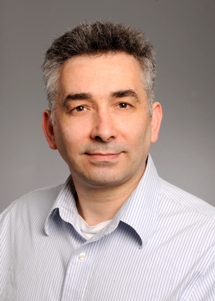 Tahsin Kurc合作论文数Department of Biomedical Informatics, College of Engineering and Applied Sciences, Stony Brook University6Laura Pearlman合作论文数Information Science Institute;University of Southern California;Information Science Institute, University of Southern California6
 Nataraj Nagaratnam合作论文数IBM5Stephen Langella合作论文数Department of Biomedical Informatics, Ohio State University5
 Don Middleton合作论文数5
 Steven Tuecke合作论文数Department of Computer Science, The University of Chicago;Computation Institute, The University of Chicago;Argonne National Lab5L. Cinquini合作论文数4
 Ann L. Chervenak合作论文数Computer Systems Research Department, The Aerospace Corporation4
 David Ervin合作论文数Department of Economics, Portland State University;Department of Environmental Science and Management, Portland State University4Tim Freeman合作论文数4
 Shishir Bharathi合作论文数4Alex Sim合作论文数Lawrence Berkeley National Laboratory4
 Ravi Madduri合作论文数Argonne National Laboratory4N Wilhelmi合作论文数3Peter Fox合作论文数3Tom Scavo合作论文数3s hankin合作论文数3d brown合作论文数3M. Chen合作论文数3M. Su合作论文数3R. Schuler合作论文数3Tom Barton合作论文数3
 Jim Basney合作论文数Cybersecurity Division, National Center for Supercomputing Applications, University of Illinois at Urbana-Champaign3
 Clifford Neuman合作论文数Center for Computer Systems Security;Department of Computer Science;Information Sciences Institute;University of Southern California3
 Yuri Demchenko合作论文数Fraunhofer Institut SCAI, 53754 Sankt Augustin, GermanyPoznan Supercomputing and Networking Center, Noskowskiego 12/14 , 61-704 Poznan, Poland3David L. Groep合作论文数3
 Luca Cinquini合作论文数3
 Bo Lang (郎波)合作论文数School of Computer Science & Engineering, Beihang University3Warren G. Strand合作论文数3Jarek Gawor合作论文数3
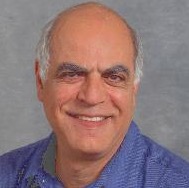 Arie Shoshani合作论文数Scientific Data Management Research and Development Group, Computing Research Department, Computational Research Division, Lawrence Berkeley National Laboratory3R. Drach合作论文数3Jens Schwidder合作论文数3Krishnakant Shanbhag合作论文数3
 Kate Keahey合作论文数University of Chicago3
 Stephen Pascoe合作论文数2Oscar Koeroo合作论文数2Joshua Phillips合作论文数2Liang Fang合作论文数2Philip Kershaw合作论文数2




