The paper discusses metrology of power loss in soft magnetic materials with focus on a ring sample measurement. Loss data at 1 T for 50 Hz and at 50 mT for 5 kHz is shown collected with a newly developed experimental setup. We carry out a comprehensive analysis of the measurement uncertainty (MU). Ten different parameters contribute to the total MU budget. Relative MUs ≤ 0.2 % for confidence interval k = 2 are obtained in the measurements, which is well below the IEC 60404-6 standard requirements.
The interplay of Kondo screening and magnetic ordering in strongly correlated materials containing local moments is a subtle problem. Usually the number of conduction electrons per unit cell matches or exceeds the number of moments, and a Kondo-screened heavy Fermi liquid develops at low temperatures. Changing the pressure, magnetic field, or chemical doping can displace this heavy Fermi liquid in favor of a magnetically ordered state. Alternatively, Kondo singlet formation can be suppressed when the number of conduction electrons is small compared to the number of magnetic moments, known as the Kondo exhaustion scenario. Here we report the discovery of such an "exhausted" Kondo lattice material, YbIr3Si7, where the bulk electrical conductivity tends to zero in the antiferromagnetic state below the Neel temperature TN = 4.1 K, as all the free carriers are consumed in the formation of Kondo singlets. By contrast, the surface is conducting, as the Yb3+ ions relax into larger nonmagnetic Yb2+ in the presence of reduced chemical pressure, which shifts the chemical potential.
Magnetic steel is utilized in electric motors/generators and transformers, where the cyclic magnetization of the material results in notable energy losses. With the increasing emphasis on boosting energy efficiency, there is a demand for more effective evaluation methods to quantify these losses in challenging operational conditions involving high frequency, elevated temperatures, and also distorted flux conditions. This investigation seeks to assess the accuracy of techniques employed for measuring losses in thin steel sheets, as well as in nanocrystalline and ferrite materials. The evaluation extends beyond the established IEC 60404 standards by broadening the ranges of induction, frequency, and temperature. These measurements play a pivotal role in advancing magnetic materials and power electronics devices, facilitating the development of materials with enhanced energy performance in practical operating scenarios. Consequently, this supports the application of the Ecodesign Directive 2009/125/EC and contributes to the attainment of objectives outlined in the United Nations 2030 Agenda for Sustainable Development.
Main text The results of the supplementary comparison in the area of magnetic field probe calibration of the field strength are presented. This supplementary comparison has been discussed to organize a comparison on magnetic field strength measurements during the EURAMET TC-EM Subcommittee Radiofrequency and Microwave (SC-MW) meeting, including an EMC meeting, organized as a virtual (online) meeting on 20-21 April 2021. The comparison was conducted in accordance with the Technical Protocol of "Comparison of Magnetic Field Strength Measurements for Frequencies up to 30 MHz, EURAMET Project No 1538, EURAMET.EM.RF-S46", which was prepared by the TÜBİTAK UME and approved by the participants. The measurements started in January 2022 and were completed in May 2023. Measurement results reported by nine participants for magnetic field strength values were compared and degrees of equivalence are reported. To reach the main text of this paper, click on Final Report. Note that this text is that which appears in Appendix B of the BIPM key comparison database https://www.bipm.org/kcdb/. The final report has been peer-reviewed and approved for publication by the CCEM, according to the provisions of the CIPM Mutual Recognition Arrangement (CIPM MRA).
We present details on the current measurement setup at PTB used for high precision loss calibrations in the frequency range 50 Hz to 1 kHz. A combination of analog and digital feedback control is utilized in accordance with the standard. A detailed measurement uncertainty (MU) analysis based on a systematic model equation is presented and inter-dependencies of model parameters are discussed. Experimental results obtained at 50 Hz on NO and GO Epstein samples show excellent agreement between statistical and systematic MU estimation and confirm the MU model analysis. Furthermore, we investigate the influence of external parameters on the loss measurements, like sample loading scheme and the value of maximum demagnetization polarization.
We present technical details on an experimental setup that allows to measure magnetic losses in electrical steel sheets and the movement of magnetic domains on the sample surface simultaneously. The setup is suitable to investigate grain oriented electrical sheets in the polarization range 0.05 T to 2.3 T and at excitation frequencies between 50 Hz and 4 kHz. The screened surface area is 13 mm x 18 mm.
A precise and efficient way to calibrate 3D magnetometers is by utilizing triaxial coil systems. We describe the development and characterization of a 3D coil system that generates magnetic flux densities up to 2 mT in arbitrary field direction. Coil parameters, such as coil constants and the misalignment of its spacial axes are determined with nuclear magnetic resonance (NMR) techniques, ensuring traceability to SI standards. Besides the generation of a constant magnetic field inside a sphere of radius 1 cm in the center of the coil, the 3D coil system enables the realization of gradient and saddle field profiles, which allow a precise estimate of sensor positions in 3D. Fluxgate and Hall sensor measurements are carried out to characterize the quality of the generated magnetic fields. The homogeneity achieved the orthogonality, and the position and structure of the saddles are determined experimentally and compared to calculated values.
Data sets of the figures in the publication "Control of electronic topology in a strongly correlated electron system"
Article contained an error in the last paragraph of the Introduction, which incorrectly read 'Upon tuning the Weyl-Kondo semimetal [12] Ce 3 Bi 4 Pd 3 [11,13] by magnetic field we observe a continuous suppression of the giant topological response associated with the material's Kondo-driven Weyl nodes, and the annihilation of the nodes.'The correct version replaces this sentence with 'Upon tuning Ce 3 Bi 4 Pd 3 [12], a Weyl-Kondo semimetal [11-13], by magnetic field we observe a continuous suppression of the giant topological response associated with the material's Kondo-driven Weyl nodes, and the annihilation of the nodes.'
It is becoming increasingly clear that breakthrough in quantum applications necessitates materials innovation. In high demand are conductors with robust topological states that can be manipulated at will. This is what we demonstrate in the present work. We discover that the pronounced topological response of a strongly correlated "Weyl-Kondo" semimetal can be genuinely manipulated-and ultimately fully suppressed-by magnetic fields. We understand this behavior as a Zeeman-driven motion of Weyl nodes in momentum space, up to the point where the nodes meet and annihilate in a topological quantum phase transition. The topologically trivial but correlated background remains unaffected across this transition, as is shown by our investigations up to much larger fields. Our work lays the ground for systematic explorations of electronic topology, and boosts the prospect for topological quantum devices.
New phases of matter emerge at the edge of magnetic instabilities, which can occur in materials with moments that are localized, itinerant or intermediate between these extremes. In local moment systems, such as heavy fermions, the magnetism can be tuned towards a zero-temperature transition at a quantum critical point (QCP) via pressure, chemical doping, and, rarely, magnetic field. By contrast, in itinerant moment systems, QCPs are more rare, and they are induced by pressure or doping; there are no known examples of field induced transitions. This means that no universal behaviour has been established across the whole itinerant-to-local moment range—a substantial gap in our knowledge of quantum criticality. Here we report an itinerant antiferromagnet, Ti 3 Cu 4 , that can be tuned to a QCP by a small magnetic field. We see signatures of quantum criticality and the associated non-Fermi liquid behaviour in thermodynamic and transport measurements, while band structure calculations point to an orbital-selective, spin density wave ground state, a consequence of the square net structural motif in Ti 3 Cu 4 . Ti 3 Cu 4 thus provides a platform for the comparison and generalisation of quantum critical behaviour across the whole spectrum of magnetism.
We present a detailed study of the magnetic and electronic properties of U2Rh3Si5, a material that has been demonstrated to exhibit a first-order antiferromagnetic phase transition. From a high-magnetic-field study, together with extensive experiments in moderate fields, we establish the magnetic phase diagrams for all crystallographic directions. The possibility of an electronic phase in a narrow interval above the Neel temperature as a precursor of a magnetic phase is discussed.
Spin-valley locking in monolayer transition metal dichalcogenides has attracted enormous interest, since it offers potential for valleytronic and optoelectronic applications. Such an exotic electronic state has sparsely been seen in bulk materials. Here, we report spin-valley locking in a Dirac semimetal BaMnSb2. This is revealed by comprehensive studies using first principles calculations, tight-binding and effective model analyses, angle-resolved photoemission spectroscopy measurements. Moreover, this material also exhibits a stacked quantum Hall effect (QHE). The spin-valley degeneracy extracted from the QHE is close to 2. This result, together with the Landau level spin splitting, further confirms the spin-valley locking picture. In the extreme quantum limit, we also observed a plateau in the z-axis resistance, suggestive of a two-dimensional chiral surface state present in the quantum Hall state. These findings establish BaMnSb2 as a rare platform for exploring coupled spin and valley physics in bulk single crystals and accessing 3D interacting topological states.
We present a combined experimental and theoretical study of the mineral atacamite Cu_{2}Cl(OH)_{3}. Density-functional theory yields a Hamiltonian describing anisotropic sawtooth chains with weak 3D connections. Experimentally, we fully characterize the antiferromagnetically ordered state. Magnetic order shows a complex evolution with the magnetic field, while, starting at 31.5 T, we observe a plateaulike magnetization at about M_{sat}/2. Based on complementary theoretical approaches, we show that the latter is unrelated to the known magnetization plateau of a sawtooth chain. Instead, we provide evidence that the magnetization process in atacamite is a field-driven canting of a 3D network of weakly coupled sawtooth chains that form giant moments.
Classical and quantum phase transitions (QPTs), with their accompanying concepts of criticality and universality, are a cornerstone of statistical thermodynamics. An excellent example of a controlled QPT is the field-induced ordering of a gapped quantum magnet. Although numerous "quasi-one-dimensional" coupled spin-chain and -ladder materials are known whose ordering transition is three-dimensional (3D), quasi-two-dimensional (2D) systems are special for multiple reasons. Motivated by the ancient pigment Han purple (BaCuSi2O6), a quasi-2D material displaying anomalous critical properties, we present a complete analysis of Ba0.9Sr0.1CuSi2O6. We measure the zero-field magnetic excitations by neutron spectroscopy and deduce the spin Hamiltonian. We probe the field-induced transition by combining magnetization, specific-heat, torque, and magnetocalorimetric measurements with nuclear magnetic resonance studies near the QPT. With a Bayesian statistical analysis and large-scale Quantum Monte Carlo simulations, we demonstrate unambiguously that observable 3D quantum critical scaling is restored by the structural simplification arising from light Sr substitution in Han purple.
The study of the quantum Hall effect (QHE) in two-dimensional (2D) systems such as 2D electron gases and graphene has led to important breakthroughs in the development of many new concepts in modern physics. Although the QHE is not generally expected for bulk materials due to the band dispersion along the magnetic field direction, a bulk QHE has been observed in several materials. Here, we report on the observation of a unique bulk half-integer QHE in a topological semimetal BaMnSb2. In the extreme quantum limit, its quantum Hall state is accompanied by a 2D chiral metal at the surface, which represents a novel topological quantum liquid, not previously observed in bulk single crystal materials.
 Marcelo Jaime合作论文数Los Alamos National Laboratory45
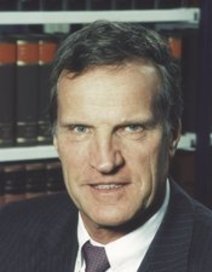 Frank Steglich合作论文数TU Dresden;Center for Correlated Matter, Zhejiang University;Max-Planck-Institute for Chemical Physics of Solids26
 Philipp Gegenwart合作论文数Max-Planck Institute for Chemical Physics of Solids24
 Vivien Zapf合作论文数National High Magnetic Field Laboratory, Los Alamos National Laboratory21
 Roman Movshovich合作论文数Los Alamos National Laboratory21
 Michael Nicklas合作论文数Max Planck Institute for the Chemical Physics of Solids14
 H. Rosner合作论文数Max-Planck-Institut fur Chemische Physik fester Stoffe14
 Eric D. Bauer合作论文数Los Alamos National Laboratory12
 Filip Ronning合作论文数Institute for Materials Science, Los Alamos National Laboratory11
 Joe D. Thompson合作论文数Los Alamos National Laboratory10M. Brando合作论文数9
 Alexander Tsirlin合作论文数Felix Bloch Institute for Solid State Physics, University of Leipzig9Kim Young duk合作论文数8
 Shizeng Lin (林士增)合作论文数Theoretical Division, Los Alamos National Laboratory/Center for Nonlinear Studies, Los Alamos National Laboratory8
 Oleg Janson合作论文数Department of Crystallography, St. Petersburg State University;Max-Planck Institute for Chemical Physics of Solids8J. Ferstl合作论文数7
 S. Paschen合作论文数7
 A. Paduan-Filho合作论文数7
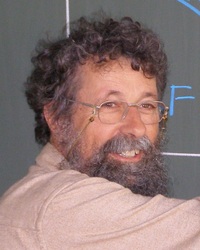 Geibel, Christoph合作论文数Max Planck Institute for Chemical Physics of Solids7
 Krzysztof Gofryk合作论文数Institute of Low Temperature and Structure Research, Polish Academy of Sciences7
 Alexander Steppke合作论文数Laboratory for Multiscale Materials Experiments, Center for Neutron and Muon Sciences, Paul Scherrer Institute7
 Ross McDonald合作论文数The National High Magnetic Field Laboratory, Los Alamos National Laboratory7
 Zhiqiang Mao合作论文数Department of Materials Science and Engineering, College of Earth and Mineral Sciences, The Pennsylvania State University;Department of Chemistry, Eberly College of Science, The Pennsylvania State University6Niels Oeschler合作论文数6
 Adam A Aczel合作论文数Neutron Scattering Division, Oak Ridge National Laboratory6
 Leonardo Civale合作论文数Department of Physics, University of Connecticut6
 Schnelle, Walter合作论文数Max-Planck-Institut fur Chemische Physik fester Stoffe6
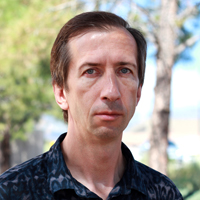 Fedor Balakirev合作论文数National High Magnetic Field Laboratory, Los Alamos National Laboratory6
 Cornel Miclea合作论文数6Korbinian Pfnuer合作论文数5Lucas M. K. Tang合作论文数5Katja Hoffmann合作论文数5Sami Dzsaber合作论文数5Vaideesh Loganathan合作论文数5
 Chien-Lung Huang合作论文数Department of Physics and Astronomy, Rice University5
 Alannah Hallas合作论文数Department of Physics & Astronomy, The University of British Columbia5Yurii Skourski合作论文数5
 Qimiao Si (斯其苗)合作论文数Department of Physics and Astronomy, Wiess School of Natural Sciences, Rice University5
 David Mandrus合作论文数Department of Materials Science and Engineering, Tickle College of Engineering, University of Tennessee, Knoxville5Christoph Geibel合作论文数5
 Neil Harrison合作论文数The National High Magnetic Field Laboratory;Los Alamos National Laboratory5Xinlin Yan合作论文数5
 Stuart Harmon合作论文数5
 Jiaqiang Yan合作论文数Materials Science and Technology Division, Oak Ridge National Laboratory;Tickle College of Engineering, The University of Tennessee, Knoxville5
 Michal Ulvr合作论文数5
 Priscila F. S. Rosa合作论文数Los Alamos National Laboratory5
 Diego A. Zocco合作论文数5
 Mathieu Taupin合作论文数Laboratoire de Probabilites;Statistique et Modelisation;Laboratoire de Probabilites|Statistique et Modelisation5
 Raivo Stern合作论文数Laboratory of Chemical Physics, National Institute of Chemical Physics and Biophysics;The National High Magnetic Field Laboratory5




