Molecular assembly involves limiting the translational freedom of the participating compounds, but rota-tions and intemal motions persist. This perspective describes the motions involved in cavitand com-plexes. In the literature, solution NMR studies have been used to reveal the spinning, tumbling, and roll-ing of rigid guests and the scrolling, folding, and coiling of flexible guests. An underappreciated yet widespread feature of cavitand complexation involves the reciprocal motions of the hosts. These dy-namics allow moving partners to achieve configurations that are unlikely to occur with either component alone. Computational methods have likewise been applied to shed light on the dynamics of host-guest complexes. The fluid nature of these complexes is not captured by the lock-and-key or induced-fit model or by the pre-organization formalism of supramolecular chemistry. Instead, we propose that the complexation behavior re-sembles a dance of host and guest. This dynamic fit navigates a shallow energy landscape, where weak inter-molecular forces sustain low-barrier, coupled motions essential to the complex.
Herein, we report density functional theory calculations to investigate the reaction mechanism and the selectivity of the cycloisomerization of alkynoic acids inside a gold-functionalized resorcinarene-based cavitand. This cavitand has experimentally been shown to catalyze the cycloisomerization of a number of substituted alkynoic acids to give the corresponding γ-lactones. Three representative substrates, with different substitution patterns, are considered in the calculations, and for each of them, the geometries and energies of various binding modes are first characterized. Next, the cycloisomerization reaction mechanism is evaluated, which is shown to consist of an intramolecular addition of the carboxylic acid to the gold-activated alkyne triple bond, followed by a protodeauration step. Both 5-exo-dig and 6-endo-dig cyclizations were considered, leading to γ- or δ-lactones, respectively, and the involvement of the triflate counterion in the cyclization step is discussed. Finally, the influence of the cavitand walls on the reactivity is evaluated by using a model catalyst in which the walls were removed.
The demand for novel enzyme-catalyzed reactions in chemical synthesis has spurred the development of many new-to-nature reactions. Additionally, detailed analysis of biosynthetic pathways can uncover unprecedented chemical/enzymatic mechanisms. In this study, we revisited the catalytic mechanism of the 2-oxoglutarate-dependent dioxygenase Pt2OGD-1, involved in the biosynthesis of huperzine alkaloids. Our experimental and computational investigations uncovered a previously unknown enzymatic C-C bond cleavage in the piperidine ring of the alkaloid scaffold, resembling an oxidative retro-aza-Prins reaction. Here, this transformation is initiated by hydrogen abstraction, followed by electron transfer at the 4-position of the heterocycle, triggering ring opening and finally resulting in the loss of a carbon atom as formaldehyde. This discovery expands the toolbox of reactions, enhances our understanding of these enzymes, and may facilitate their application in the biotechnological production of pharmaceutically relevant alkaloid scaffolds as well as the development of biocatalysts with similar activities.
Nature efficiently produces a myriad of structurally diverse carbon ring frameworks from common linear precursors via cyclization reactions at specific olefinic sites in dienes or polyenes. In contrast, achieving the site-selective functionalization of diene or polyene substrates remains a formidable challenge in chemical synthesis. Herein, we report a pair of highly site-selective, regiodivergent carbocyclization reactions of dienallenes and trienallenes, enabling the efficient synthesis of cis-1,4-disubstituted cyclohexenes and trans-1,2-disubstituted cyclobutenes from a common precursor with high diastereoselectivity. Remarkably, simple achiral organophosphoric acids and amines are identified as powerful ligands for controlling these palladium-catalyzed regiodivergent carbocyclizations. This approach represents the first example of site-selective regiodivergent carbocyclization, providing a practical method for the stereospecific synthesis of thermodynamically disfavored cis-1,4-disubstituted cyclohexenes and fully substituted trans-1,2-cyclobutenes. Additionally, the methodology developed offers general insights into the development of metal-catalyzed site-selective, regiodivergent carbocyclizations of diene and polyene precursors, mimicking natural carbocyclization processes.
The transamination reaction, which involves the conversion of one amine to another, traditionally relies on biological enzyme catalysts. Although chemists have recently developed a few transition metal-catalyzed methods, mimicking these enzymes to interconvert amine groups in acyclic substrates via transamination metathesis of a single C(sp2)─N bond, transamination of cyclic tertiary amines has remained a challenge in synthetic chemistry. Here, we present the development of organoautocatalyzed transamination metathesis of two C(sp2)─N bonds in a cyclic substrate that allows for the challenging transformation to take place with up to 95% yield under exceptionally mild reaction conditions at room temperature without external catalysts and/or additives. The reaction mechanism has been studied in detail through time-resolved 1H-NMR, 2D NMR, and computational methods. Remarkably, in situ-formed pyrrolidinium salt acts as a hydrogen bond donor (HBD) organoautocatalyst in this multi-step domino process. The new organoautocatalyzed methodology gives environmentally friendly, atom-economical, straightforward, and rapid access to N-substituted 3,5-dinitro-1,4-dihydropyridines (DNDHPs), thus offering facile entry to privileged bioactive compounds.
The detailed reaction mechanism of diphenyl selenide-catalyzed sulfenofunctionalization of chiral α-CF3 allylboronic acids is investigated by means of density functional theory calculations. It is demonstrated that the reaction starts with...
Binding of xylene isomers to two resorcin[4]arene-based water-soluble cavitands, one fully organic and one with palladium bridges, is investigated by means of a combination of molecular dynamics simulations and quantum chemical calculations. Experimentally, the metallo-cavitand binds all three isomers but shows a preference for p-xylene, while the organo-cavitand prefers o-xylene and shows no affinity for p-xylene. The cavitands are first characterized and compared in aqueous solution in the absence of guests using classical molecular dynamics simulations. This is followed by a study of the dynamics of the various host-guest complexes. Finally, density functional theory is used to calculate the relative binding free energies. The molecular dynamics simulations show that both host and guest exhibit extensive motions in the complexed state, and the density functional theory calculations yield accurate results on the relative binding free energies.
The acyltransferase from Pseudomonas protegens (PpATase) catalyzes in nature the reversible transformation of monoacetylphloroglucinol to diacetylphloroglucinol and phloroglucinol. Interestingly, this enzyme has been shown to catalyze the promiscuous transformation of 3-hydroxyphenyl acetate to 2',4'-dihydroxyacetophenone, representing a biological version of the Fries rearrangement. In the present study, we report a mechanistic investigation of this activity of PpATase using quantum chemical calculations. A detailed mechanism is proposed, and the energy profile for the reaction is presented. The calculations show that the acylation of the enzyme is highly exothermic, while the acetyl transfer back to the substrate is only slightly exothermic. The deprotonation of the C6-H of the substrate is rate-limiting, and a remote aspartate residue (Asp137) is proposed to be the general base group in this step. Analysis of the binding energies of various acetyl acceptors shows that PpATase can promote both intramolecular and intermolecular Fries rearrangement towards diverse compounds.
Methylation of amines inside an introverted resorcinarene-based deep methyl ester cavitand is investigated by means of molecular dynamics simulations and quantum chemical calculations. Experimentally, the cavitand has been shown to bind a number of amines and accelerate the methylation reaction by more than four orders of magnitude for some of them. Eight different amines are considered in the present study, and the geometries and energies of their binding to the cavitand are first characterized and analyzed. Next, the methyl transfer reactions are investigated and the calculated barriers are found to be in generally good agreement with experimental results. In particular, the experimentally-observed rate acceleration in the cavitand as compared to the solution reaction is well reproduced by the calculations. The origins of this rate acceleration are analyzed by computational modifications made to the structure of the cavitand, and the role of the solvent is discussed. The binding and methylation reaction of eight amines in a resorcinarene-based methyl ester cavitand are studied computationally using a combination of molecular dynamics and density functional theory techniques. The origins of the experimentally-observed rate acceleration compared to the solution reactions are analyzed.image
Density functional theory calculations have been performed to investigate the mechanism for the BINOL-catalyzed asymmetric homologation of alkenylboronic acids with CF3-diazomethane. The reaction proceeds via a chiral BINOL ester of the alkenylboronic acid substrate. The calculations reveal a complex scenario for the formation of the chiral BINOL-alkenylboronate species, which is the key intermediate in the catalytic process. The aliphatic alcohol additive plays an important role in the reaction. This study provides a rationalization of the stereoinduction step of the reaction, and the enantioselectivity is mainly attributed to the steric repulsion between the CF3 group of the diazomethane reagent and the γ-substituent of the BINOL catalyst. The complex potential energy surface obtained by the calculations is analyzed by means of microkinetic simulations.
The homologation of bioethanol to higher alcohols by means of the Guerbet reaction is a promising way to obtain biofuels. Herein, we present an efficient ruthenium-catalyzed process and a detailed investigation of the reaction mechanism using a combined experimental-computational approach. Density functional theory calculations of the free energy profiles are corroborated by designed experiments. Microkinetic simulations are performed based on the calculated energies, providing good agreement with experimental observations of the time-evolving ethanol conversion and product distribution. Analysis of the kinetics network elucidates the key steps governing the conversion and selectivity of the Guerbet process, pointing out the unexpected role of the molecular hydrogen evolution step and suggesting strategies to design new catalysts for the Guerbet reaction.
The synthesis of strained carbocyclic building blocks is relevant for Medicinal Chemistry, and methylenecyclobutanes are particularly challenging with current synthetic technology. Careful inspection of the reactivity of [1.1.1]propellane and diboron reagents has revealed that bis(catecholato)diboron (B2cat2) can produce a bis(borylated) methylenecyclobutane in a few minutes at room temperature. This reaction constitutes the first example of B–B bond activation by a special apolar hydrocarbon and also the first time that propellane is electrophilically activated by boron. Mechanistic studies including in situ NMR kinetics and DFT calculations demonstrate that the diboron moiety can be directly activated through coordination with the inverted sigma bond of propellane, and reveal that DMF is involved in the stabilization of diboronate ylide intermediates rather than the activation of the B–B bond. These results enable new possibilities for both diboron and propellane chemistry, and for further developments in the synthesis of methylenecyclobutanes based on propellane strain release.
The catalytic alkylation of amines with alcohols is a highly atom-economical approach that produces water as the sole by-product. Existing catalytic systems lack generality and are primarily applicable to electron-poor amines or to non-oxidizable amines, such as anilines. The outstanding effectiveness of an Ir-NHC catalyst in forming C−N bonds from alcohols and amines, both aliphatic and aromatic, is presented here. The catalyst performs remarkably under mild conditions, even at room temperature, attaining complete selectivity in all tested cases toward monoalkylation, even for challenging aliphatic amines, and under base-free conditions. Thorough mechanistic investigation to understand the outstanding activity and selectivity, combining experimental, theoretical, and both in situ and ex situ X-ray absorption spectroscopy (XAS) studies, are presented.
The mechanism of dehydrogenation of amines catalyzedby (cyclopentadienone)ironcarbonyl complexes was studied by means of kinetic isotope effect(KIE) measurements, intermediate isolation, and density functionaltheory calculations. The (cyclopentadienone)iron-amine intermediateswere isolated and characterized by H-1 and C-13 NMR spectroscopy as well as X-ray crystallography. The isolatediron-amine complexes are quite stable and undergo a formal beta-hydride elimination to produce imine and iron hydride complexes.The KIEs observed for the iron-catalyzed dehydrogenation of 4-methoxy-N-(4-methylbenzyl)aniline are in accordance with stepwisedehydrogenation. The density functional calculations corroborate astepwise mechanism involving a rate-determining hydride transfer fromamine to iron to yield a metal hydride and an iminium intermediate,followed by a proton transfer from the iminium ion to the oxygen ofthe cyclopentadienone ligand.
Conspectus The quantum chemical cluster approach has been used for modeling enzyme active sites and reaction mechanisms for more than two decades. In this methodology, a relatively small part of the enzyme around the active site is selected as a model, and quantum chemical methods, typically density functional theory, are used to calculate energies and other properties. The surrounding enzyme is modeled using implicit solvation and atom fixing techniques. Over the years, a large number of enzyme mechanisms have been solved using this method. The models have gradually become larger as a result of the faster computers, and new kinds of questions have been addressed. In this Account, we review how the cluster approach can be utilized in the field of biocatalysis. Examples from our recent work are chosen to illustrate various aspects of the methodology. The use of the cluster model to explore substrate binding is discussed first. It is emphasized that a comprehensive search is necessary in order to identify the lowest-energy binding mode(s). It is also argued that the best binding mode might not be the productive one, and the full reactions for a number of enzyme–substrate complexes have therefore to be considered to find the lowest-energy reaction pathway. Next, examples are given of how the cluster approach can help in the elucidation of detailed reaction mechanisms of biocatalytically interesting enzymes, and how this knowledge can be exploited to develop enzymes with new functions or to understand the reasons for lack of activity toward non-natural substrates. The enzymes discussed in this context are phenolic acid decarboxylase and metal-dependent decarboxylases from the amidohydrolase superfamily. Next, the application of the cluster approach in the investigation of enzymatic enantioselectivity is discussed. The reaction of strictosidine synthase is selected as a case study, where the cluster calculations could reproduce and rationalize the selectivities of both the natural and non-natural substrates. Finally, we discuss how the cluster approach can be used to guide the rational design of enzyme variants with improved activity and selectivity. Acyl transferase from Mycobacterium smegmatis serves as an instructive example here, for which the calculations could pinpoint the factors controlling the reaction specificity and enantioselectivity. The cases discussed in this Account highlight thus the value of the cluster approach as a tool in biocatalysis. It complements experiments and other computational techniques in this field and provides insights that can be used to understand existing enzymes and to develop new variants with tailored properties.
The Nazarov cyclization is investigated in solution and within K12 [Ga4 L6 ] supramolecular organometallic cage by means of computational methods. The reaction needs acidic condition in solution but works at neutral pH in the presence of the metallocage. The reaction steps for the process are analogous in both media: (a) protonation of the alcohol group, (b) water loss and (c) cyclization. The relative Gibbs energies of all the steps are affected by changing the environment from solvent to the metallocage. The first step in the mechanism, the alcohol protonation, turns out to be the most critical one for the acceleration of the reaction inside the metallocage. In order to calculate the relative stability of protonated alcohol inside the cavity, we propose a computational scheme for the calculation of basicity for species inside cavities and can be of general use. These results are in excellent agreement with the experiments, identifying key steps of catalysis and providing an in-depth understanding of the impact of the metallocage on all the reaction steps.
The discovery and investigation of solvent dependency in stereoselective intramolecular amidation of chiral 5-aminofunctionalized-2-fluoromalonate ester derivatives, which gives access to highly functionalized delta-lactams with a quaternary fluorine-containing stereocenter, is disclosed. Experimental work together with density functional theory calculations led to understanding of how to direct and switch the stereochemical outcome of the stereoselective delta-lactam formation. The merging of this solvent-dependent stereoselective switch with asymmetric catalysis and cascade reactions gives access to an unprecedented strategy for stereodivergent synthesis of all possible stereoisomers of fluorine-containing stereocenters adjacent to tertiary stereocenters of a wide range of heterocyclic compounds with 95->99% ee in one-pot. It is also useful for application in total synthesis of fluorine-containing pharmaceuticals.
Human PAICS is a bifunctional enzyme that is involved in the de novo purine biosynthesis, catalyzing the conversion of aminoimidazole ribonucleotide (AIR) into N-succinylcarboxamide-5-aminoimidazole ribonucleo-tide (SAICAR). It comprises two distinct active sites, AIR carboxylase (AIRc) where the AIR is initially converted to carboxyaminoimidazole ribonucleotide (CAIR) by reaction with CO2 and SAICAR synthetase (SAICARs) in which CAIR then reacts with an aspartate to form SAICAR, in an ATP-dependent reaction. Human PAICS is a promising target for the treatment of various types of cancer, and it is therefore of high interest to develop a detailed understanding of its reaction mechanism. In the present work, density functional theory calculations are employed to investigate the PAICS reaction mechanism. Starting from the available crystal structures, two large models of the AIRc and SAICARs active sites are built and different mechanistic proposals for the carboxylation and phosphorylation-condensation mechanisms are examined. For the carboxylation reaction, it is demonstrated that it takes place in a two-step mechanism, involving a C-C bond formation followed by a deprotonation of the formed tetrahedral intermediate (known as isoCAIR) assisted by an active site histidine residue. For the phosphorylation-condensation reaction, it is shown that the phosphorylation of CAIR takes place before the condensation reaction with the aspartate. It is further demonstrated that the three active site magnesium ions are involved in binding the substrates and stabilizing the transition states and intermediates of the reaction. The calculated barriers are in good agreement with available experimental data.
 Xiang Sheng (盛翔)合作论文数Tianjin Institute of Industrial Biotechnology, Chinese Academy of Sciences;University of Chinese Academy of Sciences24
 Rongzhen Liao (廖荣臻)合作论文数School of Chemistry and Chemical Engineering, Huazhong University of Science & Technology21
 Santoro Stefano合作论文数Arrhenius Laboratory, Stockholm University19
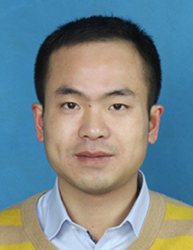 Genping Huang (黄跟平)合作论文数School of Science, Tianjin University13
 Binh Khanh Mai合作论文数Institute for Computational Science and Technology, 6 Quarter, Linh Trung Ward, Thu Duc District, Ho Chi Minh City, Viet Nam11
 Julius Rebek合作论文数Skaggs Institute for Chemical Biology, The Scripps Research Institute10
 Henrik Daver合作论文数10
 Stefan E Payer合作论文数9
 Kathrin Hopmann合作论文数Arctic Univ Norway, Univ Tromso9Ferran Planas合作论文数8
 Kálmán J. Szabó合作论文数Department of Organic Chemistry, Arrhenius Laboratory, Stockholm University8
 Jianguo Yu (于建国)合作论文数School of Resources and Environmental Engineering, East China University of Science and Technology8Silvia M. Glueck合作论文数8
 Jan-Erling Bäckvall合作论文数Department of Organic Chemistry, Stockholm University8
 Kurt Faber合作论文数University of Graz8Peter Hammar合作论文数8Marcin Kalek合作论文数8Masoud Kazemi合作论文数Biomatter Designs7
 Armando Cordova合作论文数Institutionen for Naturvetenskap, Mittuniversitetet Mid Sweden University7
 Shilv Chen (陈世稆)合作论文数School of Chemistry and Chemical Engineering, Beijing Institute of Technology6
 Lars E Eriksson合作论文数Department of Neurobiology, Care Sciences and Society, Karolinska University Hospital6Tommaso Marcelli合作论文数6maria e s lind合作论文数5Katharina Plasch合作论文数5
 Michael J Mcleish合作论文数5
 Biswanath Das合作论文数Department of Organic Chemistry, Stockholm University5
 Mendoza Abraham合作论文数Department of Chemistry, The Scripps Research Institute5
 Christian Dahlstrand合作论文数5
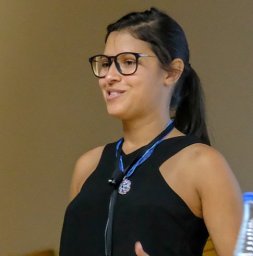 Brea Oriana合作论文数Laboratoire de Chimie et Physique Quantiques - LCPQ/IRSAMC, Université de Toulouse (UPS) et CNRS5
 Maria Biosca合作论文数Departament de Química Física i Inorgànica, Universitat Rovira i Virgili5
 Weihai Fang (方维海)合作论文数College of Chemistry, Beijing Normal University5
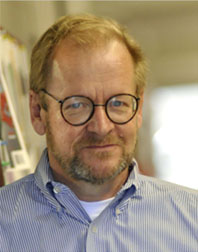 Frank Raushel合作论文数Raushel Research Group, Department of Biochemistry and Biophysics, College of Agriculture & Life Sciences, Texas A&M University;Department of Chemistry, Texas A&M University5Wolfgang Kroutil合作论文数Department of Chemistry Organic and Bioorganic Chemistry University of Graz5Ebbe Nordlander合作论文数Center for Chemistry and Chemical Engineering, Lund University5
 Srijit Biswas合作论文数Department of Chemistry, Jadavpur University5R. Baati合作论文数4Arnar Guðmundsson合作论文数4Gantulga Norjmaa合作论文数4Pemikar Srifa合作论文数4
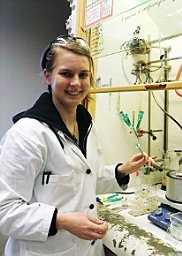 Olsson Sandra K合作论文数†Department of Chemistry, Uppsala University4
 Gerhard Hofer合作论文数Institute of Molecular Biosciences, Karl-Franzens University Graz4Yu Yang合作论文数4Wuensch Christiane合作论文数4
 Jeremy Harvey合作论文数Department of Chemistry, KU Leuven;Faculty of Science, KU Leuven4
 Sven Lidin合作论文数Center for Nanoscience, Lund University;Faculty of Science, Lund University;Centre for Analysis and Synthesis, Lund University4
 Kazushi Mashima合作论文数Department of Chemistry, Graduate School of Engineering Science, Osaka University, CREST, Japan Science and Technology Agency (JST)4Georg Steinkellner合作论文数Research Centre Applied Biocatalysis4
 Ismail Ibrahem合作论文数Arrhenius Laboratory, Stockholm University4




