Smart Cities refer to urban areas which exploits recent technologies for improving the performance, sustainability, and livability of their infrastructure and services. Crowd Density Analysis (CDA), a vital component of Smart Cities, involves the use of sensors, cameras, and data analytics to monitor and analyze the density and movement of people in public spaces. CDA utilizing DL harnesses the control of neural networks to mechanically and exactly evaluate the density of crowds in numerous settings, mainly in smart cities. DL techniques like Recurrent Neural Network (RNN) and Convolutional Neural Network (CNN), are trained on vast datasets of crowd videos or images to learn complex designs and features. These models can forecast crowd density levels, recognize crowd anomalies, and offer real-time visions into crowd behavior. This study designs an Artificial Intelligence Driven Crowd Density Analysis for Sustainable Smart Cities (AICDA-SSC) technique. The aim of the AICDA-SSC method is to analyze the crowd density and classify it into multiple classes by the use of hyperparameter-tuned DL models. To accomplish this, the AICDA-SSC technique applies contrast enhancement using the CLAHE approach. Besides, the complex and intrinsic features can be derived by the use of the Inception v3 model and its hyperparameters can be chosen by the use of the marine predator’s algorithm (MPA). For crowd density detection and classification, the AICDA-SSC technique applies a gated recurrent unit (GRU) model. Finally, a chaotic sooty tern optimizer algorithm (CSTOA) based hyperparameter selection procedure takes place to increase the effectiveness of the GRU system. The experimental evaluation of the AICDA-SSC technique takes place on a crowd-density image dataset. The experimentation values showcase the superior performance of the AICDA-SSC method to the recently developed DL models.
Early detection of brain tumors is essential, and a biopsy is required to determine the type of tumors in the brain and is only possible after extensive brain surgery. Brain tumors can be identified and classified by clinicians with the aid of computational intelligence algorithms. Here, we developed an novel and intelligent automated system, known as, Spatial Adaptive Dart Optimized Network (SADO-Net) for the diagnosis of brain tumor using MRIs. This will allow medical professionals to identify tumors in their early stages with a high degree of accuracy. Before classifying the diseases, the preprocessed brain MRIs are segmented using the Spatial Pattern based Image Segmentation (SPISeg) technique. The type of brain tumor is then promptly and reliably identified using the Weight Optimized Deep Network (WODNet) Classification model. The adoption of the Darts Game based Optimization (DGO) method for feature reduction expedites the classification process. This work uses a range of metrics and popular public datasets such as BRATS 2018, BRATS 2019, BRATS 2020 and Figshare to compare and validate the performance of the proposed SADO-Net model in tumor identification. Based on the results, the SADO-Net model exhibits good performance, with an average accuracy of 99.2 % and a loss rate of 0.5 %.
Osteosarcoma is the most normal kind of cancer that arises in bones, which appears on the surface to resemble earlier types of bone cells that assist in forging new bone tissues, but the tissue in osteosarcoma is weaker and softer than normal bone tissue. The usage of automated techniques for the detection of osteosarcoma has the potential to mitigate the obligations and burdens confronted by pathologists owing to its abundant quantity of cases. Artificial intelligence (AI) has an emerging progress in diagnostic pathology. In recent years, numerous studies using deep learning (DL) techniques to histopathological images (HI) have been published. While several studies claim higher accuracy, they might lack generalization and fall into the pitfall of overfitting owing to the wide range of HI. The study objective is to enhance the diagnosis and detection of osteosarcoma by employing computer-assisted detection (CAD) and diagnoses (CADx). Technique like convolutional neural networks (CNN) make better prognoses for patient conditions and considerably reduce the surgeon’s workload. CNN needs to be trained on the massive quantity of data to accomplish a remarkable performance. Therefore, the study presents a novel Group Teaching Optimization Algorithm with Deep Learning-Driven Osteosarcoma Detection on Histopathological Images (GTOADL-ODHI) technique. The purpose of the GTOADL-ODHI technique is to examine the HIs for the detection and classification of osteosarcoma. To accomplish this, the GTOADL-ODHI algorithm applies the Gaussian filtering (GF) method for image pre-processed to become rid of the noise. Besides, the capsule network (CapsNet) model is utilized for the extractor of the feature vector. Furthermore, the hyperparameter selection of the CapsNet approach takes place using the GTOA. Finally, the self-attention bidirectional long short-term memory (SA-BiLSTM) model can be employed for osteosarcoma recognition and classification. The widespread experimental analysis of the GTOADL-ODHI method is tested on the benchmark datasets. The simulation validation reported the optimum solution of the GTOADL-ODHI algorithm related to existing systems concerning distinct aspects.
Cloud computing has become a vital part of many organizations due to its ability to provide a resilient IT infrastructure over the internet without being the owner of such infrastructure. However, the organization faces many security issues while using cloud computing because it is a distributed and open infrastructure. Cloud computing is vulnerable to numerous cyber-attacks, and an Intrusion Detection System (IDS) is a widely recognized mechanism used to detect such threats. This article presents a description of the different security attacks associated with the cloud environment in addition to the other classifications and types of IDS. The article also discusses the challenges of intrusion detection systems in the cloud environment. This discussion is vital for building a strong cybersecurity posture, protecting sensitive data, and ensuring the integrity, availability, and confidentiality of cloud-based services and infrastructure.
The capstone projects for computing primary students require the embodiment of the skills and ideas learned by developing specific solutions to some existing challenges. This project must follow an organized and elaborate life cycle to reach the required solution. This task ends with the production of applicable software and a document showing the production stages of this work, which will be presented orally. During this scientific paper, we will evaluate all the forms and models of assessment used and their relevance to the student's level at the undergraduate level. (Abstract)
According to experts in neurology, brain tumours pose a serious risk to human health. The clinical identification and treatment of brain tumours rely heavily on accurate segmentation. The varied sizes, forms, and locations of brain tumours make accurate automated segmentation a formidable obstacle in the field of neuroscience. U-Net, with its computational intelligence and concise design, has lately been the go-to model for fixing medical picture segmentation issues. Problems with restricted local receptive fields, lost spatial information, and inadequate contextual information are still plaguing artificial intelligence. A convolutional neural network (CNN) and a Mel-spectrogram are the basis of this cough recognition technique. First, we combine the voice in a variety of intricate settings and improve the audio data. After that, we preprocess the data to make sure its length is consistent and create a Mel-spectrogram out of it. A novel model for brain tumor segmentation (BTS), Intelligence Cascade U-Net (ICU-Net), is proposed to address these issues. It is built on dynamic convolution and uses a non-local attention mechanism. In order to reconstruct more detailed spatial information on brain tumours, the principal design is a two-stage cascade of 3DU-Net. The paper’s objective is to identify the best learnable parameters that will maximize the likelihood of the data. After the network’s ability to gather long-distance dependencies for AI, Expectation–Maximization is applied to the cascade network’s lateral connections, enabling it to leverage contextual data more effectively. Lastly, to enhance the network’s ability to capture local characteristics, dynamic convolutions with local adaptive capabilities are used in place of the cascade network’s standard convolutions. We compared our results to those of other typical methods and ran extensive testing utilising the publicly available BraTS 2019/2020 datasets. The suggested method performs well on tasks involving BTS, according to the experimental data. The Dice scores for tumor core (TC), complete tumor, and enhanced tumor segmentation BraTS 2019/2020 validation sets are 0.897/0.903, 0.826/0.828, and 0.781/0.786, respectively, indicating high performance in BTS.
With technology constantly becoming present in people's lives, smart homes are increasing in popularity.A smart home system controls lighting, temperature, security camera systems, and appliances.These devices and sensors are connected to the internet, and these devices can easily become the target of attacks.To mitigate the risk of using smart home devices, the security and privacy thereof must be artificially smart so they can adapt based on user behavior and environments.The security and privacy systems must accurately analyze all actions and predict future actions to protect the smart home system.We propose a Hybrid Intrusion Detection (HID) system using machine learning algorithms, including random forest, Xgboost, decision tree, K-nearest neighbors, and misuse detection technique.
Manufacturing is changing quickly in parallel with market trends. Precise forecasting is critical for suppliers, impacting the worldwide supply chain network-a range of products derived from various sources and places in manufacturing plants in inbound logistics. Planning these inbound logistics depends on inventory readiness, plant planning, sourcing, and knowledge (continuously evolving). This paper focuses on machine learning algorithms such as K-nearest neighbors (KNN), Random Forests, Support Vector Machine (SVM) to improve the planning of inbound logistics systems. The presented algorithms track and train consumer preferences, policies, and other complex planning considerations in the planning process, such as time, strategy, and network design. In the planning process, half the time is spent preparing and collecting data, while the gained experience is not utilized efficiently. Therefore, designing potential inbound logistics processes are addressed using machine learning algorithms such as KNN, random forests, and SVM.
The network system of smart homes using a Internet of Things (IoT) device is increasing in parallel with cybersecurity challenges as these loT devices have some vulnerabilities such as hardware and software limitations that leads to difficulties with time to fit security features to any IoT systems. Therefore, the Intrusion Detection Systems (IDS) is the suggested method to mitigate these cyberattacks and monitor the requests in smart homes. IDS has the capacity to protect the smart home network and detect real-time vulnerabilities and threats. In this paper, we applied and compared four types of machine learning algorithms which are random forest, xgboost, decision tree, and k-nearest neighbors on two sorts of datasets. We randomly selected three samples from each dataset. The results show that our models for each algorithm can effectively achieve a satisfying seemingly classification accuracy with the lowest false positive rate.
Smart homes become part of people's daily life. Many people happily attempt to monitor and control their smart homes by using a smartphone, tablet, or computer because smart home systems make residential living areas more comfortable and convenient. Many devices in home are now being connected to the Internet; these devices can easily become a target of attack and can cause serious problems that could affect a user's life. Some of these attacks are difficult to detect because attackers can be intelligent or they use the same protocols that are employed by users to do legitimate requests. An intrusion detection system (IDS) is designed to detect, and mitigate attacks on the network. However, various constraints on the smart home sensors and device manufacturers are not able to ensure the security and privacy of the wireless sensor networks by using one tier standard intrusion detection. Therefore, we propose a Hybrid Intrusion Detection (HID) system using a random forest algorithm and misuse detection.
Although smart home systems contribute to improving many societal challenges, they usually have limited hardware which makes them vulnerable to attack. A security system in a smart home should have the capability to detect any existing or upcoming threats from the network, devices, sensors, or users. In this paper, we use machine learning algorithms for intrusion detection. In particular, we explore a publicly available dataset, CSE-CIC-IDS2018, to discover anomalous activities that can occur in a smart home environment by using a two-tiered system. We use the dataset2018, and run multiple machine learning classification models such as the random forest, xgboost, and decision tree. The algorithms are trained on the decision layer, and our experiments show that each of the models achieve a different level of accuracy in identifying possible anomalies that indicate attacks. The accuracy level achieved by our approach is promising for its practical implementation in a smart home system.
The rise of cloud computing gives community's advantages to an open environment. Outsourcing of data and applications to third parties can cause serious harm to the organizations. Security in cloud computing is a challenging issue. In this paper, we design a framework for balancing accountability and privacy in cloud computing through the development of intelligent techniques. The proposed solution is based on multi-agent systems.
This paper focuses on analyzing security and privacy problems facing cloud computing. The major issue discussed in the research that of losing control of data by both the cloud service providers (CSPs) and cloud service users (CSOs). Cloud computing offers organizations an innovative business model to adopt IT services without having to incur massive investment costs. A general analysis of the cloud is provided including its various forms. The growth and development of cloud computing technology are hampered by the fears of losing control of sensitive data by corporations and individuals. Solutions regarding this problem are discussed., and an intensive elucidation of the optimal one is included.
 Debatosh Debnath合作论文数Computer Science and Engineering Department, School of Engineering and Computer Science, Oakland University6
 Ashit Kumar Dutta合作论文数Dept Comp Sci & Informat Syst, AlMaarefa Univ4Shtwai Alsubai合作论文数3
 Yasamin Alagrash合作论文数Oakland University2
 Nisreen Innab合作论文数Dept Comp Sci & Informat Syst, AlMaarefa Univ2
 Ibrahim A. Atoum合作论文数2
 Rafiulla Gilkaramenthi合作论文数1
 Richard Olawoyin合作论文数1
 Mukesh Soni合作论文数1Bader Hussain Alamer合作论文数1Venkata Chunduri合作论文数1Sameer Alshetewi合作论文数1Abdullah Albadrani合作论文数1Marwan Abu-zanona合作论文数Coll Sharia & Islamic Studies Al Ahsaa, Al Imam Mohammad IbnSaud Islamic Univ1
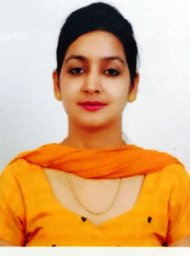 Rubal Jeet合作论文数Chandigarh Univ1
 Abdul Rahaman Wahab Sait合作论文数King Faisal Univ, Dept Arch & Commun, Al Hasa 31982, Hofuf, Saudi Arabia1Faten Khalid Karim合作论文数Dept Comp Sci, Princess Nourah Bint Abdulrahman Univ1
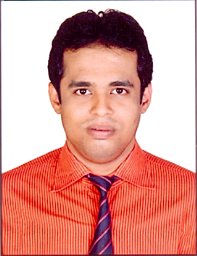 Dr Radha Mohan Pattanayak合作论文数Veer Surendra Sai Univ Technol, Dept Informat Technol, Burla 768018, Odisha, India1
 Esam Aloufi合作论文数1
 Samih M. Mostafa合作论文数Grad. Sch. of Inf. Sci. & Electr. Eng., Kyushu Univ.;c;Grad. Sch. of Inf. Sci. & Electr. Eng., Kyushu Univ.1
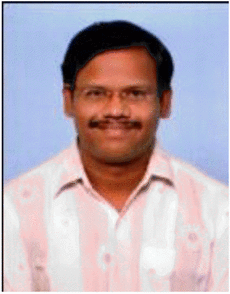 Janjhyam Venkata Naga Ramesh合作论文数1
 Mohanty Sachi Nandan合作论文数1 Indian Institute of Technology1
 A. Alshammari合作论文数The National Nanotechnology Center1
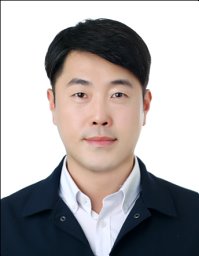 Haewon Byeon合作论文数1
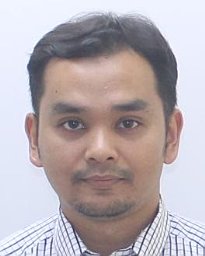 Mohamad Khairi Ishak合作论文数1Dr. Manisha Sunil Bhende合作论文数1
 Mohammed Zohdy合作论文数Oakland University1
 Suresh Babu Kondaveeti合作论文数Bridgetown International University;International Higher School of Medicine Bishkek;Symbiosis International University1




