This paper introduces SkinWiseNet (SWNet), a deep convolutional neural network designed for the detection and automatic classification of potentially malignant skin cancer conditions. SWNet optimizes feature extraction through multiple pathways, emphasizing network width augmentation to enhance efficiency. The proposed model addresses potential biases associated with skin conditions, particularly in individuals with darker skin tones or excessive hair, by incorporating feature fusion to assimilate insights from diverse datasets. Extensive experiments were conducted using publicly accessible datasets to evaluate SWNet's effectiveness.This study utilized four datasets-Mnist-HAM10000, ISIC2019, ISIC2020, and Melanoma Skin Cancer-comprising skin cancer images categorized into benign and malignant classes. Explainable Artificial Intelligence (XAI) techniques, specifically Grad-CAM, were employed to enhance the interpretability of the model's decisions. Comparative analysis was performed with three pre-existing deep learning networks-EfficientNet, MobileNet, and Darknet. The results demonstrate SWNet's superiority, achieving an accuracy of 99.86% and an F1 score of 99.95%, underscoring its efficacy in gradient propagation and feature capture across various levels. This research highlights the significant potential of SWNet in advancing skin cancer detection and classification, providing a robust tool for accurate and early diagnosis. The integration of feature fusion enhances accuracy and mitigates biases associated with hair and skin tones. The outcomes of this study contribute to improved patient outcomes and healthcare practices, showcasing SWNet's exceptional capabilities in skin cancer detection and classification.
Nowadays, people in society are increasingly depending on multimedia content, particularly digital images and videos, as reliable evidence of events. However, with the accessibility of advanced and easy-to-use video editing tools, even beginners can easily alter digital video content, which could be used as evidence in digital investigations. This raises significant concerns about the authenticity of digital videos. This study presents a method for detecting video forgery using a Depth-Wise Convolutional Neural Network (DWCNN) model that specifically crafted to precisely identify and detect forged videos. The proposed approach processes both forged and original video datasets, extracting individual frames for analysis. Ground truth data is utilized to label frames as forged or non-forged, based on pixel-level annotations. A CNN model is trained on these frames to classify forged and authentic video content. The model has a validation accuracy of 99.5
Sentiment analysis of memes is crucial in domains such as finance and politics, but the focus has been mainly on English. This study presents our test dataset MemoSen, and a proposed bimodal system dedicated to memes, integrating both text and image, with three sentiment labels: positive, negative, and neutral. A detailed annotation manual is provided to facilitate the development of new resources in this area, thus promoting the extension of sentiment analysis to various languages. Our first model, which integrates a Convolutional Neural Network (CNN), branches to process both images and text using a concatenation merge, and achieves a validation performance of an Area Under the Curve (AUC) about 100
The emergence of deep learning techniques has solved many image processing problems using traditional methods. It has provided pioneering solutions, especially in image compression, for the urgent need for storage and transmission. This paper aims to review modern techniques that use image compression using several neural networks and deep learning methods. These networks have shown promising results in complex cognitive tasks by providing high compression ratios while maintaining visual image quality. However, this field lacks further exploration and testing to evaluate the effectiveness of deep learning across different types of images, especially in medical images, which has its own challenges and requirements. Therefore, image compression has become extremely important. In this article, we begin with an overview of the basics of image compression. A brief introduction to the types of networks based on deep learning, then a comprehensive summary of previous literature, and finally, we discuss prospects for image compression methods based on deep learning.
In today's society, digital images increasingly predominate as a source of information. However, they are easily modifiable with accessible image editing software. An image forgery technique that is frequently used is splicing. It involves combining two or more separate images to produce a merged image that differs greatly from the source image. Image splicing detection is crucial to digital forensics; hence it has recently drawn more attention. We present a comprehensive analysis of the research on several image splicing detection technologies. In the literature, a variety of methods utilizing machine and deep learning to detect image splicing have been suggested. The investigation carried out in this paper may assist the researcher in better comprehending the benefits and uses of the image splicing detection technologies already in use and in the development of more effective algorithms for detection.
Research interest has been focused on vehicle-to-vehicle (V2V) and vehicle-to-infrastructure (V2I) communication systems, known as V2X technologies, namely in road safety and traffic ergonomics. The evaluation of their performance is crucial before their potential integration and deployment in real systems. The present work aims at investigating the correspondences between two sets of scenarios of a simulation and an experimental model pertaining to the performance of IEEE 802.11p communication standard, and confronting their results. Concerning the first set, it pertains to the simulation of the physical layer PHY IEEE 802.11p standard, involving the implementation of V2X PHY transmission model, in a vehicle-to-vehicle V2V and vehicle-to-infrastructure V2I, according to different scenarios. The simulation series also involved data exchange between high-speed vehicles over Rice Race channel. This paper highlights several main parameters that may affect the physical layer network performance and the quality of transmission QoT. In this paper, the Bit Error Rate BER according to the Signal to Noise Ratio SNR was used to assess the performance of the V2X communication standard using all modulation types. Regarding the second set of evaluation scenarios, it includes the development of real-case measurements using the Arada LocoMate OBU transmission system to test the effects of the transmission range on V2X communications. V2I and V2V communications are evaluated in terms of real low and high mobility effects with transmission being taken into account.
Vehicle to Vehicle (V2V) and Vehicle to Infrastructure (V2I) communication systems, known as V2X technologies, have increasingly attracted attention in current research on road safety and traffic ergonomics. The performance evaluation of these communication systems is an important step before their potential integration and use in real systems. V2X communications are based on the IEEE 802.11p standard also known as Wireless Access in Vehicular Environment (WAVE). V2X can affect human life; therefore a deep study related to V2X performance evaluation should be done in order to be sure about the system reliability. In this context, we have elaborated a deep study related to the effect of transmission range on V2X communications by considering the terminal mobility. First, we have evaluated the performance of the PHY layer on the IEEE 802.11p using simulation. Secondly, we have conducted real case measurements using the Arada LocoMate Transmission system. The obtained results shows the necessity to optimize the quality of transmission in V2X communications. Consequently, we propose in this paper a new comb-pilot technique to enhance the quality of Orthogonal Frequency Division Multiplexing (OFDM) transmission. Our proposal consists in two new uses of the pilot subcarrier estimation technique in order to decrease the elevated bit error rate (BER). The quality of transmission (QoT) is first evaluated relating to the pilot symbol rearranged positions. Second, we proposed to optimize the QoT by adding two supplementary pilot symbols as it can offer better channel estimation results. Based on the performance evaluation of our proposal, it is confirmed that both of rearrangement and the adding of the pilot patterns lead to performance enhancement compared to baseline model (standardized one).
Inter-vehicular communication is a major research field in the intelligent transportation systems (ITS) industry. It has been increasingly growing due to recent advances in mobile and wireless communication technologies. This paper aims to present a novel cross layer channel estimation technique for inter-vehicular communication based on Bayesian network theory. It proposes a multi-criteria estimation method of the Orthogonal Frequency Division Multiplexing OFDM in the 802.11p communication. The proposed method seeks to enhance the way the standardized and initial estimation method proposed in the V2V standard interact with its environment. The paper introduces two estimation-based pilot subcarrier techniques. The first technique considers re-arranging the initial position of pilot subcarriers, and the second technique adds two supplementary subcarriers. A Bayesian channel estimation technique is proposed wherein a decision-aided algorithm starts by estimating the impact of the information to be transmitted and then proceeds by assessing the error rate of the previously transmitted data while taking the quality of transmission into account. The results show that the proposed system responds well to instances involving degradation in the communication environment..
The equipment of vehicles with wireless communication capabilities is expected to be the key to the evolution to next generation intelligent transportation systems (ITS). The IEEE community has been continuously working on the development of an efficient vehicular communication protocol for the enhancement of Wireless Access in Vehicular Environment (WAVE). Vehicular communication systems, called V2X, support vehicle to vehicle (V2V) and vehicle to infrastructure (V2I) communications. The efficiency of such communication systems depends on several factors, among which the surrounding environment and mobility are prominent. Accordingly, this study focuses on the evaluation of the real performance of vehicular communication with special focus on the effects of the real environment and mobility on V2X communication. It starts by identifying the real maximum range that such communication can support and then evaluates V2I and V2V performances. The Arada LocoMate OBU transmission system was used to test and evaluate the impact of the transmission range in V2X communication. The evaluation of V2I and V2V communication takes the real effects of low and high mobility on transmission into account. The yielded results will help us to validate previous Matlab simulations of the IEEE 802.11p transmission system.
The Vehicle to Vehicle and Vehicle to Infrastructure V2X communication systems are one of the main topics in research domain. Its performance evaluation is an important step before their on board integration into vehicles and its probable real deployment. This paper studies the physical layer PHY of the upcoming vehicular communication standard IEEE 802.11p. This standard PHY Layer model, with much associated phenomena, is implemented in V2V and V2I, situations through different scenarios. The series of simulation results carried out, perform data exchange between high speed vehicles over different channels models and different transmitted packet size. We underline several propagation channel and other important parameters, which affect both the physical layer network performance and the QoT. The Bit Error Rate BER versus Signal to Noise Ratio SNR of all coding rates is used to evaluate the performance of the communication.
The aim of this paper is to enhance the quality of Orthogonal Frequency Division Multiplexing OFDM estimation in dedicated vehicular communication transmission V2X networks. Wireless Access in Vehicular Environment WAVE as also known IEEE 802.11p represents the standard for these networks. Developing a reliable inter-vehicular V2X communication has to focus on optimizing its real performances. In this work, we studied the fact that WAVE transmission uses the channel characteristics designed for indoor and stationary communication terminals in IEEE 802.11a. In this paper, we propose an approach to overcome this mobility problem of terminal communication. The considered solution consists in using pilot estimation technique to reduce the high bit error rate. First, we highlight the impact of rearranging the pilot symbol positions on the quality of transmission QoT. Second, we try to overcome one of the PHY layer estimation constraints by adding two new pilot symbols. By considering pilot symbol aided channel estimation at the transmitter, we focus on Least Square LS and Minimum Mean Square Error MMSE channel estimation on the receiver. A range of simulations is carried out according to ratio between the Bit Error Rate BER and the Signal to Noise Ratio SNR. We demonstrate that rearranging pilot pattern can offer better results than standardized ones. Furthermore, we prove that adding pilots symbols can provide the best performances.
Nowadays we have observed an increase on vehicles number on the road. This increase justifies the need for all those vehicles to communicate in order of better coordination. The dedicated vehicles communication concerns both the communication between a vehicle and vehicle V2V or even a vehicle and infrastructure V2I such as road signs and other structures on the roads. This type of communications will allow modern vehicles no longer enough to identify potentially dangerous hazards on the roads but also be able to send and receive information in interaction with their environments. The V2X communications between vehicles will provide based on the Intelligent Transportation Systems ITS two different classes of applications: applications involving road safety in one hand and applications for the ergonomics of transport in the second hand. Road safety systems, road traffic control, and other service application are vehicular systems based on new information technologies which need an efficient information transmission. Based on this theme, a multitude of research teams in the world (Japanese, American and European) are focusing on vehicular communication performances and enhancement. The main goal of this paper is to evaluate the real performance of the IEEE 802.11p in order to propose solutions and enhancements. We have conducted a set of experimentation measurements in different environments in order to evaluate the IEEE 802.11p transmission in different real scenarios. First we tried to identify the maximum range in which the communication between sender and receiver can be well done. In the second scenario, we tried to evaluate the communication between the infrastructure represented by a stopped vehicle and another moving vehicle at different speed. Finally in the last scenario, we have used two moving vehicles with
The classification of the electrocardiogram (ECG) into different pathological disease categories is a complex pattern recognition task. In this paper, we propose a scheme to integrate Discrete Wavelet Transform (DWT), Principal Component Analysis (PCA), Fast Independent Component Analysis (FastICA) and Decision Tree (DT) for ECG beat classification. The PCA and FastICA are used to transform the extracted wavelet coefficients into uncorrelated and mutually independent new features. Several decision tree methods are utilized to discriminate between different ECG arrhythmia types. Our results suggest the high reliability and high classification accuracy of the C4.5 algorithm. The problem of imbalanced arrhythmia datasets is also investigated by comparing different C4.5 versions. Therefore, various testing configurations and performance measures such as precision, recall and AUC were considered. The discrimination ability of selected features and the extracted rules were demonstrated.
Wireless Network Controlled Systems (WNCSs) are a new area of research which concerns the implementation of control strategy over wireless networks. Therefore, many potential applications of Wireless Sensor Networks (WSNs) span a wide spectrum in various domains. The dependability of the WNCSs becomes a strong requirement due to real-time requirements of control. The Quality of Control (QoC) is performed through optimally allocating the network resources to ensure the Quality of Service (QoS) and optimally designing controller to compensate for time delays in the control feedback loop. The IEEE 802.11b standard is a really widespread wireless network. However, some QoS properties are missing, compared to more specific protocols, such as 802.15.4. In this paper, the authors present the implementation of an extended model of the IEEE 802.11b standard in order to add more QoS properties through the use of CSMA/CA with the combination of the frame selection sort and the First Come First Served (FCFS) scheduling methods. The control performances of the new model are compared to those of IEEE 802.15.4 with QoS. Several improvements are achieved including a reduction in the number of collisions and priority-based flow control.
A new automated approach for the polysomnography (PSG) characterization and classification with the combination of FastICA, clustering and support vector machines (SVM) is presented in this paper. The method is based on two key steps. In the first step, the authors adopt the Principal Component Analysis (PCA) and Fast Independent Component Analysis (FastICA) approaches to separate and transform the original inputs into uncorrelated and mutually independent new features. In the second step, they utilize the K_Means clustering combined with Support Vector Machine (SVM) to build the proposed classifier. Multiple SVM kernels such as the linear, quadratic, polynomial, and radial basic functions are used for the classification of central and obstructive sleep apnea. Their results suggest the high reliability and high classification accuracy of polynomial kernel.
The electrocardiogram ECG signal has often been reported to play an important role in the primary diagnosis, prognosis, and survival analysis of heart diseases. Electrocardiography has brought several valuable impacts on the practice of medicine. This paper deals with the feature extraction and automatic analysis of different ECG signal waves using derivative based/ Pan-Tompkins based algorithms. The ECG signal contains an important amount of information that can be exploited in different way. It allows for the analysis of cardiac health condition. The discrimination of ECG signals using the Data Mining Decision Tree techniques is of crucial importance in the cardiac disease therapy and control of cardiac arrhythmias. Different ECG signals from MIT/BIH Arrhythmia data base are used for ECG features extraction and analysis. Two pathologies are considered: atrial fibrillation and right bundle branch block. Some decision tree classification algorithms currently in use, including C4.5, Improved C4.5, CHAID Chi square Automatic Interaction Detector and Improved CHAID are performed for performance analysis. Promising results have been achieved using the C4.5 classifier, with an overall accuracy of 96.87%.
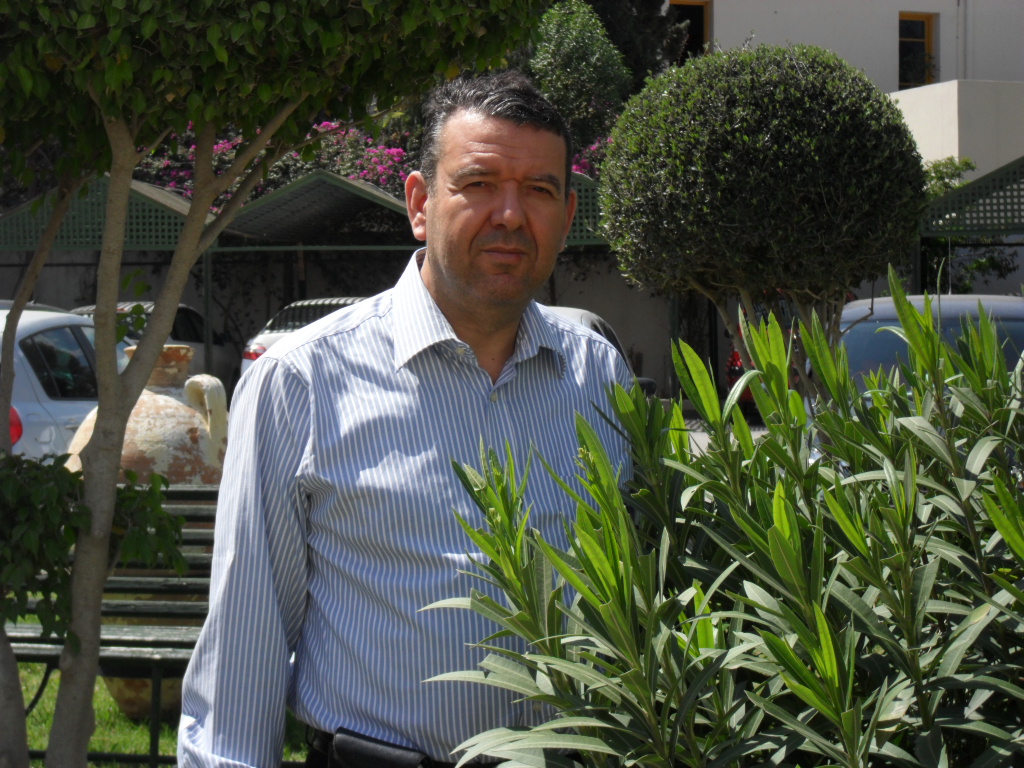 Monji Kherallah合作论文数University of Sfax, Faculty of Sciences of Sfax, Department of Physics
REGIM: REsearch Group on Intelligent Machines, http:;www.REGIM.org
IEEE AESS Tunisia Chapter Chair, 20119
Monji Kherallah合作论文数University of Sfax, Faculty of Sciences of Sfax, Department of Physics
REGIM: REsearch Group on Intelligent Machines, http:;www.REGIM.org
IEEE AESS Tunisia Chapter Chair, 20119 Aymen Sassi合作论文数7
 Yassin Elhillali合作论文数7
 Lotfi Kamoun合作论文数6Ali Kraiem合作论文数5
 Atika Rivenq合作论文数Département Opto-Acousto-Electronique: UVHC, Université de Valenciennes5
 Mohamed Elleuch合作论文数Univ Manouba, Natl Sch Comp Sci ENSI, Manouba, Tunisia2Nouha Khediri合作论文数2Anis Mezghani合作论文数2Atika Revenq合作论文数1
 Laith Alzubaidi合作论文数School of Mech., Medical & Process Engineering, Faculty of Engineering, Queensland University of Technology1
 Mohammed A. Fadhel合作论文数Univ Informat Technol & Commun, Al Nidhal Campus, Baghdad 00964, Iraq1Mohamed Bouyahi合作论文数Commun Syst Lab SysCom, Univ Tunis El Manar1
 Ye Duan合作论文数Department of Computer Science,University of Missouri-Columbia1
 Jean-Marc Thiriet合作论文数Joseph Fourier University;Centre de Recherche en Automatique de Nancy;Centre de Recherche en Automatique de Nancy, Joseph Fourier University1




