Abstract A new finite element (FE)-based approach for calculating crack-tip strain energy density factor (SEDF) named “element strain energy density factor (ESEDF) approach” was proposed. Mode I, mode II, mode III and mixed mode cracks in both 2D models and 3D models were analyzed. A da/dN-ΔS-R equation considering stress ratios was proposed for mode I cracks and a fatigue crack growth test was done. The results show that the ESEDF approach directly computes SEDF from FE results without assuming plane stress/strain or calculating stress intensity factors. It performs best for regular mode I/II cracks in 2D and 3D models, but is less accurate for complex mixed-mode, 3D mode III, surface-cracks and coarse-mesh cases, while remaining acceptable accuracy. The proposed da/dN-ΔS-R equation correlates fatigue crack growth rate with SEDF ranges considering stress ratios in mode I cracks for steels well.
The static tension test on smooth specimens and the fatigue crack growth rate test on CT specimens were conducted for two mild steels, Q235B and Q355B, and three high-strength steels, Q460C, Q550D and Q690D. The digital image correlation (DIC) technique was introduced and strain results around the crack tip were verified by finite element analysis. Material constants based on stress intensity factor (SIF) range and strain energy density factor (SEDF) range were obtained by fitting. A thorough survey of fatigue crack growth test results of high-strength steels in relevant literature was conducted and test results were compared. The scatter band upper bound of fatigue crack growth curves for each steel was obtained and compared with suggested curves in various design codes. The results show that the strains at the crack tip of specimens obtained by finite element analysis and DIC analysis are in good agreement with each other; The mean+2s curve in BS7910 and DNVGL-RP-210, along with the curves in WES2805 and IIW-2259-15, are all applicable to the design of the three high-strength steels, while the mean curve in BS7910 and DNVGL-RP-210 are not applicable and the curves suggested by ASME BPVC or JSME S NA1-2008 and FKM are too conservative; The crack growth rate slows down with the increase of the yield strength, demonstrating the trend of decrease in material constants m, n and |logC|while increase in |logA|, although the trend is not strictly followed; The scatter band upper bounds established based on either SIF or SEDF are applicable to fatigue crack growth analysis and design of the three high-strength steels. Copyright (c) 2025 by The Hong Kong Institute of Steel Construction. All rights reserved.
The strong corrosive environment and cyclic dynamic load represented by marine scenarios put forward higher requirements for the corrosion-fatigue performance and crack resistance of high-strength steel structures. This paper aims at the accurate mathematical modeling of crack growth of corrosion fatigue for base steels and their welds. The fatigue crack growth tests of compact tension specimens of base steels and their welds under different corrosion degrees are designed and conducted. The stress intensity factor range and crack growth rate of all 24 types of specimens are estimated using a combined method. A paradigm of knowledge-data conjoint analysis is presented to diminish errors due to randomness and discreteness in tests. Using all the test results from the same type specimens, the mathematical models of different base steels and their welds under different corrosion degrees are established. The results verified that corrosion may directly add crack growth rate, a higher yield strength of steel may lead to higher crack resistance, and the cracking resistance of the welds is generally lower than that of the same grade of steel with corrosion. The established mathematical models by new analysis strategies can be used as the reference for the corrosion-fatigue design and maintenance of structures using high-strength steel.
According to the concept of limit-state margin probability function, a new look-ahead learning function called stepwise margin reduction (SMR) is proposed for active learning reliability analysis. SMR aims to select the best next point as the one minimizing, in expectation, the integrated margin probability function when adding such a new point. The plain definition of SMR involves a double integral, and three-fold contributions are made to reducing the associated computational burden. First, the closed-form expression of inner integral is well deduced, which avoids burdensome Gaussian–Hermite quadrature or drawing simulations of Gaussian process. Second, thanks to the locality of analytical expression of inner integral, truncated-integral scheme (TIS) is devised for the outer integral to avoid serious computer memory issue. Third, the candidate pool is pruned to accelerate the selection of best next point per iteration. The efficacy of SMR-based active learning reliability method is illustrated on two analytical functions, three numerical examples and one real-world engineering problem. Results demonstrate that in SMR, the TIS performs better than the traditional limited-integral scheme. Then, in comparison with existing pointwise and look-ahead learning functions, SMR gains favorable advantage in term of both computational accuracy and efficiency.
To investigate the effectiveness of a viscous fluid damper (VFD) in mitigating fatigue damage in welded beam-to-column connections, six specimens were manufactured with the full penetration groove weld process. These specimens were divided into three groups: S1, S2, and S3, each containing two specimens. One specimen in each group was equipped with VFD, while the other was not. All specimens underwent the same elastic cyclic loading stage, but a different plastic cyclic loading stage for each group. The study results indicate that the presence of VFD can significantly enhance the load-bearing capacity of the welded beam-to-column connection by 10%–15% when subjected to the same displacement amplitude at the beam end. The primary cause of failure in the welded beam-to-column connection is the fatigue damage of the weld toe on the beam flange, which requires more attention during the welding process. Additionally, the VFD can effectively reduce stress concentration at the weld seam area, leading to a maximum of 50% decrease in the maximum stress near the weld toe of the beam flange center, as observed in our study.
Driving is a multitasking process. With the advance of artificial intelligence and driver assistance systems, the tasks of driving go far beyond monitoring one’s surroundings and turning the steering wheel. For example, using phones while driving is a common occurrence. However, past studies analyzing driving have only considered a single driver’s view, based on the incorrect assumption that the driver is the only person who impacts road safety. This paper proposes a multi-centered human-machine system framework that takes more factors into account, including the drivers of surrounding vehicles and advances in driver assistance technology. An analysis of the scenario of phone calling while driving is performed using the proposed framework, followed by a preliminary evaluation with 18 beginner-level drivers. The results demonstrated the new framework’s capability of identifying more approaches both theoretically and practically to better balance the driving and non-driving tasks, compared to the traditional framework. Future research topics with the multi-centered framework, including hierarchical analysis of treatments, collaborative driving support, and information interference are addressed.
Rail-cum-road cable-stayed bridges are widely used to span rivers, bays, and valleys. It is vital to understand the vibration behavior of the cables, which are the crucial load-bearing components of a cable-stayed bridge, as it is the leading cause of cable fatigue. First, a numerical model of cable vibration under double-end excitation was derived by neglecting the bending stiffness and was verified through a cable's multi-segment bar finite element model, and a numerical solution program was compiled based on MATLAB R2022a software. Then, a finite element model (FEM) was established according to the design documents of a long-span rail-cum-road cable-stayed bridge. Finally, the dynamic response of the cable under the train loads was analyzed based on the FEM and numerical model. The study shows that the numerical model can accurately simulate the cable with a relative error of less than 1% for its first four frequencies compared with the FEM; the maximum displacement amplitude appears at the longest cable near the middle of the main span; the vibration frequency of the cable is approximate to the cable end excitation frequency within a 1% discrepancy; and the vibration amplitude at the center of the cable is approximately twice that of the excitation amplitude at the end of the cable.
Wavelet transform is often used in fault diagnosis of rolling bearings. However, in practical applications, the number of layers decomposed by wavelet transform needs to be manually specified. If there are too many layers, the corresponding features will also increase, which increases the difficulty of feature selection. To solve this problem, this paper proposes a fault diagnosis method based on relative wavelet energy and decision tree algorithm. This method has strong interpretability, which is mainly reflected in the following two aspects: (1) Establishing classification rules that is easy to be understood with clear tree structures. (2) The feature importance index can be used to quantify the importance of each feature and screen important features. The results show that: when the number of layers decomposed by wavelet increases to more than 6 layers, the accuracy rate will increase to more than 95%. In addition, due to the pre-pruning strategy in the decision tree, the decision tree actually uses fewer features, and the features with higher feature importance are selected when building the decision tree, which avoids the complicated tree structure and increases its interpretability.
Livestreaming commerce, a hybrid of e-commerce and self-media, has expanded the broad spectrum of traditional sales performance determinants. To investigate the factors that contribute to the success of livestreaming commerce, we construct a longitudinal firm-level database with 19,175 observations, covering an entire livestreaming subsector. By comparing the forecasting accuracy of eight machine learning models, we identify a random forest model that provides the best prediction of gross merchandise volume (GMV). Furthermore, we utilize explainable artificial intelligence to open the black-box of machine learning model, discovering four new facts: 1) variables representing the popularity of livestreaming events are crucial features in predicting GMV. And voice attributes are more important than appearance; 2) popularity is a major determinant of sales for female hosts, while vocal aesthetics is more decisive for their male counterparts; 3) merits and drawbacks of the voice are not equally valued in the livestreaming market; 4) based on changes of comments, page views and likes, sales growth can be divided into three stages. Finally, we innovatively propose a 3D-SHAP diagram that demonstrates the relationship between predicting feature importance, target variable, and its predictors. This diagram identifies bottlenecks for both beginner and top livestreamers, providing insights into ways to optimize their sales performance.
Long-span bridges are the lifeline throats of urban transportation network. Deflection (i.e., deformation) behavior of long-span bridges is complex. It can be found from long-term monitoring data that there is an obvious time-lag effect between the quasi-static behavior of deflection and environmental temperature, and abnormal signals, such as drift and jump-point, appear sporadically in the deflection data. In order to deal with the interference from the data time lag and abnormal signal, this article adopts the Bayesian multiple linear regression (BMLR) method to establish the mathematical model of bridge deflection based on temperature, other points’ deflection, or cable force data. A new paradigm of the recursive modeling strategy of BMLR for bridge deflection based on short-term data is proposed, which truly realizes the dynamic update ability of Bayes’ theorem in multiple regression modeling. Under the same conditions of modeling, the proposed paradigm performs higher accuracy of prediction and lower space of data storage occupied than the traditional multiple linear regression method and is less time taken than methods of deep learning. The whole process was validated to be robust to the data time lag and abnormal signal. When faced with the situation of sparse sensing points and not enough long time of monitoring, it is possible to fast predict deflection of new-added/adjusted sensing points using short-term observation data.
To investigate the use of vibration control systems in fatigue damage mitigation for welded beam-to-column connections in steel high-rise buildings, cases of both a single connection under constant amplitude cyclic loading and multi-connections in a high-rise building under the stochastic wind, with and without the fluid viscous damper (VFD) and the tuned mass damper (TMD), are discussed respectively. The finite element analysis and the fatigue assessment are conducted so that the mitigation effect, the effect of technical parameters and the conditions of both high-cycle fatigue and low-cycle fatigue are all discussed. The results show that the VFD and the TMD systems are both effective in the mitigation of local fatigue damage along with the structural displacement for both cases. The VFD generally has a better mitigation effect than the TMD and it starts to take effect instantly with the external loading, but it causes a phase difference in structural responses, while the situation of the TMD is quite the opposite. The displacement and the local stress show similar and synchronous mitigation trends so that the damping systems can be designed based on either of them. The VFD should be designed with a smaller damping exponent and a larger damping coefficient in a braced installation form, while the TMD can be designed using the optimal parameters. The optimized VFD layout plan is that VFDs are placed between the two connections with large relative displacement and relative velocity on higher floors and these two connections with VFDs should be near to the targeted connection. The negative fatigue damage mitigation mainly stems from insufficient lateral support force so that the direct installation of VFDs may result in a negative fatigue damage mitigation effect in the connections with limited lateral support.
Intense solar radio bursts (SRBs) can increase the energy noise and positioning error of the bandwidth of global navigation satellite system (GNSS). The study of the interference from intense L-band SRBs is of great importance to the steady operation of GNSS receivers. Based on the fact that intense L-band SRBs lead to a decrease in the carrier-to-noise ratio (C/N0) of multiple GNSS satellites over a large area of the sunlit hemisphere, an intense L-band SRB detection method without the aid of a radio telescope is proposed. Firstly, the valley period of a single satellite at a single monitoring station is detected. Then, the detection of SRBs is achieved by calculating the intersection of multiple satellites and multiple stations. The experimental results indicate that the detection rates of GPS L2 and GLONASS G2 are better than those of GPS L1 L5, GLONASS G1, and Galileo E1 E5. The detection rate of SRBs can reach 80% with a flux density above 800 solar flux unit (SFU) at the L2 frequency of GPS. Overall, the detection rate is not affected by the satellite distribution relative to the Sun. The proposed detection method is low-cost and has a high detection rate and low false alarm rate. This method is a noteworthy reference for coping with interference in GNSS from intense L-band SRBs.
Over-speeding is a major cause of traffic accidents. Proper speed limits provide guidance for drivers and help in improving traffic safety. This paper examines driving behaviors under different speed limits and proposes a speed limit optimizing methodology. First, vehicles steering wheel angles, acceleration, and the distance between the specified vehicle’s center of gravity and centerline of the lane were compared using multiple independent samples nonparametric tests to study the influence of different speed limits. Then, the TOPSIS (Technique for Order Preference by Similarity to Ideal Solution) and PCA (Principal Component Analysis) methods were used to determine the optimal speed limit. These methods were applied in the driving simulator and the results prove that these methods are effective. The results also suggest that speed limit has a significant influence on the lane changing and overtaking driving behaviors. Therefore, these methods could be applied in real traffic management to create a safe and efficient driving environment.
The noise signal produced by solar radio bursts (SRBs) is one of the significant factors influencing the navigation signal. The study of the detection of SRBs is meaningful to the steady operation of navigation system. Taking advantage of the influence of SRBs on Global Navigation Satellite Systems (GNSS) signal, a SRBs detection method based on support vector machine (SVM) model has been proposed. First, the carrier-to-noise ratio, positioning errors of three directions, geometric dilution of precision (GDOP) and the number of satellites loss-of-lock are input to preprocess to obtain the eigenvector and mark whether the SRBs occurs. Then the optimal classifier is obtained by inputting the sample points into SVM classifier for learning. When the new eigenvectors enter the classifier, it will be classified automatically. The average accuracy of SRBs detection reaches more than 93%. This detection method of SRBs based on SVM model can be realized all-time, all-weather and with high efficiency, high accuracy and simple process.
•The proposed method alternately calculates the position and times of the source node that is more computationally efficient.•The convergence behavior of the proposed method is further theoretically proved.•First-order perturbation analysis shows that the performance of the proposed method can approximately reach the CRLB.•Compared with some previous methods, the proposed method requires fewer anchor nodes and less communication cost.
The design of the low-cost dual-band low noise amplifier (LNA) for polarization adjustable satellite low noise block (LNB) is presented. Compared to the traditional design, this proposed design can significantly reduce the cost. This design is divided into three parts, the switched LNA, filters, and the power splitter. The design is simulated by Advanced Design System (ADS) and High Frequency Structure Simulator (HFSS). The prototype is manufactured and measured. According to the measured results, the output return loss is more than 5.5dB, the highest gain is 18dB and the noise figure (NF) is less than 2.3dB.
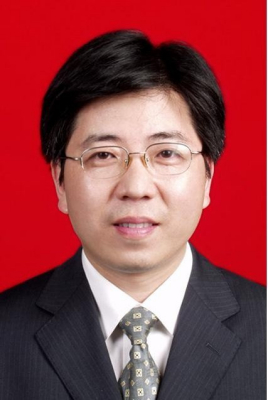 Aiqun Li (李爱群)合作论文数Beijing University of Civil Engineering and Architecture5
 Zhao Fang合作论文数3
 Han-Wei Zhao (赵瀚玮)合作论文数School of Civil Engineering, Southeast University2
 Mengying Lin合作论文数2
 Xuefen Zhu (祝雪芬)合作论文数School of Instrument Science and Engineering, Southeast University2
 Tong Guo (郭彤)合作论文数School of Civil Engineering, Southeast University2
 Youliang Ding (丁幼亮)合作论文数School of Civil Engineering, Southeast University2
 Tong Zhou (周通)合作论文数School of Civil Engineering, Southeast University1Luo Yimei合作论文数1Yongping Peng合作论文数1Wei Hua合作论文数1Fan Wang合作论文数1Hao-Shuang Hu合作论文数Xidian Univ, Natl Lab Radar Signal Proc, Xian 710071, Peoples R China1
 Yuchen Wang合作论文数1
 Liu Yongzhen合作论文数1TIAN Qiang (田强)合作论文数1
 You Dong合作论文数Hong Kong Polytech Univ, Dept Civil & Environm Engn, Hong Kong, Peoples R China1
 Min Lin (林敏)合作论文数Schoolof Communigations and Information Engineering, Nanjing University of Posts and Telecommunications1Lei Wei合作论文数1
 Hui Zhang (张辉)合作论文数Department of Manufacturing & Automation, School of Mechanical Engineering, Southeast University;Jiangsu Key Laboratory of Design and Manufacturing of Micro-Nano Biomedical Instruments, School of Mechanical Engineering, Southeast University1
 Su Li合作论文数Department of Psychiatry, University of Cambridge1
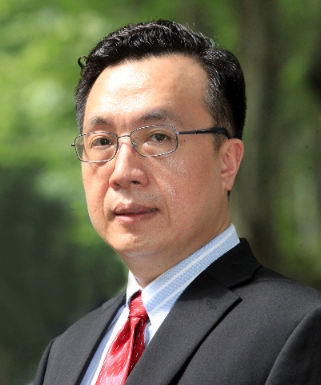 Bin Ran (冉斌)合作论文数1
 Xiyuan Chen (陈熙源)合作论文数School of Instrument Science and Engineering, Southeast University1
 Peng Chen (陈鹏)合作论文数School of Information Science and Engineering, Southeast University1
 Da-Zheng Feng (冯大政)合作论文数School of Electronic Engineering, Xidian University1
 Libo Meng合作论文数Key Laboratory of Applied Mechanics, Tsinghua University1
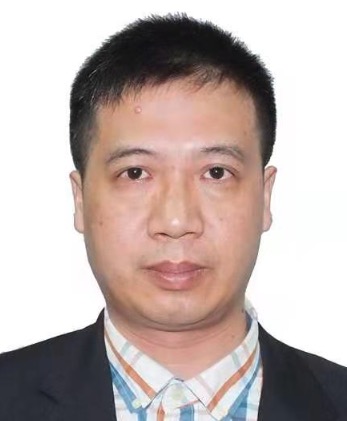 Huachun Tan (谭华春)合作论文数School of Interdisciplinary Science, Beijing Institute of Technology1
 Dan M. Frangopol合作论文数Department of Civil and Environmental Engineering, Engineering Research Center for Advanced Technology for Large Structural Systems, Lehigh University;Imbt Labs, Lehigh University;Department of Civil, Environmental, and Architectural Engineering;University of Colorado1
 Xutao Yu (余旭涛)合作论文数School of Information Science and Engineering, Southeast University1




