Floating wind turbines are subject to significant stress and load due to hostile marine conditions and the weather conditions in their location. The specificities of floating wind turbines lead to an increased degradation of some components compared with bottom-fixed offshore wind turbines. The floating technology is in an incipient stage and, therefore, there is not enough data to statistically calculate the deterioration mechanism of their components. In this paper, we employ qualitative and quantitative information on onshore and fixed-bottom offshore wind turbines to model the degradation of three main differential components of floating wind turbines, i.e. tower and transition piece, floating platform, and mooring system. A homogeneous Gamma-based deterioration process is proposed to model the degradation of components degradation. A Ridge regression is used to estimate the scale parameters of Gamma deterioration processes for each component in floating wind turbines.
The increasing demand for renewable energy has enhanced the deployment of large photovoltaic systems. Aerial thermography is widely implemented in industry, although the accurate detection, localization, and quantification of defects still represent a major challenge for maintenance planning and performance optimization. The main contribution of this paper is a novel approach for fault location and quantification in large-scale photovoltaic plants, divided into three different phases. The first phase is the analysis of aerial parameters implemented during the monitoring procedure, e.g., GPS position, altitude, gimbal angle, etc., to define the field of view. The second phase performs thermal image processing using transformer-based deep learning models to define image-space coordinates for defect detection that will be used to extract pixel-level temperature data. Each pixel contains an associated temperature value that is analyzed using different qualitative parameters based on average temperatures, thermal load, or thermal distribution, to determine the severity of the fault. The mapping of solar plants is carried out with georeferenced visual images acquired by drones through the open-source tool OpenDroneMap, Segment Anything Model version 2, and Unidirectional Histogram. This approach is validated on two operational photovoltaic installations comprising 12 and 20 strings with 1170 and 1290 modules, respectively, achieving a module detection accuracy between 95% and 98.55%. Fault detection is performed through a RoboFlow-Detection Transformer model with an overall accuracy of 96.6%. These defects are characterized using multiple thermographic parameters, including intensity, spatial distribution, or affected area, among others, to assess their severity. The analysis of 85 detected faults reveals that 34.1% are classified as severe, 27.1% as moderate, and 38.8% as low severity. For this analysis, 12 representative cases are examined in detail, and a validation stage is conducted to assess the overall measurement process using an external infrared sensor. This procedure demonstrated an overall accuracy of ±2 °C or ± 2% of the measured value. An economic analysis to determine the feasibility of the methodology has also been developed, showing that the proposed UAV-based framework combines high diagnostic performance with a direct operational cost of approximately €202 per inspection. All these procedures confirmed the effectiveness of the proposed method in the identification of defective modules and assessing their condition through a scalable and efficient solution for maintenance in solar plants.
Energy production using renewable energies is increasing every year. Amongst them, hydropower is a well-known and established technology. Compared with other renewable energy sources, it is not as dependent on weather and allows for energy storage. These systems require constant monitoring for early fault detection to prevent undesired downtime. Previous reviews focused on single issues such as cavitation or fatigue, or concrete monitoring system. This study expands current knowledge by presenting a comprehensive review of the state-of-the-art in condition monitoring systems applied for hydropower systems, classifying them based on the component monitored (dam, turbine, generator, etc.), the sensing technology applied (vibration, acoustic, etc.), and the issue considered for assessment (cavitation, sedimentation, water hammer, etc.). Furthermore, an analysis of findings is presented, comprehensively discussing the current trends, research gaps, and challenges in this field, followed by a discussion on practical applications and future challenges.
This article presents an effective approach to predict short circuit faults in the stator windings in an induction motor using motor current signature analysis. Traditional sensor-based diagnostic methods require large manpower and a larger number of sensors. In this paper, to come through these drawbacks, fault detection based on current signature is proposed. The main fault detection parameter in this article will be the three-phase current of the stator in healthy and faulty conditions under different loads. Fault detection is, firstly, applying a discrete wavelet transform (DWT) to the output current from the stator under healthy conditions and also under different fault conditions. DWT yields many coefficients in the high-level decomposition required for high resolution. Then, using wavelet coefficients, the energy values in each scale are extracted and used as input parameters for training the artificial neural network (ANN) for fault detection. The proposed method has given 96
Deep learning is efficiently used for photovoltaic power generation forecasting to handle the intermittent nature of solar energy. However, big data are required for training deep networks which are not available for newly installed plants. Therefore, in this study, a novel strategy is proposed to train a deep learning model using a transfer learning technique to cop up with the unavailability of enough training datasets. A new 400 kWp solar power plant installed in the Himalayan region is considered as a case study to evaluate the proposed model. The proposed approach utilizes solar radiation data to train a deep neural network and then fine-tune the model using the power generation data from the plant. The network architecture is optimized using grey wolf optimizer to find the best suitable model for the data. The evaluation results show that the same model can achieve higher performance in generation forecasting with percentage error improved by 2% and R-value increased by 7.7% after applying transfer learning. Moreover, SHapley Additive exPlanation and Partial Dependence Plots are used to interpret the model behavior and showed that the model is mostly dependent on the previous generation values (up to 4 days) followed by the temperature and solar radiation.
In integrated energy systems (IESs), thermal energies with different characteristics and efficiencies are typically regarded as having the same thermal energy level, which leads to unreasonable assumptions regarding the thermal energy structure of the system. Moreover, the traditional optimal operation method does not consider the impact of expanding a single thermal energy flow into a multi-level thermal energy flow on the optimal operation results of the system. These problems pose challenges to the complexity of multi-level thermal energy flow mechanisms and optimal operation results of the IES. To tackle this challenge, first, this study establishes a multi-level thermal energy coupling (MTEC) model, which divides the thermal energy flow into three levels according to temperature, and re-models the production and conversion equipment based on thermal energy levels. Second, the energy hub matrix for MTEC-IDR joint operation is proposed, and the integrated demand response (IDR) is introduced to replace energy storage devices to solve the problem of rising costs caused by insufficient load flexibility. Finally, the system constraints and objective function are improved, and an optimal IES scheduling strategy under the MTEC-IDR mechanism is proposed. The effectiveness of the proposed strategy is proved from the perspectives of low-carbon implementation and economy.
The Jaya algorithm is a novel and effective global optimization technique, yet it faces challenges such as slow convergence, limited exploitation capabilities, and suboptimal balance between exploration and exploitation. This research proposes a hybrid Jaya algorithm, designated HMJDE, that integrates a modified Jaya algorithm with Differential Evolution (DE) to address the Optimal Power Flow (OPF) problem. The modified Jaya algorithm facilitates global exploration of the search space, while DE enhances local search by refining solutions within the neighbourhoods identified by Jaya. The performance of HMJDE is first assessed using eight well-established benchmark functions. Subsequently, its effectiveness is validated through application to real-world OPF problems on the Algerian 59-bus and standard IEEE 57-bus systems. The HMJDE algorithm achieves minimum fuel costs of 1688.1210 $/h and 41656.0438 $/h, respectively, with standard deviations of 0.3295 and 0.2412, representing cost reductions of 13.1317% and 18.8753% compared to the base case. These translate to annual savings of approximately $2,235,922.55 and $84,903,463.50, respectively. Compared to other recent optimization techniques, HMJDE exhibits superior solution quality and computational efficiency for both benchmark functions and OPF applications. Statistical analysis, including best, worst, mean, and standard deviation metrics, further confirms that HMJDE is a robust and reliable optimization approach.
In order to ensure optimal performance of permanent magnet synchronous motors (PMSMs) across many technical applications, it is imperative to minimize torque fluctuations and reduce total harmonic distortion (THD) in stator currents. Hence, this study proposes the utilization of an adaptive flux estimator (AFE) in conjunction with an Intelligent Hybrid Controller (IHC) to mitigate the ripples and total harmonic distortion (THD). The IHC system is constructed by integrating PI and fuzzy logic controllers (FLC) in a cascade configuration, alongside a new switching unit that facilitates automatic switching between the two controllers during various operations of the PMSM. AFE estimates accurate flux which is required to achieve ripple free high dynamic performance of the PMSM drive by using a limiter to fix the flux at reference flux value of the drive. The proposed controller with AFE has achieved its originality through the refinement of membership functions located at the center of the universe of discourse (UOD) and the enhancement of the switching function. These improvements have resulted in increased sensitivity in the proximity to the reference speed. The Fuzzy Logic Controller (FLC) demonstrates superior performance when operating in a transient state, whereas the Proportional-Integral (PI) controller of the proposed system exhibits satisfactory performance under steady-state situations. The efficacy of AFE with IHC is substantiated by the simulation and experimental analysis reported in this study. A significant reduction in both total harmonics distortion (THD) and torque ripples are found.
This paper builds on the theoretical basis of natural resource-based view theory (NRBV) and upper echelons theory (UET) to examine the complex network of connections between sustainable leadership, green innovations (radical and incremental), and sustainable performance in the textile sector in Pakistan. A self-administered survey questionnaire was distributed among 400 professionals from textile firms listed on the Pakistan Stock Exchange. Out of which, 315 responses were deemed valid for analysis through the PLS-SEM technique using SPSS 23 and SmartPLS 4.0. The findings disclosed that sustainable leadership has strong relationships with green innovations and the sustainable performance of the firm. Additionally, organizational error tolerance was a significant moderator of the development of these relationships. The study attempts to extend the existing knowledge on NRBV and UET by integrating them into leadership literature and organizational innovation management. Further, the use of organizational error tolerance as a moderator adds an important criterion for these relationships. It is important to gain an in-depth understanding of the mechanisms by which sustainable leadership impacts green innovations and subsequently impacts sustainable performance. The findings will guide industry leaders, policymakers, and stakeholders in promoting resilient, environmentally conscious, and high-performing textile enterprises in Pakistan.
Supervisory Control and Data Acquisition (SCADA) systems are employed to collect data from sensors and monitor the condition of wind turbines. Thresholds are commonly used to set the alarms, generating many false alarms, downtimes, costs, etc. A real case study is presented to validate the approach. This paper proposes a novel approach based on Fuzzy Logic to analyse the main variables of the SCADA. Pearson’s correlation between variables is employed to reduce the number of variables that are used as inputs in the Fuzzy Logic system. The variables with perfect and strong correlations have been selected as inputs of the Fuzzy system. The signal is studied by considering the difference between the signal and the moving average value because it shows if the signal is close or not to the value in conditions free of faults. The thresholds are used to cluster the data into three groups by a statistical analysis of the new variables, i.e., the variables obtained by the difference between the signal and the moving average value. The approach helps decrease false alarms by using a Fuzzy system. The approach is capable of processing large datasets online. The results have been validated by employing SVM, where the MAPE is analysed between both methods.
 Isaac Segovia Ramirez合作论文数Ingenium Research Group, Universidad de Castilla-La Mancha58
 Mayorkinos Papaelias合作论文数School of Metallurgy and Materials, College of Engineering and Physical Sciences, University of Birmingham52
 Hasmat Malik合作论文数51
 Carlos Quiterio Gómez Muñoz合作论文数Castilla La Mancha Univ, Ingenium Res Grp, Ciudad Real, Spain47
 Alberto Pliego Marugán合作论文数Univ Castilla La Mancha, Ingenium Res Grp, E-13071 Ciudad Real, Spain47
 Jesús María Pinar-Pérez合作论文数CUNEF Univ29
 Devarapalli, R.合作论文数24
 Alotaibi, M.A.合作论文数Electr. & Comput. Eng, Univ. of Waterloo Waterloo;c;Electr. & Comput. Eng, Univ. of Waterloo Waterloo23
 Pedro Bernalte Sanchez合作论文数20
 Ana María Peco Chacón合作论文数Univ Castilla La Mancha, Ingenium Res Grp, Ciudad Real 13071, Spain18
 Alfredo Arcos Jiménez合作论文数14Bishwajit Dey合作论文数14
 Abhishek Kumar合作论文数Chitkara University Institute of Engineering and Technology, Chitkara University,Punjab,India11Naveed Akram合作论文数11Raul Ruiz-de-la-Hermosa Gonzalez-Carrato合作论文数10
 Diego J. Pedregal合作论文数Escuela Técnica Superior de Ingenieros Industriales, Universidad Castilla-La Mancha10
 Asyraf Afthanorhan合作论文数Fac Business & Management, Sultan Zainal Abidin Univ9
 Hakan Acaroğlu合作论文数Faculty of Economics and Administrative Sciences, Eskisehir Osmangazi University9
 Clive Roberts合作论文数School of Engineering, College of Engineering and Physical Sciences, University of Birmingham9
 Alba Munoz del Rio合作论文数8
 Ashutosh Kumar Dubey合作论文数8
 Tirumalasetty Chiranjeevi合作论文数Rajkiya Engineering College8
 Alfredo Peinado Gonzalo合作论文数School of Engineering, University of Birmingham7
 Naladi Ram Babu合作论文数Aditya Engineering College7
 Behnam Ivatloo合作论文数Department of Electrical Engineering, LUT School of Energy Systems, LUT University7
 Andrew M. Tobias合作论文数7Jesús Miguel Chacón合作论文数Department of Applied Mechanics, University of Castilla-La Mancha7Mohammad Asef Hossaini合作论文数6
 Felix Schmid合作论文数School of Engineering, University of Birmingham;Department of Civil Engineering, School of Civil Engineering, University of Birmingham;Centre for Railway Research and Education, University of Birmingham6
 Junyou Yang (杨俊友)合作论文数School of Electrical Engineering, Shenyang University of Technology6
 Hermenegildo Garcia合作论文数Instituto de Tecnología Química, Univeristat Politècnica de Valencia6
 Vicente García-Díaz合作论文数Department of Computer Science, University of Oviedo6
 Benjamin Lev合作论文数School of Management, The University of Michigan-Dearborn6
 Simone Marini合作论文数Institute of Marine Science Ismar, Italian National Research Council6Diego Ortega Sanz合作论文数5
 Noor Zaman合作论文数5
 A. Muthu Manokar合作论文数Department of Mechanical Engineering, B.S. Abdur Rahman Crescent Institute of Science and Technology5
 Maria Kogia合作论文数5
 Haixin Wang合作论文数School of Electrical Engineering, Shenyang University of Technology5
 Valter Luiz Jantara Junior合作论文数Sch Met & Mat, Univ Birmingham5
 Manzoore Elahi M. Soudagar合作论文数Lishui University5
 Alvaro Huerta合作论文数Inst Tecnol Audiovisuales Castilla La Mancha, Univ Castilla La Mancha5
 Narendra Kumar合作论文数5
 Liang Cheng合作论文数Sch. of Autom. Eng., Univ. of Electron. Sci. & Technol. of China;c;Sch. of Autom. Eng., Univ. of Electron. Sci. & Technol. of China5
 Vinay Kumar Jadoun合作论文数Dept. of Electr. Eng., Malaviya Nat. Inst. of Technol.;c;Dept. of Electr. Eng., Malaviya Nat. Inst. of Technol.5
 Emad Uddin合作论文数Korea Advanced Institute of Science and Technology, Korea Advanced Institute of Science & Technology5
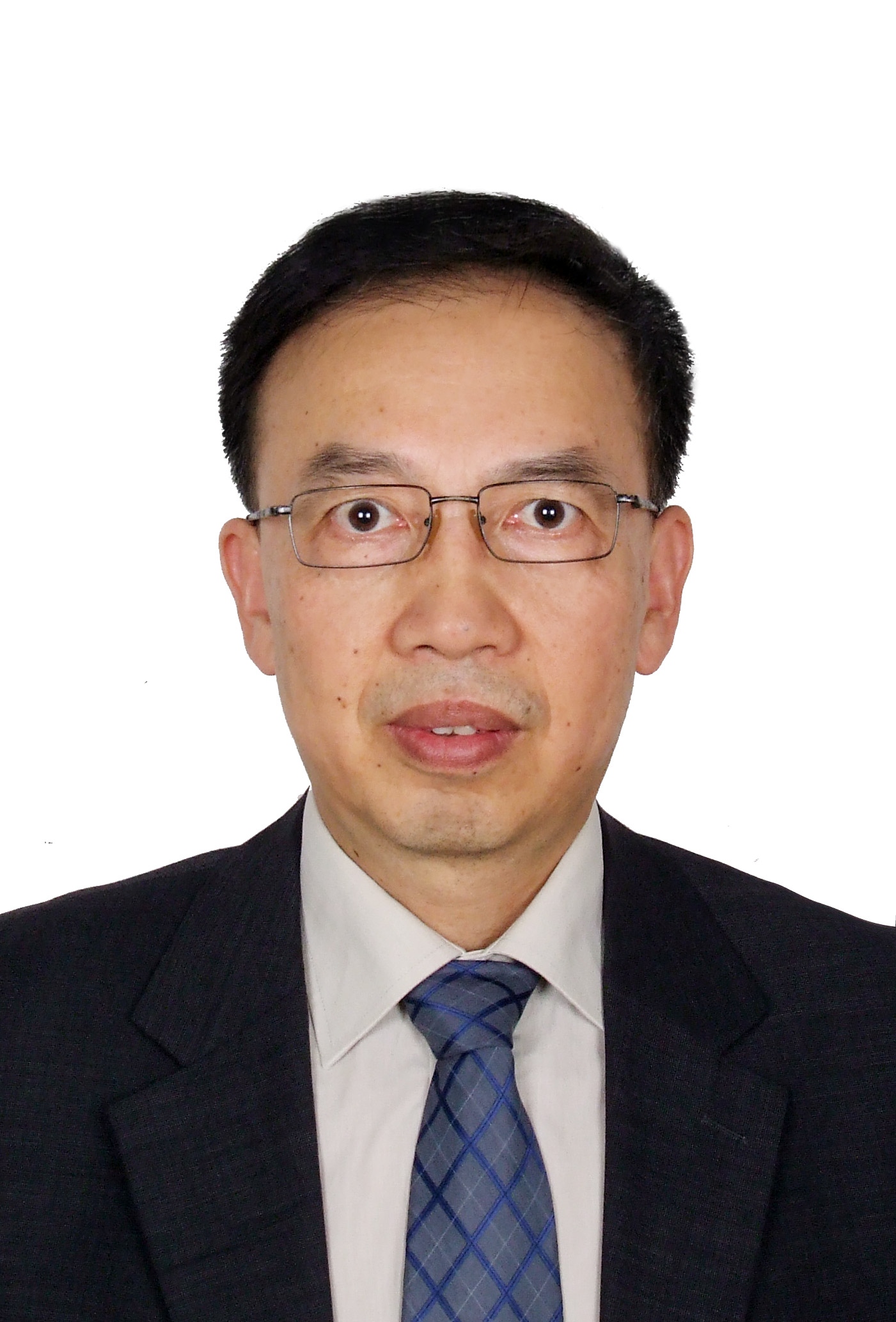 Zhe Chen合作论文数Department of Energy Technology, Faculty of Engineering and Science, Aalborg University5
 Avelino Corma (阿瓦利诺·考玛)合作论文数Instituto Universitario de Investigación Mixto de Tecnología Química, Universitat Politècnica de València5Md Yamin Younis合作论文数4




