Energy production using renewable energies is increasing every year. Amongst them, hydropower is a well-known and established technology. Compared with other renewable energy sources, it is not as dependent on weather and allows for energy storage. These systems require constant monitoring for early fault detection to prevent undesired downtime. Previous reviews focused on single issues such as cavitation or fatigue, or concrete monitoring system. This study expands current knowledge by presenting a comprehensive review of the state-of-the-art in condition monitoring systems applied for hydropower systems, classifying them based on the component monitored (dam, turbine, generator, etc.), the sensing technology applied (vibration, acoustic, etc.), and the issue considered for assessment (cavitation, sedimentation, water hammer, etc.). Furthermore, an analysis of findings is presented, comprehensively discussing the current trends, research gaps, and challenges in this field, followed by a discussion on practical applications and future challenges.
The implementation of unmanned surface vehicles is rising due to technical advances and novel condition monitoring systems to improve seabed exploration. The objective of this paper is to evaluate the economic viability of the USV developed during the ENDURUNS project. The main novelty lies in the evaluation of the viability of novel marine vehicles powered by renewable energy, being a topic not detected in the existing literature. This paper presents a cost analysis of unmanned surface vehicles powered by renewable energy sources developed under the European ENDURUNS and MERLIN projects. The study follows the UNE-EN-60300 standard to assess the life cycle cost, taking into account key expenses and revenues over 10 years. The viability evaluation of the submarine vehicles is performed through Life Cycle Cost analysis simulating two financial scenarios. The study also examines the impact of the discount rate on Net Present Value in comparison to conventional unmanned surface vehicles. The results confirm the economic feasibility of the ENDURUNS and MERLIN vehicle due to the modular design and renewable energy sources. The novel design of the USV developed by the ENDURUNS and MERLIN projects together with the eco-friendly nature of the project adds complexity to the economic analysis compared to other studies. The incorporation of investment costs along with other LCC and the impact of critical parameters such as inflation, to enhance the reliability of the results, is also a novelty in the current state of the art.
Structural health monitoring (SHM) in fiber-reinforced polymer (FRP) composites is essential to ensure safety and reliability during service, particularly in critical industries such as aerospace and wind energy. Traditional methods of analyzing Acoustic Emission (AE) signals in the time domain often fail to accurately detect subtle or early-stage damage, limiting their effectiveness. The present study introduces a novel approach that integrates frequency-domain analysis using the fast Fourier transform (FFT) with deep learning techniques for more accurate and proactive damage detection. AE signals are first transformed into the frequency domain, where significant frequency components are extracted and used as inputs to an autoencoder network. The autoencoder model reduces the dimensionality of the data while preserving essential features, enabling unsupervised clustering to identify distinct damage states. Temporal damage evolution is modeled using Markov chain analysis to provide insights into how damage progresses over time. The proposed method achieves a reconstruction error of 0.0017 and a high R-squared value of 0.95, indicating the autoencoder’s effectiveness in learning compact representations while minimizing information loss. Clustering results, with a silhouette score of 0.37, demonstrate well-separated clusters that correspond to different damage stages. Markov chain analysis captures the transitions between damage states, providing a predictive framework for assessing damage progression. These findings highlight the potential of the proposed approach for early damage detection and predictive maintenance, which significantly improves the effectiveness of AE-based SHM systems in reducing downtime and extending component lifespan.
The viability and competitiveness of wind energy industry require novel maintenance strategies and condition monitoring systems. This work presents a non-destructive testing system formed by acoustic sensors embedded in unmanned aerial vehicles to acquire acoustic signals from rotatory components of the nacelle. The occurrence of several noises increases the complexity of the analysis, requiring different filtering and data processing techniques based on wavelet transform and Butterworth filters. This approach is tested with a real case study with acoustic data acquired by an aerial acquisition system from an operating offshore wind turbine. The absence of faults is solved including recordings from laboratory associated to faults that simulate the main performance of rotatory faults in the nacelle. The results after the processing and filtering process provide clearly differentiated scenarios that demonstrate the viability and reliability of pattern identification using this technology, providing quantitative data about the real state of wind turbines.
The deployment of unmanned surface vehicles is rising, with new technologies and monitoring systems to enhance seabed monitoring. This paper shows a comprehensive cost analysis of an unmanned surface vehicle designed and developed in the European projects called ENDURUNS and MERLIN, which is powered by renewable energies. The study implements the UNE-EN-60300 standard to examine the life cycle cost, considering key expenses and revenues over 10 years and estimating failure rates. Net Present Value is implemented for the economic viability analysis of the vehicle through the simulation of two financial scenarios: the company assumes the investment, or, in another case, it is used as a credit loan. The effect of the discount rate on net present value is studied for unmanned surface vehicles compared to conventional unmanned surface vehicles. The conclusions of this study determine the economic viability of the vehicle in all scenarios, reaching the million euros difference of the same scenario comparing the ENDURUNS/MERLIN vehicle with conventional vehicles.
This study presents a novel methodology for the real-time characterisation and quantitative assessment of damage in fibre-reinforced polymers (FRPs) using acoustic emission (AE) techniques. While FRPs offer superior mechanical properties for structural applications, their anisotropic nature introduces complex damage mechanisms that are challenging to detect with conventional inspection methods. Our approach advances beyond traditional peak frequency analysis by implementing a multi-variant frequency assessment that can detect and evaluate simultaneously occurring damage modes. By applying the fast Fourier transform and examining multiple frequency peaks within AE signals, we successfully identified five distinct damage mechanisms in carbon fibre composites: matrix cracking (100-200 kHz), delamination (205-265 kHz), debonding (270-320 kHz), fibre fracture (330-385 kHz), and fibre pullout (395-490 kHz). A comparative analysis with wavelet transform methods demonstrated that our approach provides earlier detection of critical damage events, with delamination identified approximately 28 s sooner than with conventional techniques. The proposed methodology enables a more accurate quantitative assessment of structural health, facilitating timely maintenance interventions for large-scale FRP structures, such as wind turbine blades, thereby enhancing reliability while reducing operational downtime and maintenance costs.
Railway switches are critical components in the rail system. Operation and maintenance tasks are essential to ensure proper functioning and avoid any failure that can cause delays, reducing operational safety. Data from condition monitoring systems requires advanced analysis tools. This paper presents the analysis of power output data of railway switches. A novel approach is proposed based on statistical analysis techniques combined with Machine Learning techniques to classify power curves by analyzing different sections of the power curves. These curves are studied statistically to classify them into normal and non-normal curves. Then, a dataset is generated with normal and non-normal labelled curves. Shapelets and k-Nearest Neighbour classification algorithms are applied to these data with good results (accuracy, sensitivity and specificity above 88% in each case). As a further analysis, a second dataset with the sectioned curves is done to detect non-normal curves without analyzing the complete curve. For this case study, k-Nearest Neighbour algorithm is able to classify with higher accuracy on the last section of the curve.
The condition of a wind turbine will depend on different elements that compound it.The relationships causeeffects of the different faults can be analysed qualitatively by Fault Tree Analysis (FTA).FTA is a graphical representation of logical relationships between events, where each event has a fault probability associated.In this paper is proposed the quantitatively study of the FTA via Binary Decision Diagram (BDD).BDD is a method which determines the output value of the function by examining the inputs.The BDD method does not analyse the FTA directly, but converts the tree to the Boolean equations that will provide the fault probability of the top event.This conversion presents several problems, where the variable ordering scheme chosen for the construction of the BDD has a crucial effect on its resulting size.It is solved in this paper employing the Level, Top-down-Left-Right, AND, Depth First Search and Breadth-First Search methods for ranking the events (or vertices), and a comparative analysis is done.
The use of autonomous vehicles for marine and submarine work has risen considerably in the last decade. Developing new monitoring systems, navigation and communications technologies allows a wide range of operational possibilities. Autonomous Underwater Vehicles (AUVs) are being used in offshore missions and applications with some innovative purposes by using sustainable and green energy sources. This paper considers an AUV that uses a hydrogen fuel cell, achieving zero emissions. This paper analyses the life cycle cost of the UAV and compares it with a UAV powered by conventional energy. The EN 60300-3-3 guidelines have been employed to develop the cost models. The output results show estimations for the net present value under different scenarios and financial strategies. The study has been completed with the discount rate sensibility analysis in terms of financial viability.
With an emphasis on the combined degradation of railway track geometry and components, an improved numerical approach is proposed for predicting the track geometrical vertical levelling loss (VLL). In contrast to previous studies, this research unprecedentedly considers the influence of unsupported sleepers (US) configuration on VLL under cyclic loadings, elasto-plastic behaviour, and different operational dynamic conditions. The nonlinear numerical models are performed adopting an explicit finite element (FE) package, and their results are validated by field data. The outcomes are iteratively regressed by an analytical logarithmic function that cumulates permanent settlements, and by a power function factor, which innovatively extends the response of US on VLL over a long term. Results shows that at 3 million cycles (or 60 MGT) the worst configuration for 20-ton axle load is at 5 US with 5-mm gap (5,51%), whereas for 30 and 40-ton axle loads is at 5 US with 2-mm gap (1.23% and 0,89%, respectively). This indicates that the axle load affects considerably the VLL as expected, however, the US condition plays an important role to accelerate it. Based on this study, the acceptable configuration of US can be specified for a minimum effect on VLL (thresholds) and, therefore, supports the development of practical maintenance guidelines to prolong the railway track service life.
Additive manufacturing is based on high-precision material deposition to build a final part or component by using various techniques. It is being one of the main advances in the fourth industrial revolution. This type of manufacturing is not new, although it is growing. There are many types of additive manufacturing techniques, and the use of efficient inspection methods to ensure a certain level of quality, and to detect faults, porosities, etc., are required in the industry. Nondestructive Testing is widely applied, and particularly in additive manufacturing, to ensure efficient quality control and preventive/predictive maintenance without changing the characteristics and initial state of the material. Each Nondestructive Testing technique is based on different physical principles; therefore, the selection and correct use of each technique depends on the application, the manufacturing process, the type of material and the possible discontinuities, among many others. This article develops a complete, exhaustive, and updated review and analysis of the state of the art of Nondestructive Testing applied in additive manufacturing. The main characteristics of the processes are analyzed, highlighting the most relevant works and the challenges that each technique should face. An analysis of techniques necessary for the development of Nondestructive Evaluation has been carried out, mainly Machine Learning techniques used for the quantification, detection and analysis of defects detected by Nondestructive Testing techniques.
The autonomous marine vehicles development has a grow demand by offshore industries. The multiple facilities implemented in this environment requires the evolution of this devices for several task as survey, maintenance or monitorization. The technology complexity of this devices requires great efforts in economics and resources to innovate. In this line, the ENDURUNS project purposes to design an autonomous marine system capable to performance a long endurance during the missions due to the employment of renewable energies for its vehicles. The evaluation of the project life cycle represents an important task for the project management. In this article, it is exposed the three different project life cycle aspects. The aspect analyzed are the social life cycle assessment, the life cycle cost and the life cycle assessment. It has been applied the corresponding standards in the European context to develop each methodology and to obtain the results. Thus, this work brings an approach about the environment, economic and social impact of this project. The results presented from this study can be considered for practitioners for future research in marine mobility field, due to the sustainability characteristics of the project analyzed.
The use of the autonomous vehicles for marine and submarine works has evolved considerably in the last decade. The appearance of new imaging, navigation and communications technologies allow large operability possibilities. The Autonomous Underwater Vehicles are used currently for several offshore missions and applications. There exists some innovative purposes in the line of the sustainable development and green energy mobility. ENDURUNS project is an European research initiative in the framework of “Horizon 2030” with the aim of seabed survey. The novelty of this project is the use and implementation of renewable energy (Hydrogen Fuel Cell) for the underwater vehicle developed, achieving the zero emissions objective. This paper analysed the product environmental management using the Life Cycle Assessment methodology, ISO 14040. This analysis reports different values of Damage and Environmental Impact. The Eco-Indicator 99 method is employed with the SimaPro software. The results obtained from the analysis are used to evaluate the Life Cycle environmental impact.
Railway turnouts are essential in the train traffic route management for modern railways. Despite significant devotion to railway turnout research, one of their most common failures has not been thoroughly investigated, which is a fatigue over the turnout crossing nose. At the crossings, wheel-rail discontinuity imparts high-frequency high-magnitude forces, which are the source of fatigue failure over the crossing nose. In this study, a novel approach built on “Peridynamics” (PD) has been developed to obtain new insights into the fatigue cracks. A recent approach using “crack on mid-plane” has also been employed in this study to enhance the limited capability of Peridynamics. This paper is the world’s first to investigate fatigue failures over a crossing nose from fracture mechanics perspective. This paper also introduces a novel adaptive time-mapping method as an alternative to earlier time-mapping methods for fatigue models proposed in the open literature. The new model has been verified against both Finite Element Method and experimental data. It reveals that our new approach can simulate fatigue damage, particularly in mode I crack propagation. The study has provided important insights on the fatigue crack development, which is not possible before by existing Peridynamics fatigue model. The new approach on the basis of “adaptive time-mapping” and “crack on mid-plane” is demonstrated to be effective and efficient in PD simulations.
This Special Issue covers research in Artificial Intelligence in Marine Science and Engineering and shows how to apply it to many different professional areas, e [...]
Undersea terrain and resource exploration missions using autonomous underwater vehicles (AUVs) require a great deal of time. Therefore, it is necessary to monitor the state of the AUV in real time during the mission. In this paper, we propose an online health-monitoring method for AUVs using fault-tree analysis. The entire system is divided into four subsystems. Fault trees of each subsystem are designed based on the information of performance and reliability. Using the given subsystem fault trees, the health status of the entire system is evaluated by considering the performance, reliability, fault status, and weight factors of the parts. The effectiveness of the proposed method is demonstrated through simulations with various scenarios.
Rail defects such as fatigue cracks have been one of the leading root causes of a number of derailments in the past. Cracks that initiate and propagate below the surface are difficult to detect using traditional non-destructive testing (NDT) methods. Acoustic emission (AE) is a more effective method for detecting and monitoring crack growth in rails online. This study investigates the applicability of AE for quantifying damage propagation in austenitic cast manganese steel used in manufacturing railway turnouts. The relationship between AE and crack growth rate in austenitic cast manganese steel samples that were fatigue tested in a three-point bending configuration was investigated by evaluating the AE activity with respect to direct current potential drop (DCPD) measurements and scanning electron microscopy (SEM) fractographic analysis of the tested samples. From the results obtained, it was not possible to observe a clear relationship between AE activity and the actual crack growth rate. Based on the SEM fractographic analysis, this is likely due to the plasticity occurring at the tip of the fatigue crack in the tested samples. This is plausible since the cast manganese steel samples had been cut off from a plate that had not been previously work hardened. The effect of carbides present in the microstructure is an additional contributing factor. Further tests should be carried out on cast manganese steel samples that have been work hardened prior to fatigue testing.
The growth of industrial activities in marine environment motivates the innovation and adaptation of different technologies. The development of these installations requires the use of specific devices and tools. In this line, the use of autonomous marine brings an outstanding support in several fields. One of the most common uses of them are the monitorization and mapping works in high deeps or complex situations. The remote control by the operators supposes a great advantage to avoid personal or economic losses. However, these vehicles present some deficits in other fields as the power endurance, communications or versatility configuration. The current trends in mobility devices motivate the improvement of these points. ENDURUNS Project develops an innovative green energy system for the offshore inspections with the aim to use renewable resources. This article exposes the main advancements developed in this project regarding the current technologies in different fields. It will be exposed a resume of the novel vehicles powered systems employed. Also, it is presented the approach for the communications systems developed, given the implementation importance of the real-time remote-control. These improvements will place this project in the forefront of the marine survey technologies.
In the past few decades, with the great progress made in the field of computer technology, non-destructive testing, signal and image processing, and artificial intelligence, machine condition monitoring and fault diagnosis technology have also achieved great technological progress and played an active and important role in various industries to ensure the efficient and reliable operation of machines, lower the operation and maintenance costs, and improve the reliability and availability of large critical equipment [...]
In the last years, the interest for offshore areas exploitation has been increased and the marine industry has been experiencing a great growth. These facts motivate the employment of autonomous marine vehicles for monitorization, survey or maintenance works. In this paper, the ENDURUNS project has been proposed. This European initiative develops a sustainable offshore exploration system-based innovation in two coordinated autonomous marine vehicles (surface and underwater vessels), both powered by renewable energies. This project involves great technical challenges due to the goal of zero emission performance. The communications' infrastructures are an important milestone to achieve a real time monitoring of the system by the user from the remote-control centre. The energy systems employed (solar photovoltaic and hydrogen fuel cell technologies) bring a distinguishing point with regards to the current marine vehicles market. Finally, the sensors and instrumentation implemented in these vehicles allow a high inspection capacity, where all of these are supported by a complex software customization.
 Fausto Pedro García Márquez合作论文数Supper Technical School of Industrial Engineers, Universidad de Castilla-La Mancha;University of Birmingham;INTI International University&Colleges;Ingenium52
 Sakdirat Kaewunruen合作论文数Department of Civil Engineering, College of Engineering and Physical Sciences, University of Birmingham;Birmingham Centre for Railway Research and Education, University of Birmingham25
 Claire Davis合作论文数Advanced Manufacturing & Materials Centre, WMG, University of Warwick22
 Pedro Bernalte Sanchez合作论文数14
 Valter Luiz Jantara Junior合作论文数Sch Met & Mat, Univ Birmingham14
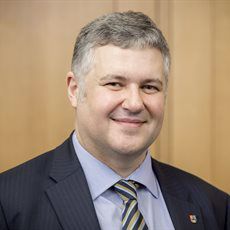 Clive Roberts合作论文数School of Engineering, College of Engineering and Physical Sciences, University of Birmingham14
 Martin Strangwood合作论文数School of Metallurgy and Materials, College of Engineering and Physical Sciences, University of Birmingham13
 Isaac Segovia Ramirez合作论文数Ingenium Research Group, Universidad de Castilla-La Mancha12
 Anthony Peyton合作论文数Division of Informatics, Imaging & Data Sciences, School of Health Sciences, Faculty of Biology, Medicine and Health, The University of Manchester11
 Mani Entezami合作论文数Sch Engn, Univ Birmingham10
 Alberto Pliego Marugán合作论文数Univ Castilla La Mancha, Ingenium Res Grp, E-13071 Ciudad Real, Spain9
 Mehmet Hamarat合作论文数8
 Jesús María Pinar-Pérez合作论文数CUNEF Univ8
 Arash Amini合作论文数Electrical engineering department;Sharif University of Technology;Electrical engineering department, Sharif University of Technology8
 Sanaz Benyamina Roshanmanesh合作论文数Sch Engn, Univ Birmingham7
 Simone Marini合作论文数Institute of Marine Science Ismar, Italian National Research Council7Patrick Vallely合作论文数6
 Carlos Quiterio Gómez Muñoz合作论文数Castilla La Mancha Univ, Ingenium Res Grp, Ciudad Real, Spain6
 Stuart Hillmansen合作论文数Department of Mechanical Engineering, Imperial College6
 Maria Kogia合作论文数5r binns合作论文数5
 Liang Cheng合作论文数Sch. of Autom. Eng., Univ. of Electron. Sci. & Technol. of China;c;Sch. of Autom. Eng., Univ. of Electron. Sci. & Technol. of China5
 Farzad Hayati合作论文数5M. Lugg合作论文数5Andre L. O. de Melo合作论文数4Andre Luis Oliveira De Melo合作论文数4
 Abbas Mohimi合作论文数Brunel Innovat Ctr, Brunel Univ London4
 Shashank Govindaraj合作论文数4
 Hanshan Dong合作论文数School of Metallurgy and Materials, University of Birmingham4Mika Silvast合作论文数3Alfredo Arcos Jiménez合作论文数3
 Zheng Huang合作论文数3
 Chayut Ngamkhanong合作论文数Dept Civil Engn, Chulalongkorn Univ3
 Weston, P.F.合作论文数3
 Selcuk Cem合作论文数3Hector Basoalto合作论文数Department of Materials Science and Engineering, Faculty of Engineering, The University of Sheffield3
 Andrew M. Tobias合作论文数3Zhiyuan Han合作论文数3
 Vassilios Kappatos合作论文数Electrical Engineering Department, University of Patras3Tat Hean Gan合作论文数2F. Hayati合作论文数2B Blakeley合作论文数2Thibaud Gobert合作论文数2S. Kerkyras合作论文数2P Weston合作论文数2Nikolaos Angelopoulos合作论文数2Andrew R. Clark合作论文数2Nikolla Gjeci合作论文数2M. Kongpuang合作论文数2




