Embodied Cognition suggests that cognitive processes are deeply rooted into our bodily morphology and its sensorimotor interactions with the environment. Evolutionary Embodied Cognition suggests that our cognitive abilities are inscribed within the evolutionary trajectory of our dynamic bodily architectures. This paper extends the framework of Evolutionary Embodied Cognition, by combining it, for the first time, with the Endurance Running Hypothesis, which suggests that our bodily morphology has been massively shaped by an evolutionary history in which our ancestors’ ability to run played a crucial role. We analyze several pieces of anatomical, physiological, biomechanical, neurobiological and neurochemical evidence, in line with the Endurance Running Hypothesis, to extend Evolutionary Embodied Cognition to the case of running. We build a framework suggesting a special link between the bodily, motoric capacity of endurance running, and a particular set of our cognitive abilities, so as to show a special relation between running and the mind, via body and brain.
The immune system (IS) is commonly understood as a system composed of specific cells and tissues that have evolved to contrast pathogens and defend the host. By virtue of this capacity, it has come to be considered capable of making an essential distinction, that between self versus non-self, which would contribute to a clear identity of the organism. However, in the wake of evolution and ecology, growing evidence suggests that the so-called immune system, which also evolved from symbiotic interactions with external agents, is not just a defensive system that merely protects the organism but, on the contrary, is involved in many global regulatory and homeostatic functions. Moreover, in performing these many functions, IS is not only an ensemble of host cells and tissues but functionally is constitutively determined by the interaction with a set of associated microorganisms, that is, the human microbiome. In this scenario, it is open-and-shut that the microbiome itself is a functional part of this extended immune system. Organisms and microbiomes together, therefore, form a functional whole, which constitutes a privileged form of biological organization. In light of this evidence showing the inadequacy of traditional accounts, we propose to extend and supplement the current IS conceptualization by introducing the notion of the symmunobiome. With this term, we intend to characterize the microbiome's own and unavoidable component to overall immune functionality. Therefore, we suggest a new immune system determination, articulated in three linked pillars—adaptive immunity, innate immunity, and symmunobiome—to better grasp the diverse functionality of extended immunity.
We aim to foster a discussion of science correction and of how individual researchers can improve the quality and control of scientific production. This is crucial because although the maintenance of rigorous standards and the scrupulous control of research findings and methods are sometimes taken for granted, in practice, we are routinely confronted with articles that contain errors.
Scientific and philosophical accounts of cognition and perception have traditionally focused on the brain and external sense organs. The extended view of embodied cognition suggests including other parts of the body in these processes. However, one organ has often been overlooked: the gut. Frequently conceptualized as merely a tube for digesting food, there is much more to the gut than meets the eye. Having its own enteric nervous system, sometimes referred to as the “second brain,” the gut is also an immune organ and has a large surface area interacting with gut microbiota. The gut has been shown to play an important role in many physiological processes, and may arguably do so as well in perception and cognition. We argue that proposals of embodied perception and cognition should take into account the role of the “gut complex,” which considers the enteric nervous, endocrine, immune, and microbiota systems as well as gut tissue and mucosal structures. The gut complex is an interface between bodily tissues and the “internalized external environment” of the gut lumen, involved in many aspects of organismic activity beyond food intake. We thus extend current embodiment theories and suggest a more inclusive account of how to “mind the gut” in studying cognitive processes.
We argue that microbiome research should be more reflective on the methods that it relies on to build its datasets due to the danger of facing a methodological problem which we call "epistemic misalignment." An epistemic misalignment occurs when the method used to answer specific scientific questions does not track justified answers, due to the material constraints imposed by the very method. For example, relying on 16S rRNA to answer questions about the function of the microbiome generates epistemic misalignments, due to the different temporal scales that 16S rRNA provides information about and the temporal scales that are required to know about the functionality of some microorganisms. We show how some of these exist in contemporary microbiome science and urge microbiome scientists to take some measures to avoid them, as they may question the credibility of the field as a whole.
In this manuscript, we explore the potential therapeutic use of helminths. After analyzing helminths' role in connection with human health from the perspective of their symbiotic and evolutionary relationship, we critically examine some studies on their therapeutic applications. In doing so, we focus on some prominent mechanisms of action and potential benefits, but also on the exaggerations and theoretical and methodological difficulties of such proposals. We conclude that further studies are needed to fully explore the potential benefits of this perspective, and we encourage the scientific community in doing so.
AbstractThe study of the interactions between the neuroendocrine and immune systems is a highly interdisciplinary research endeavor, in which the boundaries between the systems being studied become blurred. We address a common scientific perspective in dealing with intertwined complex systems, namely the conceptual approach in science that treats each system (e.g., nervous, immune, endocrine systems) as separate units or “building blocks” with unique functions that correspond to specific structures. While there are merits to this way of decomposing complex systems, there are several reasons why such an approach is limited when trying to recompose a physiological system that is engaged in intricate co-functioning and that is the result of co-development, and co-evolution, not just between these systems, but with the gut microbiota as well. Our suggestion is to take an alternative ecological evolutionary developmental approach to the neuro-endocrine-immune-microbiota system (NEIMS) as a whole, which can serve as complementary to the predominant building block perspective.KeywordsBiological systems gutMicrobiotaNeuroimmune interactionsPhilosophy of science
Individuating the logic of scientific discovery appears a hopeless enterprise. Less hopeless is trying to figure out a logical way to model the epistemic attitude distinguishing the practice of scientists. In this paper, we claim that classical logic cannot play such a descriptive role. We propose, instead, one of the three-valued logics in the Kleene family that is often classified as the less attractive one, namely Hallden’s logic. By providing it with an appropriate epistemic interpretation, we can informally model the scientific attitude.
A general view in philosophy of science says that the appropriateness of an object to act as a surrogate depends on the user's decision to utilize it as such. This paper challenges this claim by examining the role of surrogative reasoning in high-throughput sequencing technologies (technology-driven surrogates) as they are used in contemporary microbiome science. Drawing on this, we argue that, in technology-driven surrogates, knowledge about the type of inference practically permitted and epistemically justified by the surrogate constrains their use and thus puts a limit to the user's intentions to use any object as a surrogate for what they please. Ignoring this leads to a serious epistemic misalignment, which ultimately prevents surrogative reasoning. Thus, we conclude that knowledge about the type of surrogate reasoning that the technologies being used allow is fundamental to avoid misinterpreting the consequences of the data obtained with them, the hypothesis this data supports, and what these technologies are surrogates of.
Cancer is a primary cause of death globally. Surgery, chemotherapy, and radiotherapy were the most common types of cancer treatment available for a long time but not resolutive. To date, significant advancements in cancer immunotherapy has become of huge interest because of its promise for revolutionizing tumor therapy, with reduced risk of adverse events compared to the conventional therapies. Immunotherapy is a treatment that activates or suppresses the host-immune responses. However, an intricate network of dynamics, involving host and environmental factor can influence the individual immune response. Between them, the "microbiome" has currently acquired growing consideration because of its emerging role as modulator of the immune response. In this context, the potential therapeutic utility of directly manipulating commensal microbiota could be an approach to enhance the efficacy of cancer immunotherapy. In that connection, it is important to discuss how the microbiota will reshape our approach to cancer immunotherapy, introducing the concept of "holobiont." Finally, the full comprehension of the holobiont as the privileged biological unit to study the immune response urges the need of an approach capable of encompassing the "whole eco-immune system."
In the framework of symbiotic associations, the so-called “holobiontic” perspective has increasingly emerged, according to which animals and plants should no longer be considered as autonomous entities, delimited by clear boundaries, but should rather be seen as functional units, consisting of inter-relational networks of different species. From this perspective, the functions that were previously ascribed to a single component, must be updated in the light of this relational perspective and rather judged as a product of the functional unit, that is, the holobiont. In a functionalist perspective, the famous conception of the extended mind investigates the hypothesis that the vehicle of cognition can extend not only outside the brain but also beyond the limits of the body, through artificial devices. The present work aims to offer a variant of the extended theory of mind not only as a theoretical possibility but also in accordance with some recent developments in biological and biomedical research. It will therefore be argued that the activity of the human microbiota (bacteria living in associations with the human species) plays a functional role in the regulation of our cognitive processes suggesting that the microbiota constitutes a functional extension of the cognitive system previously described as “human”. The revision and extension of the biological individual in favor of the holobiont as a functional unit (therefore the true creator of cognitive functions) also leads to the need to update the boundaries of the individual as a cognitive agent.
The COVID-19 pandemic is not just a medical and epidemiological problem. In fact, its impact concerns numerous aspects of human life (such as social and the political-economic dimension). This review aims at highlighting some crucial and neglected aspects of the pandemic in order to include them into a more general framework for the understanding of the phenomenon. Accordingly, it is structured as follows. First, after e brief recap of COVID-19 onset, it is argued the so-called proximate causes of the pandemic, i.e., the mechanisms by which viruses infect their hosts and the patterns of spread of the resulting pathologies, are not enough for a more adequate understanding of it. Second, it is shown how possible solutions to the risk of an upcoming pandemic involve studying the ultimate causes of this phenomenon. This means understanding not only how COVID-19 has become a global issue but also why it was possible for this to happen. Next, it is argued that is urgent to go to the root of the possible conditions: thus looking at the ecological dimension of diseases, the role of microorganisms in evolution, up to rethinking the organization of health systems. Third, to keep these very different perspectives together entails the study of COVID-19 from the point of view of the relationships between biological entities in a purely systemic dimension. Fourth, special attention is given to the symbiotic perspective offered by the study of the microbiota. It is argued how this perspective on microbiota provides an innovative interpretative lens with which to analyze various aspects (from the immunological to the ecosystemic one) of the pandemic. In conclusion, it is claimed that this field of study could perhaps offer not only elements that will be useful to make the treatment and containment strategies of the pandemic effective in its mechanisms, but also may suggest innovative elements for the solutions about the deep reasons that have made COVID-19 a global issue.
In the framework of symbiotic associations, the so-called "holobiontic" perspective has increasingly emerged, according to which animals and plants should no longer be considered as autonomous entities, delimited by clear boundaries, but should rather be seen as functional units, consisting of inter-relational networks of different species. From this perspective, the functions that were previously ascribed to a single component, must be updated in the light of this relational perspective and rather judged as a product of the functional unit, that is, the holobiont. In a functionalist perspective, the famous conception of the extended mind investigates the hypothesis that the vehicle of cognition can extend not only outside the brain but also beyond the limits of the body, through artificial devices. The present work aims to offer a variant of the extended theory of mind not only as a theoretical possibility but also in accordance with some recent developments in biological and biomedical research. It will therefore be argued that the activity of the human microbiota (bacteria living in associations with the human species) plays a functional role in the regulation of our cognitive processes suggesting that the microbiota constitutes a functional extension of the cognitive system previously described as "human". The revision and extension of the biological individual in favor of the holobiont as a functional unit (therefore the true creator of cognitive functions) also leads to the need to update the boundaries of the individual as a cognitive agent.
According to a shared functionalist view in philosophy of mind, a cognitive system, and cognitive function thereof, is based on the components of the organism it is realized by which, indeed, play a causal role in regulating our cognitive processes. This led philosophers to suggest also that, thus, cognition could be seen as an extended process, whose vehicle can extend not only outside the brain but also beyond bodily boundaries, on different kinds of devices. This is what we call the ‘ Externally Extended Cognition Thesis .’ This notion has generated a lively debate. Here, we offer a novel notion of extended cognition, according to which cognition can be seen as being realized (and expanded) outside the brain, but still inside the body. This is what we call the ‘ Internally Extended Cognition Thesis ’. Not only our thesis but also our approach while defending it is innovative. The argument we offer is supported by recent empirical findings in the life sciences and biomedicine, which suggest that the gut microbiota’s activity has a functional role in regulating our cognitive processes and behaviors. In doing so, we embrace the holobiont-perspective , according to which it is possible to claim that what we call biological individuals are not autonomous entities with clear boundaries, but should rather be seen as networks of multiple interactions among species. Thus, by analyzing different sets of evidence in light of the holobiont-perspective , we argue that the gut microbiota could be seen as a component of our organism. On the basis of the philosophical interpretation of this evidence, however, we also suggest that there are no impediments standing the way of considering the gut microbiota also as a functional extension of our cognitive system. If so, this amounts to extending cognition out of ‘our skull’, though still confining it within ‘our body’: to ‘our gut’. This is an instance of the ‘ Internally Extended Cognition Thesis ,’ whose benefits for an original (biologically informed) theory of extended cognition are discussed.
Making public policy choices (especially on health issues) based on available scientific evidence is an ideal condition for any policy making. However, the mechanisms governing these scenarios are complex, non-linear, and, alongside the medical-health and epidemiological issues, involve socio-economic, political, communicative, informational, ethical and epistemological aspects. In this article we analyze the role of scientific evidence when implementing political decisions that strictly depend on it, as in the case of the COVID-19 pandemic. In carrying out this analysis, we will focus above all on the Italian case. This, on the one hand, precisely because Italy led the way (among European countries) regarding the containment policies of the pandemic. Secondly, the government's action was immediately criticized in various respects (specifically, by a publication on the Harvard Business Review, but later on also by various political figures and experts of various research fields). Some were calling into question not only the cumbersome political mechanisms, but also suggesting a scarce ability to take scientific evidence into account. On other fronts, there are those who have criticized Italy for its blind and uncritical faith in science and for the paternalism of its decisions. This debate therefore offers the possibility of dealing with some aspects concerning scientific results and their implementation at the political level from the point of view of a political philosophy of science, roughly in the spirit suggested by John Dupre (2016).
 Amedeo Amedei合作论文数10
 Emanuele Ratti合作论文数European Institute of Oncology, and University of Milan6
 Javier Suárez合作论文数3
 Gregor P Greslehner合作论文数Dept Philosophy, Univ Vienna3
 Russo Edda合作论文数3
 Giovanni Boniolo合作论文数University of Milan3ewelina sokolowska合作论文数2eva fernandezlabandera合作论文数2
 Gaelle Pontarotti合作论文数2
 Lynn Chiu合作论文数University of Versailles-Saint-Quentin, University of Paris-Saclay2
 Matteo Galletti合作论文数2Giulia Nannini合作论文数2
 Mattia Andreoletti合作论文数Dipartimento di Scienze della Salute, Universita' di Milano, Italy2
 Stefano Bonzio合作论文数Univ Cagliari, Cagliari, Italy2
 James DiFrisco合作论文数Institute of Philosophy, University of Leuven2Silvano Zipoli Caiani合作论文数2
 Elena Niccolai合作论文数Department of Internal Medicine, University of Florence2
 Gaoussou Camara合作论文数Université&BIO, Universitéé Paris2
 Eric Chuk合作论文数2
 Aleksandra Sojic合作论文数European Institute of Oncology, and University of Milan2Francesca Quattri合作论文数2
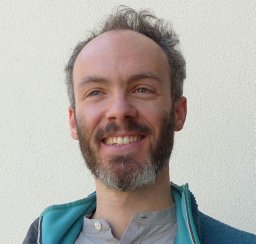 Emilio M. Sanfilippo合作论文数Institute for Formal Ontology and Medical Information Science, University of Saarland2Jan Pieter Konsman合作论文数2Judith Carlisle合作论文数1Ingrid Lamminpää合作论文数1Salome Rodeck合作论文数1
 Lavinia Curini合作论文数1Joana Formosinho合作论文数1Saliha Bayir合作论文数1Maha Said合作论文数CNRS, Univ Paris Saclay1
 Oryan Zacks合作论文数Cohn Inst Hist & Philosophy Sci & Ideas, Tel Aviv Univ1
 Jacqueline M Wallis合作论文数Dept Philosophy, Univ Bristol1
 Armando Sacco合作论文数Dept Management & Quantitat Studies, Univ Naples Parthenope1Cybèle Prigot-Maurice合作论文数1Isobel Ronai合作论文数1Mustafa Gharib合作论文数1
 Gabriele Ferretti合作论文数Dept Philosophy, Univ Florence1
 Barbara Osimani合作论文数1
 Germain Pierre-Luc合作论文数Università degli Studi di Milano and European Institute of Oncology (IEO), Campus IFOM-IEO, Via Adamello, 16, 20139, Milan, Italy, pierre.germain@ieo.eu.1
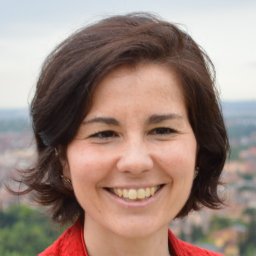 Marta Bertolaso合作论文数Institute of Philosophy of Scientific and Technological Practice, University Campus Bio-Medico Rome1
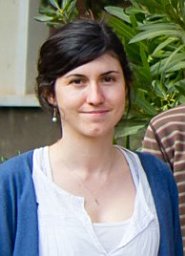 Marie Vasse合作论文数Inst Integrat Biol, Swiss Fed Inst Technol1
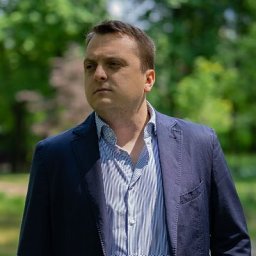 Stencel A合作论文数Institute of Environmental Sciences, Jagiellonian University1
 Giacomo Emmi合作论文数Ospedale Universitario Cattinara1
 Raphaël Lévy合作论文数University Paris Sorbonne Nord1




