Iterative learning control (ILC) has been widely applied to urban traffic signal control due to the repetitive characteristics of traffic flow. However, the convergence speed of ILC is highly dependent on the selection of learning gains, which are usually chosen as constants in practical applications. To address this limitation, this paper proposes a gain optimization method for PD-type ILC based on the whale optimization algorithm. By optimizing the learning gains according to tracking error information during the iterative process, the proposed method improves convergence behavior while preserving the original PDILC structure. Simulation experiments are conducted in VISSIM on a realistic urban road network under different disturbance conditions. Comparative results with constant-gain PDILC and particle-swarm-optimization-based PDILC demonstrate that the proposed method achieves faster convergence and lower tracking error, validating its effectiveness for urban traffic signal control.
Reconstruction-based methods, while widely used for anomaly detection (AD), often suffer from the "identity shortcut" (IS) problem, in which anomalous regions are "perfectly" reconstructed, severely compromising detection reliability. Moreover, most methods remain vulnerable to contamination when deriving prototypes directly from input defective images. To address these limitations, we propose ComNet, a new complementary prototypes–guided reconstruction framework for multi-class AD. ComNet introduces a dual-path prototype guidance mechanism consisting of: 1) a Difference-driven Prototype Filter that adaptively identifies and excludes anomalous regions from input images to ensure clean and aligned prototypes extraction; and 2) a Class-Related Memory Bank that stores normal features and applies them to generate prototypes for restoring semantic information lost due to large defects. Furthermore, we design a distance-aware attention that modulates attention scores based on spatial proximity to alleviate IS. ComNet achieves state-of-the-art performance, yielding improvements of +16.1% p-AP on MVTec-AD, +13.1% p-AP on VisA, and +10.9% p-AP on Real-IAD, demonstrating ComNet’s strong effectiveness in multi-class AD.
Along with the rapid growth of multimedia data, existing deep clustering methods often rely on autoencoders (AE) to extract feature embeddings for subsequent clustering. However, these methods tend to capture only the predominant characteristics of each sample, ignoring potential inter-sample relationships and true assignments. To address this limitation, we propose a enhancing deep fuzzy K-means clustering with pseudo-category features (DFKMP). Our method employs a fully connected network, P-Net, to extract pseudo-category features from the data and constructs a pseudo-graph to depict sample correlations. To avoid the impact of non-transitivity in the pseudo-graph, we introduce a pseudo-label supervised feature learning process. This enables DFKMP to obtain suitable feature embeddings for fuzzy clustering. Experimental results on six benchmark datasets demonstrate that DFKMP significantly outperforms prevailing fuzzy clustering techniques across different evaluation metrics, achieving notable gains in accuracy, purity, and normalized mutual information. Our work highlights the potential of integrating pseudo-category features into deep fuzzy clustering to enhance performance and capture complex data relationships. Codes are available https://github.com/hlf-art/DFKMP .
This study targets Encoder-Decoder architectures acceleration for semantic segmentation. Although deep neural networks have shown superior performance in image segmentation tasks, their substantial model size and high computational complexity limit their application in real-time processing and resource-constrained devices. To tackle this issue, pruning techniques have been developed to compact Encoder-Decoder networks. However, most current pruning methods are designed for classification tasks, rendering them challenging to achieve satisfactory results on fine-grained demands of segmentation tasks. Additionally, these methods only consider the filters’ global average contribution to each class, which can compromise model sensitivity to minority classes. To solve this issue, we propose a multi-level online group pruning method. Our method identifies and preserves the most discriminative filters for critical minority classes, ensuring that the pruned network can still accurately segment these underrepresented categories. Consequently, it fosters a more balanced and fair segmentation performance across all classes.We evaluated our method on two popular image segmentation datasets, i.e., Camvid and Cityscapes. After pruning 93% of parameters in trendy Encoder-Decoder networks, our method achieves noteworthy IoU gains for the minority classes, e.g., 6.5% for Pole on Camvid and 4.7% for Fence on Cityscapes, over state-of-the-art online pruning methods, while still maintaining comparable or superior performance for majority classes.
Current CNN-based segmentation methods can offer fine-grained lane detection results, effectively capturing subtle variations in lane lines. However, CNNs treat each pixel equally in the image, which may not effectively highlight lane line features. This is particularly evident in complex scenarios (e.g., severe occlusions, insufficient brightness, etc.), where the detected lane lines may be discontinuous and inaccurate. This paper proposes CLDNet, a deep learning model dedicated to continuous lane detection, aiming to address these challenges and achieve accurate and robust lane detection in various driving environments. CLDNet incorporates a Continuous Lane Feature Extraction (CLFE) module to refine the output of the backbone network, which comprises two key sub-modules: Hybrid Residual Fusion (HRF) and Differential Feature Aggregation (DFA). Additionally, to effectively decode the enhanced features, CLDNet integrates an Adaptive Dual-branch Decoder (ADBD), which precisely recovers high-resolution feature details for lane line prediction. Extensive experiments on the CULane and TuSimple datasets demonstrate that our method achieves superior results compared to existing state-of-the-art models, particularly in handling complex driving scenes.
Traffic volume estimation is a fundamental task in Intelligent Transportation Systems (ITS). The highly unbalanced and asymmetric spatiotemporal distribution of traffic flow combined with the sparse and uneven deployment of sensors pose significant challenges for accurate estimation. To address these issues, this paper proposes a novel traffic volume estimation framework. It combines a dynamic adjacency matrix Graph Convolutional Network (GCN) with a multi-scale transformer structure to capture spatiotemporal correlation. First, an adaptive speed-flow correlation module captures global road correlations based on historical speed patterns. Second, a dynamic recurrent graph convolution network is used to capture both short- and long-range correlations between roads. Third, a multi-scale transformer module models the short-term fluctuations and long-term trends of traffic volume at multiple scales, capturing temporal correlations. Finally, the output layer fuses spatiotemporal correlations to estimate the global road traffic volume at the current time. Experiments on the PEMS-BAY dataset in California show that the proposed model outperforms the baseline models and achieves good estimation results with only 30% sensor coverage. Ablation and hyperparameter experiments validate the effectiveness of each component of the model.
Designing an efficient and accurate anomaly detection method is crucial for quality control in medical products, particularly for identifying tiny and complex anomalies such as fur anomalies in medical syringes. In recent years, unsupervised anomaly detection methods based on reverse knowledge distillation have shown superior results. However, these methods suffer from the inability to prevent anomalous information from flowing through the student decoder during inference, leading to incorrect segmentation of abnormal areas. To address this issue, we propose a Multi-directional Feature Aggregation for unsupervised fur Anomaly Detection (MFAAD) method. Firstly, we design a Multi-directional Feature Aggregation (MFA) module, which consists of iterative feature shifting and aggregation operations. Each pixel in the feature map after being processed by the MFA module can acquire global pixel information, enhancing normal feature information while weakening abnormal ones, thereby blocking anomalous information from flowing through the student decoder. Additionally, we design a pseudo-anomaly mechanism based on the B-spline curve to generate line-like pseudo-anomalies, which guides the optimization of the MFA module. In the student decoder, we incorporate a Deep Hybrid Attention Module (DHAM) to enhance the feature extraction capabilities of the student decoder under complex scenarios. Our method achieves superior results of 100 https://github.com/beibeifanfan/MFAAD
Industrial visual inspection plays a crucial role in intelligent manufacturing. However, existing anomaly-detection methods based on unsupervised learning paradigms often struggle with issues such as overlooking minor defects and blurring component edges in confidence maps. To address these challenges, this paper proposes an industrial anomaly-detection method based on component-level feature enhancement. This method introduces a component-level feature-enhancement module, which optimizes feature matching by calculating the structural similarity between global coarse-grained confidence features and local fine-grained confidence features, thereby generating enhanced feature maps to improve the model’s detection accuracy for minor defects and local anomalies. Additionally, we propose a region-segmentation method based on multi-layer piecewise thresholds, which effectively distinguishes between foreground and background in confidence maps, circumvents background interference and ensures the integrity of structural information of foreground components. Experimental results demonstrate that the proposed method surpasses comparative methods in both logical and structural defect detection tasks, showing significant advantages, especially in fine-grained anomaly detection, with stronger robustness and accuracy.
Graph-based multi-view clustering techniques are widely praised in many clustering tasks for their outstanding performance. The weakness of most existing graph-based multi-view clustering methods is that they tend to generate skewed clusters, which may contain few samples or even only outliers when large overlaps among clusters appear. In this case, the consistent information extracted from multiple views may be biased, potentially misguiding the multi-view clustering procedure and resulting in degraded clustering performance. Besides, conventional graph-based multi-view clustering methods usually employ spectral relaxation to optimize the graph cut problem. This solution may contain mixed signs, requiring additional clustering methods, such as K-means, to get the final results. However, this process may lead to unstable and unbalanced clustering results, even when the given samples are evenly distributed. To address these issues, in this paper, we propose a novel balanced multi-view clustering method with distance graph partition to better mine the correlations among multiple views. By fully exploring the consistent information across multiple views and dynamically evaluating the contribution of each view, the proposed method autonomously learns well-balanced common cluster labels and obtains accurate, robust clustering results. We design an efficient alternating update algorithm to optimize the proposed objective function. Experimental results on synthetic and real-world datasets show that our method has superior performance over several state-of-the-art methods.
Iterative learning control (ILC) has demonstrated effectiveness in urban traffic signal control systems. However, conventional ILC methods typically require infinite iterations to achieve theoretical convergence conditions, leading to neglect of convergence speed in practical applications. As convergence speed primarily depends on the initial control signal selection and learning gain configuration, current applications in urban traffic signal control face two limitations: 1) empirical initialization of control signals often induces significant initial iteration errors, and 2) fixed learning gains prevent real-time adaptation to system errors during iterations. In order to address the aforementioned issues, we propose a novel urban traffic signal iterative learning control method based on random forest and whale optimization, and a faster convergence speed is achieved by integrating the iterative initial value and learning gain optimization algorithms. In the initial iteration of ILC, a trained random forest regression model by collecting the historical iteration data is employed to predict the initial control signals. Subsequently, the whale optimization algorithm is used to determine the learning gain of each iteration, and online optimization is performed based on the error minimum principle. Finally, a rigorous proof of convergence is conducted for the proposed method, and ablation and comparative experiments are conducted using the road network between Changfeng Street and Xuefu Street in Taiyuan to verify the effectiveness of the proposed method. Compared with other control approaches, the proposed method achieves faster convergence speed and lower tracking error under varying disturbances. Note to Practitioners-The inspiration for this study stems from the convergence speed of ILC algorithms in urban traffic signal control. Similarly, this concept can be applied to ILC algorithms in other fields. The convergence proof of the existing ILC algorithms typically rely on an infinite number of iterations, leading to the neglect of the convergence speed. To fill this gap, this study proposes to build a historical iteration information dataset by collecting the historical iteration data, and the dataset is used to train a random forest regression model. Subsequently, the trained random forest regression model is used to predict the superior initial iteration control signal, which can accelerate the convergence speed of ILC. In addition, the whale optimization algorithm is also utilized to optimize the learning gain to further accelerate the convergence speed. Compared with existing methods, our proposed method has faster convergence speed and higher tracking accuracy.
Current anomaly detection paradigms face inherent limitations in simultaneously addressing structural anomalies (e.g., geometric distortions) and logical anomalies (e.g., semantic inconsistencies), due to conflicting feature representation requirements between these two anomaly categories. We propose UniAD, a novel dual-branch teacher-student framework that achieves unified anomaly detection through synergistic integration of complementary expertise from heterogeneous vision models without requirements of extra manual annotations. In particular, our framework integrates two frozen expert models as teachers: (1) a structural teacher specializing in geometric-sensitive patterns, and (2) a logical teacher focusing on semantic-aware representations via component relationship modeling. To resolve feature conflicts while preserving complementary information, the student network is equipped with one shared backbone and two independent branches. One branch employs multi-scale feature alignment with the structural teacher while another branch establishing semantic correspondence with the logical teacher through component-aware attention mechanisms. Furthermore, we introduce the text-guided semantic enhancement module as a kind of logical guidance to facilitate the anomaly indicator. Extensive experiments on the challenging MVTec LOCO benchmark validate that the scalability of our model to localize both geometric distortions and semantic inconsistencies. The proposed method outperforms existing single-purpose detectors, yielding 93.7% AUROC for logical anomalies and 93.2% AUROC for structural anomalies.
Existing deep fuzzy clustering methods employ deep neural networks to extract high-level feature embeddings from data, thereby enhancing subsequent clustering and achieving superior performance compared to traditional methods. However, solely relying on feature embeddings may cause clustering models to ignore detailed information within data. To address this issue, this paper designs a deep multi-semantic fuzzy K-means (DMFKM) model. Our method harnesses the semantic complementarity of various kinds of features within autoencoder to improve clustering performance. Additionally, to fully exploit the contribution of different types of features to each cluster, we propose an adaptive weight adjustment mechanism to dynamically calculate the importance of different features during clustering. To validate the effectiveness of the proposed method, we applied it to six benchmark datasets. DMFKM significantly outperforms the prevailing fuzzy clustering techniques across different evaluation metrics. Specifically, on the six benchmark datasets, our method achieves notable gains over the second-best comparison method, with an ACC improvement of approximately 2.42
In modern industrial production, unsupervised anomaly detection methods have gained significant attention due to their ability to address the challenge posed by the scarcity of labeled anomaly samples. Among them, unsupervised anomaly detection methods based on reverse distillation (RD) have become a mainstream choice, which has attracted extensive research due to their excellent anomaly detection performance. However, there is a problem of “feature leakage” in the RD model, which may lead to non-anomalous regions being incorrectly identified as defects. To solve this problem, we propose a Normal Feature-Enhanced Reverse teacher–student Distillation (NFERD) method. Specifically, we designed and incorporated a normal feature bank (NFB) module into the basic RD network. This module stores normal features extracted by the teacher model, assisting the student model in learning normal features more efficiently, thereby addressing the problem of “feature leakage”. In addition, to effectively fuse the feature maps extracted by the student model with the feature maps in NFBs, we designed a Hybrid Attention Fusion Module (HAFM), which ensures the preservation of key information during the feature fusion process by the parallel processing of spatial and channel attention mechanisms. Through experimental verification on two publicly available datasets, i.e., MVTec and KSDD, our method outperformed the existing mainstream methods in both image-level and pixel-level anomaly detection. Specifically, we achieved an average I-AUROC score of 99.32% on MVTec and a 98.75% P-AUROC on the KSDD, showing clearer segmentation results, especially in complex scenarios. Furthermore, our method surpassed the second-best method by over 1.4% PRO on MVTec, demonstrating its effectiveness.
Most existing signal control methods in urban transportation areas have not taken into account the impact of signal light failures in actual road networks. By introducing a signal fault model on the basis of a macroscopic traffic flow model, a traffic signal control strategy based on iterative learning fault-tolerant control is proposed to address the overall signal control problem of urban road networks in the presence of traffic signal faults. When a signal light in the road network malfunctions and the fault is restored, by controlling the traffic signal, the queue length of vehicles in each lane at the intersection of the road network tends to be balanced, thereby improving road traffic efficiency. At the same time, state feedback is introduced into the control law to reduce the number of vehicles entering the intersection with faulty signal lights, reduce the impact on traffic flow when the signal light fails, and suppress the impact caused by periodic disturbances within the region. Finally, the convergence of the method was proved through mathematical derivation, and a linear matrix inequality was given to determine the controller gain. The simulation experiment results show that the proposed method can effectively reduce the impact of signal light failures on urban traffic flow.
Aiming at the problems of slow convergence speed, too many iterations and poor control accuracy of traffic subregion boundary control method based on fixed gain iterative learning. A traffic subarea boundary control scheme based on iterative learning and improved Wolf pack algorithm is proposed. In this scheme, the vehicle balance equation of traffic subarea network is established based on macroscopic basic graph theory, and the iterative learning control law of the system is designed. Secondly, the influence of iterative learning control on the macro basic graph is analyzed,and the adaptive step size Wolf pack algorithm is introduced to optimize the scale and differential gain coefficient of the iterative learning controller offline, and then the optimal results are put into the next control cycle iterative learning control, so as to improve the convergence speed and accuracy. Finally, the convergence of the algorithm is proved mathematically, and the simulation results show that compared with the iterative learning controller with fixed gain,the convergence speed of the algorithm is improved, the tracking accuracy of the expected trajectory of the system is better, and it has strong feasibility and effectiveness.
This paper focuses on network pruning for image retrieval acceleration. Prevailing image retrieval works target at the discriminative feature learning, while little attention is paid to how to accelerate the model inference, which should be taken into consideration in real-world practice. The challenge of pruning image retrieval models is that the middle-level feature should be preserved as much as possible. Such different requirements of the retrieval and classification model make the traditional pruning methods not that suitable for our task. To solve the problem, we propose a new Progressive Local Filter Pruning (PLFP) method for image retrieval acceleration. Specifically, layer by layer, we analyze the local geometric properties of each filter and select the one that can be replaced by the neighbors. Then we progressively prune the filter by gradually changing the filter weights. In this way, the representation ability of the model is preserved. To verify this, we evaluate our method on two widely-used image retrieval datasets,i.e., Oxford5k and Paris6K, and one person re-identification dataset,i.e., Market-1501. The proposed method arrives with superior performance to the conventional pruning methods, suggesting the effectiveness of the proposed method for image retrieval.
Abstract Hair defects are common in the industrial production of medical syringes, posing a significant risk to product quality and efficacy. Detecting these defects in real-time is crucial for ensuring high-quality production.However, existing Deep semantic segmentation (DSS) methods, which generally have numerous network parameters,face significant challenges in real-time hair defect detection due to hair's unique characteristics, including its irregular and thin structure. Moreover, potential hair overlapping with the syringe further complicates the detection process. In this case, conventional DSS methods are hard to explore the accurate low-level visuospatial information that is critical for detecting hair defects. Considering the wide applicability and effectiveness of the handcrafted features, such as Local Binary Pattern (LBP) and Sobel operators, in defect detection, we argue that these features designed by skillful experts may encode rich prior knowledge about defects and may improve the performance of DSS models for hair defects on syringes.Inspired by this idea, this study proposes a Deep LBP-Enriched Real-time Segmentation (DLERS) method for hair defects detection, which maintains a lightweight network structure and leverages the LBP encoding mechanism to facilitate the effective transfer of domain prior knowledge.Besides, to alleviate the influence of the hair-like noise and fragmentary edges, we propose employing a joint loss function that combines the Dice loss, BCE loss, and Edge loss to train our network. To evaluate the performance of DLERS, we conduct experiments on one real-world syringe dataset.The competitive results (e.g., 85.36% MIoU and 149.1 FPS) prove the effectiveness of our method.
由于城市交通流具有高度的复杂性,路网内存在的非重复性干扰会使迭代学习的交通控制系统动态性能变差.因此,提出了一种卡尔曼滤波器和迭代学习的交通信号复合控制方法,以进一步改善控制系统的鲁棒性和抗干扰能力.该控制方法首先利用卡尔曼滤波器对系统的状态进行观测,在含有随机噪声干扰的情况下,估计系统的最优状态;其次设计了带遗忘因子的迭代学习控制方法,遗忘因子可增强对大幅扰动的抗干扰能力,再通过迭代学习逐渐跟踪系统的参考轨迹;最后,对该算法的收敛性进行了数学证明,而仿真的实验结果也表明在扰动环境下利用提出的方法可以降低干扰对控制系统的影响,在一定程度上提高了道路通行能力、减少了交通拥堵.
Scale defect detection is an essential part of the quality control in the production process of medical syringes. Due to difficulty of collecting sufficient abnormal samples and defect types, it is impractical to optimize the deep learning model in a supervised learning manner for the defect detection of medical syringes. In this paper, we proposed an unsupervised defect detection method for medical syringes based on denoising convolutional autoencoder (DCAE). DCAE works as a deep reconstruction model, with a larger number of defect-free samples, to repair defects on anomaly samples reliably. The defects can be detected and located in the inspection phase by calculating the residual between the original and reconstructed images. The experimental results indicate that the proposed method is robust and can detect several scale defects in medical syringes. Our method reaches 95.11% average accuracy on one real-world medical syringe dataset, showing its practicality for defect detection.
Considering the fact that the existing intersection group division methods can only divide single intersection group and be difficult to adapt to the dynamic and complex traffic correlation characteristics in medium or large road networks, an urban multiple intersection groups division method considering traffic correlation characteristics is proposed in this paper. Firstly, we abstract the road network undirected diagram based on the urban road topology. A comprehensive intersection correlation model including the degree of correlation between two adjacent intersections and the degree of correlation between any two intersections in the network is constructed. On the basis of them, we use the spectral clustering algorithm and the Gaussian elimination dominant slow coherency clustering algorithm to complete the initial clustering process of intersection groups. Then we identify the key intersections of each category according to the traffic load index. Finally, the boundary adjustment processes of intersection groups based on the average cut degree of correlation are carried out to realize accurate division of urban intersection groups. The simulation result based on the local road network in the main urban area of Yiwu city shows that the method which proposed in this paper can complete an accurate division process of multiple intersection groups in medium or large complex road networks and reflect the dynamic changes of traffic correlation characteristics, which lays the foundation for identifying the critical paths of each intersection group and developing signal coordination control strategies.
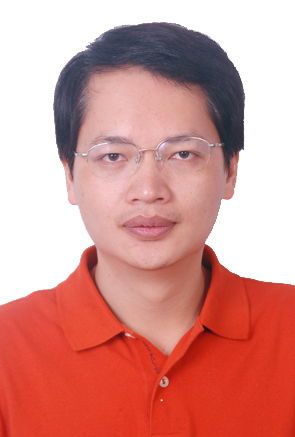 Zhiqiang Zeng (曾志强)合作论文数College of Computer and Information Engineering, Xiamen University of Technology25
 Gaowei Yan (闫高伟)合作论文数Taiyuan University of Technology9Zhongke Shi (史忠科)合作论文数School of Automation, Northwestern Polytechnical University9
 Xiaodong Wang合作论文数Department of Electrical Engineering, Columbia University8
 Rung-Ching Chen合作论文数Department of Information Management, Chaoyang University of Technology8Tian Fuli合作论文数7
 Chaoqun Hong (洪朝群)合作论文数College of Computer and Information Engineering, Xiamen University of Technology6Pengtao Wu合作论文数4Xianwei Xu合作论文数4Yanli Wang合作论文数3Pu Li (李浦)合作论文数School of Energy and Power Engineering, Xi'an Jiaotong University3Jianyan Tian合作论文数3Jun-wen LU (卢俊文)合作论文数3
 Mifeng Ren (任密蜂)合作论文数太原理工大学电气与动力工程学院3
 Zhedong Zheng (郑哲东)合作论文数University of Macau3
 Yi Yang (杨易)合作论文数College of Computer Science and Technology, Zhejiang University3Sheng Zheng合作论文数2Yingmin Yi合作论文数2Lu-lu SUI (睢璐璐)合作论文数2Sisi LI (李思思)合作论文数2
 YuMing Chen (陈玉明)合作论文数厦门理工学院信息工程学院2
 Yang He合作论文数Centre for Frontier AI Research, Agency for Science, Technology and Research2
 Tao Jiang (姜涛)合作论文数School of Cyber Engineering, Xidian University2Yonggui Du (杜永贵)合作论文数Taiyuan University of Technology2
 Guochao Yan (严国超)合作论文数College of Mining Engineering, Taiyuan University of Technology2Weidong Hong合作论文数1Hongmin Hu合作论文数1Xuqi Guo (郭旭琦)合作论文数1Shaoqi Kong合作论文数1Chen-Yen Peng合作论文数1Zhaokai Kong合作论文数1Kun Wang合作论文数1Zeng Nianfeng合作论文数1ZHANG Man (张曼)合作论文数1Enwei ZHI (支恩玮)合作论文数1Biao YUE (岳彪)合作论文数1Mengyi ZHANG (张梦怡)合作论文数1Dongsheng HAN (韩东升)合作论文数1Wei Gao (高炜)合作论文数1
 Wenjun Zhu (竹文君)合作论文数School of Law and Politics, Nanjing Tech University1
 Y. Pang合作论文数Department of Maritime and Transport Technology, Faculty of Mechanical, Maritime and Materials Engineering, Delft University of Technology1
 Hendry合作论文数1
 Tianyi Lan合作论文数Northwestern Polytechnical University, Northwestern Polytechnical Univ1Lan Cheng合作论文数1ZhiQin Kang合作论文数1
 Zehua Chen (陈泽华)合作论文数太原理工大学信息工程学院自动化系1
 Amit Banerjee合作论文数The Pennsylvania State University1
 Shengqiang Yang (杨胜强)合作论文数College of Mechanical and Vehicle Engineering, Taiyuan University of Technology1




