We consider the estimation of parameters encoded in the measurement record of a continuously monitored quantum system in the jump unraveling, corresponding to a single-shot scenario, where information is continuously gathered. Here, it is generally difficult to assess the precision of the estimation procedure via the Fisher Information due to intricate temporal correlations and memory effects. In this paper we provide a full set of solutions to this problem. First, for multi-channel renewal processes we relate the Fisher Information to an underlying Markov chain and derive a easily computable expression for it. For non-renewal processes, we introduce a new algorithm that combines two methods: the monitoring operator method for metrology and the Gillespie algorithm which allows for efficient sampling of a stochastic form of the Fisher Information along individual quantum trajectories. We show that this stochastic Fisher Information satisfies useful properties related to estimation on a single run. Finally, we consider the case where some information is lost in data compression/post-selection and provide tools for computing the Fisher Information in this case. All scenarios are illustrated with instructive examples from quantum optics and condensed matter.
Thermodynamic (TUR) and kinetic (KUR) uncertainty relations are fundamental bounds constraining the fluctuations of current observables in classical, non-equilibrium systems. Several works have verified, however, violations of these classical bounds in open quantum systems, motivating the derivation of new quantum TURs and KURs that account for the role of quantum coherence. Here, we go one step further by deriving multidimensional KUR and TUR for multiple observables in open quantum systems undergoing Markovian dynamics. Our derivation exploits a multi-parameter metrology approach, in which the Fisher information matrix plays a central role. Crucially, our bounds are tighter than previously derived quantum TURs and KURs for single observables, precisely because they incorporate correlations between multiple observables. We also find an intriguing quantum signature of correlations that is captured by the off-diagonal element of the Fisher information matrix, which vanishes for classical stochastic dynamics. By considering two examples, namely a coherently driven qubit system and the three-level maser, we demonstrate that the multidimensional quantum KUR bound can even be saturated when the observables are perfectly correlated.
Anomalous thermal relaxation is ubiquitous in non equilibrium statistical mechanics. An emblematic example of this is the Mpemba effect, where an initially “hot” system cools faster than an initially “cooler” one. This effect has recently been studied in a variety of different classical and quantum settings. In this letter, we find a novel signature of the Mpemba effect in the context of quantum batteries. We identify situations where batteries in higher charge states can discharge faster than less charged states. Specifically, we consider a quantum battery encoded in a single bosonic mode that is charged using unitary Gaussian operations. We show that the ergotropy, used here as a dynamical indicator of the energy stored in the battery, can be recast as a phase space relative entropy between the system's state and the unitarily connected passive state, at each time. Our formalism allows us to compute the ergotropy analytically under dissipative dynamics and allows us to understand the conditions which give rise to a Mpemba effect. We also find situations where two batteries charged to the same value using different operations can discharge at different rates.
Efficiently harvesting thermodynamic resources requires a precise understanding of their structure. This becomes explicit through the lens of information engines -- thermodynamic engines that use information as fuel. Maximizing the work harvested using available information is a form of physically-instantiated machine learning that drives information engines to develop complex predictive memory to store an environment's temporal correlations. We show that an information engine's complex predictive memory poses both energetic benefits and risks. While increasing memory facilitates detection of hidden patterns in an environment, it also opens the possibility of thermodynamic overfitting, where the engine dissipates additional energy in testing. To address overfitting, we introduce thermodynamic regularizers that incur a cost to engine complexity in training due to the physical constraints on the information engine. We demonstrate that regularized thermodynamic machine learning generalizes effectively. In particular, the physical constraints from which regularizers are derived improve the performance of learned predictive models. This suggests that the laws of physics jointly create the conditions for emergent complexity and predictive intelligence.
Within quantum thermodynamics, many tasks are modelled by processes that require work sources represented by out-of-equilibrium quantum systems, often dubbed quantum batteries, in which work can be deposited or from which work can be extracted. Here we consider quantum batteries modelled as finite-dimensional quantum systems initially in thermal equilibrium that are charged via cyclic Hamiltonian processes. We present optimal or near-optimal protocols for $N$ identical two-level systems and individual $d$-level systems with equally spaced energy gaps in terms of the charging precision and work fluctuations during the charging process. We analyze the trade-off between these figures of merit as well as the performance of local and global operations.
The jump unravelling of a quantum master equation decomposes the dynamics of an open quantum system into abrupt jumps, interspersed by periods of coherent dynamics when no jumps occur. Such open quantum systems are ubiquitous in quantum optics and mesoscopic physics, hence the need for efficient techniques for their stochastic simulation. Numerical simulation techniques fall into two main categories. The first splits the evolution into small timesteps and determines stochastically for each step if a jump occurs or not. The second, known as Monte Carlo Wavefunction simulation, is based on the reduction of the norm of an initially pure state in the conditional no-jump evolution. It exploits the fact that the purity of the state is preserved by the finest unraveling of the master equation. In this work, we present an alternative method for the simulation of the quantum jump unraveling, inspired by the classical Gillespie algorithm. The method is particularly well suited for situations in which a large number of trajectories is required for relatively small systems. It allows for non-purity-preserving dynamics, such as the ones generated by partial monitoring and channel merging. We describe the algorithm in detail and discuss relevant limiting cases. To illustrate it, we include four example applications of increasing physical complexity and discuss the performance of the algorithm across regimes of interest for open quantum systems simulation. Publicly available implementations of our code are provided in Julia and Mathematica.
Thermodynamics connects our knowledge of the world to our capability to manipulate and thus to control it. This crucial role of control is exemplified by the third law of thermodynamics, Nernst's unattainability principle, which states that infinite resources are required to cool a system to absolute zero temperature. But what are these resources and how should they be utilized? And how does this relate to Landauer's principle that famously connects information and thermodynamics? We answer these questions by providing a framework for identifying the resources that enable the creation of pure quantum states. We show that perfect cooling is possible with Landauer energy cost given infinite time or control complexity. However, such optimal protocols require complex unitaries generated by an external work source. Restricting to unitaries that can be run solely via a heat engine, we derive a novel Carnot-Landauer limit, along with protocols for its saturation. This generalizes Landauer's principle to a fully thermodynamic setting, leading to a unification with the third law and emphasizes the importance of control in quantum thermodynamics.
Energy extraction is a central task in thermodynamics. In quantum physics, ergotropy measures the amount of work extractable under cyclic Hamiltonian control. As its full extraction requires perfect knowledge of the initial state, however, it does not characterize the work value of unknown or untrusted quantum sources. Fully characterizing such sources would require quantum tomography, which is prohibitively costly in experiments due to the exponential growth of required measurements and operational limitations. Here, we therefore derive a new notion of ergotropy applicable when nothing is known about the quantum states produced by the source, apart from what can be learned by performing only a single type of coarse-grained measurement. We find that in this case the extracted work is defined by the Boltzmann and observational entropy in cases where the measurement outcomes are, or are not, used in the work extraction, respectively. This notion of ergotropy represents a realistic measure of extractable work, which can be used as the relevant figure of merit to characterize a quantum battery.
We study the problem of parameter estimation in time series stemming from general stochastic processes, where the outcomes may exhibit arbitrary temporal correlations. In particular, we address the question of how much Fisher information is lost if the stochastic process is compressed into a single histogram, known as the empirical distribution. As we show, the answer is nontrivial due to the correlations between outcomes. We derive practical formulas for the resulting Fisher information for various scenarios, from generic stationary processes to discrete-time Markov chains to continuous-time classical master equations. The results are illustrated with several examples.
Many real-world tasks include some kind of parameter estimation, i.e., determination of a parameter encoded in a probability distribution. Often, such probability distributions arise from stochastic processes. For a stationary stochastic process with temporal correlations, the random variables that constitute it are identically distributed but not independent. This is the case, for instance, for quantum continuous measurements. In this paper we prove two fundamental results concerning the estimation of parameters encoded in a memoryful stochastic process. First, we show that for processes with finite Markov order, the Fisher information is always asymptotically linear in the number of outcomes, and determined by the conditional distribution of the process' Markov order. Second, we prove with suitable examples that correlations do not necessarily enhance the metrological precision. In fact, we show that unlike for entropic information quantities, in general nothing can be said about the sub- or super-additivity of the joint Fisher information, in the presence of correlations. We discuss how the type of correlations in the process affects the scaling. We then apply these results to the case of thermometry on a spin chain.
We discuss the role of non-ideal measurements within the context of measurement engines by contrasting examples of measurement engines which have the same work output but with varying amounts of entanglement. Accounting for the cost of resetting, correlating the engine to a pointer state and also the cost of cooling the pointer state, we show that for a given work output, thermally correlated engines can outperform corresponding entanglement engines. We also show that the optimal efficiency of the thermally correlated measurement engine is achieved with a higher temperature pointer than the pointer temperature of the optimal entanglement engine.
Textbook quantum physics features two types of dynamics, reversible unitary dynamics and irreversible measurements. The latter stands in conflict with the laws of thermodynamics and has evoked debate on what actually constitutes a measurement. With the help of modern quantum statistical mechanics, we take the first step in formalising the hypothesis that quantum measurements are instead driven by the natural tendency of closed systems to maximize entropy, a notion that we call the Measurement-Equilibration Hypothesis. In this paradigm, we investigate how objective measurement outcomes can emerge within an purely unitary framework, and find that: (i) the interactions used in standard measurement models fail to spontaneously feature emergent objectivity and (ii) while ideal projective measurements are impossible, we can (for a given form of Hamiltonian) approximate them exponentially well as we collect more physical systems together into an ``observer'' system. We thus lay the groundwork for self-contained models of quantum measurement, proposing improvements to our simple scheme.
Taking Smooth Steps Toward EquilibriumBy combining continuous and discrete theoretical approaches, researchers show how to plot an optimal path from one nonequilibrium quantum state to another.
Philip Taranto,1, 2, ∗ Faraj Bakhshinezhad,3, 1, † Andreas Bluhm,4, ‡ Ralph Silva,5, ‡ Nicolai Friis,1, 2 Maximilian P. E. Lock,2, 1 Giuseppe Vitagliano,1 Felix C. Binder,1 Tiago Debarba,6 Emanuel Schwarzhans,1, 2 Fabien Clivaz,7, 1 and Marcus Huber2, 1, § Institute for Quantum Optics and Quantum Information IQOQI Vienna, Austrian Academy of Sciences, Boltzmanngasse 3, 1090 Vienna, Austria Atominstitut, Technische Universität Wien, 1020 Vienna, Austria Department of Physics and Nanolund, Lund University, Box 118, 221 00 Lund, Sweden QMATH, Department of Mathematical Sciences, University of Copenhagen, Universitetsparken 5, 2100 Copenhagen, Denmark Institute for Theoretical Physics, ETH Zürich, Wolfgang-Pauli-Str. 27, Zürich, Switzerland Departamento Acadêmico de Ciências da Natureza, Universidade Tecnológica Federal do Paraná (UTFPR), Campus Cornélio Procópio, Avenida Alberto Carazzai 1640, Cornélio Procópio, Paraná 86300-000, Brazil Institut für Theoretische Physik und IQST, Universität Ulm, Albert-Einstein-Allee 11, D-89069 Ulm, Germany (Dated: June 10, 2021)
Thermodynamic resources, beyond their well-known usefulness in work extraction and other thermodynamic tasks, are often important also in tasks that are not evidently thermodynamic. Here we develop a framework for identifying such resources in diverse applications of bosonic continuous-variable systems. Introducing the class of bosonic linear thermal operations to model operationally-feasible processes, we apply this model to identify uniquely quantum properties of bosonic states that refine classical notions of thermodynamic resourcefulness. Among these are (1) a suite of temperature-like quantities generalizing the equilibrium temperature to quantum, non-equilibrium scenarios; (2) signal-to-noise ratios quantifying a system's capacity to carry information in phase-space displacement; and (3) well-established non-classicality measures quantifying the resolution in sensing and parameter estimation tasks.
In the setting of regression, the standard formulation of gradient boosting generates a sequence of improvements to a constant model. In this paper, we reformulate gradient boosting such that it is able to generate a sequence of improvements to a nonconstant model, which may contain prior knowledge or physical insight about the data generating process. Moreover, we introduce a simple variant of multi-target stacking that extends our approach to the setting of multi-target regression. An experiment on a real-world superconducting quantum device calibration dataset demonstrates that our approach outperforms the state-of-the-art calibration model even though it only receives a paucity of training examples. Further, it significantly outperforms a well-known gradient boosting algorithm, known as LightGBM, as well as an entirely data-driven reimplementation of the calibration model, which suggests the viability of our approach.
A quantum battery is a work reservoir that stores energy in quantum degrees of freedom. When immersed in an environment an open quantum battery needs to be stabilized against free energy leakage into the environment. For this purpose we here propose a simple protocol that relies on projective measurement and obeys a second-law like inequality for the battery entropy production rate.
Effective and efficient forecasting relies on identification of the relevant information contained in past observations---the predictive features---and isolating it from the rest. When the future of a process bears a strong dependence on its behavior far into the past, there are many such features to store, necessitating complex models with extensive memories. Here, we highlight a family of stochastic processes whose minimal classical models must devote unboundedly many bits to tracking the past. For this family, we identify quantum models of equal accuracy that can store all relevant information within a single two-dimensional quantum system (qubit). This represents the ultimate limit of quantum compression and highlights an immense practical advantage of quantum technologies for the forecasting and simulation of complex systems.
Constraints on work extraction are fundamental to our operational understanding of the thermodynamics of both classical and quantum systems. In the quantum setting, finite-time control operations typically generate coherence in the instantaneous energy eigenbasis of the dynamical system. Thermodynamic cycles can, in principle, be designed to extract work from this nonequilibrium resource. Here, we isolate and study the quantum coherent component to the work yield in such protocols. Specifically, we identify a coherent contribution to the ergotropy (the maximum amount of unitarily extractable work via cyclical variation of Hamiltonian parameters). We show this by dividing the optimal transformation into an incoherent operation and a coherence extraction cycle. We obtain bounds for both the coherent and incoherent parts of the extractable work and discuss their saturation in specific settings. Our results are illustrated with several examples, including finite-dimensional systems and bosonic Gaussian states that describe recent experiments on quantum heat engines with a quantized load.
 Gu Mile (顾麦然)合作论文数Division of Physics and Applied Physics, School of Physical and Mathematical Sciences, Nanyang Technological University;Interdisciplinary Institute of Information Sciences, Tsinghua University;Centre for Quantum Technologies, National University of Singapore12
 Thompson Jayne合作论文数Centre for Quantum Technologies, National University of Singapore8
 Kavan Kishore Modi合作论文数Singapore University of Technology and Design7
 Sai Vinjanampathy合作论文数Physics and Astronomy;Louisiana State University;Physics and Astronomy, Louisiana State University7
 John Goold合作论文数Trinity College Dublin6
 Marco Radaelli合作论文数5
 Gabriel Landi合作论文数Department of Physics and Astronomy, School of Arts & Sciences, University of Rochester5
 Varun Narasimhachar合作论文数Institute of High Performance Computing,Agency for Science, Technology and Research5
 Thomas J. Elliott合作论文数Clarendon Laboratory, University of Oxford4
 Chengran Yang (杨诚然)合作论文数Singapore Management University4Emanuel Schwarzhans合作论文数Inst Quantum Opt & Quantum Informat IQOQI Vienna, Austrian Acad Sci3
 Francesco Campaioli合作论文数Sch Sci, RMIT Univ3Benjamin Yadin合作论文数Univ Oxford, Clarendon Lab, Atom & Laser Phys, Parks Rd, Oxford OX1 3PU, England3Lock Maximilian P E合作论文数3
 Nicolai Friis合作论文数School of Mathematical Sciences;University of Nottingham;University Park;University of Nottingham, University Park3
 Marcus Huber合作论文数Institute of Atomic and Subatomic Physics, Faculty of Physics, Technical University Vienna;Institute of Quantum Optics and Quantum Information, Austrian Academy of Sciences3Joseph A. Smiga合作论文数2
 Faraj Bakhshinezhad合作论文数Dept Phys & Nanolund, Lund Univ2
 Nishchay Suri合作论文数Dept Phys, Carnegie Mellon Univ2
 Alex Wozniakowski合作论文数Sch Phys & Math Sci, Nanyang Technol Univ2Ralph Silva合作论文数2
 Andreas Bluhm合作论文数CNRS, Univ Grenoble Alpes2
 Fabien Clivaz合作论文数2
 Mark T. Mitchison合作论文数Trinity Coll Dublin2
 Philip Taranto合作论文数Inst Quantum Opt & Quantum Informat IQOQI Vienna, Austrian Acad Sci2Vitagliano Giuseppe合作论文数Department of Theoretical Physics, The University of the Basque Country2
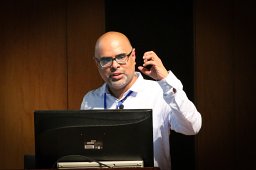 Bhaskaran Muralidharan合作论文数School of Electrical and Computer Engineering and Network for Computational Nanotechnology, Purdue University;c;School of Electrical and Computer Engineering and Network for Computational Nanotechnology, Purdue University2
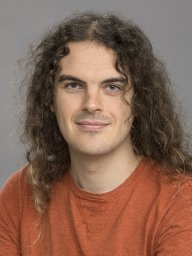 Felix A. Pollock合作论文数School of Physics and Astronomy, Monash University2
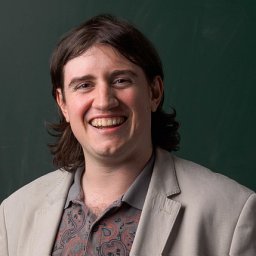 Garner Andrew J P合作论文数Clarendon Laboratory, University of Oxford2
 Tiago Debarba合作论文数Departamento de Física - ICEx, Universidade Federal de Minas Gerais2
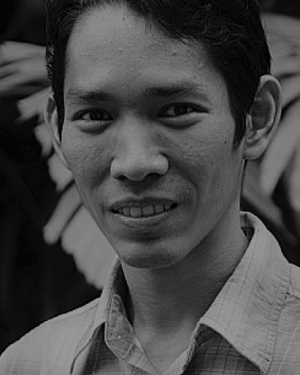 Syed M. Assad合作论文数1Abhisek Panda合作论文数1
 Pharnam Bakhshinezhad合作论文数1
 Oisin Culhane合作论文数1Qing Liu合作论文数School of Physical and Mathematical Sciences, Nanyang Technological University1Lucas C. Céleri合作论文数1Gianluca Francica合作论文数1
 Alessandro Candeloro合作论文数Quantum Technol Lab, Univ Milan1
 Saulo V. Moreira合作论文数Dept Phys & NanoLund, Lund Univ1
 Dario Rosa合作论文数Basic Sci Program, Korea Univ Sci & Technol UST1
 Dominik Safranek合作论文数Inst Basic Sci IBS, Ctr Theoret Phys Complex Syst1
 Alexander B. Boyd合作论文数Div Phys Math & Astron, CALTECH1
 Stefano Gherardini合作论文数LENS - European Laboratory for Non-Linear Spectroscopy;National Institute of Optics1
 Giacomo Guarnieri合作论文数Dahlem Ctr Complex Quantum Syst, Free Univ Berlin1
 Myungshik Kim合作论文数Department of Physics, Faculty of Natural Sciences, Imperial College London1
 Jim Crutchfield合作论文数Complexity Sciences Center, University of California, Davis;Department of Physics, University of California, Davis;Art & Science Laboratory;Santa Fe Institute1Carlo Di Franco合作论文数1
 Francesco Plastina合作论文数Dipartimento di Fisica;Universita della Calabria;Arcavacata di Rende;Arcavacata di Rende, Universita della Calabria1
 Filippo Caruso合作论文数Institut fur Theoretische;Universitat Ulm;Institut fur Theoretische, Universitat Ulm1




