Detecting genuine multipartite entanglement (GME) is a state-characterization task that benchmarks coherence and experimental control in quantum systems. Existing GME tests often require joint measurements on many qubits, posing challenges for systems like time-bin encoded qubits and microwave photons from superconducting circuits, where qubit connectivity is limited or measurement noise grows with the number of jointly measured qubits. Here we introduce versatile GME and k-inseparability criteria applicable to any state, which only require measuring O(n2) out of 2n (at most) m-body stabilizers of n-qubit target graph states, with m upper-bounded by twice the graph's maximum degree. For cluster or ring-graph states, only constant-weight stabilizers are needed. Using semidefinite programming (and sometimes graph-local complementations), we can reduce the number or weight of required stabilizers. Analytical and numerical results show that our criteria are noise-robust and may infer state infidelity from certified k-inseparability in microwave photonic graph states generated under realistic conditions.
Genuine multipartite entanglement and full inseparability are two inequivalent quantum resources. Even though all genuinely multipartite entangled states are also fully inseparable, not all fully inseparable states are genuinely multipartite entangled. There exist fully inseparable states that can be prepared as convex mixtures of states separable with respect to different bipartite splits. Here, we are interested in examples of Gaussian states that possess this type of entanglement, so-called fully inseparable biseparable states. We show for several archetypical families of multimode Gaussian states that fully inseparable biseparable candidate states are actually genuinely multipartite entangled. Using projections to finite-dimensional subspaces and fully decomposable witnesses, we observe a shrinking of the regions of potentially fully inseparable biseparable Gaussian states with growing dimension of the projection subspaces. We therefore conjecture that all fully inseparable Gaussian states are genuinely multipartite entangled.
A central concept in quantum information processing is genuine multipartite entanglement (GME), a type of correlation beyond biseparability, that is, correlations that cannot be explained by statistical mixtures of partially separable states. GME is relevant for characterizing and benchmarking complex quantum systems, and it is an important resource for applications such as quantum communication. Remarkably, it has been found that GME can be activated from multiple copies of biseparable quantum states, which do not possess GME individually. Here, we experimentally demonstrate unambiguous evidence of such GME activation from two copies of a biseparable three-qubit state in a trapped-ion quantum processor. These results not only challenge notions of quantum resources but also highlight the potential of using multiple copies of quantum states to achieve tasks beyond the capabilities of the individual copies.
Universal quantum computers are expected to generate arbitrary complex quantum states of logical qubits encoded in many physical qubits. This capability hinges on a fault-tolerantly implemented universal gate set, which no single quantum error-correction code admits transversally but which becomes accessible by joining complementary codes via lattice surgery. Here we report on the experimental generation and certification of logical genuine multipartite entanglement in a trapped-ion quantum processor using a transversally implemented universal logical gate set. The gate set is accessed via lattice surgery across two different codes and comprises a Hadamard gate on a four-qubit surface code and a doubly controlled Pauli-Z (CCZ) gate on an eight-qubit 3D colour code. To showcase this lattice-surgery toolbox, we generate both stabiliser (Greenberger-Horne-Zeilinger) and non-stabiliser (|CCZ⟩) states of three logical qubits and verify their genuine multipartite entanglement–a form of correlation beyond statistical mixtures of bipartite entanglement across any bipartition. We further use these cross-code primitives to demonstrate arbitrary rotations of single logical qubits via a CCZ-based resource gadget accessing the full universal gate set through lattice surgery. Together, these demonstrations showcase the core building blocks of an architecture for fault-tolerant quantum computation and its ability to generate complex logical quantum states.
High-dimensional encoding of quantum information holds the potential to greatly increase the computational power of existing devices by enlarging the accessible state space for a fixed register size and by reducing the number of required entangling gates. However, qudit-based quantum computation remains far less developed than conventional qubit-based approaches, particularly for photons, which represent natural multilevel information carriers that play a crucial role in the development of quantum networks. A major obstacle for realizing quantum gates between two individual photons is the restriction of direct interaction between photons in linear media. In particular, essential logic components for quantum operations such as native qudit-qudit entangling gates are still missing for optical quantum information processing. Here we address this challenge by presenting a protocol for realizing an entangling gate-the controlled phase-flip gate-for two photonic qudits in an arbitrary dimension. We experimentally demonstrate this protocol by realizing a four-dimensional qudit-qudit controlled phase-flip gate, whose decomposition would require at least 13 two-qubit entangling gates. Our photonic qudits are encoded in orbital angular momentum, and we have developed a new active high-precision phase-locking technology to construct a high-dimensional orbital angular momentum beamsplitter that increases the stability of the controlled phase-flip gate, resulting in a process fidelity within a range of [0.71 +/- 0.01, 0.85 +/- 0.01]. Our experiment represents an important advance for high-dimensional optical quantum information processing and has the potential for wider applications beyond optical system.
Noise and errors are unavoidable in any realistic quantum process, including processes designed to reduce noise and errors in the first place. In particular, quantum thermodynamical protocols for cooling can be significantly affected, potentially altering both their performance and efficiency. Analytically characterizing the impact of such errors becomes increasingly challenging as the system size grows, particularly in deep quantum circuits where noise can accumulate in complex ways. To address this, we introduce a general framework for approximating the cumulative effect of gate-dependent noise using a global depolarizing channel. We specify the regime in which this approximation provides a reliable description of the noisy dynamics. Applying our framework to the thermodynamical two-sort algorithmic cooling (TSAC) protocol, we analytically derive its asymptotic cooling limit in the presence of noise. Using the cooling limit, the optimal cooling performance is achieved by a finite number of qubits–distinguished from the conventional noiseless TSAC protocol by an infinite number of qubits–and fundamental bounds on the achievable ground-state population are derived. This approach opens new avenues for exploring noisy quantum thermodynamical processes.
The field of high-dimensional quantum photonics involves the use of multimode photonic degrees-of-freedom such as the spatial, temporal, or spectral structure of light to encode multi-level quantum states. Recent years have seen rapid progress in the development of methods to generate, manipulate, and distribute such quantum states of light and their use in a range of quantum technology applications that offer practical advantages over conventional qubit-based approaches. High-dimensional quantum states of light encoded in photonic time-bins, frequency-bins, transverse-spatial modes, waveguide paths, and temporal modes have enabled noise-robust fundamental tests of quantum mechanics, error-resilient and high-capacity quantum communication protocols, andas well as efficient approaches for quantum information processing, to name just a few examples. However, research in this field has progressed fairly independently, with little exchange across different photonic degrees-of-freedom or between experiment and theory and no comprehensive comparison between degrees-of-freedom. This roadmap aims to bridge this gap by surveying progress in each area and identifying shared challenges and opportunities that cut across two or more photonic degrees-of-freedoms. We review early work and state-of-the-art experimental techniques under development for high-dimensional quantum states encoded in single and entangled photons, as well as theoretical tools for their measurement and certification. We outline the main outstanding challenges for theory and each experimental degree-of-freedom, identifying promising future directions of research that may enable these to be overcome. We end by discussing interconnections and shared challenges centered around their distribution, measurement, and manipulation, with a view towards their integration into next-generation quantum technology platforms and applications.
The ability to establish entanglement between the nodes of future quantum networks is essential for enabling a wide range of new applications in science and technology. A promising approach involves the use of a powerful central node capable of deterministically preparing arbitrary multipartite entangled states of its matter-based qubits and efficiently distributing these states to surrounding end nodes via flying photons. This central node, referred to as a “factory node", serves as a hub for the production and distribution of multipartite entanglement. In this work, we demonstrate key functionalities of a factory node using a cavity-integrated trapped-ion quantum processor. Specifically, we program the system to generate genuinely multipartite entangled Greenberger-Horne-Zeilinger (GHZ) states of three path-switchable photons and verify them using custom-designed entanglement witnesses. These photons can, in the future, be used to establish stored multipartite entanglement between remote matter-based nodes. Our results demonstrate that the well-established techniques for the deterministic preparation of entangled states of co-trapped ion qubits can be used to prepare the same states of traveling photons, paving the way for multipartite entanglement distribution in quantum local area networks.
Multi-copy activation of genuine multipartite entanglement (GME) is a phenomenon whereby multiple copies of biseparable but fully inseparable states can exhibit GME. This was shown to be generically possible in finite dimensions. Here, we extend this analysis to infinite dimensions. We provide examples of GME-activatable non-Gaussian states. For Gaussian states, we apply a necessary biseparability criterion for the covariance matrix and show that it cannot detect GME activation. We further identify fully inseparable Gaussian states that satisfy the criterion but show that multiple and, in some cases, even single copies are GME. Thus, we show that the covariance-matrix biseparability criterion is not sufficient even for Gaussian states.
Transmission electron microscopes (TEMs) enable atomic-scale imaging and characterisation, driving advances across fields from materials science to biology. Quantum correlations, specifically entanglement, may provide a basis for novel hybrid sensing techniques to make TEMs compatible with sensitive samples prone to radiation damage. We present a protocol to certify entanglement between electrons and photons naturally arising from certain coherent cathodoluminescence processes. Using mutually unbiased bases in position and momentum, our method allows robust, state-agnostic entanglement verification and provides a lower bound on the entanglement of formation, enabling quantitative comparisons across platforms. Simulations under experiment-inspired conditions and preliminary experimental data highlight the feasibility of implementing this approach in modern TEM systems with optical specimen access. Our work integrates photonic quantum information techniques with electron microscopy. It establishes a foundation for entanglement-based imaging at the atomic scale, offering a potential pathway to reduce radiation exposure.
Certifying entanglement is an important step in the development of many quantum technologies, especially for higher-dimensional systems, where entanglement promises increased capabilities for quantum communication and computation. A key feature distinguishing entanglement from classical correlations is the occurrence of correlations for complementary measurement bases. In particular, mutually unbiased bases (MUBs) are a paradigmatic example that is well-understood and routinely employed for entanglement certification. However, implementing unbiased measurements exactly is challenging and not generically possible for all physical platforms. Here, we extend the entanglement-certification toolbox from correlations in MUBs to arbitrary bases. This practically significant simplification paves the way for efficient characterizations of high-dimensional entanglement in a wide range of physical systems. Furthermore, we introduce a simple three-MUBs construction for all dimensions without using the Wootters–Fields construction, potentially simplifying experimental requirements when measurements in more than two MUBs are needed, especially in high-dimensional settings.
Landauer's limit on heat dissipation during information erasure is critical as devices shrink, requiring optimal pure-state preparation to minimize errors. However, Nernst's third law states this demands infinite resources in energy, time, or control complexity. We address the challenge of cooling quantum systems with finite resources. Using Markovian collision models, we explore resource trade-offs and present efficient cooling protocols (that are optimal for qubits) for coherent and incoherent control. Leveraging thermodynamic length, we derive bounds on heat dissipation for swap-based strategies and discuss the limitations of preparing pure states efficiently.
The detection of genuine multipartite entanglement (GME) is a state-characterization task that can be viewed as a benchmark in that it confirms appropriate levels of coherence and the ability to control the system in the laboratory. However, many GME tests require joint measurements on all or the majority of the involved quantum systems, posing experimental challenges for platforms with restricted qubit connectivity such as typical setups for time-bin encoded qubits. Here we construct a family of versatile GME criteria that only require measurements of a small subset, i.e., $O(n^2)$ out of $2^n$, of (at most) $m$-body stabilizers of $n$-qubit target graph states, with $m$ bounded from above by twice the maximum degree of the underlying graph. We present analytical results for white-noise-added graph states and numerical simulations for graph states produced in microwave photonic qubits that demonstrate the versatility and performance of our GME criteria under realistic conditions.
As we enter the post-Moore era, we experience the rise of various non-von-Neumann-architectures to address the increasing computational demand for modern applications, with quantum computing being among the most prominent and promising technologies. However, this development creates a gap in current computer science curricula since most quantum computing lectures are strongly physics-oriented and have little intersection with the remaining curriculum of computer science. This fact makes designing an appealing course very difficult, in particular for non-physicists. Furthermore, in the academic community, there is consensus that quantum computers are going to be used only for specific computational tasks (e.g., in computational science), where hybrid systems - combined classical and quantum computers - facilitate the execution of an application on both quantum and classical computing resources. A hybrid system thus executes only certain suitable parts of an application on the quantum machine, while other parts are executed on the classical components of the system. To fully exploit the capabilities of hybrid systems and to meet future requirements in this emerging field, we need to prepare a new generation of computer scientists with skills in both distributed computing and quantum computing. To bridge this existing gap in standard computer science curricula, we designed a new lecture and exercise series on Hybrid Quantum-Classical Systems, where students learn how to decompose applications and implement computational tasks on a hybrid quantum-classical computational continuum. While learning the inherent concepts underlying quantum systems, students are obligated to apply techniques and methods they are already familiar with, making the entrance to the field of quantum computing comprehensive yet appealing and accessible to students of computer science.
Quantum technologies have matured to the point that we can test fundamental quantum phenomena under extreme conditions. Specifically, entanglement, a cornerstone of modern quantum information theory, can be robustly produced and verified in various adverse environments. We take these tests further and implement a high-quality Bell experiment during a parabolic flight, transitioning from microgravity to hypergravity of 1.8 g while continuously observing Bell violation, with Bell-CHSH parameters between $S=-2.6202$ and $-2.7323$, an average of $\overline{S} = -2.680$, and average standard deviation of $\overline{\Delta S} = 0.014$. This violation is unaffected both by uniform and non-uniform acceleration. This experiment demonstrates the stability of current quantum communication platforms for space-based applications and adds an important reference point for testing the interplay of non-inertial motion and quantum information.
Measurements can be viewed as interactions between a measured system and a pointer system that imprint information about the system on the pointer. For so-called unbiased interactions, the measurement statistics–the information corresponding to the diagonal of the system's initial density operator–with respect to a chosen measurement basis are transferred accurately, even if the pointer is initially in a mixed state. However, establishing measurement outcomes as objective facts also requires redundancy. We therefore consider the problem of unitarily distributing the outcome statistics to several pointers or quantum memories. We show that the accuracy of this process is limited by thermodynamic restrictions on preparing the memories in pure states: exact duplication of unknown outcome statistics is impossible using finite resources. For finite-temperature memories, we put forward a lower bound on the entropy production of the duplication process. This Holevo-Landauer bound demonstrates that the mixedness of the initial memory limits the ability to accurately transfer the same information to more than one memory component, thus fundamentally restricting the creation of redundancies while maintaining the integrity of the original information. Finally, we show how the outcome statistics can be recovered exactly in the classical limit–via coarse-graining or asymptotically as the number of subsystems of each memory component increases–thus elucidating how objective properties can emerge despite inherent imperfections.
Within quantum thermodynamics, many tasks are modelled by processes that require work sources represented by out-of-equilibrium quantum systems, often dubbed quantum batteries, in which work can be deposited or from which work can be extracted. Here we consider quantum batteries modelled as finite-dimensional quantum systems initially in thermal equilibrium that are charged via cyclic Hamiltonian processes. We present optimal or near-optimal protocols for $N$ identical two-level systems and individual $d$-level systems with equally spaced energy gaps in terms of the charging precision and work fluctuations during the charging process. We analyze the trade-off between these figures of merit as well as the performance of local and global operations.
Quantum correlations in the form of entanglement, quantum steering or Bell nonlocality are resources for various information-processing tasks, but their detailed quantification and characterization remains complicated. One counter-intuitive effect is the phenomenon of superactivation, meaning that two copies of a quantum state may exhibit forms of correlations which are absent on the single-copy level. We develop a systematic approach towards a full understanding of this phenomenon using the paradigm of genuine multipartite entanglement. We introduce systematic methods for studying superactivation of entanglement based on symmetries and generalized notions of multipartite distillability. With this, we present novel criteria for superactivation as well as a quantitative theory of it. Moreover, we present evidence for incompressible entanglement on multi-copy systems, which cannot be reduced to the single-copy level.
Abstract This chapter takes a closer look at entanglement in multipartite systems. An examination of pure tripartite systems serves a starting point from which we discover the equivalence classes of Greenberger-Horne-Zeilinger (GHZ) states and W states. We then continue with the mixed-state case and discuss the notions of full separability, partition-separability and biseparability versus genuine tripartite entanglement, before stating the GHZ theorem in the formulation following Mermin. For systems of three or more parties we then formulate the definitions for k-separability and genuine multipartite entanglement (GME), as well as for k-producibility and entanglement depth, followed by prominent examples for GME states such as the generalized GHZ states and Dicke states. We give an overview of the problem of detecting GME using various linear and non-linear GME witnesses, lifted witnesses, PPT mixers, before discussing challenges for the characterization and quantification of multipartite entanglement. We close by analysing the phenomenon of entangled entanglement.
Abstract In this chapter we revisit the creation of an entangled kaon state where the particles comprising the relevant pair propagate in to opposite directions. Experimental tests of Bell inequalities in particle physics are difficult and feature loopholes for local realistic models. Although such Bell tests are of fundamental interest, the examination of entanglement rather than non-locality for meson-antimeson pairs might be more feasible. To examine the possibilities and challenges for such tests, it is useful to study possible mechanisms for decoherence that might influence the quality of the entanglement. We consider possible decoherence effects arising from interactions of the quantum system with its environment: strong-interaction scatterings of kaons with nucleons, weak-interaction decays, as well as experimental noise. We concentrate on a specific model of decoherence developed by Bertlmann and Grimus that allows us to quantify the strength of such possible decoherence effects by the data of existing experiments
 Marcus Huber合作论文数Institute of Atomic and Subatomic Physics, Faculty of Physics, Technical University Vienna;Institute of Quantum Optics and Quantum Information, Austrian Academy of Sciences33
 Reinhold A Bertlmann合作论文数University of Vienna21
 Hans J. Briegel合作论文数Institut für Theoretische Physik, Universität Innsbruck14
 Vedran Dunjko合作论文数Leiden Institute of Advanced Computer Science, Faculty of Science, Leiden University10
 Ivette Fuentes合作论文数School of Mathematical Sciences;University of Nottingham;University Park;University of Nottingham, University Park8
 Vitagliano Giuseppe合作论文数Department of Theoretical Physics, The University of the Basque Country7
 Mehul Malik合作论文数Institute of Photonic and Quantum Sciences, School of Engineering and Physical Sciences, Heriot-Watt University6
 David Edward Bruschi合作论文数Institute for Quantum Computing Analytics, Forschungszentrum Jülich6
 Tiago Debarba合作论文数Departamento de Física - ICEx, Universidade Federal de Minas Gerais5Michalis Skotiniotis合作论文数4Simon Morelli合作论文数4
 Paul Erker合作论文数Inst Quantum Opt & Quantum Informat IQOQI, Austrian Acad Sci4
 Hendrik Poulsen Nautrup合作论文数Univ Innsbruck, Inst Theoret Phys, Technikerstr 21a, A-6020 Innsbruck, Austria4
 Antony Richard Lee合作论文数School of Mathematical Sciences, The University of Nottingham4Sabine Wölk合作论文数4Th. Sriarunothai合作论文数3g s giri合作论文数3Ch. Wunderlich合作论文数3Wolfgang Duer合作论文数3Teodor Strömberg合作论文数3
 Jorma Louko合作论文数School of Mathematical Sciences, Faculty of Science, The University of Nottingham3Emanuel Schwarzhans合作论文数Inst Quantum Opt & Quantum Informat IQOQI Vienna, Austrian Acad Sci3
 Faraj Bakhshinezhad合作论文数Dept Phys & Nanolund, Lund Univ3Beate Asenbeck合作论文数Fac Phys, Univ Vienna3
 Valeria Saggio合作论文数Univ Vienna, Fac Phys, Vienna Ctr Quantum Sci & Technol VCQ, Vienna, Austria3Peter Schiansky合作论文数3
 Fabien Clivaz合作论文数3
 Natalia Herrera Valencia合作论文数Heriot-Watt University3
 Philip Taranto合作论文数Inst Quantum Opt & Quantum Informat IQOQI Vienna, Austrian Acad Sci3
 Jessica Bavaresco合作论文数Austrian Acad Sci, IQOQI, Boltzmanngasse 3, A-1090 Vienna, Austria3Claude Klöckl合作论文数University of Natural Resources and Life Sciences3
 Nicholas Harris合作论文数Lightmatter3
 Martin Ringbauer合作论文数Centre for Eng. Quantum Syst., Univ. of Queensland;c;Centre for Eng. Quantum Syst., Univ. of Queensland3
 Binder Felix合作论文数Clarendon Laboratory, University of Oxford3
 Martí Perarnau-Llobet合作论文数Department of Physics, Autonomous University of Barcelona3Lock Maximilian P E合作论文数3
 Dirk Englund合作论文数Department of Electrical Engineering and Computer Science, Schwarzman College of Computing, Massachusetts Institute of Technology;LightMatter Computing Inc;Dust Identity Inc3
 Philip Walther合作论文数Institut fur Experimentalphysik;Universitat Wien;Institut fur Experimentalphysik, Universitat Wien3
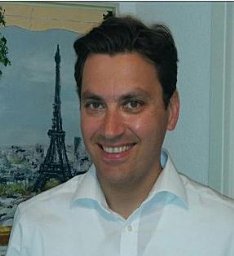 Arne Hamann合作论文数Technical University of Braunschweig3
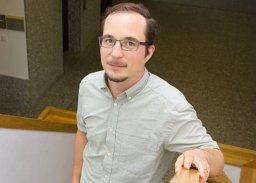 Matej Pivoluska合作论文数Faculty of Informatics, Masaryk University3
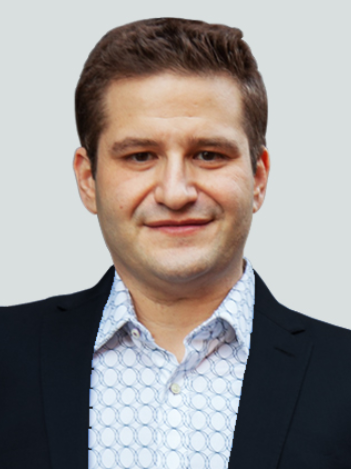 Michael Hochberg合作论文数Elenion Technologies, LLC3S. Woelk合作论文数2C Sabín合作论文数2
 Pharnam Bakhshinezhad合作论文数2Meth Michael合作论文数2
 Kevin Reuer合作论文数ETH Zurich2Ralph Silva合作论文数2
 Andreas Bluhm合作论文数CNRS, Univ Grenoble Alpes2
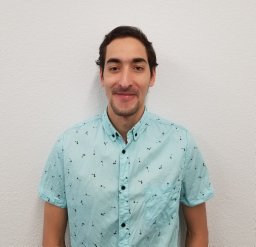 Manuel H. Muñoz-Arias合作论文数Dept Phys & Astron, Univ New Mexico2




