Objective:To observe the effect of simulated eating movement training based on the principle of training and learning to stroke patients with hemiplegic upper limb on motor function and activities of daily living, so as to provide an economical, effective and easy rehabilitation nursing method for stroke patients with hemiplegia.Methods:Sixty subjects were recruited according to the inclusion and exclusion criteria. They were randomly divided into experimental group and control group, 30 cases each group. All subjects received routine treatment and rehabilitation nursing, while the experimental group received simulated eating movement training every day and successfully completed the action 50 times a day for 3 months. The changes of Fugl-Meyer assessment scale (FMA), Barthel Index (BI), clinical neurologic deficit scale (CNDS) about hemiplegic upper limb in the two groups were observed before test, 1 month after test and 3 months after test.Results:FMA score and BI about hemiplegic upper limb in the experimental group were significantly different compared with those in the control group (P<0.01) after 1 month and 3 month of test. There was no significant difference in the score of CNDS between the two groups (P>0.05).Conclusion:Simulated eating movement training can improve the motor function of stroke patients with hemiplegic upper limb and the self-care ability of stroke patients.
目的:探讨五行角调对老年肝郁化火型糖尿病伴失眠患者睡眠质量的影响。方法将纳入64例老年肝郁化火型糖尿病伴失眠患者随机分成角调组和对照组,每组32例。两组患者均接受糖尿病和失眠的常规治疗和护理。在此基础上,角调组聆听角调音乐,每晚睡前一次,连续4周。试验前后对两组睡眠质量进行比较。结果试验后角调组失眠疗效高于对照组(P<0.01)。 PSQI指数试验后两组均比试验前有所下降,其中角调组优于对照组(P<0.05)。结论角调音乐能有效改善患者睡眠质量,提高睡眠效率。
Objective:To evaluate the effect of Tai Chi on one-leg standing time (OLST) of the elderly and analyze the relationships with intervention of different time.Methods:Cochrane Central Register Controlled Trials (CENTRAL), PubMed, Wanfang Data, CNKI, VIP databases were searched for the randomized controlled trials (RCTS) of the effect of Tai Chi on OLST of the elderly, from the date of establishment of the databases to January 2016. The extracted data were analyzed by RevMan 5.3.Results:A total of 6 literatures were discovered. There was one Chinese literature, others are English literatures. Meta-analyses showed that Tai Chi intervention can increase OLST. In single-leg stance with the eyes open (SLO), the effect was better than in single-leg stance with the eyes closed (SLC), and the result is [WMD=8.97, 95%CI (8.05, 9.90) ] and [WMD=5.05, 95%CI (2.72, 7.37) ] respectively. And intervention of different time had different results. The effect of Tai Chi of 3 to 4 months, 6 months and 12 months were as follows: [WMD=1.74, 95%CI (-3.75, 7.23) ], [WMD=4.58, 95%CI (2.24, 6.92) ] and [WMD=5.37, 95%CI (-0.51, 11.24) ].Conclusion:Tai Chi with varying degrees can increase OLST of the elderly and improve the static balance. And intervention of different time has different effects and at least 6 months Tai Chi exercise can promote its effects.
随着生物医学模式的发展,护理模式也由原来"以疾病为中心"的功能制护理转向"以人的健康为中心"的整体护理.健康教育也因此被人们摆在了越来越重要的地位.
《护理学基础》是护理学专业的一门重要的基础学科,教学过程包括理论教学和实践教学.护理教育的目标是为社会培养具有实践能力和创新精神的高素质的新型护理人才,但目前在护理教学与护理实践之间,还存在着一定的距离,护理专业的学生毕业后不能很快地进入角色.为了缩短二者之间的距离,笔者通过几年的护理教学工作,对《护理学基础》课程进行了教学方法的改革,现介绍如下.
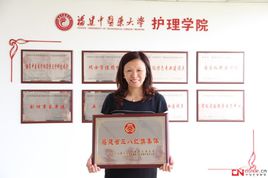 Jinxiu Chen (陈锦秀)合作论文数福建中医药大学护理学院4
 Wenxia Zhang (张文霞)合作论文数福建中医药大学护理学院2Xiaoqiong LIN (林晓琼)合作论文数1Xiaojun LI (李晓军)合作论文数1XuXing Lin (林旭星)合作论文数1TingYu Chen (陈婷玉)合作论文数1Yannan Chen (陈焰南)合作论文数福建中医药大学护理学院1Liwei Zheng (郑丽维)合作论文数福建中医药大学护理学院1
 Jian Liu (刘健)合作论文数新疆医科大学第一附属医院 肾病科1
 Guoying Zhou (周国英)合作论文数福建中医药大学第一临床医学院1




