This expert consensus addressed the use of digital full-contour high-translucent/ultra-translucent (HT/UT) zirconia restorations. HT/UT zirconia, stabilised with 4 mol% to 6 mol% yttria, balances flexural strength (550 to 1100 MPa) and enhanced translucency (45% to 55% light transmission) through a cubic-tetragonal microstructure while maintaining excellent biocompatibility and aging resistance. Clinical applications include single crowns, short-span bridges, veneers (0.3 to 1.0 mm) and implant-supported prostheses (screw-/cement-retained with specific thickness requirements). The digital workflow involves precise preparation, digital impressions, computer-aided design, milling, sintering and post-processing (surface polishing to Ra ≤ 0.25 μm). A lack of unified standards causes variable practices in the clinic. This consensus provides guidelines to standardise procedures, promoting predictable quality and long-term success of HT/UT zirconia restorations.
High-speed and energy-efficient multi-port content addressable memory (CAM) is very important to modern superscalar processors. In order to overcome the disadvantages of multi-port CAM and improve the performance of searching stage, a high-speed and energy-efficient single-port (SP) CAM is introduced to achieve dual-port (DP) operation. For different bit cell topologies - the traditional 9T CAM cell and 6T SRAM cell, two novel peripheral schemes - CShare and VClamp are proposed. The proposed schemes are verified using all possible corners, a wide range of temperature and detailed Monte-Carlo variation analysis. With 65-nm process and 1.2 V supply, the search delay of CShare and VClamp is 0.55 ns and 0.6 ns, respectively, a reduction of approximately 87% compared to the state-of-the-art works. In addition, compared with the recently proposed IOT BCAM, CShare and VClamp can provide 84.9% and 85.1% energy reduction in the TT corner, respectively. Experimental results in an 8 Kb CAM at 1.2 V supply and across different corners show that the energy efficiency is improved by 45.56% (CShare) and 45.64% (VClamp) on average in comparison with DP CAM.
OBJECTIVE This study aims to validate the standardized procedure for designing soft tissue substitutes (STS) adapted to optimally fit single-tooth defects in the anterior jaws and double-tooth defects in the posterior jaw and to compare mathematically modeled average shapes. MATERIALS AND METHODS Casts from 35 patients with 17 single-tooth defects in anterior region and 21 double-tooth defects in posterior region were scanned. STS were designed and sectioned in 3D slices meshes. Thickness values were documented respecting mesial-distal and buccal-lingual orientations. Graphs were embedded into images, and hierarchical clustering was applied to group STS according to shape and thickness. RESULTS STS clustered into two groups per defect type. For anterior single defects, STS (n = 4) were either a small and thin oval: 7 mm buccal-lingual, 4-5 mm mesial-distal direction and 1.1-1.5 mm thick or a larger oval (n = 13): 9 mm buccal-lingual, 5-7 mm mesial-distal and 1.6 m thick. For posterior double tooth defects, STS (n = 10) were either narrow, long and thick: 6-7 mm buccal-lingual, 16-20 mm mesial-distal and 2.2 thick or a wide, thinner rectangle (n = 11): 9-11 mm buccal-lingual, 12-14 mm mesial-distal and 1.1-1.5 mm thick. CONCLUSIONS The study validated the standardized digital method to design grafts for soft tissue volume augmentation and identified four average shapes for anterior single-tooth and posterior double-tooth soft tissue defects. CLINICAL SIGNIFICANCE We developed and validated a standardized digital method to design an optimal geometrical shape of a soft tissue substitute for oral volume augmentation and combined it with mathematical modeling to identify average shapes for single-interior, and double-posterior tooth defects. The identified average shapes offer the possibility to produce better-fitted xenografts or synthetic STS blocks requiring minimal chair-side adaptation leading to reduced clinical time and patient discomfort and potentially improving soft tissue volume augmentation outcomes.
In esthetic rehabilitation, methods used to enhance the margin quality have always been the focus and difficulty of improving the level of diagnosis and treatment, prevention and treatment of complications, and collaboration between clinicians and technicians. However, it is impeded by the ambiguous definition and classification of margin, unstandardized tooth preparation, manufacturing process of restoration, and lack of reliable means of checking the quantitative requirements of preparation or restoration. The digital technologies that are increasingly applied, such as intra-oral scanner, impression scanner, and computerized numerical control cutting machine, have strict requirements about margin quality. Failure of recognizing margins by these scanners will hinder the digital process of diagnosis and treatment. Even if these sharp and narrow margins are successfully scanned, they cannot be milled accurately. To overcome these problems, this article demonstrated the clear and complete definition of preparation margin and restoration margin, as well as their subclassifications, by analyzing the target restoration space from a geometric perspective. Practical approaches to measuring the margin width and inspecting the margin quality were proposed. The new and full understanding and proposal about preparation margin and restoration margin characterized by measurements will effectively support the thoroughly digitalized process of esthetic rehabilitation using porcelain in fixed prosthodontics, which is based on the guidance of values.
PURPOSE This study evaluated the effects of manipulator level (ML) on implant scan body (ISB) seating. It also investigated ISB vertical deviation with various levels of tightening torque. MATERIALS AND METHODS In total, 10 standard acrylic resin models were prepared with the implant on the first molar site. ISBs were placed on the models by six operators with three MLs, manually and with a torque of 15 Ncm using an electronic torque driver. Digital scans were completed with an intraoral scan device. After superimposition in the software, ISB vertical deviation was compared between the 15 Ncm torque level and manual operation. One experienced operator then placed the ISB with different torque levels (20, 25, 30, and 35 Ncm) using an electronic torque driver. The ISB vertical deviation was also compared among torque levels. Vertical deviations within ML were analyzed using one-way analysis of variance (ANOVA). One-way repeated measures ANOVA was used to analyze the differences between torque levels (α = .05). RESULTS ISB vertical deviations differed among MLs (P < .01). Significant vertical deviations were observed between 20 and 30 Ncm (P < .01), 20 and 35 Ncm (P < .05), and 25 and 35 Ncm (P < .05). The largest estimated marginal mean was 13.5 ± 4.11 μm with a torque of 35 Ncm. CONCLUSION Significant differences in ISB vertical deviation were observed according to MLs and tightening torque levels. The amounts of those deviations did not exceed the previously described occlusal threshold.
Medical photography in clinical practice has been widely used in oral medicine in recent years.Using clinical photography, a dentist can record a patient's case with greater medical accuracy and schedule appropriate treatment.This revised third edition of Dental Digital Photography covers 9 topics.The book begins with the presentation of The History and Significance of Dental Photography and explains the importance of photos in patient education, preserving the images for medical records, the doctor-patient, doctor-technician and doctor-doctor communications, doctor-technician and doctor-doctor as well as the legal basis.The next part tackles the Basic Concepts and Knowledge of the Photography.Prior to learning oral clinical photography, it is necessary for learners to understand the basic concepts and knowledge of photography.So, there are exhaustive explanations of notions such as photoelectric sensor, pixel and resolution, exposure, aperture, shutter speed, exposure control, ISO, depth of field, layout and white balance.The next topic addressed is Devices and Equipment of the Dental Photography.This part helps us to choose the appropriate equipment and devices to achieve ideal dental photography.Then the Basic Procedures of Dental Clinical Photography are presented.This part describes the dental photography protocol such as clinical image specification recommended, position and holding, placing retractors, composition and focus.Basic Images of Dental Clinical Photography Considering is the next chapter.It summarizes 74 images usually used in clinical work.The shooting methods and applications of all these images are introduced in detail in this chapter, which describing both photographs taken with the camera and photos taken with the microscope.The next chapter, Standards for Common Aesthetic Oral Clinical Photography introduces the three main standards required by the: American Academy of Cosmetic Dentistry (AACD), European Society of Cosmetic Dentistry (ESCD) and Chinese Society of Aesthetic Dentistry (CSED).Clinical Still Life and Operation Photography is the following chapter.Besides clinical photographs there are also many other photos necessary in a clinic, such as photographs of clinical objects and photographs of clinical operations.Some examples are photographs of impressions, models and prostheses.Image Adjustment and Application is the next part.The chapter focuses on how to adjust images by some simple application of Photoshop, and the procedure of introducing acquired clinical images into the Digital Smile Design (DSD) process.The last part, Aesthetic Treatment Based on Clinical Image presents the basic protocol to establish aesthetic goals and it is explained by presenting many clinical cases.The third edition of Dental Digital Photography is more comprehensiveand systematic providing a greater sense of knowledge.It will contribute to a clearer understanding of the scientific oral clinical photography concepts and methods, thus becoming for each dentist a working tool in the daily application of digital photography.
PURPOSETo evaluate the influence of different cements on the color outcomes of CAD/CAM lithium-disilicate implant crowns cemented to titanium-base abutments utilizing spectrophotometric analysis.MATERIALS AND METHODSA clinical situation with a missing lateral incisor was mimicked using a maxillary plastic model. Titanium-base-supported monolithic lithium disilicate crowns with identical designs were fabricated using a laboratory CAD/CAM system. The crowns were cemented with three provisional cements and with six definitive cements on both nonsandblasted and sandblasted titanium-base abutments for a total of 15 test groups. As a control group, identical crowns were attached with try-in paste on composite die abutments that duplicated the shape of the titanium-base abutments. The colors of the labial surfaces of the crowns and the peri-implant artificial soft tissue were measured with a spectrophotometer and recorded in CIE L*a*b* parameters. Color differences between the test and control groups were calculated as: ΔE = ([ΔL*]2 + [Δa*]2 + [Δb*]2)1/2. Kruskal-Wallis test was used to compare ΔE values across different groups.RESULTSThe median ΔE values reported for crowns cemented with different definitive cements on titanium-base abutments ranged from 1.4 to 2.9 for the crown surface and from 1.7 to 1.9 on the peri-implant artificial soft tissue; when the titanium-base abutments were sandblasted, the respective median ΔE values ranged from 0.8 to 4.0 and from 1.4 to 2.2. Ceramic crowns cemented with Multilink HO 0 cement presented significantly (P < .01) lower ΔE values than the other cement types for the crown surface independent of sandblasting and for the artificial soft tissue surface when the titanium abutments were sandblasted (P = .011).CONCLUSIONWithin the limitations of this study, Multilink HO 0 (Ivoclar Vivadent) cement showed the most favorable masking ability and the most favorable color outcome among the evaluated definitive cements. Cements of more opaque shades appeared in general to be more favorable in terms of masking the gray color of the titanium-base abutments.
By removing a part of the structure, the tooth preparation provides restorative space, bonding surface, and finish line for various restorations on abutment. Preparation technique plays critical role in achieving the optimal result of tooth preparation. With successful application of microscope in endodontics for >30 years, there is a full expectation of microscopic dentistry. However, as relatively little progress has been made in the application of microscopic dentistry in prosthodontics, the following assumptions have been proposed: Is it suitable to choose the tooth preparation technique under the naked eye in the microscopic vision? Is there a more accurate preparation technology intended for the microscope? To obtain long-term stable therapeutic effects, is it much easier to achieve maximum tooth preservation and retinal protection and maintain periodontal tissue and oral function health under microscopic vision? Whether the microscopic prosthodontics is a gimmick or a breakthrough in obtaining an ideal tooth preparation should be resolved in microscopic tooth preparation. This article attempts to illustrate the concept, core elements, and indications of microscopic minimally invasive tooth preparation, physiological basis of dental pulp, periodontium and functions involved in tool preparation, position ergonomics and visual basis for dentists, comparison of tooth preparation by naked eyes and a microscope, and comparison of different designs of microscopic minimally invasive tooth preparation techniques. Furthermore, a clinical protocol for microscopic minimally invasive tooth preparation based on target restorative space guide plate has been put forward and new insights on the quantity and shape of microscopic minimally invasive tooth preparation has been provided.
Tooth preparation is the primary and core operation technique for dental esthetic restoration treatment, due to its effect of providing restoration space, bonding interfaces and marginal lines for dental rehabilitation after tooth tissue reduction. The concept of microscopic minimal invasive dentistry put forward the issue of conducting high-quality tooth preparation, conserve tooth-structure, protect vital pulp and periodontal tissue simultaneously. This study reviewed the concepts, physiology background, design and minimal invasive microscopic tooth preparation, and in the meantime, individualized strategies and the two core elements of tooth preparation (quantity and shape) are listed.
At present,the steady methods based on mixing plane models are widely applied to numerical investigations of multi-stage turbomachinery flow.And meanwhile,the unsteady numerical methods have gained more attentions because the flow details can be obtained.In the study,four typical mixing plane models and unsteady simulations are employed to resolve the flow of a singlestage transonic compressor and a 1.5-stage subsonic turbine.Firstly,the effects of different mixing plane models on the interface flow conservations and the outlet radial distributions of aerodynamic parameters are presented.Furthermore,the results from the mixing plane models are compared with the time-averaged ones from unsteady simulations.Through the comparisons,one strives to find a mixing plane model with strong interface flow conservation and acceptable robustness.
西方文学的早期引介与中国传统文学体制的现代转型息息相关,是对传统文学体制的“不足”作出的回应,目的是要将中国文学纳入世界文学的发展轨道,因而,这一努力从一开始就包含着一个“致用”的层面.另一方面,在西方文学研究作为一个学术性学科的建立过程中,老一辈学者如吴宓等人透过平衡的比较视域,在汇通东西文化的基础上对西方文学研究作了十分明确的学科定位,而其中的一个重要方面就是“创造今日之中国文学”.由此看来,从西方文学的最初输入到其作为一个专业学科的基本确立,始终贯穿着一种本土问题意识.近年来,包括外国文学研究在内的人文学科都提出了国际化诉求,而如何在国际化与本土问题意识之间保持适当的张力,已成为一个需要认真考量的紧迫问题.
Due to the limited machine precision,there exist deviations between the nominal and the manufacturing aerodynamic shape of turbomachinery blades.The stroug randomicity of manufacturing variations results in uncertainties to aerodynamic performance,which is essentially a small perturbation problem because the manufacturing variations are micro relative to the geometric parameters.In the paper,the evaluation of the resultant performance uncertainty is firstly introduced and completed with the adjoint sensitivity.Then the performance variations of two blades with uniformly thickened and thinned thickness,respectively reference to the nominal blade are predicted by the adjoint sensitivity,which are then compared with the computational ones to demonstrate the sufficieut accuracy and practicability of the adjoint method in uncertainty studies.Fiually,Monte Carlo sinulations arc performed on a group of blade samples,the manufacturing variations of which subject to normal distributions.By the adjoint method,the performance variations subject to normal distributions are successfully obtained.
The parameterization methods of discrete shape function and B-spline function are employed to obtain the profile of blade snapshots.The description ability of Gappy POD by different snapshot approaches is evaluated and compared.An iterative inverse design method is introduced based on error correction to the target.Two inverse design studies of two-dimensional turbine blades are performed to achieve the given pressure distributions.The results demonstrate that the description ability of Gappy POD can be improved by the two-blades-based snapshot approach;significant improvements of the design results can be obtained by using the proposed iterative inverse design method.
社会治理是近年来学界研究的热点难点问题,围绕社会治理的研究成果层出不穷.文章围绕当前学界关于社会治理的基本问题、社会治理创新、社会治理现代化、当代中国乡村社会治理等问题进行评析,旨在推动学界对社会治理相关问题研究的深化和拓展.
In this paper, we roughly divided the development of SNS in China into four stages:prototype SNS stage re-presented by blog, SNS entertainment stage represented by RenRen, micro information SNS stage represented by Weibo and WeChat, vertical mainstream SNS stage representing the future direction of development.Then from the perspective of “six elements business model”, and by introducing six dimensions into the analytical framework, i.e.the paying party in platform strategy, subsidies party, the same edge network effect, cross boundary network effects, switching costs, the paper outlines the development of Chinese SNS business model and analyzes the possible influence factors by contrasting the position aiming to blog, RenRen, Sina Weibo and Wechat, the platform cover, business system, key resources and capabilities, profit model, cash flow and enterprise value.Finally, the future prospects of Chinese SNS were discussed.
当前我国社会利益格局不断分化,不同阶层价值观念多元化,社会组织日益多样化,流动人口和特殊人群管理服务压力较大,基层党政组织整合能力下滑,主流意识形态统领功能弱化,网络民意整合难度加大。制约我国社会良性整合的因素包括政府权力过于集中,整合主体相对单一;阶层利益不断分化,社会共识较为缺乏;社会组织发育不良,市民社会发展缓慢;社会整合理论解释力不强,大数据时代网络空间治理能力不足等。对此,必须加快简政放权步伐,继续转变政府职能;健全社会整合机制,推进社会治理现代化;汲取国内外优秀的社会治理理念,重构社会认同;培育与壮大社会组织的力量,推进法治社会建设。
社会的整体性变革、传统的政府运作模式失灵及社会控制方式的转换构成20世纪八九十年代我国社会治理的重要背景。这一时期社会治理呈现多元混合的发展态势。影响该时期社会良性治理的因素是高度集中的政府管理体制、治理理论没有恰当地回应“中国问题”、不成熟的市民社会以及社会成员法治观念比较淡薄。因此,必须发挥政府在社会治理中的主导作用,建设善治型与服务型政府,破除体制性障碍;吸收国内外优秀治理理念,完善中国特色社会治理理论,回应时代关切;积极培育市民社会,实现法治与德治的有机结合,推进社会治理现代化。
 Xinran Liu合作论文数3
 Jiaqi Luo (罗佳奇)合作论文数School of Aeronautics and Astronautics, Zhejiang University3
 Xu Cheng (程旭)合作论文数University of Chinese Academy of Sciences;School of Computer Science, Peking University;Microprocessor Research and Development Center, Peking University3
 Hongchen Liu (刘洪臣)合作论文数Chinese People's Liberation Army General Hospital3
 Weicai Liu (刘伟才)合作论文数The Affiliated Stomatology Hospital, Tongji University3
 Mingming Xu (徐明明)合作论文数Peking University School of Stomatology3
 Haiyang Yu (于海洋)合作论文数West China Hospital of Stomatology, Sichuan University3
 Jian Wang (王剑)合作论文数Hospital of Stomatology Sichuan University2
 Zhao Ke合作论文数2Yuwei Zhao合作论文数2Jing Gao合作论文数2Lin Fan合作论文数2
 Tian Luo合作论文数2
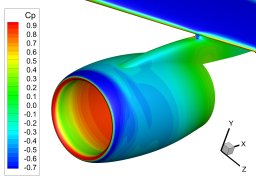 Yalu Zhu合作论文数Peking University2
 Fei Liu合作论文数Department of Biologic and Materials Sciences & Prosthodontics, School of Dentistry, University of Michigan2
 Shanshan Gao (高姗姗)合作论文数West China School of Stomatology Sichuan University2
 Zhimin Zhu (朱智敏)合作论文数West China Hospital of Stomatology, Sichuan University2
 Jianchun Zhao (赵建春)合作论文数North China Electric Power University (Baoding)2
 Shanshan Liang (梁珊珊)合作论文数School of Stomatology, Wuhan University2
 Jiefei Shen (沈颉飞)合作论文数Hospital of Stomatology, Sichuan University2Xianhua Liu (刘先华)合作论文数北京大学信息科学技术学院2Chufan Ma (马楚凡)合作论文数2
 Junying Li (李俊英)合作论文数West China Hospital of Sichuan University2
 Xuliang Deng (邓旭亮)合作论文数Department of VIP Dental Service, Peking University School of Stomatology2
 Xuedong Zhou (周学东)合作论文数West China School of Stomatology, Sichuan University2
 Zhuoli Zhu (朱卓立)合作论文数West China School of Stomatology, Sichuan University2
 Irena Sailer合作论文数Division for Fixed Prosthodontics and Biomaterials, University Clinics for Dental Medicine, University of Geneva2Jürgen M. Setz合作论文数1
 Lining Zhang (张立宁)合作论文数School of Electronic and Computer Engineering, Peking University1Yue Sun合作论文数1
 Xiaoyin Wang合作论文数Department of Computer Science, College of Al, Cyber & Computing, University of Texas at San Antonio1
 Hongwei Cui合作论文数1Miaozhen Wang合作论文数1Haijian Hu合作论文数1
 Jing Li合作论文数Linde+ Robinson Laboratories, California Institute of Technology1
 Jian Zhang (张健)合作论文数Integrated Syst Lab, Ecole Polytech Fed Lausanne1
 Malin Strasding合作论文数University Clinic of Dental Medicine, University of Geneva1
 Honglan Zhan合作论文数School of Electronics and Information Engineering, Anhui University1Qi Ma合作论文数1Yi FENG (冯毅)合作论文数1Nian Fang合作论文数1
 Dobrila Nesic合作论文数1FuBao Zhang (章福保)合作论文数1
 Yandong Mou (牟雁东)合作论文数Hospital of Stomatology, Southwest Medical University1
 Zhe Wu (吴哲)合作论文数School & Hospital of Stomatology, Guangzhou Medical University1
 Yili Chang (常以力)合作论文数Affiliated Eye Hospital of Nanchang University1
 Longquan Shao (邵龙泉)合作论文数Southern Medical University1Jihua Chen (陈吉华)合作论文数Air Force Medical University1Yu Hao (于皓)合作论文数Fujian Medical University1




