FPGAs are increasingly gaining traction in cloud and edge computing environments due to their hardware flexibility, low latency, and low energy consumption. However, the existing hardware stack of FPGA and the host-FPGA connectivity does not allow flexible scaling and simultaneous reconfiguration of multiple devices, which limits the adoption of FPGA at scale. In this paper, we present SAF – an Ethernet-based scalable acceleration framework that allows FPGA to be hot-plugged into a network in a stand-alone fashion without connecting to a local host CPU, which enables flexible scalability. SAF provides a custom FPGA shell and a set of Ethernet protocols that allow FPGAs to connect with a remote host to accelerate application kernels. SAF can configure multiple FPGAs simultaneously, which significantly reduces the reconfiguration time in scaling effort. We implemented the SAF framework using Intel FPGA SDK for OpenCL and 20 Bittware 385A cards with Arria-10 FPGAs. We analyze a case study and conduct experiments to compare SAF with state-of-the-art multi-FPGA clusters. Results show that SAF provides 13X faster reconfiguration than sequential PCIe programming, reduces the hardware setup costs by 38 evaluated the performance scalability of SAF using the PTRANS benchmark of the HPCC FPGA benchmark suite and showed an almost linear speedup for strong and weak scaling scenarios.
The area of Video Camouflaged Object Detection (VCOD) presents unique challenges in the field of computer vision due to texture similarities between target objects and their surroundings, as well as irregular motion patterns caused by both objects and camera movement. In this paper, we introduce TokenMotion (TMNet), which employs a transformer-based model to enhance VCOD by extracting motion-guided features using a learnable token selection. Evaluated on the challenging MoCA-Mask dataset, TMNet achieves state-of-the-art performance in VCOD. It outperforms the existing state-of-the-art method by a 12.8% improvement in weighted F-measure, an 8.4% enhancement in S-measure, and a 10.7% boost in mean IoU. The results demonstrate the benefits of utilizing motion-guided features via learnable token selection within a transformer-based framework to tackle the intricate task of VCOD. The code of our work will be available when the paper is accepted.
General sparse matrix–matrix multiplication (SpGEMM) is integral to many high-performance computing (HPC) and machine learning applications. However, prior field-programmable gate array (FPGA)-based SpGEMM accelerators either use the inner product algorithm with wasted and costly operations or Gustavson’s algorithm with a cache-based hardware architecture suffering from long-latency cache miss penalties and limited to embedded devices. In this work, we propose framework for accelerating SpGEMM (FSpGEMM), an OpenCL-based SpGEMM framework for accelerating Gustvason’s algorithm that includes an FPGA kernel implementing a throughput-optimized and scalable hardware architecture compatible with high-bandwidth memory (HBM) or traditional DDR-based memory. In addition, to address the irregular memory access patterns incurred by Gustavson’s algorithm, we propose a new buffering scheme tailored to Gustavson’s algorithm enabled by a new compressed sparse vector (CSV) format for representing sparse matrices and a row reordering technique as a preprocessing step to improve data reuse, and consequently, resource utilization. The proposed framework includes a host program implementing preprocessing functions for reordering input matrices and storing them in the proposed CSV format for further use. We implemented FSpGEMM using Intel FPGA SDK for OpenCL and experimented with a benchmark of sparse matrices selected from the SuiteSparse Matrix Collection on a Bittware 520N-MX FPGA board. The results show that the reordering technique improves the performance on average by 20.3% compared with the baseline. Finally, FSpGEMM outperforms the state-of-the-art (SOTA) FPGA implementation by an average of 2.23 $\times$ in terms of execution cycles with the same benchmark and memory system configuration for a fair comparison.
Common image-based LiDAR point cloud semantic segmentation (LiDAR PCSS) approaches have bottlenecks resulting from the boundary-blurring problem of convolution neural networks (CNNs) and quantitation loss of spherical projection. In this work, we propose a transformer-based plug-and-play uncertain point refiner, i.e., TransUPR, to refine selected uncertain points in a learnable manner, which leads to an improved segmentation performance. Uncertain points are sampled from coarse semantic segmentation results of 2D image segmentation where uncertain points are located close to the object boundaries in the 2D range image representation and 3D spherical projection background points. Following that, the geometry and coarse semantic features of uncertain points are aggregated by neighbor points in 3D space without adding expensive computation and memory footprint. Finally, the transformer-based refiner, which contains four stacked self-attention layers, along with an MLP module, is utilized for uncertain point classification on the concatenated features of self-attention layers. As the proposed refiner is independent of 2D CNNs, our TransUPR can be easily integrated into any existing image-based LiDAR PCSS approaches, e.g., CENet. Our TransUPR with the CENet achieves state-of-the-art performance, i.e., 68.2% mean Intersection over Union (mIoU) on the Semantic KITTI benchmark, which provides a performance improvement of 0.6% on the mIoU compared to the original CENet.
Motivated by the increasing application of low-resolution LiDAR, we target the problem of low-resolution LiDAR-camera calibration in this work. The main challenges are two-fold: sparsity and noise in point clouds. To address the problem, we propose to apply depth interpolation to increase the point density and supervised contrastive learning to learn noise-resistant features. The experiments on RELLIS-3D demonstrate that our approach achieves an average mean absolute rotation/translation errors of 0.15cm/0.33° on 32-channel LiDAR point cloud data, which significantly outperforms all reference methods.
Frequency-domain learning draws attention due to its superior tradeoff between inference accuracy and input data size. Frequency-domain learning in 2D computer vision tasks has shown that 2D convolutional neural networks (CNN) have a stationary spectral bias towards low-frequency channels so that high-frequency channels can be pruned with no or little accuracy degradation. However, frequency-domain learning has not been studied in the context of 3D CNNs with 3D volumetric data. In this paper, we study frequency-domain learning for volumetric-based 3D data perception to reveal the spectral bias and the accuracy-input-data-size tradeoff of 3D CNNs. Our study finds that 3D CNNs are sensitive to a limited number of critical frequency channels, especially low-frequency channels. Experiment results show that frequency-domain learning can significantly reduce the size of volumetric-based 3D inputs (based on spectral bias) while achieving comparable accuracy with conventional spatial-domain learning approaches. Specifically, frequency-domain learning is able to reduce the input data size by 98% in 3D shape classification while limiting the average accuracy drop within 2%, and by 98% in the 3D point cloud semantic segmentation with a 1.48% mean-class accuracy improvement while limiting the mean-class IoU loss within 1.55%. Moreover, by learning from higher-resolution 3D data (i.e., 2x of the original image in the spatial domain), frequency-domain learning improves the mean-class accuracy and mean-class IoU by 3.04% and 0.63%, respectively, while achieving an 87.5% input data size reduction in 3D point cloud semantic segmentation.
Due to the complicated nanoscale structures of current integrated circuits(IC) builds and low error tolerance of IC image segmentation tasks, most existing automated IC image segmentation approaches require human experts for visual inspection to ensure correctness, which is one of the major bottlenecks in large-scale industrial applications. In this paper, we present the first data-driven automatic error detection approach that targets two types of IC segmentation errors: wire and via errors. On an IC image dataset collected from real industry, we demonstrate that, by adapting existing CNN-based approaches of image classification and image translation with additional pre-processing and post-processing techniques, we are able to achieve recall/precision of 0.92/0.93 in wire error detection and 0.96/0.90 in via error detection, respectively.
Although various 3D datasets with different functions and scales have been proposed recently, it remains challenging for individuals to complete the whole pipeline of large-scale data collection, sanitization, and annotation. Moreover, the created datasets usually suffer from extremely imbalanced class distribution or partial low-quality data samples. Motivated by this, we explore the procedurally synthetic 3D data generation paradigm to equip individuals with the full capability of creating large-scale annotated photogrammetry point clouds. Specifically, we introduce a synthetic aerial photogrammetry point clouds generation pipeline that takes full advantage of open geospatial data sources and off-the-shelf commercial packages. Unlike generating synthetic data in virtual games, where the simulated data usually have limited gaming environments created by artists, the proposed pipeline simulates the reconstruction process of the real environment by following the same UAV flight pattern on different synthetic terrain shapes and building densities, which ensure similar quality, noise pattern, and diversity with real data. In addition, the precise semantic and instance annotations can be generated fully automatically, avoiding the expensive and time-consuming manual annotation. Based on the proposed pipeline, we present a richly-annotated synthetic 3D aerial photogrammetry point cloud dataset, termed STPLS3D, with more than 16 $km^2$ of landscapes and up to 18 fine-grained semantic categories. For verification purposes, we also provide a parallel dataset collected from four areas in the real environment. Extensive experiments conducted on our datasets demonstrate the effectiveness and quality of the proposed synthetic dataset.
This paper proposes an automated data-driven integrated circuit segmentation approach of scan electron microscopy (SEM) images inspired by state-of-the-art CNN-based image perception methods. Based on the requirements derived from real industry applications, we take wire segmentation and via detection algorithms to generate integrated circuit segmentation maps from SEMs in our approach. On SEM images collected in the industrial applications, our method achieves an average of 50.71 on Electrically Significant Difference (ESD) in the wire segmentation task and 99.05% F1 score in the via detection task, which achieves about 85% and 8% improvements over the reference method, respectively.
The emerging area of bioelectric signal compressive sensing(CS) has shown great potential in health care applications. However, improving the reconstruction accuracy of compressively sensed bioelectric signals remains a challenging problem. In recent years, data-driven image CS methods have achieved significant improvements in reconstruction accuracy over conventional model-based image CS methods. In this paper, we conduct an experimental study on transferring existing data-driven image CS methods to bioelectric signals. Through our investigation of five critical factors affecting the reconstruction performance of bioelectric signals, we conclude that existing data-driven image CS methods can be transferred to ECG signals with high reconstruction accuracy. Our experimental results show that transferred data-driven image CS methods can achieve up to 8.08-2.73 SNR improvement over the reference method on ECG signal reconstruction across compression ratios of 2-8x.
General sparse matrix-matrix multiplication (SpGEMM) is an integral part of many scientific computing, high-performance computing (HPC), and graph analytic applications. This paper presents a new compressed sparse vector (CSV) format for representing sparse matrices and FSpGEMM, an OpenCL-based HPC framework for accelerating general sparse matrix-matrix multiplication on FPGAs. The proposed FSpGEMM framework includes an FPGA kernel implementing a throughput-optimized hardware architecture based on Gustavson's algorithm and a host program implementing pre-processing functions for converting input matrices to the CSV format tailored for the proposed architecture. FSpGEMM utilizes a new buffering scheme tailored to Gustavson's algorithm. We compare FSpGEMM implemented on an Intel Arria 10 GX FPGA development board with Intel Math Kernel Library (MKL) implemented on an Intel Xeon E5-2637 CPU and cuSPARSE on an NVIDIA GTX TITAN X GPU, respectively, for multiplying a set of sparse matrices selected from SuiteSparse Matrix Collection. The experiment results show that the proposed FSpGEMM solution achieves on average 4.9x and 1.7x higher performance with 31.9x and 13.1x lower energy consumption per SpGEMM computation than the CPU and GPU implementations, respectively.
Computation intensive applications usually consist of multiple nested or flattened loops. These loops are the main building blocks of the applications and embody a specific type of execution pattern. In order to reduce the running time of the loops, developers need to analyze the loops in the code and try to parallelize them on hardware accelerators, such as GPUs, TPUs, and FPGAs, which are increasingly available in the cloud. Unfortunately, the lack of understanding of loop characteristics and the ability of hardware accelerators in handling these types of loops prevents developers from choosing the right platform to develop their applications in the cloud. Also, developing and optimizing code for a specific accelerator is a time-consuming effort. To address these issues, this paper studies the effectiveness of different processors in accelerating common patterns of loops. It identifies five important types of loops that commonly exist in real-world applications, and presents Loopy, the implementations of these loops optimized for different architectures. Using Loopy, the paper also evaluates different hardware in accelerating the loop patterns. The result reveals the architectural differences among different accelerators with regard to different loop patterns. It also provides insights for the developers to choose the right accelerators for their applications. The current version of Loopy supports both FPGAs and GPUs, which are the most versatile and available accelerators.
FPGA accelerators are gaining increasing attention in both cloud and edge computing because of their hardware flexibility, high computational throughput, and low power consumption. However, the design flow of FPGAs often requires specific knowledge of the underlying hardware, which hinders the wide adoption of FPGAs by application developers. Therefore, the virtualization of FPGAs becomes extremely important to create a useful abstraction of the hardware suitable for application developers. Such abstraction also enables the sharing of FPGA resources among multiple users and accelerator applications, which is important because, traditionally, FPGAs have been mostly used in single-user, single-embedded-application scenarios. There are many works in the field of FPGA virtualization covering different aspects and targeting different application areas. In this article, we review the system architectures used in the literature for FPGA virtualization. In addition, we identify the primary objectives of FPGA virtualization, based on which we summarize the techniques for realizing FPGA virtualization. This article helps researchers to efficiently learn about FPGA virtualization research by providing a comprehensive review of the existing literature.
This paper presents FLASH 1.0, a C++-based software framework for rapid parallel deployment and enhancing host code portability in heterogeneous computing. FLASH takes a novel approach in describing kernels and dynamically dispatching them in a hardware-agnostic manner. FLASH features truly hardware-agnostic frontend interfaces, which unify the compile-time control flow and enforce a portability-optimized code organization that imposes a demarcation between computational (performance-critical) and functional (non-performance-critical) codes as well as the separation of hardware-specific and hardware-agnostic codes in the host application. We use static code analysis to measure the hardware independence ratio of twelve popular HPC applications and show that up to 99.72% code portability can be achieved with FLASH. Similarly, we measure and compare the complexity of state-of-the-art portable programming models to show that FLASH can achieve a code reduction of up to 4.0x for two common HPC kernels while maintaining 100% code portability with a normalized framework overhead between 1% - 13% of the total kernel runtime. The codes are available at https://github.com/PSCLab-ASU/FLASH.
Designing an on-sensor data dimensionality reduction scheme for efficient signal sensing has always been a challenging task. Compressive sensing is a state-of-the-art sensing technique used for on-sensor data dimensionality reduction. However, the undesired computational complexity involved in the sensing stage of compressive sensing limits its practical application in resource-constrained sensor devices or high-data-rate sensor devices dealing with high-dimensional signals. In this paper, we propose a selective sensing framework that adopts the novel concept of data-driven nonuniform subsampling to reduce the dimensionality of acquired signals while retaining the information of interest in a computation-free fashion. Selective sensing adopts a co-optimization methodology to co-train a selective sensing operator with a subsequent information decoding neural network. We take image as the sensing modality and reconstruction as the information decoding task to demonstrate the 1st proof-of-concept of selective sensing. The experiment results on CIFAR10, Set5 and Set14 datasets show that selective sensing can achieve an average reconstruction accuracy improvement in terms of PSNR/SSIM by 3.73dB/0.07 and 9.43dB/0.16 over compressive sensing and uniform subsampling counterparts across the compression ratios of 4-32x, respectively. Source code is available at https://figshare.com/s/519a923fae8f386d7f5b
The proposed FSCHOL framework consists of an FPGA kernel implementing a throughput-optimized hardware architecture for accelerating the supernodal multifrontal algorithm for sparse Cholesky factorization and a host program implementing a novel scheduling algorithm for finding the optimal execution order of supernodes computations for an elimination tree on the FPGA to eliminate the need for off-chip memory access for storing intermediate results. Moreover, the proposed scheduling algorithm minimizes on-chip memory requirements for buffering intermediate results by resolving the dependency of parent nodes in an elimination tree through temporal parallelism. Experiment results for factorizing a set of sparse matrices in various sizes from SuiteSparse Matrix Collection show that the proposed FSCHOL implemented on an Intel Stratix 10 GX FPGA development board achieves on average 5.5× and 9.7× higher performance and 10.3× and 24.7× lower energy consumption than implementations of CHOLMOD on an Intel Xeon E5-2637 CPU and an NVIDIA V100 GPU, respectively.
The real-world application of image compressive sensing is largely limited by the lack of standardization in implementation and evaluation. To address this limitation, we present OpenICS, an image compressive sensing toolbox that implements multiple popular image compressive sensing algorithms into a unified framework with a standardized user interface. Furthermore, a corresponding benchmark is also proposed to provide a fair and complete evaluation of the implemented algorithms. We hope this work can serve the growing research community of compressive sensing and the industry to facilitate the development and application of image compressive sensing.
Monocular multi-object detection and localization in 3D space has been proven to be a challenging task. The MoNet3D algorithm is a novel and effective framework that can predict the 3D position of each object in a monocular image and draw a 3D bounding box for each object. The MoNet3D method incorporates prior knowledge of the spatial geometric correlation of neighbouring objects into the deep neural network training process to improve the accuracy of 3D object localization. Experiments on the KITTI dataset show that the accuracy for predicting the depth and horizontal coordinates of objects in 3D space can reach 96.25\% and 94.74\%, respectively. Moreover, the method can realize the real-time image processing at 27.85 FPS, showing promising potential for embedded advanced driving-assistance system applications. Our code is publicly available at this https URL.
Hardware-agnostic programming with high performance portability will be the bedrock for realizing the ubiquitous adoption of emerging accelerator technologies in future heterogeneous high-performance computing (HPC) systems, which is the key to achieving the next level of HPC performance on an expanding accelerator landscape. In this paper, we present HALO 1.0, an open-ended extensible multi-agent software framework, that implements a set of proposed hardware-agnostic accelerator orchestration (HALO) principles and a novel compute-centric message passing interface (C^2MPI) specification for enabling the portable and performance-optimized execution of hardware-agnostic application codes across heterogeneous accelerator resources. The experiment results of evaluating eight widely used HPC subroutines based on Intel Xeon E5-2620 v4 CPUs, Intel Arria 10 GX FPGAs, and NVIDIA GeForce RTX 2080 Ti GPUs show that HALO 1.0 allows the same hardware-agnostic application codes of the HPC kernels, without any change, to run across all the computing devices with a consistently maximum performance portability score of 1.0, which is 2x-861,883x higher than the OpenCL-based solution that suffers from an unstably low performance portability score.
Due to the high computational complexity and memory storage requirement, it is hard to directly deploy a full-precision convolutional neural network (CNN) on embedded devices. The hardware-friendly designs are needed for resource-limited and energy-constrained embedded devices. Emerging solutions are adopted for the neural network compression, e.g., binary/ternary weight network, pruned network and quantized network. Among them, binary neural network (BNN) is believed to be the most hardware-friendly framework due to its small network size and low computational complexity. No existing work has further shrunk the size of BNN. In this work, we explore the redundancy in BNN and build a compact BNN (CBNN) based on the bit-level sensitivity analysis and bit-level data pruning. The input data is converted to a high dimensional bit-sliced format. In the post-training stage, we analyze the impact of different bit slices to the accuracy. By pruning the redundant input bit slices and shrinking the network size, we are able to build a more compact BNN. Our result shows that we can further scale down the network size of the BNN up to 3.9x with no more than 1% accuracy drop. The actual runtime can be reduced up to 2x and 9.9x compared with the baseline BNN and its full-precision counterpart, respectively.
 Dejan Markovic合作论文数Samueli School of Engineering, University of California, Los Angeles13
 Kai Xu合作论文数Deep Learning Algorithm and Software Team, NVIDIA Corporation12
 Yixing Li合作论文数9
 Erfan Bank Tavakoli合作论文数School of Computing, Informatics, and Decision Systems Engineering, Arizona State University, Tempe, AZ, USA9Zhikang Zhang (张志康)合作论文数Department of Engineering Physics, Tsinghua University9
 Masudul Hassan Quraishi合作论文数School of Computing, Informatics, and Decision Systems Engineering, Arizona State University, Tempe, AZ, USA8Zifan Yu合作论文数7
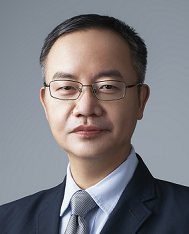 Hao Yu (余浩)合作论文数School of Microelectronics, Southern University of Science and Technology7
 Michael Riera合作论文数6
 Wenyao Xu合作论文数Department of Computer Science and Engineering, School of Engineering and Applied Sciences, University at Buffalo, The State University of New York;Center for Unified Biometrics and Sensors, University at Buffalo, The State University of New York;Auspex Medix6
 Richard Dorrance合作论文数Intel Labs6
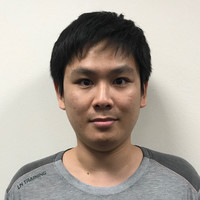 Zichuan Liu合作论文数TikTok5
 Suya You合作论文数Ming Hsieh Department of Electrical and Computer Engineering, University of Southern California;U.S. Army Research Laboratory Adelphi4Sanjeev Agarwal合作论文数3Akshay Dua合作论文数Arizona State University3
 Saman Biookaghazadeh合作论文数Arizona State University3
 Meida Chen合作论文数Institute for Creative Technologies, University of Southern California3
 Chih-Kong Ken Yang合作论文数Department of Electrical and Computer Engineering, University of California, Los Angeles3
 Toriyama, Y.合作论文数3
 Xichuan Zhou (周喜川)合作论文数School of Microelectronics and Communication Engineering, Chongqing University;Institute of Science on Brain Inspired Intelligence, Chongqing University3
 Yuhao Wang合作论文数Alibaba Group3
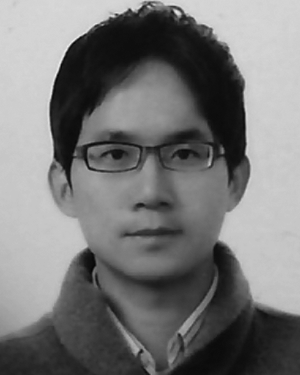 Henry Park合作论文数3
 Amr Amin Hafez合作论文数Silicon-Vision3
 Ming-Chun Huang合作论文数Data Science Research Center, Duke Kunshan University3
 Raghuveer Rao合作论文数Army Research Laboratory3Bruno Machado Trindade合作论文数2Christopher Pawlowicz合作论文数2Jonathan Zhao合作论文数2Michael Green合作论文数2
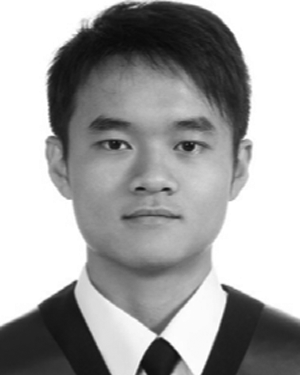 Zuow-Zun Chen合作论文数Univ Calif Los Angeles, Los Angeles, CA 90095 USA2
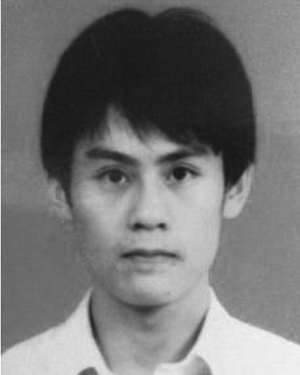 Boyu Hu合作论文数2
 Xiaoyi Zhang (张骁懿)合作论文数Apple2
 Mau-Chung Frank Chang合作论文数Hong Kong Institute for Advanced Study, City University of Hong Kong;University of California Los Angeles2
 Goh Wang Ling合作论文数Department of Computer Science, Virginia Tech2
 Yen-Kuang Chen合作论文数Intel Corporation1Yicong Peng (彭乙骢)合作论文数1
 Aman Arora合作论文数University of Texas at Austin1Xinchen Shen合作论文数1Mark Lakatos-Toth合作论文数1Matthew Westerham合作论文数1
 Yinggang Liu合作论文数1Avi Moskoff合作论文数1Kyle McCullough合作论文数1Jiayu Huang合作论文数Sch Comp & Augmented Intelligence, Arizona State Univ1Chunqiao Long合作论文数Chongqing University , 1Nurretin Sergin合作论文数Arizona State Univ, Tempe, AZ 85287 USA1
 Fang Gong合作论文数Amazon Web Services1




