Robotic collaborative sewing presents substantial challenges due to the dynamic manipulation of deformable materials and the necessity for precise coordination. Traditional robotic sewing methods, generally reliant on fixed-speed control or simplistic collaborative strategies, often exhibit limited adaptability. This study introduces a novel approach that capitalizes on human demonstrations, multimodal information fusion, and hybrid control strategies to enhance adaptability. A learning framework has been developed to predict the desired sewing speeds based on expert demonstrations, combining network-predicted velocities with visual detection-based trajectory planning to enhance the system’s adaptability to variations in sewing speed and trajectory. Experimental validation across representative sewing trajectories—including straight lines, arcs, and S-curves—demonstrates that the proposed method improves stitching accuracy, with the mean trajectory errors remaining below 3 mm for all tested trajectory types and the mean stitch-length error rates remaining below 4%. Furthermore, the system shows adaptability to variable sewing speeds, underscoring its potential suitability for real-world sewing automation applications.
To achieve safe and efficient interaction in contactrich tasks like precision assembly, this paper proposes an adaptive variable impedance learning method based on a trial-to-trial iterative framework. Addressing the limitations of constant impedance and the high costs of reinforcement learning, we extend iterative learning control (ILC) to the cross-trial optimization of impedance profiles. Guided by trajectory errors and force feedback, a physically constrained law enables the robot to autonomously adjust stiffness and damping. Experiments on a UR5e robot performing drawer manipulation under varying payloads validate the method. Results show the system quickly optimizes parameters within limited iterations to adapt to unknown force fields. The approach effectively balances high-precision tracking with stable interaction while reducing manual tuning.
In the domain of robot skill learning, efficiently transferring source domain strategies is crucial for enhancing the generalization of acquired skills. However, existing transfer learning methods lack thorough analysis of the high-dimensional feature similarity between source and target domains, leading to limitations in transfer effectiveness. Therefore, this article proposes a robot assembly skill transfer strategy based on deep metric learning (STS-DML) to promote effective transfer of multi-source domain tasks. By constructing a metric model, the proposed method can efficiently evaluate the similarity between target and source domain tasks using only a small amount of target domain data. This provides a basis for adaptive adjustment of multi-source domain knowledge in strategy transfer, enabling effective strategy transfer across different assembly objects and environments. Extensive experiments conducted in both simulated and real environments demonstrate that the STS-DML algorithm achieves superior performance in the aspect of skill transfer success rate and efficiency.
The modeling and control of underactuated robotic systems with multiple degrees of freedom (DOF) have been open problems. Using a 5-DOF underactuated shipboard crane as a case study, this article addresses the modeling and tracking control problem in noninertial reference frame. Although considerable progress has been made, most studies establish the dynamic model and designed the control method in the inertia reference frame. However, in certain operating scenarios, some state variables in the inertial reference frame are difficult to measure directly and converting them between the ship-fixed (noninertial reference frame) and the inertial frames may lead to singularity problems. Aiming at these open problems, by using the Lagrange equation of the second kind and the virtual work theory, the dynamic model of a 5-DOF shipboard rotary crane is established in the noninertial reference frame in consideration of ship 6-DOF movements and the offset between the crane mounting position and the ship’s center of gravity. After that, an adaptive neural network (NN)-based nonlinear feedback tracking control method is designed to track the desired trajectory and suppress the cargo swing simultaneously. The closed-loop stability is also analyzed. Finally, the performance of the control method is validated through experiments on a self-made experimental testbed.
Traditional assembly tasks often require robots to transfer the acquired skills to new tasks. However, previous transfer reinforcement learning methods typically ignore the inherent relationship between the source and the target domain tasks. This requires a substantial amount of interaction data to compensate for this deficiency, and generally results in poor transfer effects. To address this issue, a strategy transfer method that establishes a shared feature space between the source domain and the target domain is proposed to enhance the efficiency of strategy learning on peg-in-hole assembly. Initially, by calculating the distance between each feature in the source and target domains, the features with small distance are selected as shared features. Subsequently, in order to determine the successful search state, this paper uses the jump state of contact force and the relative position between the peg and the hole as the judgment criterion. Lastly, search and insertion peg-in-hole assembly experiments are conducted to validate the generalization of the proposed strategy, demonstrating its capability to transfer from simulation to the real world.
Automatic peg-in-hole assembly by robots is a crucial means of enhancing efficiency in industrial production. However, unstructured environments pose challenges for automatic assembly, and excessive contact force can easily damage workpieces. This study proposes a peg-in-hole pose estimation method based on 3D vision, which effectively addresses occlusion issues. Additionally, a compliant force control method is used to perform the insertion operation, preventing excessive contact force. Experiments conducted on a robot platform with peg-in-hole assemblies of different shapes demonstrated a pose estimation accuracy exceeding 85%, with a maximum assembly contact force of less than 20N, thus validating the effectiveness of the proposed method.
Placing fabric poses a challenge to robots since fabric with high dimensional configuration space can deform during manipulation. Existing methods for placing fabric mostly rely on static operations, which are inefficient and require a large workspace. Therefore, this study applies dynamic manipulation (manipulating uncontrollable parts of the fabric by swinging) to fabric placement, proposing a novel learning framework for robotic dynamic fabric placement skill learning and generalization. The proposed framework integrates reinforcement learning with imitation learning, leveraging expert demonstration data to guide and accelerate skill acquisition. Additionally, fabric characteristics are combined with imitation learning to enable the transfer and generalization of the learned policy to real-world environments The experiments suggest that the proposed framework is capable of achieving the placement tasks for a range of positions and fabrics. For success rate, the policy of the proposed framework ultimately achieves a flatness of exceeding 95% and a placement distance error of less than 2 mm. Moreover, the proposed approach is similar in operation time to the fastest method, while it can reduce the space required for manipulating the fabric by over 15%. Compared with other placement policies, it is promising because of its high accuracy, flexibility, efficiency, as well as adaptability.
The precise identification of the robot curtain wall assembly state is crucial for improving construction efficiency. Traditional methods remain sensitive to noise in high-dimensional sensor data and require extensive datasets, resulting in limited generalization. A method for identifying the robot curtain wall assembly state based on the ensemble deep learning is proposed. This method first trains a set of diverse base models, and then integrates their predictions by training a meta-model. Each base model is composed of a Convolutional Neural Network and a Gated Recurrent Unit, and this serial structure enhances the model's generalization performance. To retain more useful information and reduce irrelevant interference, the sample data is divided into multiple sample blocks by fuzzy DBSCAN clustering method, and these sample blocks are used as the base model's inputs. A self-attention mechanism and a Multilayer Perceptron are introduced to form a meta model to improve assembly state recognition. The experimental results show that the proposed model has improved the accuracy by 4.5%. Compared with four high-precision models, the proposed model achieves the highest accuracy in 5 out of 12 UEA public datasets, with an average rank of 2.417 and an average accuracy of 0.832, which demonstrates strong generality and robustness.
Transfer learning and ensemble learning are currently emerging trends in robotics, playing a vital role in the generalization of robot skills for manipulation tasks. In the face of new tasks, previous methods either learn from scratch or require substantial data and experience specific to the target domain, significantly hindering the generalization of robot skills. In this article, an ensemble transfer learning method is proposed based on domain differences. First, a hybrid approach that combines sequential and parallel ensemble learning strategies is designed. The experience of strategies in different domains can be reused in the target domain through ensemble transfer. Second, a strategy weight adjustment method is designed by considering the differences among various domains. This allows the strategies of the source domains that are more similar to the target domain to be assigned greater weights, thus maximizing the utilization of the knowledge of the source domains. The ensemble strategy not only exhibits good generalization for new tasks but also has excellent memory for old tasks. This article combines sequential and parallel ensemble learning methods based on domain difference, which can quickly generalize strategies from multiple source domains to the target domain without learning in the target domain. The dominant base strategies are enhanced through weight adjustment, and the adverse impact of poor base strategies is avoided on the overall strategy. A series of simulation and real multiple peg-in-hole assembly experiments is conducted to verify the superiority of the proposed method.
Skill generalization across different tasks is currently a challenging task for robots. As for recent works based on robot learning, substantial environmental interaction costs or abundant expert data are usually needed, thus causing great harm to the robot or the operating object. In this article, feature-selected adaptation transfer is proposed, aiming at accelerating the network learning process, and reducing the harm caused by the interaction process. Based on the domain adaptation, the source domain data with small maximum mean discrepancy to the target domain are extracted to pretrain the target domain policy. By extracting the shared features of the source domain and the target domain, the knowledge transfer between old task and new task is realized. Moreover, the data, more favorable to the target domain, are selected to update the network and further improve the stability of network training. Besides, a series of peg-in-hole tasks is conducted in simulation, and they can be transferred to the real world without directly interacting with the environment.
A robot screwing skill learning framework based on teaching–learning is proposed to improve the generalization ability of robots for different scenarios and objects, combined with the experience of a human operation. This framework includes task-based teaching, learning, and summarization. We teach a robot to twist and gather the operation’s trajectories, define the obstacles with potential functions, and counter the twisting of the robot using a skill-learning-based dynamic movement primitive (DMP) and Gaussian mixture model–Gaussian mixture regression (GMM-GMR). The hole-finding and screwing stages of the process are modeled. In order to verify the effectiveness of the robot tightening skill learning model and its adaptability to different tightening scenarios, obstacle avoidance trends and tightening experiments were conducted. Obstacle avoidance and tightening experiments were conducted on the robot tightening platform for bolts, plastic bottle caps, and faucets. The robot successfully avoided obstacles and completed the twisting task, verifying the effectiveness of the robot tightening skill learning model and its adaptability to different tightening scenarios.
Addressing issues such as low efficiency in semi-automated production changes, difficulty in guaranteeing product quality, and heavy reliance on manpower in the current 3C assembly industry, this paper proposes a new intelligent assembly planning method for 3C assembly manipulations. It focuses on decomposing tasks and generating operation sequences using Large Language Models (LLMs) and the Planning Domain Definition Language (PDDL). The introduction of a hierarchical clustering-based sample selection and prompt generation algorithm (HCSSPG) enhances the problem-solving capabilities of LLMs, facilitating intelligent assembly operations. Furthermore, the study investigates flexible assembly state monitoring methods for robots, which enable anomaly detection during the assembly process and the intelligent selection and execution of solutions based on these anomalies. A real mobile phone assembly platform has been developed to validate the planning and execution phases of the assembly process, thus providing essential theories and technical support for industrial applications.
The proficiency of robots in cloth manipulation is crucial for their potential widespread deployment in household service contexts, with the task of unfolding cloth being particularly indispensable. Unlike rigid objects, cloth has a high-dimensional state space, which poses significant challenges for robotic operations. This paper presents a robotic framework that integrates dynamic and static operations for cloth unfolding. Dynamic operations are introduced in a single-arm scenario, employing gravity to expedite flattening. Initially, we define the classification of cloth states and operational skills. Subsequently, in skill selection, a Large Language Model (LLM) is utilized to make decisions based on the current state, selecting skills appropriate for the given situation. For the determination of operation points, a cloth region segmentation network extracts key features of the cloth, and the final operation points are determined through geometric analysis of the masks. Experiments on a real robot demonstrate that our method can successfully unfold cloths of various initial conditions, colors, sizes, textures, shapes and materials, achieving over 95$\%$ coverage - defined as the ratio of the current area of the fabric to its fully expanded area - thereby proving the effectiveness of the combined dynamic and static operation strategy. Furthermore, this method significantlyenhances the efficiency of cloth unfolding, completing the task within ten actions, whereas other methods require dozens of operations, greatly reducing the required operational complexity.
At present, most clothing sewing relies on manual labor, and robot sewing has become a trend. However, different clothing styles have various sewing requirements. This poses a challenge for robot sewing, and the key to solving this challenge lies in the planning of robot operation trajectories. Although the shapes of sewing components are diverse, we can decompose them into the most basic straight lines and curved edges. In order to solve the trajectory planning problem in robot sewing process, this paper divides the sewing task into two parts: straight line and curve, and proposes a new robot sewing method based on task process decomposition. Firstly, The robot complex sewing task is divided into two parts: straight line and curve. Based on the extensibility, the sewing tension is predicted, and the robot linear sewing based on impedance control is realized. At the same time, the trajectory planning is carried out on the basis of the line identification of the curved edge to realize the curve sewing. Finally, the robot complex stitch sewing under different curvatures is realized on the built physical experiment platform. It is verified that the effectiveness of the robot sewing method based on process modeling.
The Backpropagation Neural Network (BPNN) is a deep learning model inspired by the biological neural network. Introduced in the 1980s, the BPNN quickly became a focal point in neural network research due to its outstanding learning capability and adaptability. The network structure consists of input, hidden, and output layers, and it optimizes weights through the backpropagation algorithm, widely applied in image recognition, speech processing, natural language processing, and more. The mathematical model of neurons describes the relationship between input and output, and the training process involves adjusting weights and biases using optimization algorithms like gradient descent. In applications, BPNN excels in image recognition, speech processing, natural language processing, and financial forecasting. Researchers continuously experiment with optimization algorithms, including the Grey Wolf Algorithm, Genetic Algorithm, Particle Swarm Algorithm, Simulated Annealing Algorithm, as well as comprehensive strategies and improved gradient descent algorithms. In the future, with the ongoing development of deep learning, BPNN is poised to play a crucial role in tasks such as image recognition and speech processing.
Human–robot collaboration fully leverages the strengths of both humans and robots, which is crucial for handling large, heavy objects at construction sites. To address the challenges of human–machine cooperation in handling large-scale, heavy objects—specifically building curtain walls—a human–robot collaboration system was designed based on the concept of “human–centered with machine support”. This system allows the handling of curtain walls according to different human intentions. First, a robot trajectory learning and generalization model based on dynamic motion primitives was developed. The operator’s motion intent was then characterized by their speed, force, and torque, with the force impulse introduced to define the operator’s intentions for acceleration and deceleration. Finally, a collaborative experiment was conducted on an experimental platform to validate the robot’s understanding of human handling intentions and to verify its ability to handle curtain wall. Collaboration between humans and robots ensured a smooth and labor-saving handling process.
Background Nowadays, robots have been widely used in handling rigid objects, but research on deformable objects like fabrics is still in its early stages. This is because fabrics possess infinite degrees of freedom and their state modeling is highly complex, making robot manipulation of fabrics challenging due to the occurrence of wrinkles and deformations during the operation. The detection and recognition of fabric deformations such as wrinkles and fabric manipulation features like corners are of great significance in enhancing a robot's capability to handle deformable objects. Methods In response to the issue of fabric wrinkles in various scenarios, we propose a real-time fabric wrinkle and corner detection system based on the YOLOv5 detection algorithm. Additionally, we implement a fabric flattening operation on a hardware platform using the detected wrinkle and corner information. Results We collected and created a dataset of fabric deformation features and trained a detection model, achieving a detection accuracy of over 90%. The model was deployed in the fabric wrinkle detection system, using a heuristic operation strategy of flattening the fabric from the four corners. As a result, the robot successfully performed the flattening operation on wrinkled fabric. Conclusions The application of the YOLOv5 algorithm enables effective detection of fabric wrinkles and corner points. Based on the detection information and using the quadrilateral flattening operation method, the robotic system achieves fabric flattening operations.
Deformable object manipulation has been considered a challenging task for robots for its complex dynamics and the infinite dimensional configuration space. Fabric unfolding manipulation takes on critical significance in the textile industry and household services. Accordingly, enabling robots to possess the above-mentioned skill has been confirmed as a crucial and challenging task. In this study, a general framework is developed for transferring human skills to robots in fabric unfolding manipulation. The developed framework comprises two key components (i.e., behavior cloning to learn human unfolding policy and learning from demonstration to transfer unfolding actions). A mixture density network is introduced, with the aim of addressing the multimodality in human policy. Moreover, task parameter weighting is considered during action generalization to adapt to a wide variety of unfolding scenarios. As revealed by the experimental results of this study, the framework can successfully unfold fabrics of different colors and sizes, and its performance can be comparable to human-level operation. Furthermore, the framework also can be applied to garment unfolding, and experiments suggest that it exhibits generalization.
Background: As an important part of robot operation, peg-in-hole assembly has problems such as a low degree of automation, a large amount of tasks and low efficiency. It is still a huge challenge for robots to automatically complete assembly tasks because the traditional assembly control policy requires complex analysis of the contact model and it is difficult to build the contact model. The deep reinforcement learning method does not require the establishment of complex contact models, but the long training time and low data utilization efficiency make the training costs very high. Methods: With the aim of addressing the problem of how to accurately obtain the assembly policy and improve the data utilization rate of the robot in the peg-in-hole assembly, we propose the Experience Fusion Proximal Policy Optimization algorithm (EFPPO) based on the Proximal Policy Optimization algorithm (PPO). The algorithm improves the assembly speed and the utilization efficiency of training data by combining force control policy and adding a memory buffer, respectively. Results: We build a single-axis hole assembly system based on the UR5e robotic arm and six-dimensional force sensor in the CoppeliaSim simulation environment to effectively realize the prediction of the assembly environment. Compared with the traditional Deep Deterministic Policy Gradient algorithm (DDPG) and PPO algorithm, the peg-in-hole assembly success rate reaches 100% and the data utilization rate is 125% higher than that of the PPO algorithm. Conclusions: The EFPPO algorithm has a high exploration efficiency. While improving the assembly speed and training speed, the EFPPO algorithm achieves smooth assembly and accurate prediction of the assembly environment.
 Rui Song (宋锐)合作论文数School of Control Science and Engineering, Shandong University41
 Yibin Li (李贻斌)合作论文数School of Control Science and Engineering, Shandong University21
 Yu Men合作论文数7
 Ligang Jin合作论文数7
 Wei Quan合作论文数7
 Chaoqun Wang合作论文数School of Science and Engineering, The Chinese University of Hong Kong, Shenzhen6
 Xuting Yang合作论文数5
 Zheng Yukun合作论文数Minist Educ, Key Lab Reprod Endocrinol, Shandong Univ5
 Qi Jiang (蒋奇)合作论文数School of Control Science and Engineering, Shandong University5
 Yunfeng Bai合作论文数4Sisi Zhang (张思思)合作论文数4Cheng Li合作论文数3
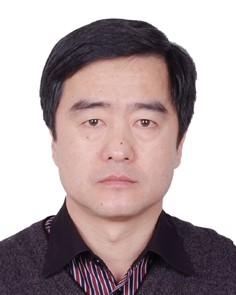 Xincheng Tian (田新诚)合作论文数School of Control Science and Engineering, Shandong University3Donghui Mao合作论文数2
 Tao Cui合作论文数2Ziyue Wang合作论文数2Mei Liu (刘玫)合作论文数2XiaoHong Wang (王晓红)合作论文数2
 Jie Zhao (赵杰)合作论文数School of Mechatronics Engineering, Harbin Institute of Technology2
 Fuxin Du (杜付鑫)合作论文数School of Mechanical Engineering, Shandong University2
 Yixiang Liu (刘义祥)合作论文数School of Control Science and Engineering, Shandong University2Wei Meng (孟炜)合作论文数2Ruyue Sun合作论文数1Wei Wang合作论文数1Xiaohong Wang合作论文数1Weizhe Liu合作论文数1ShiBo Cai (蔡世波)合作论文数1LeHua Yu (于乐华)合作论文数1
 Jiang Wu (吴疆)合作论文数School of Control Science and Engineering, Shandong University1
 Xinli Wang (王新立)合作论文数School of Control Science and Engineering, Shandong University1
 Bing Ji (姬冰)合作论文数School of Control Science and Engineering, Shandong University1Liqing Lu (卢立清)合作论文数1
 Rui Gao (高瑞)合作论文数School of Control Science and Engineering, Shandong University1
 Tianyu Fu (付天宇)合作论文数School of Medical Technology, Beijing Institute of Technology;School of Computer Science & Technology, Beijing Institute of Technology1




