We performed an analysis of published literature related to fruit and vegetable and indexed in the Web of Science®, covering the period 2000–2009. The EU27 and the USA are the two leading actors in terms of number of fruit and vegetable articles published. This paper compares their publication outputs using bibliometric methods. We assessed the fruit and vegetable species, topics (from Web of Science® categories), countries and institutions involved. The top species, topics and institutions are ranked according to their number of publications. Collaboration networks between countries were mapped to visualize the intensity of the relationships involved in international fruit and vegetable research and to obtain an overall picture of the fruit and vegetable research landscape. These results can be useful for policy makers.
Introduction. The fruit and vegetable sector group of the French National Institute for Agricultural Research (INRA) carried out a bibliometric analysis of INRA publications on fruits and vegetables produced between 2002 and 2006. While a previous study focused on scientific publications indexed by the Web of Science, this study took into account the remaining INRA publications, i.e., gray literature, technical papers and scientific papers not indexed by the Web of Science. Materials and methods. Different steps were taken to constitute and process a corpus of INRA researchers' publication data. The citation corpus gathering bibliographic data was mainly constituted using the INRA institutional repository (ProdINRA). To ensure exhaustivity, a survey was carried out to collect INRA researchers' publications. Due to the different types of publications involved, we had to develop an original method to constitute a complete database which could allow bibliometric analysis. The Sphinx Plus(2) Survey program was used to analyze publications and Pajek software was used to visualize networks. Results. A total of 2,224 publications were authored by INRA between 2002 and 2006. We analyzed the typology of fruits and vegetables studied at INRA, the INRA research centers and research divisions involved, the main research topics, and the national and international partners of INRA authors. Graphic visualizations allowed an attractive presentation of relationships between authors within and outside INRA. Conclusion. This study led to the mapping of INRA fruit and vegetable research publications. It confirmed that INRA plays an active role in the field of fruit and vegetable research. French research is carried out in the main INRA research centers located in horticultural and/or fruit regions, particularly in South-Eastern France. Despite the fact that the nature of these publications provides less opportunity for co-publication, this study highlights the relationships between INRA and French partners or foreign countries.
Introduction. The fruit and vegetable sector group of the French National Institute for Agricultural Research (INRA) undertook a bibliometric analysis of INRA scientific academic literature on fruits and vegetables for the 2000-2006 period. This study made it possible to produce quantitative and qualitative indicators that will shed light on the institute's scientific position in relation to the fruit and vegetable sectors. Materials and methods. Different steps were taken to constitute and process a corpus of INRA researcher publication data. The citation corpus gathering bibliographic data was constituted using the Web of Science. The Sphinx data processing program allowed the constituted databases to be structured and manipulated. Results. After the data were cleaned, there was a total of 1463 articles published by INRA authors between 2000 and 2006; this constituted the "fruit and vegetable corpus" studied, which represented 8% of the total number of INRA publications during this period. The typology of fruits and vegetables studied at INRA, the INRA research centres involved, the main subjects addressed by INRA research divisions and the national and international partnerships of INRA authors were analysed. Conclusion. The analysis presented highlights the overall magnitude of research dedicated to fruits and vegetables at INRA. This research is undertaken in the principal research centres of horticulture and/or fruit regions, with a high level of involvement of Southeast centres of France. Partnerships with other French and foreign organisations are numerous. This assessment allows an understanding of the rapid evolution of research that has occurred over the past several years in the fruit and vegetable field, notably the growing involvement of nutrition and consumer sciences. The development of multi-disciplinary and integrated approaches must also be emphasised.
The European Prunus database (EPDB) was created under the auspices of IPGRI (International Plant Genetic Resources Institute) twenty years ago and was first maintained in Sweden. In the nineties, the EPDB was transferred to INRA research centre of Bordeaux and developed to become an interactive database. The accessions incorporated in the database mainly originate from Europe and should have at least passport data and also characterisation data: common (primary) and specific (secondary) descriptors were agreed by the European Prunus Working Group. Public availability is planned at the beginning of 2005 and different queries are under development for the database. With the support of the European Union from 1996 to 1999, a European network on Prunus genetic resources was organised by IPGRI in the context of the European Cooperative Programme for Crop Genetic Resources (ECP/GR). More than 20 countries are involved in the survey of national collections. At present the permanent collections have more than 8 000 accessions for which passport and characterisation data are registered in the EPDB and available via the Internet site of IPGRI. However the web interface to allow direct search is still under development. Concerning European Collections, plans for establishing a Decentralised European Prunus Collection (DEPC) have been established. It is agreed that each country is responsible for its own genetic resources. Not all the material held in national collections is eligible for the DEPC but it concerns essentially original genetic resources responding to the sovereign rights of F. Dosba and A. Zanetto J. Fruit Ornam. Plant Res. Special ed. vol. 12, 2004: 77-85 78 states over the prunus european cooperative programme for genetic resources: their natural resources as proposed by the Convention of Biological Diversity originating from the Rio Conference in 1992. Furthermore contacts have been established between the Prunus and Malus/Pyrus Working Groups in order to establish common strategies for stone and pome fruit genetic resources at the European level.
An in vitro grown interspecific Prunus rootstock, Fereley-Jaspi (R), which had been infected by chip budding with the Plum Pox Potyvirus Marcus strain, was used as experimental material. After excision from Fereley plantlets which had been subcultured 7, 14, 30 days, shoot tips were sorted by size (from 0.3 to 2 mm). Control shoot tips were grown directly on meristem culture medium. Experimental shoot tips were cultured 24 h at 4°C on a preculture medium enriched with dimethylsulfoxide and proline, then treated with modified PVS2 cryoprotective solution and cooled at 1°C/min to −40°C before immersion in liquid nitrogen. When plantlets, from both, control and cryopreserved shoot tips were 4 month old, they were tested by the immunocapture Polymerase Chain Reaction method (IC-PCR) for Plum Pox virus detection. An average of 50 and 20%, respectively for frozen and control shoot tips were virus free. The impact of cryopreservation on producing virus-free plantlets was also studied in relation to shoot tip size and to the duration of subculture of the plantlets before excision of the shoot tips. Both of these parameters influenced the percentage of virus-free plantlets obtained from control shoot tips, but not that obtained from cryopreserved ones.
Shoot tips of two in vitro grown interspecific Prunus rootstocks, Fereley-Jaspi (R) and Ferlenain-Plumina (R), were successfully cryopreserved using a two step freezing method. Excised shoot tips from hardened plantlets were precultured for 24 h on solid medium (modified half strength Murashige and Skoog medium (MS)) supplemented with 5% dimethylsulfoxide and 2% proline. They were transferred to 1.2-ml cryotubes and treated with 0.5 ml of modified PVS2 cryoprotective solution for 20–40 min. Cryotubes were then cooled at 1°C/min to −40°C before being immersed in liquid nitrogen (LN2). After 1 min warming at 40°C, shoot tips were rinsed with MS medium containing 1.2 M sucrose and then plated. First regrowth occurred after 5 days and was evaluated 21 days after plating. The average rate of shoot formation was 69% and 74% for Fereley and Ferlenain respectively, compared with 86% for controls of both hybrids. The roles of several factors, especially hardening procedures and meristem size, in the improvement of survival rates, were discussed.
Dans certaines conditions de températures basses peu avant la méiose, on observe une réduction de la production de pollen et de la nouaison chez le blé.Ces phénomènes sont particulièrement manifestes chez les lignées demi-naines issues de Norin 10, les descendants du géniteur VPM issus d'hybridations interspéciLques et sur- tout chez les hybrides entre ces 2 groupes.Nous ayons fait l'hypothèse que des irrégularités méiotiques pouvaient expliquer cette situation.Une analyse du comportement méiotique, de la fertilité pollinique et de la nouaison a été réalisée sur 4 lignées : « Maris Freeman » (T), «(Champlein x Aronde) 68 » (C), « VPM 1.1.1.2.R4 » (V) et « Naïnari 60S » (U) ; sur les hybrides FI entre ces lignées, sur certains rétrocroisements et sur des plantes F2 du croisement (VU).Nous avons défini un critère de mesure du déficit de fertilité de l'épi, le taux de nouaison, qui est la probabilité d'obtenir un grain dans les 2 premières fleurs de l'épillet.L'observation des 4 premiers épillets fertiles de la base de l'épi semble être suffisante pour réaliser cette estimation.Une corrélation nette a pu être mise en évidence entre le pourcentage de grains de pollen anormaux et le taux de nouaison.Certains génotypes ont des taux de nouaison faibles comme T et surtout V. Ils produisent des FI dont le taux de nouaison dépend du partenaire avec lequel ils sont combinés.Nous observons un taux de nouaison plus faible en moyenne en F2 qu'en F1.L'effet du cytoplasme semble fai- ble.Le comportement méiotique des hybrides est moins régulier que celui des parents.Un excès d'univalents et de multivalents traduit qu' 1 ou 2 translocations réciproques importantes différencient les parents mis en présence.Les irrégularités méiotiques importantes induisent toujours une baisse du taux de nouaison, cependant une méiose régulière ne conduit pas obligatoirement à un taux de nouaison élevé.Les défauts d'association des chromosomes en métaphase 1 n'expliquent donc que très partiellement la réduction de nouaison observée.
come from teaching and research institutions in France or abroad, or from public or private research centers.L'archive ouverte pluridisciplinaire HAL, est destinée au dépôt et à la diffusion de documents scientifiques de niveau recherche, publiés ou non, émanant des établissements d'enseignement et de recherche français ou étrangers, des laboratoires publics ou privés.
Afin de préciser l'effet de la température sur l'expression des symptômes de la prolifération du pommier, des plants sains et des plants contaminés de pervenche de Madagascar et de jeunes pommiers issus de bouturage de racines ont été mis en serre ou en chambre climatisée à deux conditions de température.Pour des températures comprises entre 21 et 24 °C, les symptômes typiques de la maladie apparaissent et les organismes de type mycoplasme (MLO) associés à la maladie sont détectés au moyen du test DAPI dans les tubes criblés des pétioles ou des racines.Entre 29 et 32 °C les symptômes ne s'expriment pas et les MLO sont détectés uniquement au niveau des racines.Le passage des plants de 29-32 °C à 21-24 °C permet la réapparition des symtômes et la détection des MLO dans les feuilles.
Chez le colza, l'absence de restauration de la stérilité mâle génocytoplasmique d'origine radis conduit à envisa- ger l'introgression de ce caractère, du radis au colza.La 1" génération, issue du croisement entre le colza androstérile et un Raphano-Brassica (amphiploïde radis-chou) présente une bonne fertilité mâle.La présence de gènes de restauration est confirmée au cours des générations successives.Les analyses de la méiose mâle de la 2 e génération montrent un doublement partiel du stock chromosomique.Ce phénomène est probablement lié à une fécondité femelle réduite.Au cours des 3 e et 4 e générations, il apparaît quelques familles plus fécondes et une baisse sensible du nombre de chromosomes.L'obtention en 6 e génération de plantes très fécondes doit permettre d'améliorer la restaura- tion.
published or not.The documents may come from teaching and research institutions in France or abroad, or from public or private research centers.L'archive ouverte pluridisciplinaire HAL, est destinée au dépôt et à la diffusion de documents scientifiques de niveau recherche, publiés ou non, émanant des établissements d'enseignement et de recherche français ou étrangers, des laboratoires publics ou privés.
E Des croisements ont été réalisés entre Aegilops squarrosa n° 33 résistant à Septoria nodorum et divers blés.Le comportement méiotique très irrégulier en FI pour certaines lignées (pourcentage élevé de multivalents) s'améliore fortement en F2.Le comportement vis-à-vis de la septoriose présente une grande variabilité et laisse entrevoir la possibilité de sélectionner des lignées plus courtes et plus résistantes quc !. Comtal » à partir de ce matériel.
Les lignees d'addition des chromosomes Mv d'Aegilops ventricosa (2 n = 28, genomes Dv Mv) ont ete extraites dans le genotype du ble tendre a partir du croisement (Ae. ventricosa, n° 11 x T. aethiopicum, n° 1A)x T. aestivum cv. « Moisson » 3, suivi de 8 generations d'autofecondation (fig. 1). L'analyse du comportement meiotique des plantes au cours des premieres generations, revele un taux important d'irregularites meiotiques qui peut s'expliquer par des differences de structure chromosomique entre les geniteurs mis en presence (tabl. 1 et 2). La selection, au cours des generations a partir du premier retrocroisement par « Moisson », a porte essentiellement sur la fertilite et la regularite meiotique (tabl. 3). Cependant, la stabilisation, au niveau 44 chromosomes, s'est effectuee differemment selon les lignees (fig. 2). Le comportement meiotique des lignees est regulier depuis la generation F4 de R2 et le taux d'asyndese est faible (tabl. 6) ; cependant, a la generation F8 de R2 un pourcentage non negligeable d'univalents a ete observe chez les plantes a 2 n = 44 (fig. 3). Les lignees d'addition obtenues ont ete regroupees en 9 types d'apres leurs caracteristiques morphologiques, agronomiques ou biochimiques. L'analyse en meiose des hybrides intra ou inter types met en evidence les types 5, 7, 8, 9
 Benoît Jeannequin合作论文数6
 D. Fournier合作论文数4G. Doussinault合作论文数4Am Tanguy合作论文数3MT DEBOUCAUD合作论文数2Roger Rivoal合作论文数2Joseph Jahier合作论文数2Marthe Brison合作论文数2Marie-Violaine Tatry合作论文数2Gérard Doussinault合作论文数2Maxime Trottet合作论文数2J.C. Montigaud合作论文数1j bulit合作论文数1A. Shani合作论文数1Y. Bashan合作论文数1m pitrat合作论文数1rosa sanchezmonge laguna de rins合作论文数1R. Dahan合作论文数1RUT Ideses合作论文数1Hugues Leiser合作论文数1
 J. T. Klug合作论文数1Ba Peleg合作论文数1Françoise ROUSSELLE合作论文数1Alloys Hüttermann合作论文数1J Renaudin合作论文数1S. Cohen合作论文数1R Baker合作论文数1
 Yael Zilberstein合作论文数1M. Chen合作论文数1F Quetier合作论文数1
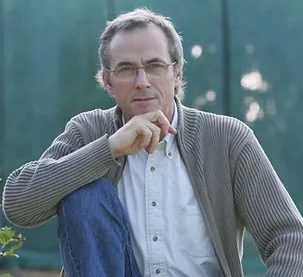 Antoine Kremer合作论文数Institut National De La Recherche Agronomique, Universite de Bordeaux1
 Hefetz Abraham合作论文数The George S. Wise Faculty of Life Sciences, School of Zoology, Tel Aviv University1Tatry Marie-Violaine合作论文数1
 Yigal Cohen合作论文数The Mina and Everard Goodman Faculty of Life Sciences, Bar-Ilan University1E. Breuer合作论文数1Jean Dunez合作论文数1M. Platt合作论文数1
 J. Katan合作论文数Department of Plant Pathology and Microbiology, The Robert H. Smith Faculty of Agriculture, Food & Environment, The Hebrew University of Jerusalem1Pierre Davet合作论文数1John J Halperin合作论文数1
 Yoram Yom Tov合作论文数Department of Zoolog, George S. Wise Faculty of Life Sciences, Tel Aviv University1E. Dunkelblum合作论文数1
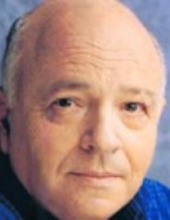 Ilan Chet合作论文数Department of Plant Pathology and Microbiology, Robert H. Smith Faculty of Agriculture, Food & Environment, Hebrew University of Jerusalem1Anne Guirao合作论文数1M. Lansac合作论文数1Patrick Maison合作论文数1R. Delbos合作论文数1Fernand Vedel合作论文数1Paulette Penard合作论文数1




