Hypostatization, (reification in one of its many senses) or the fallacy of misplaced concreteness refers to an abstraction being “treated as if it were a concrete, real event, or physical entity.” Hypostatization has occurred when concepts, frameworks, and theories freeze into pictures of reality that cannot be shaken by reality.
On 5 January 1968, the news came from Czechoslovakia that Antonin Novotny, one of the most durable leaders in the Soviet bloc, had been replaced as Party First Secretary. In the months which followed January, the world witnessed a Soviet-bloc country attempting to change its Soviet-style political system into one which would combine the best aspects of socialism and democracy, Czechoslovakia came alive with political activity, and its Communist Party, striving to keep at the head of the reform movement, earned a degree of popular support unknown in any other Communist-ruled country.Although post-January developments in Czechoslovakia surprised many, both inside and outside the country, they were, in fact, quite understandable in view of developments which had been going on within the country long before January 1968. Although it was a change of Party leadership which opened the floodgates to change, the shape of what happened, as well as the driving forces behind it, were already determined long before the fall of Novotny.
Confused students researching papers not knowing where they are going. Articles, lectures, and books on exciting topics that turn out to be boring. Such familiar phenomena are symptoms of a widespread, largely unconscious methodological habit of focusing on topics rather than problems. This habit rests on views about knowledge that are deeply ingrained in commonsense knowledge and in the methodology of mainstream social science. Such views saturate the understanding of scientific inquiry assumed by most methods textbooks. This article criticizes the method of topics and contrasts it with the method of problems. The word "topic" suggests that there is some surface to cover, but not why covering it might be interesting. Interesting research is problem-driven. It begins with a sense that something is amiss with existing knowledge and requires explanation. Problem-driven research begins, not with collection of data or facts, or with clarification of concepts, but with identification of inconsistencies or gaps in existing knowledge. It seeks to solve problems through free invention and severe criticism of hypotheses.
The article examines the problem of relations between the General and the Unique in the social and political sciences. The author highlights the different views on this perspective: some scientists explain specific cases by bringing them under general theories and laws while others researchers emphasize that each case, each phenomenon is unique and shouldn't be generalization. The author theorizes that there is a methodological bridge between the generalizing spirit of social science and uniqueness of events and cases.
Confused students researching papers not knowing where they are going, articles, lectures, and books on exciting topics that turn out to be boring. Such familiar phenomena are shown to be symptoms of the widespread, largely unconscious methodological habit of focusing on topics rather than problems. This habit rests on views about knowledge deeply ingrained in commonsense knowledge and much of social scientific inquiry. Such views saturate the understanding of scientific inquiry assumed by most social science methods textbooks. The word topic suggests that there is some surface to cover, but not why covering it might be interesting. Interesting research is problemdriven. It begins with a sense that something is amiss with existing knowledge and requires explanation. The method of topics is criticized and contrasted with the method of problems. The method of problems begins, not with data collection, but with identification of inconsistencies in existing knowledge. It seeks solutions to problems through free invention and severe criticism of hypotheses. The method of problems is intellectually challenging, since the human psyche naturally tends to skip over or blur them without solving them. There is no cookbook for the method of problems. The method of topics is criticized and contrasted with the method of problems. The method of problems seeks solutions to inconsistencies in existing knowledge through free invention and severe criticism of hypotheses.Keywords: problem, intellectual problem, research question, topic, method, methodology, problemdriven inquiry.
Concepts shape and guide thought, both fruitfully and unfruitfully. Sometimes concepts lead inquiry to previously unimagined depths. Sometimes, they lead astray, or block thought and prevent inquiry from going anywhere. Sometimes the most penetrating and fruitful of concepts become inquiry blockers. And all concepts, even the most penetrating and fruitful, block as well as probing, depending on the circumstances. What it is that makes some concepts and frameworks serve as depth probes, while others impede inquiry? What is it that makes some concepts and frameworks depth probes under certain conditions, and inquiry blockers under other conditions? The present paper explores the roles concepts, frameworks, and methods play in capturing reality and preventing its capture. It explores the conditions under which concepts that have served as depth-probes may turn into inquiry-blockers. It suggests practical guidelines for becoming aware of the qualities that distinguish depth probing concepts from inquiry blocking concepts, and which distinguish fruitful from degenerating research programs. Finally, by way of illustration, the analytical instruments developed in the paper are applied to three specific examples of conceptual blockage in political science and political theory — problems arising in the study of democracy, power, and totalitarianism.
Karl Popper never even attempted to work out an original theory of liberal democracy. His interests in politics were limited in scope, and different aspects of his political thought differ greatly in depth and quality. Despite a keen interest in politics throughout his life, Popper remained an amateur in most matters political. He never even attempted to grapple with the standard range of problems that politicians and civil servants confront, nor did he participate in debates in contemporary political philosophy. This paper places Popper’s political thought in context, suggesting the aims and limits of his project in political philosophy, and some of the strengths and weaknesses of his work. It concludes by discussing the relevance and importance of Popper’s work for both political philosophy, empirical social science, and post-totalitarian politics.
There has been much discussion in scholarly literature as to whether or not civil society exists in Russia. Some argue that, due to its totalitarian past, Russia lacks the networks of interpersonal trust and state-independent voluntary organizations necessary for the emergence of a vibrant civil society. Others find that the inflexibility and inertia which citizens encounter in political institutions has resulted in a new form of civil society with greater emphasis on smaller units of cooperation between family and friends. However, it turns out to be no simple matter to determine who is right. Even a fleeting glance at the literature makes clear that no clear conception of civil society exists. This paper seeks to transcend this war of words by approaching the problem in a different way. There may be no consensus as to a definition of civil society. Yet it would not be difficult to reach agreement on some set of regimes that would be widely, ir not universally recognized as possessing a vital civil society. Civil society refers to a significant measure of autonomy from government. Where civil society is robust, society or parts of it mobilize to resist and oppose attempts of governments to exceed established boundaries of legitimacy. Such boundaries may differ from one society to another. So may be the mechanisms by which society resists illegitimate government incursions. However, regimes under which society regularly demonstrates its autonomy can be identified. Their typical government-resisting behaviour can be observed and objectively described. We will attempt to assess the state of civil society in Russia by keeping such regimes in view.
It is unfortunate that United States of America has fallen into position of such great influence in the world order that has emerged since the collapse of the USSR. Not that the moral level of the U.S. is worse than other countries. In the author's view, the U.S. is above average in pursuing high moral principles in both its domestic and international politics. The problem is that the U.S. has sometimes gotten itself and other countries into serious trouble because of its efforts to follow high moral principles. This certainly does not apply to all of American foreign. More often than not, U.S. foreign policy has followed along sensible, pragmatic lines. The present paper contrasts U.S. policy towards post-Soviet Russia with U.S. policy towards the China. Policy towards Russia is presented as an example of where moralism has been getting the upper hand. Policy towards China is presented as an example of where pragmatism has usually prevailed. The sources of these different approaches are explored in terms of the different circumstances in the history of these relationships.
Social scientists who take the ideal of a science of society seriously believe that they have adopted only a method, and certainly not a metaphysics. Yet although these prescriptions appear purely methodological, they tacitly assume a picture of the kind of reality to be described. Methodological rules borrowed from Newtonian physics result in a picture of society in the image of Newtonian physics. This method, adopted in the name of objectivity turn out to be, as Hayek puts it, 'a very prejudiced approach which, before it has considered its subject, claims to know what is the most appropriate way of investigating it.' I propose to retain the ideal of formulating hypotheses objectively describing orderliness in the social world which can be tested against reality. Once one asks what the sources of order in the social world might be, it is easy to recognize a wide variety of sources. A typical description and explanation of a pattern in society is likely to contain mixtures of types of variables, including, among other things, mental phenomena, habits, reasons, and social structures. All can be treated as real. All can be described objectively and can serve as constraints on hypothesizing. The test is, in Bronowski's words is: 'Will the concept work? Does it give an unforced unity to the experience of men? Does the concept make life orderly, not by edict but by fact?'
This paper attempts to show how the widespread illusion of Soviet-type regimes as totalitarian systematically blinded scholars, policy-makers, and the broader public, to processes of change that had begun to work even before Stalin’s death. It also takes the totalitarian illusion as a concrete example of a more general blinding influence of essentialistic methodology and thought on social science research, and suggests ways of breaking out of this essentialist trap. The essentialist methodology dominating Soviet studies, diverted attention away from the underlying dynamics and developmental tendencies of these regimes. Soviet-type regimes, it was assumed, shared a totalitarian essence, in terms of which they were to be studied and understood. Over time, gaps between the totalitarian model and reality became increasingly apparent, and the model was subjected to devastating barrages of conceptual critiques and empirical refutations. Some scholars attempted to accommodate such criticism by advancing significant modifications, yet most of these modifications continued to describe these regimes in terms of a modified totalitarian essence. Some attempts were made to integrate the study of Soviet-type regimes into mainstream social science, yet no alternative paradigm ever emerged to replace the totalitarian model - even after the collapse of these regimes. The concept of totalitarianism, despite modifications, has remained influential in both scholarly and popular understanding of the nature of Communist regimes, even to the present day. This paper points a way out of the morass of the essentialistic approach that dominated Soviet studies. Essentialistically-understood totalitarianism mistakenly collapses three distinct senses of the concept: 1) totalitarianism as normative theory; 2) totalitarianism as ideology in practice; and 3) totalitarianism as descriptive of empirical reality. To some extent, totalitarian norms were embedded in the actual practice of regimes called totalitarian, with each regime embodying its own peculiar set of totalitarian norms in practice. Yet, institutional constraints prevented these regimes from coming even close to the normative ideal of totalitarianism. This paper suggests that if these three senses are disagregated, the way may be opened toward integrated theory of those regimes that have been called totalitarian.
Two years after the Soviet invasion of Hungary, Janos Kadar, the leader installed by the Soviets was already proclaiming that 'anyone who is not against us is for us.' Two years after the invasion of Czechoslovakia in 1968, only the highest levels of party and government had been effectively 'normalized.' The real purges were yet to come, and they continued for many years. In the 1980s, when the East European communist states were compared with regard to degree of reform, Hungary usually headed the list, while Czechoslovakia was usually ranked near the bottom, along with Rumania. Because of the massive rollback of reforms and extensive purges of reformists it is easy to see this as evidence that the Soviets simply wanted to crush the Prague Spring, and that they eventually achieved what they had wanted from the start. Largely overlooked is how difficult it was for the Soviet leadership to make up its collective mind as to whether the Czechoslovak reform movement represented salvation for the communist regime in Czechoslovakia, or whether it represented a mortal danger to that regime. Evidence of both attitudes abounds throughout the pre-intervention period, and this profound ambivalence in Soviet attitudes toward the reform movement goes a long way toward accounting for the oscillations in Soviet policy toward Czechoslovakia during the Prague Spring.
The experts on Soviet-type regimes, in both academe and government did not foresee even the possibility that something like thoroughgoing liberal reform might emerge from within the ruling elite of the Soviet Union. This failure to anticipate is particularly intriguing since a similar reform movement had emerged in Czechoslovakia, two decades before, for similar reasons, and also from within the ruling Communist elite. In retrospect, the causes of Perestroika and the collapse of Soviet-type regime appeared so obvious that few who specialized in Soviet-type regimes were interested in probing into how drives for thoroghgoing reform emerged from within the ruling elites. Why did intelligent, well-informed scholars and policy makers fail to notice what was happening in broad daylight. Other aspects of the explanation were not as obvious, be could easily have been noticed and fruitfully studied, rather than being ignored. How, for example, could such decent humanitarians as Mikhail Gorbachev and Alexander Dubcek, have emerged from within the leaderships of such regimes. This paper argues that the essentialist methodology dominating Soviet studies, diverted attention away from the underlying dynamics and developmental tendencies of these regimes. Soviet-type regimes, it was assumed, shared a totalitarian essence, in terms of which they were to be studied and understood. To be sure, over time, gaps between the totalitarian model and reality became increasingly apparent, and the model was subjected to devastating barrages of conceptual critiques and empirical refutations. Various scholars attempted to accommodate such criticism by advancing significant modifications, yet most of these modifications continued to describe these regimes in terms of a modified totalitarian essence. Some attempts were made to integrate the study of Soviet-type regimes into mainstream social science, yet no alternative paradigm ever emerged to replace the totalitarian model–even after the collapse of these regimes. The concept of totalitarianism, despite modifications, has remained influential in both scholarly and popular understanding of the nature of Communist regimes, even to the present day. This paper points a way out of the morass of the essentialistic approach that dominated Soviet studies. Essentialistically-understood totalitarianism mistakenly collapses three distinct senses of the concept: 1) totalitarianism as normative theory; 2) totalitarianism as ideology in practice; and 3) totalitarianism as descriptive of empirical reality. Since these senses are interrelated, and since they all belong to most usages of the word, they are commonly confused with each other. Propagandists of totalitarian regimes were in full agreement with their most bitter opponents in describing these regimes as conforming to the norms of totalitarianism. Yet, these descriptions never came close to reality. To a mild extent, totalitarian norms were embedded in the actual practice of regimes called totalitarian, with each regime embodying its own peculiar set of totalitarian norms in practice. Finally, institutional constraints prevented these regimes from coming even close to the normative ideal of totalitarianism. This paper suggests that if these three senses are disagregated, the way may be opened toward integrated theory of those regimes that have been called totalitarian.
Seeks to identify serious failures, strong rational criticisms and ethical arguments leveled against the various version of socialism that have so far been attempted. Asks what all of this implies for anyone interested in formulating an intellectually honest and morally defensible socialist program, steering a realistic course between utopianism and cynicism. The concept of socialism as an ideal is distinguished from the various concrete embodiments of it in actual movements, programs, experiments, and explicitly-formulated theories and ideologies that have been called socialist. Argues that, as is also true of the closely-related concept of democracy: The concept of socialism is largely utopian; The concept is vague and stands for a wide variety of different, often contradictory ideals and theories. These concrete theories are not only normative, but also rest on empirical and metaphysical assumptions about man and society, many of which have been refuted or rendered problematic by experience and criticism.
"Political power" is often used unproblematically. Yet, when attempt is made to think rigorously, it turns out to be difficult to pin down. It means many different things, which the present paper attempts to sort out. Much of the power of any state is based on myth, and largely illusory. Cases in which one person compels another are not as as significant as usually believed. Mechanical, push-pull images of power, which are amenable to measurement tend to be misleading and of not too useful. The sense of power as the ability to achieve aims is of limited utility, since so much depends on the nature of the aims pursued, and the attitudes of those. The most "powerful" may be those who know how to run with the current, yet this often means moderating aims. Neustadt argues that Presidential power amounts to persuading people to do what they should have had the sense to do without being persuaded. Bachrach and Baratz point out that to attempt to understand power solely in terms of ability to initiate and veto proposals is to ignore the possible exercise of influence in limiting the scope of initiation. Additional problems arise when the attempt is made to think about power as an attribute of social wholes, like classes, or power elites. Power is a contested concept, but it is not essentially contested. Its problematic character can be resolved by breaking it down into a wide variety of different, yet readily identifiable and fruitfully researchable usages.
Despite the centrality of power to thinking about Soviet-type politics, the nature of power in such regimes has, strangely, remained largely unproblematic. Power has tended to be viewed as self-evident rather requiring of explanation. Since the ruler(s) have been viewed as having overwhelming means at their disposal, it is only too obvious why their power should be absolute. There thus seems to be nothing puzzling about how and why the rulers can impose their will on society. On the other hand, over the years, both empirical research and critical reflection how revealed gaping holes in this once standard picture of power in Soviet-type regimes. The present paper seeks to provide an integrated view of the power system, consistent with the evidence that the apparent and power groups actually are powerful in certain ways, but which is also consistent with evidence of the weakness and significant areas of paralysis of the power system.
Holding unlimited economic freedom to be nearly as dangerous as physical violence, Karl Popper advocated '' piecemeanl '' economic intervention by the state. Jeremy Shearmur's recent book on Popper contends that as the philosopher aged, his views grew closer to classical liberalism than those expressed in The Open Society-consistently with what Shearmur sees as the logic of Popper's arguments. But Popper's philosophy, while recognizing that any project aimed at bringing about social change must be immensely complex and fraught with difficulty, retains grounds for hope about the purposeful use of government to bring about desirable social results.
Popper is in substantial agreement with both Marx's ideals and theoretical achievements. Nevertheless, he accuses Marx of having misled scores of intelligent people into believing that historical prophesy is the scientific way of approaching social problems. While Marx's writings do not on balance put forward a mechanical and simplistic view of history according to which all societies were predestined to go through a single, inexorable sequence of stages, several features of these writings encourage such an interpretation. Problems in Popper's critique of Marxism are identified: (1) His attribution of causality to Marx's ideas may itself have a historicist flavor. (2) He does not convincingly demonstrate the responsibility of Marxism for the downfall of democracy and rise of totalitarianism. (3) Doctrines which Popper identifies as pernicious can be and often have been tamed and put to good use in practice. (4) It is unclear that Marx was in fact a moral positivist as Popper claims. (5) Historicism, by Popper's own testimony pervades even the writings of liberal political thinkers. The final section zeroes on those of Popper's criticisms of Marx that hit the mark: a) their deceptive way of selling revolution as the only way to bring about real change in society, excluding any concern for social technology; and b) those features that make them resistant to correction by experience and criticism.
Addresses the problem of whether an objective, realistic social science is possible or whether any social science is bound to remain merely a form of ideology-that is of systematically false, distorted belief. Formulates some ways of thinking about an autonomous social reality that can serve as objective constraint on theorizing and as court of appeal for hypothesis testing, while taking into account various objections that have been leveled against the ideal of a realistic, objective social science_-such as those referring to the mechanistic bias of mainstream social science, the openness of social systems, the plasticity of social reality, the contribution of meaning to social reality, the inevitable biases of theoretical and conceptual perspective and the social construction of reality. Most objections to the ideal of an "objective" social science affect only a particular conception of objectivity, i.e. the "objectivity" of the Newtonian model. What is thought to be the Scientific Method--a philosophically-neutral, empirically content-free method of inquiry actually imports into social science an unrecognized ontology. This ontology is prejudice as what the social world is like. Confused with objectivity it becomes an important source of deformed representation of reality in mainstream social science. A conception of objectivity and sociological realism is advanced that is detached from this Newtonian ideology. It is not pretended that ideological deformation can be rooted out of either science or politics, but that it can be better brought under control if its sources are better understood.
 s shehata合作论文数1Eric Hershberg合作论文数1Fred A. Lewis合作论文数1JC FOSTER合作论文数UNIV WISCONSIN PARKSIDE1Joanna C. Grant合作论文数1Philip Harris合作论文数1
 Mark Aronoff合作论文数Department of Linguistics, College of Arts and Sciences, Stony Brook University1Lowell Gustafson合作论文数1
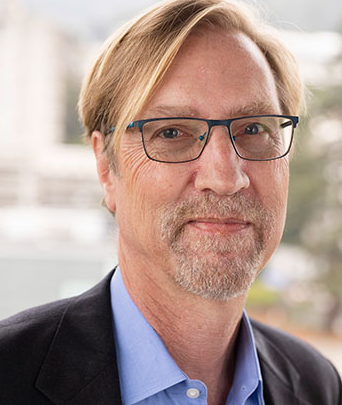 Paul Pierson合作论文数Department of Political Science, University of California, Berkeley1
 Stephen Skowronek合作论文数Department of Political Science, Yale University1
 Rogers M. Smith合作论文数Department of Political Science, College of Arts & Sciences, University of Pennsylvania1
 Sherrill Stroschein合作论文数Department of Political Science, Faculty of Social & Historical Sciences, University College London1
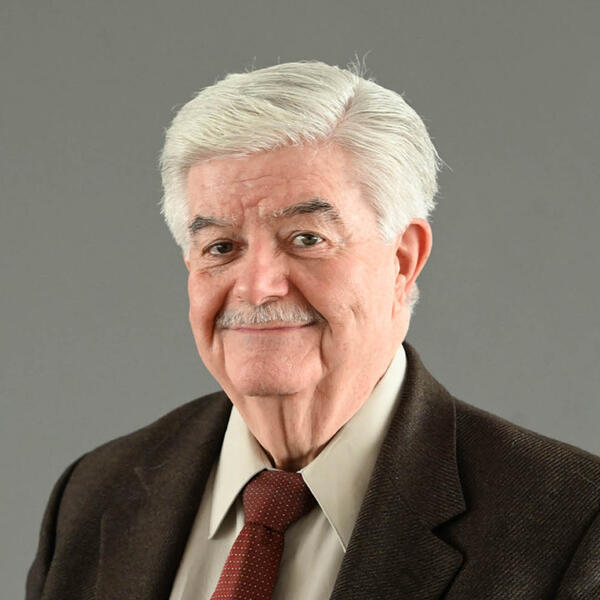 Richard K. Betts合作论文数School of International and Public Affairs, Columbia University1Tulis J J合作论文数1Gottschalk Michael E合作论文数1Simon D. W. Frost合作论文数1
 Gere diZerega合作论文数CritiTech1
 Derek Hart合作论文数ANZAC Research Institute1
 Stanford T Shulman合作论文数Division of Pediatric Infectious Diseases, Department of Pediatrics, Feinberg School of Medicine, Northwestern University1
 James Sowers合作论文数Dalton Cardiovascular Research Center;University of Missouri;Center for Diabetes and Cardiovascular Research;Division of Endocrinology, School of Medicine, Wayne State University1
 Han-Jung Chae合作论文数1Dave Edwards合作论文数1
 John Gerring合作论文数Department of Government, College of Liberal Arts, University of Texas at Austin1
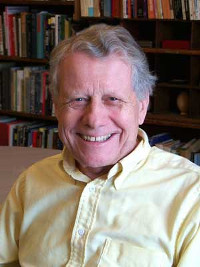 Charles Tilly合作论文数University of Michigan1Mark Mattern合作论文数1
 Tracy Lightcap合作论文数Department of Political Science;LaGrange College1
 Joel Migdal合作论文数University of Washington1Barbara Kane Schneider合作论文数1Stephen Eric Bronner合作论文数1
 Jack L. Walker合作论文数1
 Thomas M. Keck合作论文数Oxford University1
 B. I. P. Barratt合作论文数AgResearch Invermay1Deborah Baumgold合作论文数1Keir A. Lieber合作论文数1G. J. Kasza合作论文数1
 Jennifer L. Hochschild合作论文数Department of Government, Harvard University/Department of African and African American Studies, Harvard University/Harvard Kennedy School, Harvard University1
 William H. Sewell Jr.合作论文数Department of History, Division of the Social Sciences, University of Chicago1
 Robert Pape合作论文数Department of Political Science, The University of Chicago1Robert J Art合作论文数1
 Stephen Walt合作论文数John F. Kennedy School of Government, Harvard University1
 Ashutosh Varshney合作论文数Department of Political Science, Brown University1Linda Zerilli合作论文数1Angie C. Lin合作论文数Solid-State and Photonics Laboratory, Stanford University1
 John J. Mearsheimer合作论文数Political Science Department, University of Chicago1Robert J. Spitzer合作论文数1Raymond Duvall合作论文数University of Minnesota;University of British;University of Minnesota, University of British1
 Michael C. Desch合作论文数Department of Political Science, College of Arts and Letters, University of Notre Dame1
 James N. Kirkpatrick合作论文数Department of Bioethics & Humanities, School of Medicine, University of Washington;Department of Internal Medicine, School of Medicine, University of Washington1
 Julie Novkov合作论文数Department of Political Science;University at Albany;Department of Political Science, University at Albany1




