Efficient separation of minor actinides and lanthanides from used nuclear fuel could potentially lead to the development of sustainable nuclear fuel cycles. Herein, we report an in-depth study on selectivity and speciation in the extraction of the trivalent minor actinide Am and rare earth metal ions with a pre-organized phenanthroline-based ligand in a hydrocarbon solvent system relevant to nuclear fuel reprocessing. The 1 : 1 and 2 : 1 ligand-to-metal complexes dominate the speciation in the organic solvent over a range of ligand-to-metal concentrations, as evidenced by experimental data and supported by modeling.
We report a new family of preorganized bis-lactam-1,10-phenanthroline (BLPhen) complexants that possess both hard and soft donor atoms within a convergent cavity and show unprecedented extraction strength for the trivalent f-block metal ions. BLPhen ligands with saturated and unsaturated δ-lactam rings have notable differences in their affinity and selectivity for Am(III) over Eu(III), with the latter being the most selective mixed N,O-donor extractant of Am(III) reported to date. Saturated BLPhen was crystallized with five Ln(III) nitrates to form charge-neutral 1:1 complexes in the solid state. DFT calculations further elaborate on the variety of effects that dictate the performance of these preorganized compounds.
The thermodynamics and kinetics of crystallization of sodium sulfate with a tripodal tris-urea receptor (L1) from aqueous alkaline solutions have been measured in the 15-55 degrees C temperature range for a fundamental understanding of the elementary steps involved in this sulfate separation method. The use of radiolabeled (Na2SO4)-S-35 provided a practical way to monitor the sulfate concentration in solution by beta liquid scintillation counting. Our results are consistent with a two-step crystallization mechanism, involving relatively quick dissolution of crystalline L1 followed by the rate-limiting crystallization of the Na2SO4(L1)(2)(H2O)(4) capsules. We found that temperature exerted relatively little influence over the equilibrium sulfate concentration, which ranged between 0.004 and 0.011 M. This corresponds to 77-91% removal of sulfate from a solution containing 0.0475 M initial sulfate concentration, as found in a typical Hanford waste tank. The apparent pseudo-first-order rate constant for sulfate removal increased 20-fold from 15 to 55 degrees C, corresponding to an activation energy of 14.1 kcal/mol. At the highest measured temperature of 55 degrees C, 63% and 75% of sulfate was removed from solution within 8 and 24 h, respectively. These results indicate the capsule crystallization method is a viable approach to sulfate separation from nuclear wastes.
The guanidine recommended for the Next-Generation Caustic-Side is N,N ,N -tris(3,7-dimethyloctyl)guanidine (TiDG). Systematic testing has shown that it is significantly more lipophilic than the previously recommended guanidine DCiTG, the active extractant in the commercial guanidine product LIX -79, while not otherwise changing the solvent performance. Previous testing indicated that the extent of partitioning of the DCiTG suppressor to the aqueous strip solution is significantly greater than expected, potentially leading to rapid depletion of the suppressor from the solvent and unwanted organic concentrations in process effluents. Five candidate guanidines were tested as potential replacements for DCiTG. The tests included batch extraction with simulated waste and flowsheet solutions, third-phase formation, emulsion formation, and partition ratios of the guanidine between the solvent and aqueous strip solution. Preliminary results of a thermal stability test of the TiDG solvent at one month duration indicated performance approximately equivalent to DCiTG. Two of the guanidines proved adequate in all respects, and the choice of TiDG was deemed slightly preferable vs the next best guanidine BiTABG.
A multivariate mathematical model describing the extraction of cesium from different mixtures of sodium hydroxide, sodium nitrate, sodium chloride, and sodium nitrite containing potassium at variable concentrations has been established. It was determined based on the cesium, potassium, and sodium distribution ratios obtained with simple systems containing single salts. These experimental data were modeled to obtain the formation constants of complexes formed in the organic phase based on specified concentrations of components in both organic and aqueous phases. The model was applied to five different SRS waste simulants, and the corresponding cesium extraction results were predicted satisfactorily, thus validating the model.
This paper describes the chemical performance of the Next-Generation Caustic-Side Solvent Extraction (NG-CSSX) process in its current state of development for removal of cesium from the alkaline high-level tank wastes at the Savannah River Site (SRS) in the US Department of Energy (USDOE) complex. Overall, motivation for seeking a major enhancement in performance for the currently deployed CSSX process stems from needs for accelerating the cleanup schedule and reducing the cost of salt-waste disposition. The primary target of the NG-CSSX development campaign in the past year has been to formulate a solvent system and to design a corresponding flowsheet that boosts the performance of the SRS Modular CSSX Unit (MCU) from a current minimum decontamination factor of 12 to 40,000. The chemical approach entails use of a more soluble calixarene-crown ether, called MaxCalix, allowing the attainment of much higher cesium distribution ratios (DCs) on extraction. Concurrently decreasing the Cs-7SB modifier concentration is anticipated to promote better hydraulics. A new stripping chemistry has been devised using a vitrification-friendly aqueous boric acid strip solution and a guanidine suppressor in the solvent, resulting in sharply decreased DCs on stripping. Results are reported herein on solvent phase behavior and batch Cs distribution for wastemore » simulants and real waste together with a preliminary flowsheet applicable for implementation in the MCU. The new solvent will enable MCU to process a much wider range of salt feeds and thereby extend its service lifetime beyond its design life of three years. Other potential benefits of NG-CSSX include increased throughput of the SRS Salt Waste Processing Facility (SWPF), currently under construction, and an alternative modular near-tank application at Hanford.« less
When certain macrocyclic anion receptors are added to a chloroform solution of the nitrate form of a lipophilic quaternary ammonium salt (methyltri-C8,10-ammonium nitrate, Aliquat 336N), the extraction of sulphate from an aqueous sodium nitrate solution via exchange with the organic-phase nitrate is significantly enhanced. Eight macrocycles were surveyed, including two derivatives of a tetraamide macrocycle, five derivatives of calix[4]pyrrole and -decafluorocalix[5]pyrrole. Under the hypothesis that the enhancement originates from sulphate binding by the anion receptors in the chloroform phase, it was possible to obtain reasonable fits to the sulphate distribution survey data based on the formation of 1:1 and 2:1 receptor:sulphate complexes in the chloroform phase. Apparent 1:1 sulphate-binding constants obtained from the model in this system fell in the range [image omitted]. Comparison of the results for the various anion receptors included in this study reveals that sulphate binding is sensitive to the nature of the substituents on the parent macrocycle scaffolds in a way that does not follow straightforwardly from simple chemical expectations, such as electron-withdrawing effects on hydrogen-bond donor strength.
The combined extraction of cesium and strontium from caustic wastes can be achieved by adding a crown ether and a carboxylic acid to the Caustic-Side Solvent Extraction (CSSX) solvent. The ligand 4,4'(5')-di(tert-butyl)cyclohexano-18-crown-6 and one of four different carboxylic acids were combined with the components of the CSSX solvent optimized for the extraction of cesium, allowing for the simultaneous extraction of cesium and strontium from alkaline nitrate media simulating alkaline high level wastes present at the U.S. Department of Energy Savannah River Site. Extraction and stripping experiments were conducted independently and exhibited adequate results for mimicking waste simulant processing through batch contacts. The promising results of these batch tests showed that the system could reasonably be tested on actual waste.
This work provides a proof-of-principle demonstration that Ti(III)-catalyzed electrochemical techniques could potentially be used for reduction of ClO4− in small waste streams, such as the regeneration of selective anion-exchange resins that are loaded with ClO4−. The technique may not be directly applied for the treatment of large volumes of ClO4−-contaminated water at relatively low concentrations because of its slow reaction kinetics and the use of chemical reagents. Further studies are needed to optimize the reaction conditions in order to achieve a complete reduction of ClO4− and the regeneration of spent resin beds. Alternative complexing and reducing agents may be used to enhance the reaction completeness of sorbed ClO4− in the resin and to overcome potential clogging of micropores within the resin beads resulting from the precipitation of TiO2.
Silicone rubber has received attention as an alternative to polyvinyltoluene in applications in which the scintillator is exposed to high doses of radiation because of the increased resistance of the rubber to the formation of blue-absorbing color centers. Work by Bowen, et al, and Harmon, et aL, has demonstrated their properties under gamma/X-ray irradiation, and Bell, et aL have shown their response to thermal neutrons. This last work, however, provides an example of a silicone in which both the boron and the scintillator are contained in the rubber as solutes, a formulation which leads to the precipitation of solids and sublimation of the boron component. In the present work we describe a scintillator in which the boron is chemically bonded to the siloxane and so avoids the problem of precipitation and loss of boron to sublimation. Material containing up to 18% boron, by weight, was prepared, mounted on photomultipliers, and exposed to both neutron and gamma fluxes. Pulse height spectra showing the neutron and photon response were obtained, and although the light output was found to be much poorer than from samples in which boron was dissolved, the, higher boron concentrations enabled essentially 100% neutron absorption in only a few millimeters of rubber.
 Gilbert M. Brown合作论文数24
 Bruce A. Moyer合作论文数Chemical Sciences Division, Oak Ridge National Laboratory15
 Laetitia H Delmau合作论文数Radioisotope Science and Technology Division, Isotope Science and Enrichment Directorate, Oak Ridge National Laboratory14
 David R. Walt合作论文数Wyss Institute for Bioinspired Engineering, Harvard University;Department of Biologically Inspired Engineering, Harvard Medical School;Brigham and Women's Hospital;Protillion Biosciences;Vizgen;Sherlock Biosciences;Arbor Biotechnologies;Ultivue;Gloucester Marine Genomics Institute;Quanterix12Kb Jacobson合作论文数9Ra Sachleben合作论文数9Tamara J. Haverlock合作论文数8n thonnard合作论文数5RS FOOTE合作论文数5Heinrich F Arlinghaus合作论文数5R P Woychik合作论文数4Zane W. Bell合作论文数4Larimer Frank W合作论文数Oak Ridge Natl Lab, Biosci Div, Oak Ridge, TN 37831 USA4denise l lee合作论文数3J. E. ELBERT合作论文数3M. L. Garrity合作论文数3
 Kristin Bowman-James合作论文数Department of Chemistry, College of Liberal Arts & Sciences, University of Kansas3
 James Shriver合作论文数Department of Chemistry, West Virginia University3Vincent M. Lynch合作论文数Department of Chemistry and Biochemistry, The University of Texas at Austin3
 Nathan L. Bill合作论文数3m t spaar合作论文数2Hyun-Ah Kang合作论文数2Maya L.合作论文数2
 Neil J Williams合作论文数Oak Ridge Natl Lab, Chem Sci Div, Oak Ridge, TN 37831 USA2
 Ilja Popovs合作论文数Oak Ridge Natl Lab, Chem Sci Div, Oak Ridge, TN 37831 USA2
 Jing-Fang Huang (黄景帆)合作论文数Department of Chemistry, National Chung Hsing University2Jansone-Popova Santa合作论文数2
 Jonathan L Sessler (乔纳森·塞斯乐)合作论文数Department of Chemistry, College of Natural Sciences, The University of Texas at Austin2
 Radu Custelcean合作论文数Oak Ridge National Laboratory2
 Christopher Fowler合作论文数Umea Universitet2
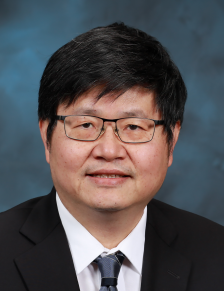 Sheng Dai合作论文数Department of Chemistry, College of Arts & Sciences, The University of Tennessee, Knoxville;Nanomaterials Chemistry Group, Chemical Sciences Division, Oak Ridge National Laboratory2
 Dustin E Gross合作论文数University of Texas at Austin, University of Texas2
 Md. Alamgir Hossain合作论文数Department of Crop Botany, Faculty of Agriculture, Bangladesh Agricultural University2Robert S. Foote合作论文数2M.W. England合作论文数2Joseph F. Birdwell合作论文数2
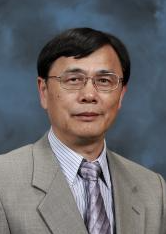 Baohua Gu合作论文数Environmental Sciences Division, Oak Ridge National Laboratory;Department of Biosystems Engineering and Soil Science, The University of Tennessee;Institute 0f Agriculture, The University of Tennessee2Tatiana G. Levitskaia合作论文数2
 David R Mullins合作论文数Oak Ridge National Laboratory2Dean R. Peterman合作论文数1Rt Dabestani合作论文数1F Sansone合作论文数1Minna Luostarinen合作论文数1Ra Leonard合作论文数1Jc Bryan合作论文数1Manuel Márquez合作论文数1Rs Foote合作论文数1Pm Narula合作论文数1




