Superconducting quantum circuits, such as the transmon, have multiple quantum states beyond the computational subspace. These states can be populated during quantum logic operations; residual population in such states is known as leakage. While control methods can eliminate this error in ideal systems, leakage will arise from transient population in the presence of dephasing. This dephasing-induced leakage effect is analyzed, both analytically and numerically, for common single and two-qubit operations used in transmon-based approaches to quantum information processing.
This paper considers a theoretical model of the double-slit experiment with electrons whose paths are monitored. This monitoring, inspired by a recent text by Maudlin, is performed by the Coulomb scattering of the electron by a proton. A simple quantum mechanical calculation is presented, inspired in part by a recent experimental demonstration of this famous thought experiment. The results illustrate the relationship between entanglement and the loss of coherence in the interference pattern. The tradeoff between the visibility of interference and the information gained by measurement is also explored. This calculation can provide advanced undergraduates insight into decoherence, entanglement, and quantum information.
This paper develops the approach to special relativity put forward by John S. Bell. The classical dynamics of an electron orbiting a nucleus in uniform motion is solved analytically and compared to numerical simulations for an accelerated nucleus. The relativistic phenomena of length contraction and time dilation are shown to result from the electric and magnetic forces on the electron when its motion is analyzed in a single frame of reference. The relevance of these results for understanding the theory of special relativity is discussed.
We present a theoretical analysis of the efficiency and rate of excitation transport on a network described by a complete graph in which every site is connected to every other. The long-time transport properties are analytically calculated for networks of arbitrary size that are symmetric except for the trapping site, start with a range of initial states, and are subject to dephasing and excitation decay. Conditions for which dephasing increases transport are identified, and optimal conditions are found for various physical parameters. The optimal conditions demonstrate robustness and a convergence of timescales previously observed in the context of light-harvesting complexes.
Many systems exhibit a digit bias. For example, the first digit base 10 of the Fibonacci numbers, or of $2^n$, equals 1 not 10% or 11% of the time, as one would expect if all digits were equally likely, but about 30% of the time. This phenomenon, known as Benford's Law, has many applications, ranging from detecting tax fraud for the IRS to analyzing round-off errors in computer science. The central question is determining which data sets follow Benford's law. Inspired by natural processes such as particle decay, our work examines models for the decomposition of conserved quantities. We prove that in many instances the distribution of lengths of the resulting pieces converges to Benford behavior as the number of divisions grow. The main difficulty is that the resulting random variables are dependent, which we handle by a careful analysis of the dependencies and tools from Fourier analysis to obtain quantified convergence rates.
We describe an efficient quantum algorithm for the quantum Schur transform. The Schur transform is an operation on a quantum computer that maps the standard computational basis to a basis composed of irreducible representations of the unitary and symmetric groups. We simplify and extend the algorithm of Bacon, Chuang, and Harrow, and provide a new practical construction as well as sharp theoretical and practical analyses. Our algorithm decomposes the Schur transform on n qubits into O(n^4\log(\frac{n}{\eps})) operators in the Clifford+T fault-tolerant gate set and uses exactly 2\lfloor\log_2(n)\rfloor-1 ancillary qubits. We extend our qubit algorithm to decompose the Schur transform on n qudits of dimension d into O(d^{1+p}n^{3d}\log^p(\frac{d n}{\eps})) primitive operators from any universal gate set, for p~3.97.
We propose a tunable nonlinear interaction for the implementation of quantum logic operations on pairs of superconducting resonators, where the two-resonator interaction is mediated by a transmon quantum bit (qubit). This interaction is characterized by a high on-to-off coupling ratio and allows for fast qubit-type and $d$-level system (qudit)-type operations for quantum information processing with multiphoton cavity states. We present analytical and numerical calculations showing that these operations can be performed with practically unit fidelity in absence of any dissipative phenomena, whereas physical two-photon two-resonator operations can be realized with a fidelity of 99.9% in presence of qubit and resonator decoherence. The resonator-qubit-resonator system proposed in this Letter can be implemented using available planar or three-dimensional microwave technology.
Generalizations of the classic Bell inequality to higher-dimensional quantum systems known as qudits are reputed to exhibit a higher degree of robustness to noise but such claims are based on one particular noise model. We analyze the violation of the Collins-Gisin-Linden-Massar-Popescu inequality subject to more realistic noise sources and their scaling with dimension. This analysis is inspired by potential Bell inequality experiments with superconducting resonator-based qudits. We find that the robustness of the inequality to noise generally decreases with increasing qudit dimension.
This Resource Letter surveys the history and modern developments in the field of quantum information. It is written to guide advanced undergraduates, beginning graduate students, and other new researchers to the theoretical and experimental aspects of this field. The topics covered include quantum states and processes, quantum coding and cryptography, quantum computation, the experimental implementation of quantum information processing, and the role of quantum information in the fundamental properties and foundations of physical theories.
We present a theoretical analysis of different methods to synthesize entangled states of two quantum mechanical resonators. These methods are inspired by experimentally demonstrated interactions of superconducting resonators with artificial atoms, and offer efficient routes to generate nonclassical states. Using a two-mode Jaynes-Cummings model, we analyze the theoretical structure of these algorithms and their average performance for arbitrary states and for deterministically preparing NOON and maximally entangled states. Using a new state synthesis algorithm, we show that NOON and maximally entangled states can be prepared in a time linear in the desired photon number and without any state-selective interactions.
We show that in the regime of ground-state cooling, simple expressions can be derived for the performance of resolved-sideband cooling-an example of coherent feedback control-and optimal linear measurement-based feedback cooling for a harmonic oscillator. These results are valid to leading order in the small parameters that define this regime. They provide insight into the origins of the limitations of coherent and measurement-based feedback for linear systems, and the relationship between them. These limitations are not fundamental bounds imposed by quantum mechanics, but are due to the fact that both cooling methods are restricted to use only a linear interaction with the resonator. We compare the performance of the two methods on an equal footing-that is, for the same interaction strength-and confirm that coherent feedback is able to make much better use of the linear interaction than measurement-based feedback. We find that this performance gap is caused not by the back-action noise of the measurement but by the projection noise. We also obtain simple expressions for the maximal cooling that can be obtained by both methods in this regime, optimized over the interaction strength.
A statistical model for the fragmentation of a conserved quantity is analyzed, using the principle of maximum entropy and the theory of partitions. Upper and lower bounds for the restricted partitioning problem are derived and applied to the distribution of fragments. The resulting power law directly leads to Benford's law for the first digits of the parts.
We show that in the regime of ground-state cooling, simple expressions can be derived for the performance of resolved-sideband cooling --- an example of coherent feedback control --- and optimal linear measurement-based feedback cooling for a harmonic oscillator. These results are valid to leading order in the small parameters that define this regime. They provide insight into the origins of the limitations of coherent and measurement-based feedback for linear systems, and the relationship between them. These limitations are not fundamental bounds imposed by quantum mechanics, but are due to the fact that both cooling methods are restricted to use only a linear interaction with the resonator. We compare the performance of the two methods on an equal footing --- that is, for the same interaction strength --- and confirm that coherent feedback is able to make much better use of the linear interaction than measurement-based feedback. We find that this performance gap is caused not by the back-action noise of the measurement but by the projection noise. We also obtain simple expressions for the maximal cooling that can be obtained by both methods in this regime, optimized over the interaction strength.
Here we address the question of just how cold one can cool a quantum system, given that the size of the control forces is limited. We solve this problem fully, within the dual regimes of (i) weak coupling, defined as that in which the thermalization dynamics of the system is preserved, and (ii) relatively strong control, being that in which appreciable cooling can be achieved. State-of-the art cooling schemes are presently implemented in this regime. Given that the maximum rate of coupling to the system is bounded, we identify a control protocol for cooling, and provide detailed structural arguments, supported by strong numerical evidence, that this protocol is globally optimal. From this we obtain simple expressions for the absolute limit to cooling. The methods developed can also be used to obtain optimal controls for a broad class of state-preparation problems.
We attempt to recover the results of Lemons for a probabilistic model of partitioning a conserved quantity. We derive an approximation for the number of partitions of integer X into parts given by a set H as well as the average number of partshn j i of a given part size x j . 1. What is Benford’s Law? Benford’s Law of Digit Bias concerns the distribution of the leading digits of the elements of a data set. A data set is Benford if the probability that the first digit of a set element is d is given by log 10 1 + 1 d .
Quantum walks have been shown to have impressive transport properties compared to classical random walks. However, imperfections in the quantum-walk algorithm can destroy any quantum-mechanical speedup due to Anderson localization. We numerically study the effect of static disorder on a quantum walk on the glued trees graph. For small disorder, we find that the dominant effect is a type of quantum decay, and not quantum localization. For intermediate disorder, there is a crossover to diffusive transport, while a localization transition is observed at large disorder, in agreement with Anderson localization on the Cayley tree.
 Frederick Wellstood合作论文数Department of Physics, College of Computer, Mathematical & Natural Sciences, University of Maryland11
 Christopher John Lobb合作论文数Department of Physics, College of Computer, Mathematical & Natural Sciences, University of Maryland11
 Kurt Jacobs合作论文数Department of Physics, University of Massachusetts at Boston;U.S. Army DEVCOM Army Research Laboratory11
 Alex J. Dragt合作论文数10
 Philip Johnson合作论文数Department of Molecular & Clinical Cancer Medicine, University of Liverpool;Institute of Systems, Molecular and Integrative Biology, University of Liverpool7J. Anderson合作论文数6
 Raymond Simmonds合作论文数Advanced Microwave Photonics Group, National Institute of Standards and Technology5
 Hendra Nurdin合作论文数The University of New South Wales4
 Xiaoting Wang (王晓霆)合作论文数Institute of Fundamental and Frontier Sciences, University of Electronic Science and Technology of China4
 Roberto C. Ramos合作论文数Low Temperature Lab;Department of Physics;Drexel University;Low Temperature Lab, Drexel University4
 Joseph R. Iafrate合作论文数3
 Huizhong Xu合作论文数3William Parsons合作论文数3
 Steven J Miller合作论文数Dept Math & Stat, Williams Coll3Rupert Lewis合作论文数Centre for Developmental Medicine and Biology, Research;Faculty of Medicine and Health Science;University of Auckland;Faculty of Medicine and Health Science, University of Auckland3
 Kaushik Mitra合作论文数Joint Quantum Institute;Department of Physics;University of Maryland;Joint Quantum Institute, University of Maryland3
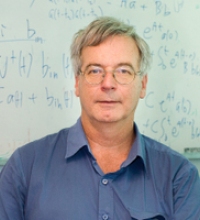 Matt James合作论文数College of Engineering, Computing and Cybernetics, The Australian National University;Department of Engineering, Faculty of Engineering and Information Technology, Australian National University3Hanhee Paik合作论文数Department of Physics, Yonsei University3Andrew J Berkley合作论文数D-Wave Systems Inc3S. K. Dutta合作论文数3
 Sai Vinjanampathy合作论文数Physics and Astronomy;Louisiana State University;Physics and Astronomy, Louisiana State University3
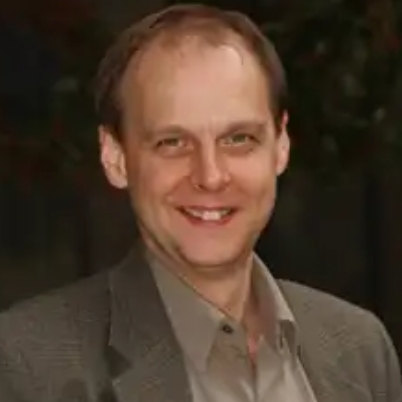 Carl Williams合作论文数Quantum Measurement Division, Physical Measurement Laboratory, National Institute of Standards and Technology3james r anderson合作论文数2Christopher Chudzicki合作论文数2
 M. A. Gubrud合作论文数2
 Eite Tiesinga合作论文数Laser Cooling and Trapping Group, Physical Measurement Laboratory, National Institute of Standards and Technology2philip r s johnson合作论文数1Justin Berman合作论文数1Tauno Palomaki合作论文数1Douglas Onyango合作论文数1jaclyn porfilio合作论文数1Alec Greaves-Tunnell合作论文数1A. M. Forney合作论文数1Roshan Sharma合作论文数Memorial Sloan Kettering Cancer Center, Sloan Kettering Institute1
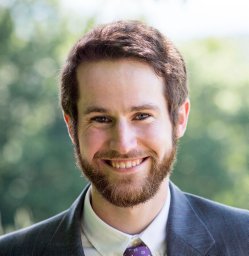 William Kirby合作论文数Dept Phys & Astron, Tufts Univ1
 Charles W Clark合作论文数Institute for Physical Science and Technology, University of Maryland;ScienceCast, Inc;National Institute of Standards and Technology1Jing Joy合作论文数1
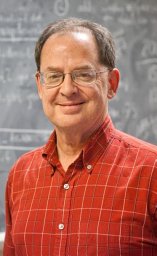 Mark Edwards合作论文数Department of Biochemistry, Chemistry, and Physics, College of Science and Mathematics, Georgia Southern University1
 M. Ram Murty合作论文数Queen’s University,Department of Mathematics1Hua Xu合作论文数1Steven R. Jackson合作论文数1
 Samyam Rajbhandari合作论文数Snowflake1
 Alex Dragt合作论文数Department of Physics, College of Computer, Mathematical, & Natural Sciences, University of Maryland1Brian K Cooper合作论文数JQI, University of Maryland1
 Khoo Teng Jian合作论文数Institut für Physik, Mathematisch-Naturwissenschaftliche Fakultät, Humboldt-Universität zu Berlin;CERN1Matthew R. James合作论文数1
 Matteo Mariantoni合作论文数Department of Physics and Astronomy, Faculty of Science, University of Waterloo;Institute for Quantum Computing, University of Waterloo1




