The following four species of Hymenoptera are reported for the first time from Norway: Schizoprymnus collaris (Thomson, 1874) (Braconidae, Brachistinae), Streblocera longiscapha Westwood, 1882 (Braconidae, Euphorinae), Ademon decrescens (Nees, 1811) (Braconidae, Opiinae) and Phrudus badensis Hilpert, 1987 (Ichneumonidae, Tersilochinae). Their biology and distribution are briefly discussed.
A total of nine species of Dryinidae (Hymenoptera) are reported from Norway for the first time; Aphelopus orphanidesi Olmi, 1994, Anteon pinetellum de Rond, 1998, Anteon reticulatum Kieffer, 1905, Lonchodryinus woodi Olmi, 1998, Gonatopus horvathi Kieffer, 1906, Gonatopus formicarius Ljungh, 1810, Gonatopus pallidus (Ceballos, 1927), Gonatopus distinguendus Kieffer, 1905 and Haplogonatopus oratorius (Westwood, 1833). The unknown female of Lonchodryinus woodi Olmi, 1998 is described based on a specimen from Norway. New records of Anteon claricolle Kieffer, 1906 from Norway are reported. Remarks on geographical range and host use of all species are given.
The subfamily Xoridinae is a relatively small and rare group within the species rich family of Ichneumonidae. Xorides indicatorius (Latreille, 1906) is recorded from two hot-spot locations in southern Norway. A total of 12 species of Xorides are currently recorded from Norway.
On a world basis, about one-third of forest-living insect species are saproxylic, that is, they depend directly or indirectly on dead wood. They represent many different insect groups, but the highest species numbers are found among Coleoptera, Diptera, and Hymenoptera. Many saproxylic species are red-listed due to the impact of modern forestry. Preserving their high diversity represents a big challenge in today’s conservation work for insects. There is an urgent need to protect the last, deadwood-rich natural forests and to increase the amount and diversity of dead wood substrate in managed forests. We present a case study from boreal forests in Fennoscandia to illustrate how certain measures have been implemented recently to protect, or restore, habitats for saproxylic beetles. In a second case study, we describe the challenge of conserving the unique insect fauna of old, hollow oaks. Climate change can affect saproxylic insects in several ways, directly or indirectly. Summer drought could initiate large-scale forest fires. Wind felling and snow damage may increase, and other tree species could be favored. Such changes will affect the amount and diversity of dead wood substrates. Higher temperatures may favor bark beetle outbreaks and root rot in boreal forests, and the geographical distribution of species may change. The present system of protected forests in Europe is not sufficient for conserving the diversity of saproxylic insects. Stronger initiatives are needed to protect more forests, and increased considerations must be taken in forestry operations.
The weevil Coniocleonus zherichini Ter-Minassian & Korotyaev 1977 (Coleoptera, Curculionidae, Lixinae) is recorded new to Europe at two sites in northern Norway. Previously the species has been found at a few sites in northern Russia, as well as from Alaska (fossil records) and Canada. Field observations as well as DNA-analyses of gut content reveal that the host plant for the larvae and adults is Dryas octopetala L. The unknown larva of the species was found together with adults among mats of D. octopetala. The new records indicate that C. zherichini has a Holarctic distribution and the present records may represent relicts from early Holocene.
We have entered Anthropocene, a period where man’s activity has significantly influenced the globe’s ecosystems. From several countries, a decline in the number of insects has been reported. The main reasons are habitat loss and fragmentation due to agriculture and urbanization, pollution by synthetic pesticides and fertilizers, biological factors like pathogens and introduced species, and climate change. Reduced insect numbers may affect pollination and other ecosystem services. Agricultural and forest pests may increase. Maintaining a diversity of habitats in the landscape is a simple but important thumb rule for preserving invertebrate diversity and viable populations in the long term. Deteriorated nature must be restored. A considerable increase in awareness about insect conservation is needed to save the majority of insects for the future.
Spiders have been collected by pitfall traps from two palsa bogs in the vicinity of Vardø in Finnmark, northern Norway. A total of 449 specimens belonging to 27 species from 4 families were caught. Two major ecological guilds were present, active vagrant forms, mainly consisting of lycosids, and the smaller net-building species represented by Linyphiidae and Hahniidae. Linyphiids made up 70% of the species but only 38% of the individuals, the lycosids being most abundant. Faunal differences between sites is probably caused by placement of the traps in different parts of the bogs. Seven species are new to Finnmark, although one has been reported before without being named. General faunistic and taxonomic comments are given on a few additional species: Agyneta mossica, recently reported from Norway, Agyneta sp., Arctosa alpigena lamperti, and Ozyptila arctica.
This paper is the first attempt to summarize the beetles present in the arctic region of the mainland of Norway since 1946. In 1995 and 1998 beetles were collected by pitfall traps and other methods in Vardø municipality on the Varanger Peninsula in Finnmark county. This area is part of the small section of the Norwegian mainland that belongs to the southern arctic vegetation zone. A total number of 159 species from 18 families were recorded, including earlier findings by others. This probably covers a substantial part of the beetle fauna present in this marginal environment. Rove beetles (Staphylinidae) are the most abundant group and made up 46% of the recorded species, whereas diving beetles (Dytiscidae) and ground beetles (Carabidae) made up 16% and 15% of the species, respectively. Considering the regional distribution of these species in Norway, 8% are found only in northern Norway (Nordland/Troms/Finnmark), 19% have mainly an alpine distribution, 27% are mainly restricted to boreal areas, whereas 53% are common all over Norway. Diacheila polita and Simplocaria elongata belong to a characteristic arctic beetle community, and the present records of these two species are the only ones from Scandinavia. The study indicates that there are very few beetles that belong entirely to the arctic mainland of Norway.
In Fennoscandia, only one species of Dryinus (Hymenoptera, Dryinidae) is known, D. niger Kieffer, 1904. The species is very sporadically collected in that region, and the association of its opposite sex is difficult by its rarity. The capture of a male in Norway allowed us to describe it and place it in the new key to the males of Western Palaearctic Dryinus.
Pollinators play a crucial role in ecosystems globally, ensuring the seed production of most flowering plants. They are threatened by global changes and knowledge of their distribution at the national and continental levels is needed to implement efficient conservation actions, but this knowledge is still fragmented and/or difficult to access. As a step forward, we provide an updated list of around 3000 European bee and hoverfly species, reflecting their current distributional status at the national level (in the form of present, absent, regionally extinct, possibly extinct or non‐native). This work was attainable by incorporating both published and unpublished data, as well as knowledge from a large set of taxonomists and ecologists in both groups. After providing the first National species lists for bees and hoverflies for many countries, we examine the current distributional patterns of these species and designate the countries with highest levels of species richness. We also show that many species are recorded in a single European country, highlighting the importance of articulating European and national conservation strategies. Finally, we discuss how the data provided here can be combined with future trait and Red List data to implement research that will further advance pollinator conservation.
Species of Anteon Jurine, 1807 are a large group of parasitoids attacking leafhoppers, which are important insect pests. Despite their great potential in pest biological control, the taxonomy and biology of these parasitoids are far from clear. Sexual dimorphism is extreme in Anteon species and has hampered the taxonomy of these parasitoids, resulting in many species described based on a single sex. In this paper, we employed an integrated taxonomic approach for delimitating species, combining morphological examinations with DNA barcoding, to investigate Anteon species from China. In total, 53 COI sequences representing 29 species of Anteon were obtained and analyzed. On the basis of both morphology and DNA barcoding, five new species of Anteon were discovered and described: A. clariclypeum sp. nov., A. maguanense sp. nov., A. parafidum sp. nov., A. shaanxianum sp. nov., and A. shandonganum sp. nov. The neotype of A. claricolle Kieffer is designated. The sexual association of six species was confirmed by DNA barcoding, which led to the synonymy of Anteon liui Xu, Olmi & He 2010, new syn., under Anteon meifenganum Olmi, 1991. Keys to species of Anteon from the Oriental and Eastern Palaearctic are updated to contain the five new species. Our study demonstrates that DNA barcoding is a potent tool for tackling the taxonomic challenges in parasitoids with extreme sexual dimorphism.
Linden trees ( Tilia spp . ) have for a long time been associated with bumblebee ( Bombus spp . ) mortality in Europe and North America. Several explanations have been suggested for this phenomenon. This study aimed to explore to which extent the factors of predation, ageing, starvation, and poisonous nectar serve as explanations for bumblebee mortality in association with linden trees. Starvation, ageing, and predation all contributed to mortality of bumblebees found under flowering linden trees. The mean weight of a dead wild bumblebee found under linden trees was found to be close to the weight of a starved bumblebee of the same size. This indicated that starvation was the main driver for many of the deaths. A significant proportion of the dead bumblebees collected under linden trees had injuries indicating predation. The authors suggest that predation may serve as a secondary explanation for the bumblebee mortality, after weakening by starvation or other factors. A small proportion of the bumblebees may have died from physical degradation or age. The present study did not support the poisonous nectar hypothesis. It is necessary to explore the covariation between the suggested hypotheses more closely, to better understand the interplay between the different factors. In addition, there is a need to investigate alternative hypotheses for the association between bumblebees and linden trees.
A new pompilid wasp, Ceropales pallida sp. nov., is described, illustrated and distinguished from its close relative Ceropales maculata. The new species is supported by evidence from morphological characters as well as DNA barcoding. The type specimens were collected at several localities in southern Norway, Sweden and Finland.
Species of the genus Aphelopus Dalman (Hymenoptera, Dryinidae) are important natural enemies of leafhoppers. The genus is relatively diverse in China, with 35 recorded species. In order to further make use of these important parasitoids in biological control programs, species of Aphelopus collected across China are studied using an integrative approach (combined DNA barcoding and morphology). Of the 17 studied species, two are newly recorded from China: A. nivealis Mita & Olmi, 2014 and A. prolatus Mita & Olmi, 2014, and four are described as new to science: A. incognitus Chen, Olmi & Guglielmino sp. nov., A. maculiala Olmi, Chen & Ødegaard sp. nov., A. taianensis Olmi, Ødegaard & Chen sp. nov., and A. zaifui Olmi, Chen & Liu sp. nov. The total number of Aphelopus species known from China is raised from 35 to 39. Keys to the Oriental and Eastern Palaearctic species of Aphelopus are modified to include the new species. Application of DNA barcoding in the species delimitation of Dryinidae is discussed.
Cuckoo wasps of the Chrysis ignita species group are difficult to identify at the species level, and the taxonomic status of various taxa has consequently been controversial. COI barcoding has helped clarify some of the taxonomic problems in this group, but also revealed cryptic diversity at the genetic level that remained difficult to interpret taxonomically. Here we show that analysis of cuticular hydrocarbons (CHCs) clarifies the taxonomic status of cuckoo wasp samples with distinct COI haplotypes. The advantages of studying CHCs in insects for taxonomic purposes reside on the fact that CHC profiles evolve quickly and that all proteins required for CHC biosynthesis are encoded by nuclear genes. Using Chrysis pseudobrevitarsis as an example, we show that COI barcoding in combination with analysis of CHCs extracted from freshly collected and from dry-mounted museum specimens (including the lectotype of C. pseudobrevitarsis) provides clear evidence for a separate taxon among samples which were previously considered to be conspecific with C. pseudobrevitarsis. We describe this taxon as Chrysis parabrevitarsis n. sp. and present characters for distinguishing it chemically, genetically, and morphologically (females only) from C. pseudobrevitarsis. CHC profile comparison suggests females of C. pseudobrevitarsis may chemically mimic females of the vespid wasp Euodynerus notatus. Our study demonstrates the value of CHC analyses for supporting taxonomic inferences based on COI barcodes. It additionally underlines the value of dry-mounted collection specimens for chemical analyses and the potential of CHCs for inferring the identity of museum specimens, including type material, in a morphologically noninvasive manner.
1. Due to globalisation, trade and transport, the spread of alien species is increasing dramatically. Some alien species become ecologically harmful by threatening native biota. This can lead to irreversible changes in local biodiversity and ecosystem functioning, and, ultimately, to biotic homogenisation. 2. We risk-assessed all alien plants, animals, fungi and algae, within certain delimitations, that are known to reproduce in Norway. Mainland Norway and the Arctic archipelago of Svalbard plus Jan Mayen were treated as separate assessment areas. Assessments followed the Generic Ecological Impact Assessment of Alien Species (GEIAA) protocol, which uses a fully quantitative set of criteria. 3. A total of 1,519 species were risk-assessed, of which 1,183 were species reproducing in mainland Norway. Among these, 9% were assessed to have a severe impact, 7% high impact, 7% potentially high impact, and 49% low impact, whereas 29% had no known impact. In Svalbard, 16 alien species were reproducing, one of which with a severe impact. 4. The impact assessments also covered 319 so-called door-knockers, that is, species that are likely to establish in Norway within 50 years, and 12 regionally alien species. Of the door-knockers, 8% and 10% were assessed to have a severe and high impact, respectively. 5. The impact category of most species was driven by negative interactions with native species, transformation of threatened ecosystems, or genetic contamination. The proportion of alien species with high or severe impact varied significantly across the different pathways of introduction, taxonomic groups, time of introduction and the environments colonised, but not across continents of origin. 6. Given the large number of alien species reproducing in Norway and the preponderance of species with low impact, it is neither realistic nor necessary to eradicate all of them. Our results can guide management authorities in two ways. First, the use of quantitative assessment criteria facilitates the prioritisation of management resources across species. Second, the background information collected for each species, such as introduction pathways, area of occupancy and ecosystems affected, helps designing appropriate management measures.
A new chrysomelid beetle, Galerucella anserina Ødegaard & Hanssen, sp. nov., belonging to the Galerucella tenella-group (subgenus Neogalerucella) is described, illustrated and distinguished from similar species within the genus. The type specimens were collected in coastal wetlands in southeastern Norway. The species is associated with Potentilla anserina L. (Rosaceae), and lives sympatrically with the closely related G. tenella (L.).
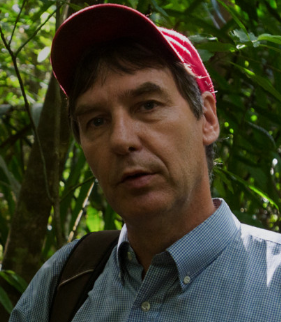 Yves Basset合作论文数Smithsonian Tropical Research Institute21
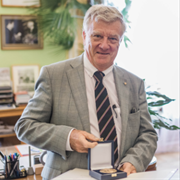 Roger L. Kitching (Roger Kitching)合作论文数School of Environment and Science, Griffith University19
 Barrios Hector合作论文数18
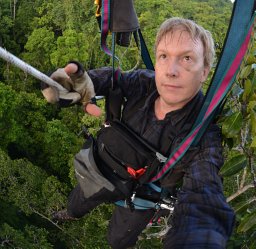 Maurice Leponce合作论文数Conservation Biology Section, Royal Belgian Institute of Natural Sciences18
 Jan Ove Gjershaug合作论文数18
 Oddvar Hanssen合作论文数17
 Vojtech Novotny合作论文数Laboratory of Tropical Ecology, Department of Ecology, Institute of Entomology, Biology Centre of the Czech Academy of Sciences17
 Enrique Medianero合作论文数Environmental Science Department, Universidad de Panamá17
 Johannes Bail合作论文数17
 Yves Roisin合作论文数Faculte des Sciences, Universite libre de Bruxelles17
 Arnstein Staverløkk合作论文数Norwegian Institute for Nature Research - NINA16
 Raphael Didham合作论文数Commonwealth Scientific and Industrial Research Organisation;School of Biological Sciences, Faculty of Science, University of Western Australia16Andreas Floren合作论文数16Henri-Pierre Aberlenc合作论文数16
 David Ward Roubik (David W. Roubik)合作论文数Tropical Research Institute, Smithsonian Tropical Research Institute16
 Servio P. Ribeiro合作论文数Universidade Federal de Ouro Preto;Instituto de Ciências Exatas e Biológicas;Lab . Ecologia Evolutiva de Herbívoros de Dossel, DECBI;Campus Morro do Cruzeiro;Instituto de Ciências Exatas e Biológicas, Universidade Federal de Ouro Preto16Gianfranco Curletti合作论文数16Bruno Corbara合作论文数Laboratoire d'Evolution et Diversité Biologique;Université Toulouse III;Laboratoire d'Evolution et Diversité Biologique, Université Toulouse III16
 Laura L Fagan合作论文数16
 Alain Dejean合作论文数15Lukas Cizek合作论文数Institute of Entomology;Biological Faculty, Czech Academy of Sciences;University of South Bohemia;Institute of Entomology, University of South Bohemia15
 Anne Sverdrup-Thygeson合作论文数Norwegian Institute for Nature Research—NINA15Alexey K. Tishechkin合作论文数15Neville N. Winchester合作论文数15
 Tomas Roslin合作论文数Department of Ecology, Swedish University of Agricultural Sciences14Jérôme Orivel合作论文数UMR Ecologie des Forêts de Guyane, CNRS14Line Sørensen合作论文数13Mathieu Rapp合作论文数13Evandro Gama de Oliveira合作论文数13Philippe Cuénoud合作论文数13
 Jurgen Schmidl合作论文数12Tor Erik Brandrud合作论文数11Jesper B. Schmidt合作论文数11
 Marc Pollet合作论文数11
 Juho Paukkunen合作论文数11Domir De Bakker合作论文数11Wesley Duarte da Rocha合作论文数10
 Thomas M. Lewinsohn合作论文数Instituto de Biologia, UNICAMP10Gabriela Castaño-Meneses合作论文数Laboratorio de Ecología y Sistemática de Microatrópodos;Departamento de Ecología y Recursos Naturales, Facultad de Ciencias;Universidad Nacional Autónoma de México;Laboratorio de Ecología y Sistemática de Microatrópodos, Universidad Nacional Autónoma de México10
 Jacques H C Delabie合作论文数Entomology Section, Cocoa Research Centre;Departamento de Ciências Agrárias e AMbientais, State University of Santa Cruz9Jonathan R. Bridle合作论文数8
 Ola H. Diserud合作论文数Norwegian Institute for Nature Research;Norwegian University of Science and Technology;Department of Mathematical Sciences;Norwegian Institute for Nature Research, Norwegian University of Science and Technology8Harald Bratli合作论文数7
 Anders Endrestøl合作论文数Norwegian Inst Nat Res7
 Pierre Rasmont合作论文数Université de Mons-Hainaut;Laboratoire de Zoologie;Laboratoire de Zoologie, Université de Mons-Hainaut7sandra astrom合作论文数6Cederberg Björn合作论文数6Dawn Frame合作论文数5Juergen Schmidl合作论文数5




