The train braking model (TBM) that describes the dynamic relations of operation speed, mileage, and control force is essential for achieving stable operation and precise stopping of heavy haul trains (HHTs). However, difficult to establish the TBM of HHTs due to complex characteristics: (i) the long body and air braking process of the HHTs may lead to unexpected time-delays of control force; and (ii) there are significant unmodeled dynamics caused by rough tracks and external poor environment. Traditional TBM does not take into account the unmodeled dynamics and time-delays caused by air transmission during braking. To address these issues, this study proposes a data mechanism hybrid modeling strategy, which incorporates a braking time-delay assisted mechanism model and an adaptive long and short-term memory (LSTM) model. A new Bayesian optimization based time-delay estimation method is first proposed to determine unknown time-delays of each carriage and the estimated time-delays are incorporated to generate the multi-point-mass kinetic mechanism model. Moreover, the error of the mechanism-driven model is adaptively compensated by a sliding window LSTM model to conduct the unmodeled dynamics. The effectiveness of the proposed method is demonstrated using the field data.
In this study, a multiple-input multiple-output (MIMO) data-driven sliding mode optimal control scheme is investigated for a multi-power unit high-speed train (HST) automatic driving system under disturbances. First, an integral terminal sliding mode control (ITSMC) law based on the dynamic linearization method is introduced to achieve error convergence in finite time. Subsequently, a parameter update law and an adaptive extended state observer (AESO) are designed to estimate the control gain and total uncertainty, respectively, which solves the problem of traditional sliding mode control requiring a large switching gain to handle the disturbance. Third, an optimal control signal is obtained by predictive control to achieve a higher level of tracking error accuracy and quickly reach the quasisliding mode state, and the compound optimal control scheme is derived under the combined action of the ITSMC and predictive control. The scheme considers and compensates for the total uncertainty caused by the error feedback, parameter estimation error, and unknown nonlinearity. The main advantages of this scheme include the following: controller design process uses only system data, provides excellent model adaptability, and disturbance rejection ability. Upon providing a stability-proof analysis of the proposed method, the proposed composite control method was compared and tested on a CRH380A train simulation test bench equipped in the laboratory. The simulation results show that the speed tracking errors of each power unit of the HST under the proposed control scheme are within [−0.123 km·h −1 , 0.144 km·h −1 ]. The control forces and accelerations are within [−55 kN, 46 kN] and [−0.592 m·s −2, 0.521 m·s −2 ] respectively, which meets the requirements of safe, stable, and efficient operation of the train.
A novel MIMO data-driven integral predictive sliding mode control (DIPSMC) scheme is proposed based on the dynamic linearization (DL) and state observer method, intended for the automatic driving systems of multi-power unit high-speed trains (HSTs) influenced by system couplings, input constraints, and external disturbances. Initially, by introducing a nonlinear fast integral terminal sliding mode (NFITSM) surface instead of the traditional sliding mode function, facilitating rapid convergence of system errors and reducing sliding mode chattering. Additionally, a parameter update law and an adaptive extended state observer (AESO) are designed to estimate input gains and total uncertainties, respectively, addressing the issue in traditional discrete-time sliding mode control (DSMC) that requires large switching gains to handle disturbances. Subsequently, combining the rolling time domain optimization concepts in predictive control, it follows the reference trajectory of the predefined reaching law, allowing the system to explicitly handle control constraints and obtain higher tracking accuracy. This scheme concurrently accounts for and compensates the total uncertainties arising from system couplings, parameter estimation errors, and unknown disturbances. The principal advantage of this scheme is its design based entirely on a DL data model equivalent to the HST system, characterized by a low-order controller with robust chattering mitigation and disturbance rejection capabilities. Finally, comparative testing experiments of the proposed scheme are conducted on the CRH380A HST simulation platform. Experimental results indicate that under the proposed control scheme, the velocity and displacement error ranges for each power unit of the HST are within +/- 0.156 km /h and +/- 1, 1 m, respectively, with control force and acceleration ranges of [-53.2 kN, 46.5 kN] and [-0.568 m /s(2), 0.476 m /s(2)], respectively, and low chattering levels, fulfilling the e fficiency and safety requirements of the trains.
In this study, a novel data-driven discrete-time sliding mode control (DSMC) approach is designed for an electric multiple unit (EMU) velocity tracking control system. First, the input/output (I/O) data of the EMU are equivalently modeled as a full-format dynamic linearized (FFDL) data model to facilitate the generation of a data-driven control scheme. Subsequently, a discrete terminal sliding mode function and a new hyperbolic reaching-law are introduced to simultaneously achieve fast convergence and alleviate chattering. Based on the designed sliding mode function and reaching-law, an improved discrete-time terminal sliding mode control (iDTSMC) approach is derived using the FFDL model. The proposed approach considers the error feedback, parameter estimation errors, and total uncertainties for compensation, to achieve better control performance. The key advantages of this approach include its sole utilization of input-output data from the EMU system, low controller order, robust parameter adaptability, and anti-interference capabilities. After providing the stability analysis of the proposed method, the iDTSMC scheme is compared and tested on a simulated CRH380A high-speed train experimental platform in a laboratory. The simulation results show that the velocity tracking errors of each power unit of the EMU under the proposed control scheme are within $-$ 0.112 km/h, 0.118 km/h, and the control forces and accelerations are within $-$ 51 kN, 43 kN and $-$ 0.952 m/s $^2$ , 0.827 m/s $^2$ , respectively, with stable fluctuations. Comparative experimental results demonstrate the effectiveness and superiority of the proposed strategy, which remains robust in the presence of disturbances. Note to Practitioners —This study is inspired by the problem of EMU operation control, however, it is also applicable to other systems with trajectory tracking characteristics. Existing automatic train driving control methods are usually based on a dynamics model of the train, which is easily affected by the external environment. In this study, a new data-driven control method is proposed. A discrete terminal sliding mode control function and a new hyperbolic reaching-law were designed based on a dynamic linearized data model equivalent to the EMU operation process. In contrast to similar existing works, the control scheme does not require an accurate EMU dynamic model and is easy to implement. Preliminary simulation experiments show that the method is feasible, however, it has not been incorporated into the train’s physical system, nor has it been tested in production. In future research, we plan to promote a combination of control theory and manufacturing practices.
The controller with high reliability and excellent tracking effect is essential for electric multiple unit (EMU) operation system. Nevertheless, similar to many complex systems, the EMU operation process is multivariable, strong coupled, nonlinear and time-varying. In particular, the coupling relationship between the variables in the system seriously affects the performance of the control system. Disturbance decoupling technology is an effective method to address the above problem, so this paper proposes a rithm for the automatic train operation (ATO) system. Based on dynamic linearization (DL) technology, DISMDC equates the EMU operation process with a full format dynamic linearization (FFDL) data model, and uses FFDL data model to design a discrete integral sliding mode control (SMC) law. Meanwhile, the discrete extended state observer (DESO) is introduced to estimate the unmodeled dynamics, unknown disturbances and coupling between variables of the FFDL data model in real time, which further improves the equivalent description of the system and enhances the decoupling effect and control performance. The DISMDC method is tested on a semiphysical simulation platform of CRH380A EMU equipped in the laboratory, and compared with some traditional model-based and data-driven methods. The simulation results show that the control performance of DISMDC algorithm is better than some traditional methods. The velocity tracking error of each power unit of the EMU is within & PLUSMN;0.15 km/h, the control force and acceleration are within [ -51 kN, 42 kN] and [-0.8532 m/s2, 0.7810 m/s2], respectively, and the variations are stable. The decoupling control of EMU under disturbance is realized. & COPY; 2023 Published by Elsevier Inc. on behalf of The Franklin Institute.
In order to meet the operational requirements of the high-speed train in terms of safety, accuracy and smoothness, an adaptive backstepping sliding mode control approach based on fuzzy regulation is put forward in this paper. Firstly, to solve the problem of insufficient accuracy of the single point model, this paper establishes a mass point dynamics model of the high-speed train and sets a compensation term for the model considering the uncertainties in the operation process. Secondly, the adaptive law is designed to estimate the compensation term and the new backstepping sliding mode control strategy is developed. Finally, fuzzy rules are designed to adjust the switching gain of the sliding mode term to suppress jitter. The results of simulation and comparison experiments demonstrate the effectiveness and feasibility of the proposed modeling and control method.
高速列车运行环境复杂多变,现有的给定运行速度目标曲线主要考虑列车运行的安全性和正点性,难以改善列车的其他运行性能.为了满足高速列车日益增加的行车需求,并改善列车的运行性能,针对安全、节能、正点及舒适多个目标,考虑轮轨间最优黏着,提出一种改进的多目标运行速度优化方法.首先,在满足区间限速以及列车动力学模型约束的前提下,建立安全、节能、正点、舒适 4 个评价指标,构成高速列车运行过程多目标优化模型;其次,在节能模型中考虑轮轨间黏着的影响,优化牵引/制动力使得其保持在最优黏着范围内,节约运行能耗;最后,采用基于参考点的非支配排序的优化算法(NSGA-Ⅲ)对多目标运行速度曲线进行优化.对真实线路的仿真验证表明,本文提出的考虑轮轨黏着的优化效果显著提高,尤其在节能方面;优化算法相较于GA和NSGA-Ⅱ,NSGA-Ⅲ算法在收敛效果和收敛速度上均为更优.
针对三相交流道岔转辙机故障诊断问题,提出一种基于多通道输入和一维卷积神经网络(1DCNN)-长短期记忆神经网络(LSTM)的故障诊断方法.首先使用经验模态分解算法对动作功率信号进行分解,获得若干个尺度特征不同的固有模态函数信号;其次建立基于1DCNN和LSTM的组合故障诊断模型,使用1DCNN提取功率信号中的局部特征,使用LSTM选择性提取局部特征中的长距离特征;然后通过所建模型诊断出道岔转辙机的故障类型,并结合t-分布随机近邻嵌入展示诊断效果;最后与经典的诊断方法进行对比分析.对比实验结果表明:本方法在道岔转辙机故障诊断中具有较高的准确性和稳定性,且具有较好的泛化性.
为解决列车运行控制系统课程到现场开展实验难、学生难以理解系统原理等问题,采用实物与软件仿真相结合的方式,构建覆盖普速铁路和高速铁路的列车运行控制半实物虚拟仿真实验平台,开展演示、实操和验证性实验.结合创新应用型人才培养目标,采用典型案例和自媒体化两种教学方法,在夯实理论知识的基础上,培养学生职业道德、安全意识、团队协作以及解决复杂工程问题的能力,提升学生综合素质.
In view of the complex operating environment of high-speed trains, this paper considers the additional resistance of complex lines and the influence of random external disturbances. Aiming at this problem, a sliding mode robust control algorithm for high-speed trains is proposed based on Hamilton-Jacobi Inequality (HJI) theory and radial basis function neural network (RBFNN). On the other hand, the introduced RBFNN can be used to reduce the dependence of the controller on train model parameters, and HJI theory can be used to ensure the anti-jamming ability of the system. The Lyapunov function proves that both the displacement tracking error and the velocity tracking error can be converged and stable under the method proposed in this paper. The parameters of the CRH380A high-speed train are used for simulation, and the given target speed and target displacement curve are tracked to verify the feasibility of the proposed control algorithm. The simulation results show that the proposed control algorithm has better tracking accuracy for a given speed and displacement than the traditional robust adaptive control method (TRAC) and can meet the requirements of punctual operation and fixed-point parking required by high-speed trains. It has a better control effect when dealing with complex road conditions changes and also has the more vital anti-interference ability for random external interference.
The heavy-haul train (HHT) has large capacity and high efficiency, which represents the level of freight and makes the amelioration of control performance a trend in various countries. Improving the model reliability and increasing the anti-disturbance ability of the operation controller are two main ways to improve the operation control accuracy of HHTs. Herein, to describe the large nonlinear system more precisely, an interval type-2 fuzzy logic system (IT2FLS) is introduced to obtain a dynamic model. Then, a linear active disturbance rejection controller (LADRC) is designed to achieve precise operational control. In addition, the ‘bandwidth method’ is combined with the sparrow search algorithm (SSA) to solve the difficulty of controller parameters adjustment. Afterwards, the stability analysis of the closed-loop control system is given. The simulation experiments are conducted based on data collected from HXD1 locomotives driven by excellent drivers. Results show that the speed tracking error is no more than 0.5 km/h, and demonstrate that the proposed method significantly improves the operational performance of HHTs.
重载列车是我国大宗商品运输的重要方式,因载重大、车身长、线路复杂等因素导致重载列车的控制变得困难.本文将列车运行过程分为启动牵引、巡航控制、停车制动3个阶段,基于多质点重载列车纵向动力学模型,考虑常用空气制动,利用(SAC)强化学习方法,结合循环神经网络对专家经验数据进行行为克隆,并将克隆出的专家策略对强化学习训练进行监督,训练了一种新的智能驾驶操控策略.本文的策略可以高效学习驾驶经验数据,不断从学习中提高目标奖励,得到最优控制策略.仿真结果表明:本文所提的控制策略比未受专家模型监督的强化学习算法更优,奖励提升的周期更快,并能获得更高的奖励,训练出的控制器运行效果更加高效、稳定.
The electric multiple units (EMUs) have become a very convenient and powerful means of transportation in our daily life. Safe and punctual trajectory tracking control is the key to improve the performance of the EMUs system, but it is difficult to realize due to the influence of environmental uncertainty, coupling and nonlinearity. In this paper, a model-free adaptive sliding mode control (MFASMC) method is proposed for the EMUs. This method can solve the dependence of the model-based control method on the train model and eliminate the influence of external disturbances on the robust performance of the system. In this method, the running process of the EMUs is equivalent to a full format dynamic linearization (FFDL) data model, and a model-free adaptive controller (MFAC) is designed based on the data model. Then, to reduce the influence of measurement disturbance and improve the robustness of the system, a discrete sliding mode control (SMC) algorithm is introduced. Furthermore, to prevent the control input from being too large, the parameter estimation error is introduced as an additional correction term of the algorithm. In the end, the simulation experiment is carried out with CRH380A EMUs as the object. Compared with the traditional MFAC and the traditional SMC, the speed tracking effect of each power unit of the MFASMC algorithm is more effective, the change of control force is stable, the acceleration meets the requirements of driving, and has a strong inhibitory effect on external disturbances.
重载列车在运行时,黏着条件容易受到不良的天气状况或轨面状态影响,会导致列车无法有效发挥牵引力.为了解决重载列车在运行过程中因黏着条件恶化导致无法有效发挥牵引力的问题,提出一种考虑系统不确定性估计的离散积分滑模控制方法,该方法通过对最优蠕滑速度的跟踪控制,实现重载列车的最优黏着控制.由于黏着系数在实际情况中难以测量,所以针对此情况设计串联滑模观测器对黏着系数进行观测估计.采用带遗忘因子的最小二乘法估计出黏着特性曲线斜率,并根据梯度下降算法得到最优蠕滑速度.以最优蠕滑速度和实际蠕滑速度作为控制系统输入,以牵引电机转矩作为系统输出,利用一步延迟估计方法估计系统的不确定性,据此设计离散积分滑模控制器控制电机转矩使蠕滑速度始终稳定在最佳蠕滑速度处.仿真实验结果表明:设计的考虑系统不确定性估计的离散积分滑模控制方法实现了对最优蠕滑速度的跟踪控制,并且与离散积分滑模控制方法相比,系统跟踪误差更小且具有更高的控制精度.说明采用的方法不仅能够补偿系统的不确定性和抑制抖振现象,而且还能实现对最优蠕滑速度的高精度跟踪控制,达到使重载列车牵引性能最优的目的.
The study of heavy haul train (HHT) automatic and stable driving strategy has become the focus of many scholars due to the large load capacity, long body length, concentrated power, and complex line conditions. HHT is difficult to control, drivers are fatigued in manual driving, traction and braking force increase during operation, and the transmission time of braking waves is lengthened, resulting in serious longitudinal impulse, which leads to a series of serious accidents. In this paper, aiming at the safe and stable driving of HHT, the dynamic model of multi-particle model was established and designs the multi-objective curve optimization strategy of fuzzy adaptive genetic algorithm (FAGA). A fuzzy reasoner is mainly used for the adaptive selection of crossover and mutation probability. In terms of safety, energy-saving and punctuality designed train operation target curve combines the actual railway routes (speed limit, ramp, curve, etc.), and compares the optimization effect with standard genetic algorithm. Finally, an improved high-order model-free adaptive iterative learning control algorithm is adopted to track the optimized target curve with high precision, and compared the results of the standard iterative learning control algorithm. The simulation results show that the control method used in this paper can better track the ideal speed target curve and realize the optimal control of the HHT driving curve.
为了减小重载列车因制动延时导致的纵向冲动,提高列车运行效率,提出一种制动控制策略.将列车的每节车辆作为一个质点,建立重载列车多质点动力学模型,精确计算各节车厢的制动延时时间,并利用翟方法进行数值积分得到各质点运行状态,根据列车当前运行状态及前方路况,结合行驶约束条件提前给出合理的制动操纵策略.通过对大秦线上重载列车进行制动仿真分析,在相同的路况下采用所提出的制动控制策略,对制动过程中减小列车车钩力及缓解列车纵向冲动具有较好的效果;在路况复杂的线路上,提高了列车的平稳性,保障了列车安全运行.仿真结果表明所提方法可满足重载列车的运行要求.
为了了解不同缓冲器装置对重载列车运行安全性与舒适性的影响,研究了重载列车车钩缓冲器装置的动态特性.依据大秦线重载列车运行数据和列车实际运行环境,建立列车运行过程动态纵向动力学模型与钩缓装置模型,并根据模型对大秦线上运行列车装备的QKX100与MT-2缓冲器进行动态特性研究.将列车纵向动力学模型与钩缓装置模型的建模仿真结果与国内外多家机构的重载列车仿真实验结果进行比对,结果较为接近,表明所建列车运行模型的准确性.并对大秦线上装备2种缓冲器的重载列车进行紧急制动、循环制动与牵引运行仿真验证,结果显示装备了QKX100缓冲器的列车在多个工况运行时的最大车钩力与最大加速度都较小,远低于规定的安全限制值,表明该车钩对列车运行的安全性与舒适性提升较大.
高速列车运行系统本质上是高度非线性和不确定性的系统,为了弥补建模过程中被忽略或者简化的非线性和不确定性,提高高速列车运行过程的控制精度,提出一种基于模型补偿的高速列车状态反馈预测控制方法.在建模和控制上,分别采用子空间辨识法和状态反馈预测控制法,在此基础上建立BP神经网络在线补偿器,利用高速列车运行过程的状态变量和实际速度作为补偿器的输入,参考轨迹与实际速度之间的差值构成性能指标函数进行在线训练,输出补偿控制力作用于控制系统完成在线补偿,实现高速列车目标速度曲线高精度跟踪控制.仿真实验结果表明,该方法能够提高控制系统的控制精度.
高速动车组是由多节车辆与钩缓装置链接而成的复杂系统.将钩缓装置等效成弹簧-阻尼器系统,分析动车组运行过程中钩缓装置对相邻车辆作用的动力学机理,明确作用方式,建立高速动车组的强耦合模型.根据列车模型动力或制动力输入的分散特征,设计分布式神经网络滑模控制策略,对高速动车组进行速度跟踪控制.为减小速度跟踪过程中未知因素对高速动车组控制精度的影响,利用列车历史运行数据,采用历史工况数据中心对当前控制律输出进行补偿以提高控制精度与实用稳定性.采用高速动车组运行仿真平台的仿真实验结果表明,该建模方法较以往多质点模型更能体现高速动车组运行特性,且采用补偿规则的控制策略优于传统控制效果.
重载列车是一种由上百甚至几百节车厢组成的动力集中式大载重系统,其牵引力/制动力需通过车钩相继传递给车厢,存在明显的非线性和大滞后性.现有的人工驾驶模式,司机难以考虑车厢之间的钩缓约束,易引起车钩断裂和脱轨;且运行性能与司机的操纵经验密切相关,存在耗电大,无法按照列车运行图正点运行等问题.本文针对此关键问题,以实现重载列车安全、正点、节能运行为目标,开展其驾驶过程运行优化研究.分析列车钩缓系统受力原理,基于其特性曲线,采用翟方法构造重载列车钩缓模型及整车纵向动力学模型;据此,考虑钩缓约束运用多目标自适应遗传算法,结合实际运行线路(限速、坡道、曲线率等)约束条件设定列车理想的运行速度目标曲线;最后,采用改进广义预测控制器设计重载列车驾驶过程优化控制方法,跟踪理想速度目标曲线安全、正点、低能耗运行.基于大秦线上HXD1型重载列车实际数据的仿真结果表明本文所设计的理想目标速度曲线优化方法可以较好地改善列车运行中的安全,正点和节能等关键性指标,运行优化控制能保证列车精确跟踪理想速度目标曲线,实现其驾驶过程优化运行.
 Hui Yang (杨辉)合作论文数华东交通大学31
 ZhongQi Li (李中奇)合作论文数16
 Kunpeng Zhang合作论文数6
 Zhou Liang (周靓)合作论文数华东交通大学5Chang TAN (谭畅)合作论文数5
 Hong-En Liu合作论文数3Jun-Rong YUAN (原俊荣)合作论文数2Fang ZHANG (张芳)合作论文数2
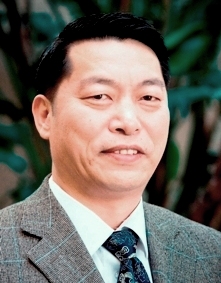 Dianhui Wang (王殿辉)合作论文数School of Information and Control Engineering, China University of Mining and Technology;Department of Computer Science and Information Technology, La Trobe University2WU Yingjie (伍迎节)合作论文数1Zhang Qiongjie合作论文数1Hongli Liu合作论文数1Yanli ZHOU (周艳丽)合作论文数1
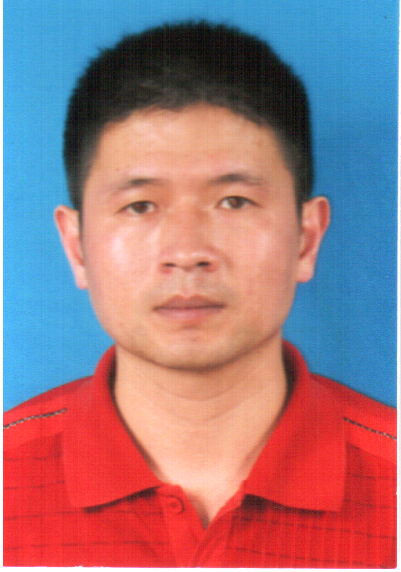 Qixin Zhu (朱其新)合作论文数School of Mechanical Engineering, Suzhou University of Science and Technology1Kun Zhong合作论文数1
 Zhen Sui (隋振)合作论文数College of Communication Engineering, Jilin University1
 Jiang Liu (刘江)合作论文数School of Automation and Intelligence, Beijing Jiaotong University1
 Yuan Cao (曹源)合作论文数School of Automation and Intelligence, Beijing Jiaotong University1
 Guangming Xie (谢广明)合作论文数College of Engineering, Peking University;Intelligent Biomimetic Design Lab, Peking University1
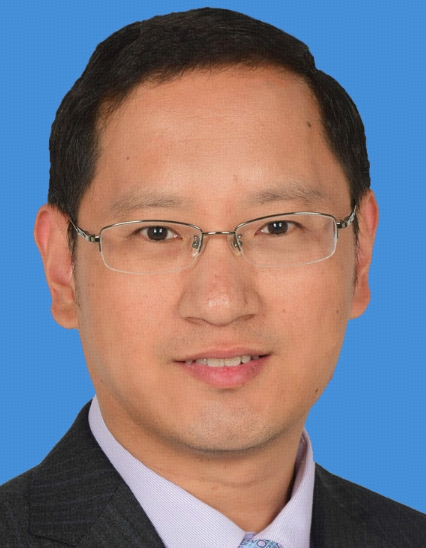 Jinliang Ding (丁进良)合作论文数College of Information Science and Engineering, Northeastern University;Faculty of Robot Science and Engineering, Northeastern University1




