Perceiving and generating diverse modalities are crucial for AI models to effectively learn from and engage with real-world signals, necessitating reliable evaluations for their development. We identify two major issues in current evaluations: (1) inconsistent standards, shaped by different communities with varying protocols and maturity levels; and (2) significant query, grading, and generalization biases. To address these, we introduce MixEval-X, the first any-to-any, real-world benchmark designed to optimize and standardize evaluations across diverse input and output modalities. We propose multi-modal benchmark mixture and adaptation-rectification pipelines to reconstruct real-world task distributions, ensuring evaluations generalize effectively to real-world use cases. Extensive meta-evaluations show our approach effectively aligns benchmark samples with real-world task distributions. Meanwhile, MixEval-X's model rankings correlate strongly with that of crowd-sourced real-world evaluations (up to 0.98) while being much more efficient. We provide comprehensive leaderboards to rerank existing models and organizations and offer insights to enhance understanding of multi-modal evaluations and inform future research.
We introduce Quantized Language-Image Pretraining (QLIP), a visual tokenization method that combines state-of-the-art reconstruction quality with state-of-the-art zero-shot image understanding. QLIP trains a binary-spherical-quantization-based autoencoder with reconstruction and language-image alignment objectives. We are the first to show that the two objectives do not need to be at odds. We balance the two loss terms dynamically during training and show that a two-stage training pipeline effectively mixes the large-batch requirements of image-language pre-training with the memory bottleneck imposed by the reconstruction objective. We validate the effectiveness of QLIP for multimodal understanding and text-conditioned image generation with a single model. Specifically, QLIP serves as a drop-in replacement for the visual encoder for LLaVA and the image tokenizer for LlamaGen with comparable or even better performance. Finally, we demonstrate that QLIP enables a unified mixed-modality auto-regressive model for understanding and generation.
Long-context capability is critical for multi-modal foundation models, especially for long video understanding. We introduce LongVILA, a full-stack solution for long-context visual-language models by co-designing the algorithm and system. For model training, we upgrade existing VLMs to support long video understanding by incorporating two additional stages, i.e., long context extension and long video supervised fine-tuning. However, training on long video is computationally and memory intensive. We introduce the long-context Multi-Modal Sequence Parallelism (MM-SP) system that efficiently parallelizes long video training and inference, enabling 2M context length training on 256 GPUs without any gradient checkpointing. LongVILA efficiently extends the number of video frames of VILA from 8 to 2048, achieving 99.8% accuracy in 6,000-frame (more than 1 million tokens) video needle-in-a-haystack. LongVILA-7B demonstrates strong accuracy on 9 popular video benchmarks, e.g., 65.1% VideoMME with subtitle. Besides, MM-SP is 2.1x - 5.7x faster than ring style sequence parallelism and 1.1x - 1.4x faster than Megatron with a hybrid context and tensor parallelism. Moreover, it seamlessly integrates with Hugging Face Transformers.
We propose Wolf, a WOrLd summarization Framework for accurate video captioning. Wolf is an automated captioning framework that adopts a mixture-of-experts approach, leveraging complementary strengths of Vision Language Models (VLMs). By utilizing both image and video models, our framework captures different levels of information and summarizes them efficiently. Our approach can be applied to enhance video understanding, auto-labeling, and captioning. To evaluate caption quality, we introduce CapScore, an LLM-based metric to assess the similarity and quality of generated captions compared to the ground truth captions. We further build four human-annotated datasets in three domains: autonomous driving, general scenes, and robotics, to facilitate comprehensive comparisons. We show that Wolf achieves superior captioning performance compared to state-of-the-art approaches from the research community (VILA1.5, CogAgent) and commercial solutions (Gemini-Pro-1.5, GPT-4V). For instance, in comparison with GPT-4V, Wolf improves CapScore both quality-wise by 55.6 we establish a benchmark for video captioning and introduce a leaderboard, aiming to accelerate advancements in video understanding, captioning, and data alignment. Webpage: https://wolfv0.github.io/.
Datasets nowadays are generally constructed from multiple sources and using different synthetic techniques, making data de-noising and de-duplication crucial before being used for post-training. In this work, we propose to perform instruction tuning by iterative data selection (). We measure the quality of a sample from complexity and diversity simultaneously. Instead of calculating the complexity score once for all before fine-tuning, we highlight the importance of updating this model-specific score during fine-tuning to accurately accommodate the dynamic changes of the model. On the other hand, the diversity score is defined on top of the samples' responses under the consideration of their informativeness. IterIT integrates the strengths of both worlds by iteratively updating the complexity score for the top-ranked samples and greedily selecting the ones with the highest complexity-diversity score. Experiments on multiple instruction-tuning data demonstrate consistent improvements of IterIT over strong baselines. Moreover, our approach also generalizes well to domain-specific scenarios and different backbone models. All resources will be available at https://github.com/JiaQiSJTU/IterIT.
Evaluating large language models (LLMs) is challenging. Traditional ground-truth-based benchmarks fail to capture the comprehensiveness and nuance of real-world queries, while LLM-as-judge benchmarks suffer from grading biases and limited query quantity. Both of them may also become contaminated over time. User-facing evaluation, such as Chatbot Arena, provides reliable signals but is costly and slow. In this work, we propose MixEval, a new paradigm for establishing efficient, gold-standard LLM evaluation by strategically mixing off-the-shelf benchmarks. It bridges (1) comprehensive and well-distributed real-world user queries and (2) efficient and fairly-graded ground-truth-based benchmarks, by matching queries mined from the web with similar queries from existing benchmarks. Based on MixEval, we further build MixEval-Hard, which offers more room for model improvement. Our benchmarks' advantages lie in (1) a 0.96 model ranking correlation with Chatbot Arena arising from the highly impartial query distribution and grading mechanism, (2) fast, cheap, and reproducible execution (6% of the time and cost of MMLU), and (3) dynamic evaluation enabled by the rapid and stable data update pipeline. We provide extensive meta-evaluation and analysis for our and existing LLM benchmarks to deepen the community's understanding of LLM evaluation and guide future research directions.
To help the open-source community have a better understanding of Mixture-of-Experts (MoE) based large language models (LLMs), we train and release OpenMoE, a series of fully open-sourced and reproducible decoder-only MoE LLMs, ranging from 650M to 34B parameters and trained on up to over 1T tokens. Our investigation confirms that MoE-based LLMs can offer a more favorable cost-effectiveness trade-off than dense LLMs, highlighting the potential effectiveness for future LLM development. One more important contribution of this study is an in-depth analysis of the routing mechanisms within our OpenMoE models, leading to three significant findings: Context-Independent Specialization, Early Routing Learning, and Drop-towards-the-End. We discovered that routing decisions in MoE models are predominantly based on token IDs, with minimal context relevance. The token-to-expert assignments are determined early in the pre-training phase and remain largely unchanged. This imperfect routing can result in performance degradation, particularly in sequential tasks like multi-turn conversations, where tokens appearing later in a sequence are more likely to be dropped. Finally, we rethink our design based on the above-mentioned observations and analysis. To facilitate future MoE LLM development, we propose potential strategies for mitigating the issues we found and further improving off-the-shelf MoE LLM designs.
Recent research has highlighted the importance of dataset size in scaling language models. However, large language models (LLMs) are notoriously token-hungry during pre-training, and high-quality text data on the web is approaching its scaling limit for LLMs. To further enhance LLMs, a straightforward approach is to repeat the pre-training data for additional epochs. In this study, we empirically investigate three key aspects under this approach. First, we explore the consequences of repeating pre-training data, revealing that the model is susceptible to overfitting, leading to multi-epoch degradation. Second, we examine the key factors contributing to multi-epoch degradation, finding that significant factors include dataset size, model parameters, and training objectives, while less influential factors consist of dataset quality and model FLOPs. Finally, we explore whether widely used regularization can alleviate multi-epoch degradation. Most regularization techniques do not yield significant improvements, except for dropout, which demonstrates remarkable effectiveness but requires careful tuning when scaling up the model size. Additionally, we discover that leveraging mixture-of-experts (MoE) enables cost-effective and efficient hyper-parameter tuning for computationally intensive dense LLMs with comparable trainable parameters, potentially impacting efficient LLM development on a broader scale.
Transformer-based models have delivered impressive results on many tasks, particularly vision and language tasks. In many model training situations, conventional configurations are typically adopted. For example, we often set the base model with hidden dimensions (i.e. model width) to be 768 and the number of transformer layers (i.e. model depth) to be 12. In this paper, we revisit these conventional configurations. Through theoretical analysis and experimental evaluation, we show that the masked autoencoder is effective in alleviating the over-smoothing issue in deep transformer training. Based on this finding, we propose Bamboo, an idea of using deeper and narrower transformer configurations, for masked autoencoder training. On ImageNet, with such a simple change in configuration, re-designed model achieves 87.1% top-1 accuracy and outperforms SoTA models like MAE and BEiT. On language tasks, re-designed model outperforms BERT with default setting by 1.1 points on average, on GLUE datasets.
Humans have the ability to adapt the type of information they use, the procedure they employ, and the amount of time they spend when solving problems. However, most standard neural networks have a fixed function type and computation budget regardless of the sample's nature or difficulty. Adaptivity is a powerful paradigm as it not only imbues practitioners with flexibility pertaining to the downstream usage of these models but can also serve as a powerful inductive bias for solving certain challenging classes of problems. In this work, we introduce a new approach called AdaTape, which allows for dynamic computation in neural networks through adaptive tape tokens. AdaTape utilizes an elastic input sequence by equipping an architecture with a dynamic read-and-write tape. Specifically, we adaptively generate input sequences using tape tokens obtained from a tape bank which can be either trainable or derived from input data. We examine the challenges and requirements to obtain dynamic sequence content and length, and propose the Adaptive Tape Reading (ATR) algorithm to achieve both goals. Through extensive experiments on image recognition tasks, we show that AdaTape can achieve better performance while maintaining the computational cost. To facilitate further research, we have released code at https://github.com/google-research/scenic.
Human education system trains one student by multiple experts. Mixture-of-experts (MoE) is a powerful sparse architecture including multiple experts. However, sparse MoE model is easy to overfit, hard to deploy, and not hardware-friendly for practitioners. In this work, inspired by the human education model, we propose a novel task, knowledge integration, to obtain a dense student model (OneS) as knowledgeable as one sparse MoE. We investigate this task by proposing a general training framework including knowledge gathering and knowledge distillation. Specifically, to gather key knowledge from different pre-trained experts, we first investigate four different possible knowledge gathering methods, \ie summation, averaging, Top-K Knowledge Gathering (Top-KG), and Singular Value Decomposition Knowledge Gathering (SVD-KG) proposed in this paper. We then refine the dense student model by knowledge distillation to offset the noise from gathering. On ImageNet, our OneS preserves $61.7\%$ benefits from MoE and achieves $78.4\%$ top-1 accuracy ImageNet with only $15$M parameters. On four natural language processing datasets, OneS obtains $88.2\%$ MoE benefits and outperforms the best baseline by $51.7\%$ using the same architecture and training data. In addition, compared with the MoE counterpart, OneS can achieve $3.7 \times$ inference speedup due to less computation and hardware-friendly architecture.
Transformer achieves promising results on various tasks. However, self-attention suffers from quadratic memory requirements with respect to the sequence length. Existing work focuses on reducing time and space complexity from an algorithm perspective. In this work, we propose sequence parallelism, a memory-efficient parallelism method to help us break input sequence length limitation and train with longer sequences on GPUs efficiently. Our approach is compatible with most existing parallelisms (e.g. data parallelism, pipeline parallelism and tensor parallelism), which means our sequence parallelism makes 4D parallelism possible. More importantly, we no longer require a single device to hold the whole sequence. That is, with sparse attention, our sequence parallelism enables us to train transformer with infinite long sequence. Specifically, we split the input sequence into multiple chunks and feed each chunk into its corresponding device (i.e. GPU). To compute the attention output, we integrated ring-style communication with self-attention calculation and proposed Ring Self-Attention (RSA). Experiments show that sequence parallelism performs well when scaling with batch size and sequence length. Compared with tensor parallelism, our approach achieved $13.7\times$ and $3.0\times$ maximum batch size and sequence length respectively when scaling up to 64 NVIDIA P100 GPUs. With sparse attention, sequence can handle sequence with over 114K tokens, which is over $27\times$ longer than existing sparse attention works holding the whole sequence on a single device.
Large language models (LLMs) have revolutionized the field of AI, demonstrating unprecedented capacity across various tasks. However, the inference process for LLMs comes with significant computational costs. In this paper, we propose an efficient LLM inference pipeline that harnesses the power of LLMs. Our approach begins by tapping into the potential of LLMs to accurately perceive and predict the response length with minimal overhead. By leveraging this information, we introduce an efficient sequence scheduling technique that groups queries with similar response lengths into micro-batches. We evaluate our approach on real-world instruction datasets using the LLaMA-based model, and our results demonstrate an impressive 86% improvement in inference throughput without compromising effectiveness. Notably, our method is orthogonal to other inference acceleration techniques, making it a valuable addition to many existing toolkits (e.g., FlashAttention, Quantization) for LLM inference.
Generative Adversarial Network (GAN) has shown tremendous success in synthesizing realistic photos and videos in recent years. However, training GAN to convergence is still a challenging task that requires significant computing power and is subject to training instability. To address these challenges, we propose ParaGAN, a cloud training framework for GAN optimized from both system and numerical perspectives. To achieve this, ParaGAN implements a congestion-aware pipeline for latency hiding, hardware-aware layout transformation for improved accelerator utilization, and an asynchronous update scheme to optimize system performance. Additionally, from a numerical perspective, we introduce an asymmetric optimization policy to stabilize training. Our preliminary experiments show that ParaGAN reduces the training time of BigGAN from 15 days to just 14 hours on 1024 TPUs, achieving 91% scaling efficiency. Moreover, we demonstrate that ParaGAN enables the generation of unprecedented high-resolution (1024×1024) images on BigGAN.
Compared with standard text, understanding dialogue is more challenging for machines as the dynamic and unexpected semantic changes in each turn. To model such inconsistent semantics, we propose a simple but effective Hierarchical Dialogue Understanding model, HiDialog. Specifically, we first insert multiple special tokens into a dialogue and propose the turn-level attention to learn turn embeddings hierarchically. Then, a heterogeneous graph module is leveraged to polish the learned embeddings. We evaluate our model on various dialogue understanding tasks including dialogue relation extraction, dialogue emotion recognition, and dialogue act classification. Results show that our simple approach achieves state-of-the-art performance on all three tasks above. All our source code is publicly available at https://github.com/ShawX825/HiDialog.
The click-through rate (CTR) prediction task is to predict whether a user will click on the recommended item. As mind-boggling amounts of data are produced online daily, accelerating CTR prediction model training is critical to ensuring an up-to-date model and reducing the training cost. One approach to increase the training speed is to apply large batch training. However, as shown in computer vision and natural language processing tasks, training with a large batch easily suffers from the loss of accuracy. Our experiments show that previous scaling rules fail in the training of CTR prediction neural networks. To tackle this problem, we first theoretically show that different frequencies of ids make it challenging to scale hyperparameters when scaling the batch size. To stabilize the training process in a large batch size setting, we develop the adaptive Column-wise Clipping (CowClip). It enables an easy and effective scaling rule for the embeddings, which keeps the learning rate unchanged and scales the L2 loss. We conduct extensive experiments with four CTR prediction networks on two real-world datasets and successfully scaled 128 times the original batch size without accuracy loss. In particular, for CTR prediction model DeepFM training on the Criteo dataset, our optimization framework enlarges the batch size from 1K to 128K with over 0.1% AUC improvement and reduces training time from 12 hours to 10 minutes on a single V100 GPU. Our code locates at github.com/bytedance/LargeBatchCTR.
Few-shot speaker recognition task is to identify speakers from limited support samples. We argue that query samples and support samples are both informative for classification. To help Prototypical Networks capture information from query samples, this paper proposes the relation-based indefinite distance metric attentive correction prototype network (RACP). Since the mean prototype deviates from the ideal prototype, we calculate attention scores for each query sample to customize the attention prototype. Then, to compensate for the missed query samples information, the prototype is further refined by correction data that is constructed by combining query samples with the global class attention score. Later, the indefinite distance metric of Relation Networks is introduced on Prototypical Networks, and the relation scores between the sample prototypes and the query samples are calculated for final prediction. Compare with existing methods, RACP can consider both query samples and support samples instead of ignoring the query ones. We compare RACP with strong baselines (e.g. GMM-SVM, MAML, Prototypical Networks, Res32, and VGG11). Ablation study and generalizability study of different scenarios are also conducted on different datasets. Results show that RACP achieves better performance and generalization ability.
Dialogue relation extraction (RE) is to predict the relation type of two entities mentioned in a dialogue. In this paper, we propose a simple yet effective model named SimpleRE for the RE task. SimpleRE captures the interrelations among multiple relations in a dialogue through a novel input format named BERT Relation Token Sequence (BRS). In BRS, multiple [CLS] tokens are used to capture possible relations between different pairs of entities mentioned in the dialogue. A Relation Refinement Gate (RRG) is then designed to extract relation-specific semantic representation in an adaptive manner. Experiments on the DialogRE dataset show that SimpleRE achieves the best performance, with much shorter training time. Further, SimpleRE outperforms all direct baselines on sentence-level RE without using external resources.
Transformer-based models have delivered impressive results on many tasks, partic-ularly vision and language tasks. In many model training situations, conventional configurations are typically adopted. For example, we often set the base model with hidden dimensions ( i.e., model width) to be 768 and the number of transformer layers ( i.e., model depth) to be 12. In this paper, we revisit these conventional configurations. Through theoretical analysis and experimental evaluation, we show that the masked autoencoder is effective in alleviating the over-smoothing issue in deep transformer training. Based on this finding, we propose Bamboo, an idea of using deeper and narrower transformer configurations, for masked autoencoder training. On ImageNet, with such a simple change in configuration, re-designed model achieves 87.1% top-1 accuracy and outperforms SoTA models like MAE and BEiT. On language tasks, re-designed model outperforms BERT with default setting by 1.1 points on average, on GLUE datasets.
Text-based video segmentation aims to segment the target object in a video based on a describing sentence. Incorporating motion information from optical flow maps with appearance and linguistic modalities is crucial yet has been largely ignored by previous work. In this paper, we design a method to fuse and align appearance, motion, and linguistic features to achieve accurate segmentation. Specifically, we propose a multi-modal video transformer, which can fuse and aggregate multi-modal and temporal features between frames. Furthermore, we design a language-guided feature fusion module to progressively fuse appearance and motion features in each feature level with guidance from linguistic features. Finally, a multi-modal alignment loss is proposed to alleviate the semantic gap between features from different modalities. Extensive experiments on A2D Sentences and J-HMDB Sentences verify the performance and the generalization ability of our method compared to the state-of-the-art methods.
 You Yang合作论文数Department of Computer Science, School of Computing, National University of Singapore20
 Zangwei (Alex) Zheng (郑奘巍)合作论文数HPC-AI Tech7
 Jinjie Ni合作论文数National University of Singapore7
 Xiaozhe Ren合作论文数Huawei Hong Kong Research Center5
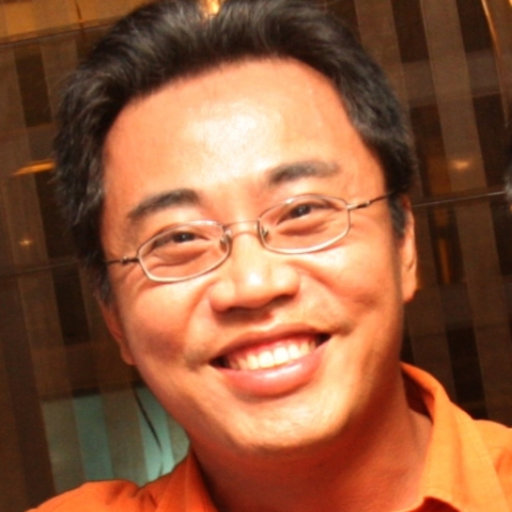 Eng Siong Chng合作论文数School of Computer Science and Engineering, Nanyang Technological University5
 Xiaoxin He (何晓昕)合作论文数School of Computing, National University of Singapore4
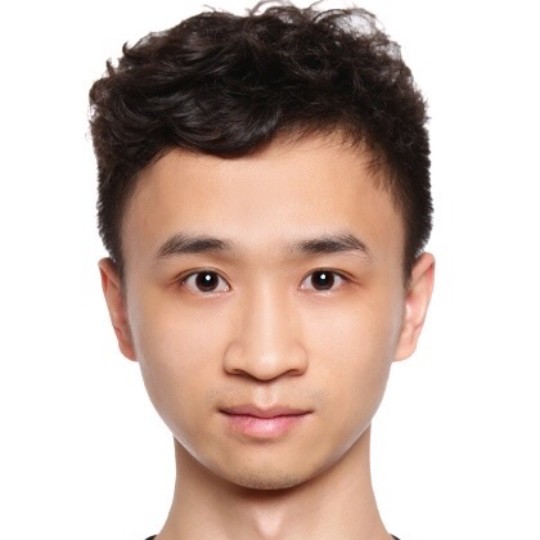 Hao Zhang (张豪)合作论文数Noah’s Ark Lab, Singapore Research Center, Huawei International4Yuxuan Lou合作论文数3
 Xin Jiang合作论文数Speech and Semantics Lab, Noah’s Ark Lab, Huawei Technologies3
 Xingmei Wang (王兴梅)合作论文数College of Computer Science And Technology, Harbin Engineering University3
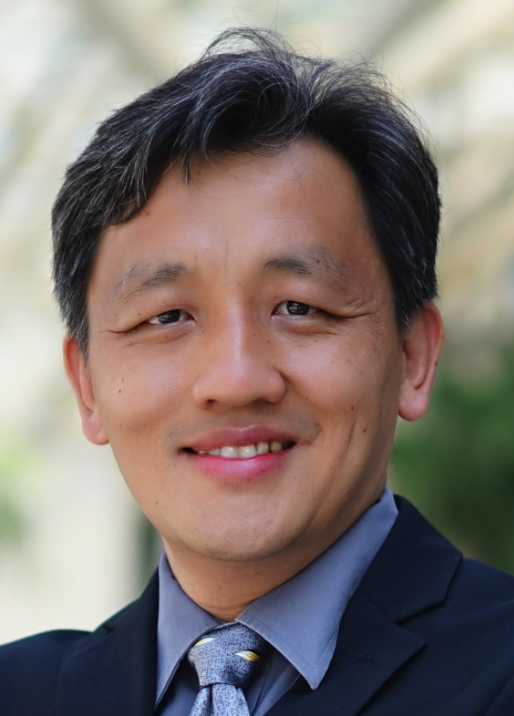 Aixin Sun (孙爱欣)合作论文数College of Computing & Data Science, Nanyang Technological University3
 Jan Kautz合作论文数Department of Computer Science, University College London3
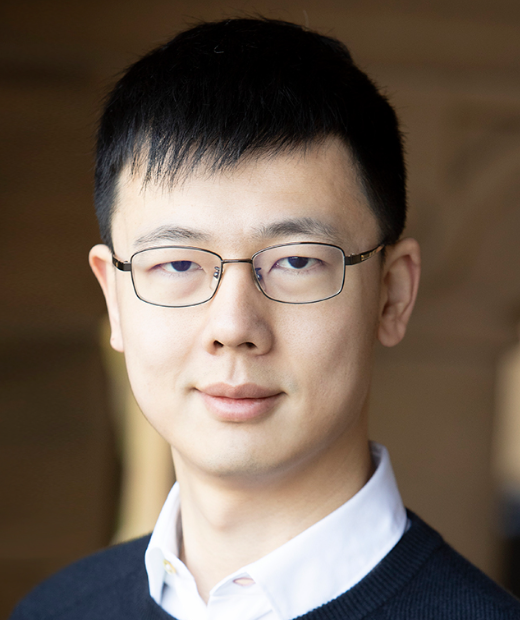 Yuke Zhu (朱玉可)合作论文数Department of Computer Science, College of Natural Sciences, The University of Texas at Austin;NVIDIA3Kabir Jain合作论文数2Mahir Shah合作论文数2aixin sun合作论文数2Anhua Liu合作论文数2
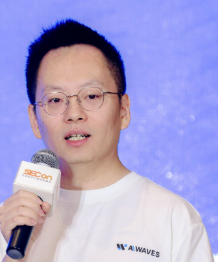 Wangchunshu Zhou (周王春澍)合作论文数Personal AI Lab, OPPO2
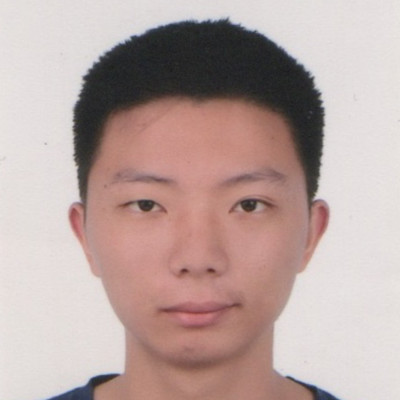 Shenggui Li合作论文数School of Computing, National University of Singapore2
 Ziheng Qin合作论文数National University of Singapore2
 Xinchao Wang合作论文数Department of Electrical and Computer Engineering, National University of Singapore2
 Yuntian Deng合作论文数Cheriton School of Computer Science, University of Waterloo;NVIDIA;Harvard University;Vector Institute2
 Wangbo Zhao合作论文数School of Computing, National University of Singapore2
 Yao Lu合作论文数Physical Intelligence2
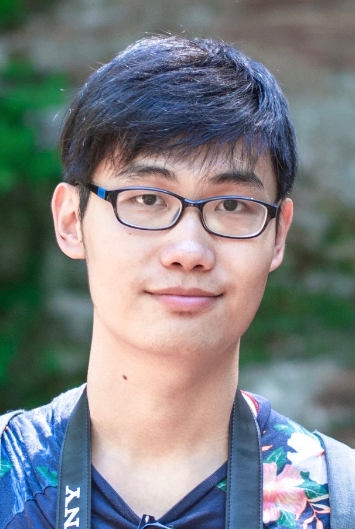 Xiang Yue (岳翔)合作论文数Language Technologies Institute, School of Computer Science, Carnegie Mellon University;The Ohio State University2
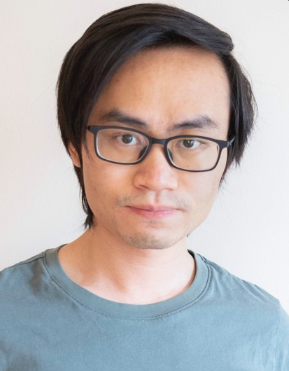 Yao Fu合作论文数Google DeepMind2
 Ligeng Zhu合作论文数Department of Electrical Engineering and Computer Science, School of Engineering, Massachusetts Institute of Technology2
 Song Han (韩松)合作论文数Electrical Engineering & Computer Science Department, School of Engineering, Massachusetts Institute of Technology;NVIDIA2
 Kai Wang (王锴)合作论文数School of Computing, National University of Singapore;High Performance Computing for Artificial Intelligence Lab, National University of Singapore2
 Linxi Jim Fan合作论文数NVIDIA2Ran Tian合作论文数1Kaichen Zhang合作论文数1Andy Zheng合作论文数1Chaitanya Baranwal合作论文数1Heng Zhang合作论文数1Zhen Li合作论文数1
 David Junhao Zhang合作论文数Show Lab, National University of Singapore;Google1Michael Qizhe Shieh合作论文数1
 Yifan Song合作论文数School of Computer Science, Peking University;National Key Laboratory for Multimedia Information Processing, Peking University1
 Philipp Krähenbühl合作论文数Department of Computer Science, College of Natural Sciences, University of Texas at Austin;Apple1Leqi Zou合作论文数1Zian Zheng合作论文数1Jim Fan合作论文数1
 Xiuyu Li (李岫宇)合作论文数Berkeley Artificial Intelligence Research Lab, University of California, Berkeley;Meta1
 Yunhao Fang合作论文数1Yijie Zhu合作论文数1Yongming Chen合作论文数1Jiaxiang Meng合作论文数1
 Pengtai Xu合作论文数1




