Earth observation is becoming one of the largest data-producing activities in science, yet current pipelines still treat compression as a storage and transmission tool rather than a new way to use data. We present a generative compression framework that learns from historical Earth observation archives and enables on-demand 100x to 10,000x data reduction across downstream tasks. Unlike general visual data, Earth observation repeatedly measures the same evolving planet, making historical-prior learning feasible for extreme compression. To realize this paradigm, we train large generative compression models at exascale on the LineShine Armv9 CPU supercomputer, with co-optimization across model design, kernels, memory hierarchy, runtime, and parallelism. Our implementation sustains 1.54 EFLOP/s and peaks at 2.16 EFLOP/s in end-to-end training. This work shows that historical-prior generative compression can turn Earth observation data into an active, task-adaptive foundation for acquisition, delivery, storage, and scientific use.
Current speech language models generate responses directly without explicit reasoning, leading to errors that cannot be corrected once audio is produced. We introduce “Silent Thought, Spoken Answer” – a paradigm where speech LLMs generate internal text reasoning alongside spoken responses, with thinking traces informing speech quality. To realize this, we present , the first diffusion-based speech-text language model supporting both understanding and generation, unifying discrete text and tokenized speech under a single masked diffusion framework. Unlike autoregressive approaches, jointly generates reasoning traces and speech tokens through iterative denoising, with modality-specific masking schedules. We also construct , the first speech QA dataset with paired text reasoning traces, containing 26K samples totaling 319 hours. Experiments show achieves state-of-the-art speech-to-speech QA accuracy, outperforming the best baseline by up to 9 points, while attaining the best TTS quality among generative models (6.2% WER) and preserving language understanding (66.2% MMLU). Ablations confirm that both the diffusion architecture and thinking traces contribute to these gains.
Autoregressive video generators are attractive for streaming, long-horizon, and interactive applications, but distilling strong black-box teachers into causal students remains difficult. The student must learn under its own rollout distribution, whereas practical teachers may expose only prompt-conditioned completed videos and may differ in architecture, capacity, temporal design, and sampling schedule. This interface makes supervised fine-tuning off-policy, score-based distillation inapplicable, and direct adversarial imitation too sparse for denoising-time credit assignment. We propose Adversarial Flow Distillation (AFD), an on-policy framework for heterogeneous black-box video distillation. AFD queries the teacher and rolls out the current student on the same prompts, trains a prompt-paired Bradley-Terry discriminator to estimate clean-sample teacher-student discrepancy, and converts the resulting on-policy advantage into forward-process flow-matching updates on the student's own noised states. Thus, AFD provides dense velocity-field supervision while requiring no teacher scores, latents, denoising trajectories, step alignment, or reverse-chain reinforcement learning. Experiments across two causal AR student families show that AFD consistently improves motion- and physics-sensitive generation while preserving general video quality, and ablations validate the importance of adaptive on-policy feedback and forward-process credit assignment. The method requires only clean teacher videos and student rollouts, providing a practical route for distilling proprietary or heterogeneous video generators into efficient autoregressive students.
Learning from demonstrations in embodied control is often cast as behavioral cloning, and recent diffusion or flow-matching policies improve this paradigm by modeling multi-modal expert actions. Yet these methods remain offline supervised learners: the policy is trained only on expert states and receives no corrective signal on the states it actually visits. On-policy distillation (OPD) offers a natural remedy, but standard OPD assumes a strong fixed teacher, which is unavailable in demonstration-only control. We propose FA-OPD, an adversarial dual on-policy distillation method in which a Flow Matching (FM) teacher is learned from demonstrations and co-trained with a lightweight MLP student. The teacher provides two complementary signals on student rollouts. The reward channel learns an expert-likeness objective over state-action pairs and drives online exploration through long-horizon policy optimization. The action channel supplies dense local targets at student-visited states, stabilizing exploitation. FA-OPD couples them so that reward distillation enables generalization beyond point-wise demonstrations, while action distillation keeps exploration anchored near expert-like behavior. Across six robot navigation, manipulation, and locomotion benchmarks, FA-OPD beats strong baselines and shows much stronger robustness under noisy or limited demonstrations. Source code: https://github.com/vanzll/FA-OPD.
Diffusion Transformers (DiTs) excel at visual generation yet remain hampered by slow sampling. Existing training-free accelerators—step reduction, feature caching, and sparse attention—enhance inference speed but typically rely on a uniform heuristic or manually designed adaptive strategy for all images, leaving quality on the table. Alternatively, dynamic neural networks offer per-image adaptive acceleration, but their high fine-tuning costs limit broader applicability. To address these limitations, we introduce RAPID^3: Tri-Level Reinforced Acceleration Policies for Diffusion Transformer framework that delivers image-wise acceleration with zero updates to the base generator. Specifically, three lightweight policy heads—Step-Skip, Cache-Reuse, and Sparse-Attention—observe the current denoising state and independently decide their corresponding speed-up at each timestep. All policy parameters are trained online via Group Relative Policy Optimization (GRPO) while the generator remains frozen. Meanwhile, an adversarially learned discriminator augments the reward signal, discouraging reward hacking by boosting returns only when generated samples stay close to the original model’s distribution. Across state-of-the-art DiT backbones including Stable Diffusion 3 and FLUX, RAPID^3 achieves nearly 3$\times$ faster sampling with competitive generation quality.
Scaling reinforcement learning (RL) has shown strong promise for enhancing the reasoning abilities of large language models (LLMs), particularly in tasks requiring long chain-of-thought generation. However, RL training efficiency is often bottlenecked by the rollout phase, which can account for up to 70
LLM-based agents are increasingly capable of complex task execution, yet current agentic systems remain constrained by text-centric paradigms that struggle with long-horizon tasks due to fragile multi-turn dependencies and context drift. We present CaveAgent, a framework that shifts tool use from “LLM-as-Text-Generator” to “LLM-as-Runtime-Operator.” CaveAgent introduces a dual-stream architecture that inverts the conventional paradigm: rather than treating the LLM's text context as the primary workspace with tools as auxiliary, CaveAgent elevates the persistent Python runtime as the central locus of state, with a lightweight semantic stream serving as its orchestrator. Beyond leveraging code generation to resolve interdependent sub-tasks (e.g., loops, conditionals) in a single step, CaveAgent introduces Stateful Runtime Management: it injects, manipulates, and retrieves complex Python objects (e.g., DataFrames, database connections) that persist across turns, unlike existing code-based approaches that remain text-bound. CaveAgent further provides a runtime-integrated skill management system that extends the Agent Skills open standard, enabling ecosystem interoperability through executable skill injections. This persistence mechanism serves as a high-fidelity external memory that reduces context drift in multi-turn interactions and preserves processed data for downstream applications without information loss. Evaluations show consistent improvement across challenging benchmarks, enabling CaveAgent to handle data scales that cause context overflow in both JSON-based and code-based agents. The accessible runtime state further provides programmatically verifiable feedback, enabling automated evaluation and reward signal generation without human annotation and establishing a structural foundation for future research in Reinforcement Learning with Verifiable Rewards (RLVR).
The large vision foundation model, SAM2, has achieved remarkable performance in video object segmentation and tracking (VOST). However, its effectiveness is hindered by significant computational overhead. While model pruning is a widely used strategy to address this issue, traditional static and input-agnostic pruning approaches fall short in managing the diverse and complex nature of video data effectively. A promising alternative is dynamic networks, yet they often struggle to translate theoretical computational reductions into actual acceleration. Furthermore, both static and dynamic approaches typically focus on visual features of individual frames while neglecting the temporal correlations between them, limiting their performance in handling complex video streams.To address these challenges, we propose Recurrent Dynamic Submodel (RDS), a dynamic architecture that adaptively selects submodel blocks for each frame. Specifically, it has a lightweight Prediction-aware Router (PAR), which leverages both the segmentation mask from the previous frame and the visual features of the current frame to make routing decisions, enabling the submodel to explicitly capture the temporal nature of video data. Additionally, to reduce the cost of adapting the dynamic submodel, we introduce an Importance-aware LoRA (I-LoRA), tuning parameters only in the most critical blocks. Extensive experiments on various benchmarks demonstrate the effectiveness of our approach.For example, it achieves a 1.3× speedup on the DAVIS 2017 dataset with less than 1% performance degradation, while introducing only 3% (6.7M) trainable parameters and requiring only 0.003% (6.7k) of the SAM2 training data.
Real-world users typically have access to multiple Large Language Models (LLMs) from different providers, and these LLMs often excel at distinct domains, yet none dominate all. Consequently, routing each task to the most suitable model becomes critical for both performance and cost. Existing routers treat this as a static, one-off classification problem. However, we identify the performance bottleneck for these routers as information deficit: simply augmenting a vanilla LLM router with performance statistics at the task-dimension level yields a 15.3
Multimodal large language models (MLLMs) represent images and video frames as visual tokens. Scaling from single images to hour-long videos, however, inflates the token budget far beyond practical limits. Popular pipelines therefore either uniformly subsample or apply keyframe selection with retrieval-style scoring using smaller vision-language models. However, these keyframe selection methods still rely on pre-filtering before selection to reduce the inference cost and can miss the most informative moments. We propose FOCUS, Frame-Optimistic Confidence Upper-bound Selection, a training-free, model-agnostic keyframe selection module that selects query-relevant frames under a strict token budget. FOCUS formulates keyframe selection as a combinatorial pure-exploration (CPE) problem in multi-armed bandits: it treats short temporal clips as arms, and uses empirical means and Bernstein confidence radius to identify informative regions while preserving exploration of uncertain areas. The resulting two-stage exploration-exploitation procedure reduces from a sequential policy with theoretical guarantees, first identifying high-value temporal regions, then selecting top-scoring frames within each region. Extensive experiments across four long-video question-answering benchmarks and four popular MLLMs demonstrate that FOCUS delivers substantial accuracy improvements while processing less than 2% of video frames. For videos longer than 20 minutes, it achieves an 11.9% gain in accuracy on LongVideoBench, demonstrating its effectiveness as a keyframe selection method and providing a simple and general solution for scalable long-video understanding with MLLMs.
Reward models play a fundamental role in aligning large language models with human preferences. Existing methods predominantly follow two paradigms: scalar discriminative preference models, which are efficient but lack interpretability, and generative judging models, which offer richer reasoning at the cost of higher computational overhead. We observe that the log-probability margin between verdict tokens strongly correlates with prediction correctness, providing a reliable proxy for instance difficulty without additional inference cost. Building on this insight, we propose CAMEL, a confidence-gated reflection framework that performs a lightweight single-token preference decision first and selectively invokes reflection only for low-confidence instances. To induce effective self-correction, we train the model via reinforcement learning with counterfactual prefix augmentation, which exposes the model to diverse initial verdicts and encourages genuine revision. Empirically, CAMEL achieves state-of-the-art performance on three widely used reward-model benchmarks with 82.9\% average accuracy, surpassing the best prior model by 3.2\% and outperforming 70B-parameter models using only 14B parameters, while establishing a strictly better accuracy-efficiency Pareto frontier.
Multimodal large language models (MLLMs), which integrate language and visual cues for problem-solving, are crucial for advancing artificial general intelligence (AGI). However, current benchmarks for measuring the intelligence of MLLMs suffer from limited scale, narrow coverage, and unstructured knowledge, offering only static and undifferentiated evaluations. To bridge this gap, we introduce MDK12-Bench, a large-scale multidisciplinary benchmark built from real-world K–12 exams spanning six disciplines with 141K instances and 6,225 knowledge points organized in a six-layer taxonomy. Covering five question formats with difficulty and year annotations, it enables comprehensive evaluation to capture the extent to which MLLMs perform over four dimensions: 1) difficulty levels, 2) temporal (cross-year) shifts, 3) contextual shifts, and 4) knowledge-driven reasoning. We propose a novel dynamic evaluation framework that introduces unfamiliar visual, textual, and question form shifts to challenge model generalization while improving benchmark objectivity and longevity by mitigating data contamination. We further evaluate knowledge-point reference-augmented generation (KP-RAG) to examine the role of knowledge in reasoning. Key findings reveal limitations in current MLLMs in multiple aspects and provide guidance for enhancing model reasoning, robustness, and AI-assisted education.
Reinforcement learning with verifiable rewards (RLVR) has recently unlocked strong reasoning capabilities in large language models (LLMs), triggering rapid exploration of new algorithms and data. However, RLVR training is notoriously inefficient: long-tailed rollouts, tool-induced stalls, and asymmetric resource requirements between rollout and training introduce substantial idle time that cannot be eliminated by job-local optimizations such as synchronous pipelining, asynchronous rollout, or colocated execution. We argue that this inefficiency is structural. While idle gaps are unavoidable within individual RLVR jobs, they are largely anti-correlated across jobs and therefore exploitable at the cluster level. Leveraging this observation, we present PlexRL, a cluster-level runtime for multiplexing unified LLM services across RLVR jobs. By centrally managing model placement, state transitions, and function-level scheduling under strict affinity constraints, PlexRL time-slices LLM execution across jobs to fill otherwise idle periods without expensive model migration. Our implementation and evaluations demonstrate that PlexRL significantly improves effective cluster capacity and reduces user GPU hour cost by maximum 37.58
Recent video generators can fabricate realistic depictions of wars, disasters, public emergencies, and other real-world crises, creating substantial risks of misinformation. Existing benchmarks, however, provide limited evidence on detector and generator behavior in such settings, including how detectability varies with generation conditions, how people perceive generated videos, and whether detectors remain reliable during social dissemination. To address this gap, we introduce RA-Bench, a benchmark for AI-generated video detection that uses Real videos as Anchors. RA-Bench contains 17,886 videos, comprising 1,830 real-video anchors across 10 social-risk categories and 16,056 generated clips from four open-source and five closed-source generators. Based on RA-Bench, we organize our evaluation along three dimensions. We first assess detector generalization across seven traditional detectors, ten zero-shot multimodal models under three review settings, and two MLLMs specifically fine-tuned on AI-generated video detection. Across these methods, none of the three detector families generalizes consistently across RA-Bench instances. We then examine how detectability varies with generation quality, conditioning information, and sampling seeds. These analyses show that generation properties affect detector families differently, while source-level detection patterns remain stable across seeds. Finally, we study human authenticity judgments and detector reliability during social dissemination. We find that videos that mislead people are also difficult for current detectors, and that social dissemination makes detection harder. Together, these findings show that current methods struggle to detect realistic AI-generated videos, highlighting the need for detectors robust to evolving video generators.
Mixture-of-Experts (MoE) enables efficient scaling of large language models by activating only a subset of experts per input token. However, deploying MoE-based models incurs significant memory overhead due to the need to retain all experts in memory. While structured pruning is promising to reduce memory costs, existing methods often show suboptimal performance and unstable degradation in three dimensions: model architectures, calibration data sources, and calibration sample sizes. This paper proposes \textbf{M}ixture-\textbf{o}f-\textbf{N}ovices-and-\textbf{E}xperts (\textbf{MoNE}), a novel expert pruning method that replaces redundant experts with lightweight novices to achieve effective and robust model compression. MoNE evaluates expert redundancy based on two metrics: access frequency and output variance. Experts exhibiting low usage and stable outputs are pruned and replaced with lightweight novices—unbiased estimations of their original outputs—minimizing performance degradation. Extensive experiments demonstrate that MoNE consistently outperforms baseline methods with minimal accuracy degradation across the three dimensions, confirming its effectiveness and robustness. Notably, it outperforms baselines by up to 2.72 for the average zero shot accuracy across nine downstream tasks under 25\% pruning ratio, with only 0.14 performance drop for Qwen2-57B-A14B. The code is available at https://anonymous.4open.science/r/AnonymizedMoNE.
As transformer sequence lengths grow, existing pipeline parallelisms incur suboptimal performance due to the quadratic attention computation and the substantial memory overhead. To relieve these challenges, we propose HelixPipe, a novel pipeline parallelism for long sequence transformer training. First, HelixPipe introduces attention parallel partition, which schedules attention computations of different micro batches across different pipeline stages in parallel, reducing pipeline bubbles. Second, it employs a two-fold first-in-last-out micro batch schedule to balance memory usage and overlap communication with computation. Additionally, HelixPipe utilizes recomputation without attention and chunked MLP to mitigate fragmentation and enable longer sequences. Experiments demonstrate that HelixPipe gains increasing advantages with longer sequence lengths, and outperforms existing methods in throughput and scalability across varying pipeline sizes, model sizes, and cluster configurations. Notably, it achieves a 26% speedup over baseline methods when training a 7B model with 128k sequence length on 64 H20 GPUs. Code is available at https: //github.com/zxgx/Megatron-LM.
With the rapid growth of large-scale video analytics applications, edge-cloud collaborative systems have become the dominant paradigm for real-time inference. However, existing approaches often fail to dynamically adapt to heterogeneous video content and fluctuating resource conditions, resulting in suboptimal routing efficiency and high computational costs. In this paper, we propose R2E-VID, a two-stage robust routing framework via temporal gating for elastic edge-cloud video inference. In the first stage, R2E-VID introduces a temporal gating mechanism that models the temporal consistency and motion dynamics of incoming video streams to predict the optimal routing pattern for each segment. This enables adaptive partitioning of inference workloads between edge and cloud nodes, achieving fine-grained spatiotemporal elasticity. In the second stage, a robust routing optimization module refines the allocation through multi-model adaptation, jointly minimizing inference delay and resource consumption under dynamic network and workload variations. Extensive experiments on public datasets demonstrate that R2E-VID achieves up to 60
Diffusion models (DMs) have become the state-of-the-art for generative tasks across domains, but their reliance on sequential forward passes limits real-time performance. Prior acceleration methods mainly reduce sampling steps or reuse intermediate results. Leveraging the flexibility of Diffusion Transformers (DiTs) to handle variable token counts, we propose RAS, a training-free sampling strategy that dynamically assigns different update ratios to image regions based on model focus. Our key observation is that at each step, DiTs concentrate on semantically meaningful areas, and these regions exhibit strong continuity across consecutive steps. Exploiting this, RAS updates only focused regions while reusing cached noise for others, with focus determined from the previous step’s output. Evaluated on Stable Diffusion 3 and Lumina-Next-T2I, RAS achieves up to 2.36× and 2.51× speedups, respectively, with minimal quality loss. This demonstrates a practical step toward more efficient diffusion transformers for real-time generation.
Reinforcement Learning with Verifiable Rewards (RLVR) makes Multimodal Large Language Models more accurate, but the gains are brittle: simply paraphrasing a question or changing the prompt template can degrade them, which challenges reliable deployment in high-stakes scenarios like medical VQA. We trace this to two issues of the standard RL objective. First, the binary verifier conflates format with content, so the reward signal cannot tell a wrong answer apart from a misformatted one. Second, the training distribution covers only a thin slice of the real-world prompts that the model might meet at deployment, so policies that perform well on the training distribution can behave differently under unseen prompts during test. Both failures call for a robust post-training method that helps the policy cover a broader distribution of semantically equivalent prompts, and we identify two measures that help achieve this objective: separating format from semantics in the reward, and applying policy invariance across perturbed prompts with equivalent semantics. We therefore propose Prompt-Invariant RLVR (PIRL), consisting of a dynamic trinary reward and a consistency regularizer based on an embedding-space adversary. Under stress testing, PIRL's average accuracy on benchmarks drops by only ≤ 1%, where GRPO drops 3
Hallucination remains a persistent challenge for Multimodal Large Language Models (MLLMs), severely limiting their reliability in high-stakes applications. Existing evaluations, predominantly based on static benchmarks, suffer from narrow taxonomical coverage and rapid performance saturation, failing to reflect model robustness in evolving real-world scenarios. To bridge this gap, we present a systematic evaluation framework integrating a comprehensive benchmark with self-evolving stress testing. First, we introduce UniHall, a fine-grained dataset grounded in a unified taxonomy spanning Object, Instruction, and Knowledge dimensions. Second, to address benchmark saturation, we propose Self-Adaptive Multimodal Fuzzing (SAMF), a self-adaptive framework that employs evolutionary mutation strategies to explore the boundaries of model hallucinations. Crucially, to ensure reliable assessment of dynamic inputs, SAMF incorporates a structured metric suite driven by an ensemble of multi-modal oracles. Our extensive experiments reveal that state-of-the-art MLLMs exhibit significant performance degradation under fuzzing compared to conventional settings, exposing a dissociation between reasoning capabilities and factual grounding. Furthermore, we identify a helpfulness-hallucination trade-off, where reinforcement learning alignment inadvertently exacerbates sycophancy in instruction-following tasks. The framework, code and benchmark are available at https://github.com/LanceZPF/EvalHall.
 Kai Wang (王锴)合作论文数School of Computing, National University of Singapore;High Performance Computing for Artificial Intelligence Lab, National University of Singapore63
 Wangbo Zhao合作论文数School of Computing, National University of Singapore33
 James Demmel合作论文数Computer Science Division, Department of Mathematics, University of California at Berkeley24
 Cho-Jui Hsieh合作论文数Department of Computer Science, Samueli School of Engineering, University of California, Los Angeles;Arena21
 Xuanlei Zhao合作论文数National University of Singapore20
 Fuzhao (Frio) Xue合作论文数School of Computing, National University of Singapore;Nvidia20
 Zangwei (Alex) Zheng (郑奘巍)合作论文数HPC-AI Tech18
 Shenggan Cheng合作论文数Time Research, Sense18
 Yong Liu (刘勇)合作论文数HPC-AI LAB, Department of Computer Science, School of Computing, National University of Singapore18
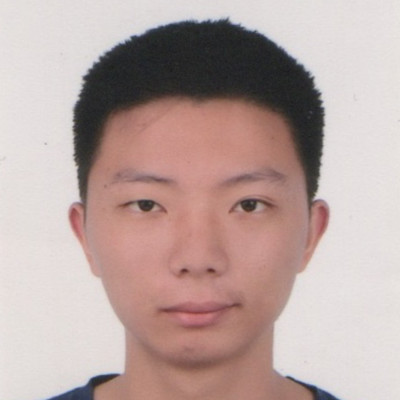 Shenggui Li合作论文数School of Computing, National University of Singapore13
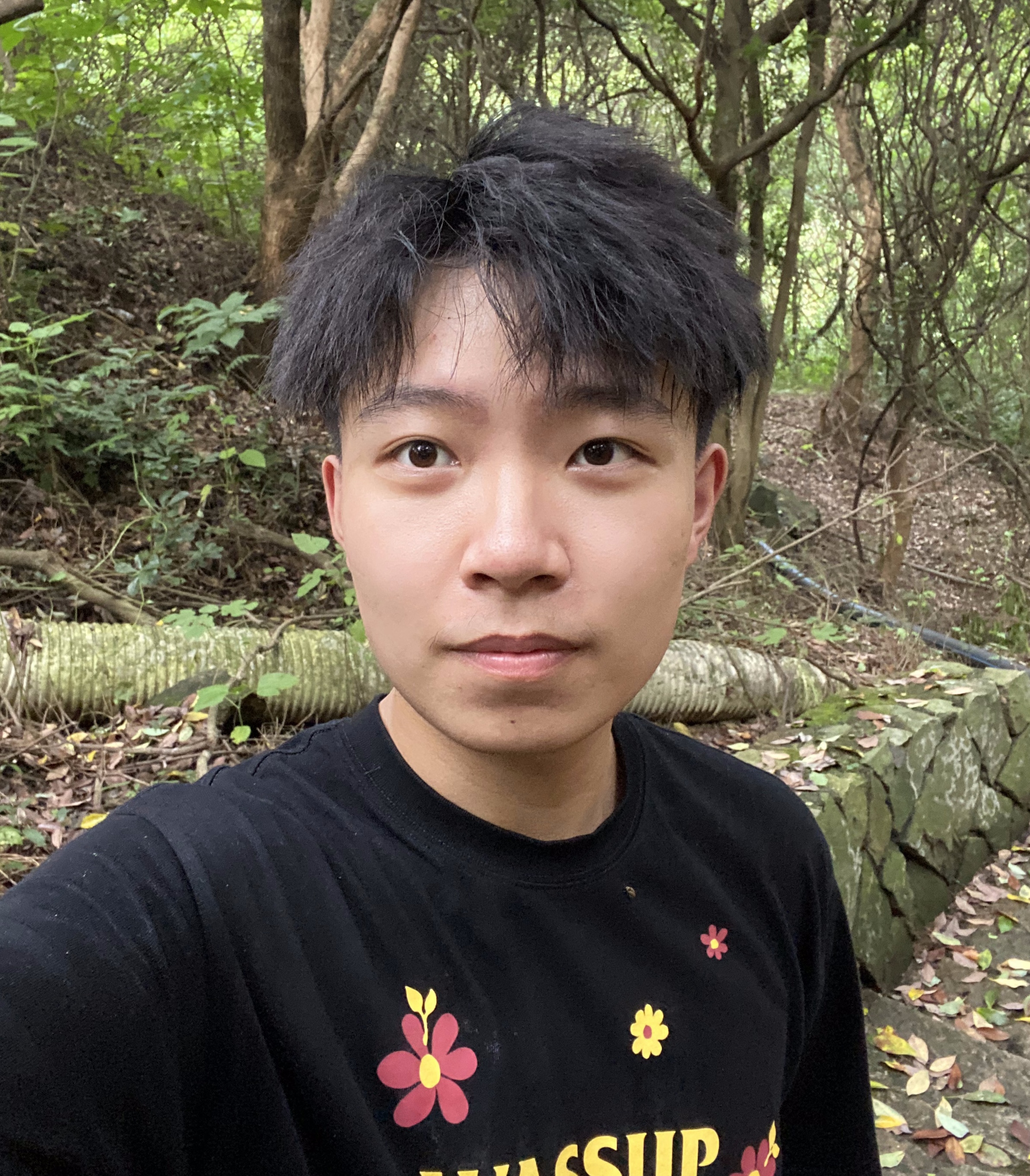 Yang Luo合作论文数National University of Singapore13
 Haohuan Fu (付昊桓)合作论文数Department of Earth System Science, Tsinghua University;Tsinghua Shenzhen International Graduate School;National Supercomputing Center in Wuxi13
 Ziheng Qin合作论文数National University of Singapore12
 Chaoyu (Chovy) Gong (巩超宇)合作论文数School of Energy and Environment, Southeast University12
 Kaipeng Zhang (张凯鹏)合作论文数Shanghai AI Laboratory12
 Jianyang Gu合作论文数Department of Computer Science and Engineering, Ohio State University11
 Yuxuan Lou合作论文数11
 Zheng Zhu (朱政)合作论文数GigaAI11
 Xiangyu Peng合作论文数National University of Singapore11Jiarui Fang (方佳瑞)合作论文数11Zirui Zhu合作论文数National University of Singapore9
 Ziming Liu (刘子铭)合作论文数School of Computing, National University of Singapore;Tencent9Jiasheng Tang合作论文数Alibaba Group8
 Fan Wang (王凡)合作论文数School of Computer Science and Technology, Dalian University of Technology8
 Kurt Keutzer合作论文数Department of Electrical Engineering and Computer Sciences, University of California, Berkeley;Graduate School, University of California, Berkeley8Zhaopan XU (徐兆攀)合作论文数7
 Xiaojiang Peng (彭小江)合作论文数College of Big Data and Internet, Shenzhen Technology University7
 Xingrui Yu合作论文数Australian Artificial Intelligence Institute, University of Technology Sydney7
 Wenqi Shao (邵文琪)合作论文数Shanghai AI Lab7
 Guangwen Yang (杨广文)合作论文数Department of Computer Science and Technology, Tsinghua University7Haotian Zhou合作论文数6Zhengda Bian合作论文数6Xiaozhe Ren合作论文数Huawei Hong Kong Research Center6
 Yizeng Han (韩益增)合作论文数6
 Hao Luo (罗浩)合作论文数Alibaba Damo Academy6
 Zhao Zhang合作论文数Department of Electrical and Computer Engineering, Rutgers University6
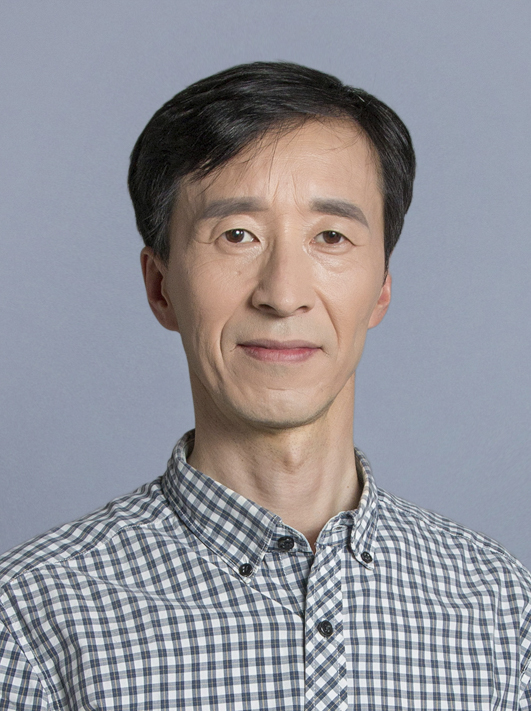 Wei Jiang (姜伟)合作论文数Institute of Cyber-Systems and Control, College of Control Science and Engineering, Zhejiang University6
 Bo An (安波)合作论文数Division of Artificial Intelligence, College of Computing and Data Science, Nanyang Technological University;School of Physical & Mathematical Sciences, Nanyang Technological University6
 Shuaiwen Leon Song合作论文数Together AI6Tianle Zhang合作论文数5
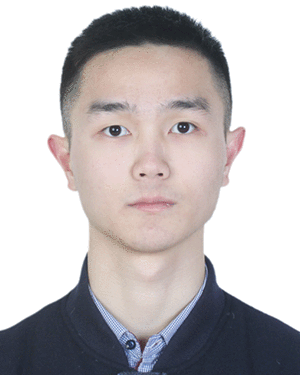 Geng Zhang (张耿)合作论文数School of Computing, National University of Singapore5Mingjia Shi合作论文数Sichuan University5Juntao Hu合作论文数5Chenhui Shen合作论文数Department of Electrical & Computer Engineering, National University of Singapore5
 Jiangsu Du (杜江溯)合作论文数School of Computer Science and Engineering, Sun Yat-sen University5
 Zelin Zang (臧泽林)合作论文数School of Engineering, Westlake University5
 Xinchao Wang合作论文数Department of Electrical and Computer Engineering, National University of Singapore5
 Zhangyang “Atlas” Wang (汪张扬)合作论文数XTX Markets5
 Minhao Cheng (程黽昊)合作论文数Department of Computer Science and Engineering, Hong Kong University of Science and Technology5




