Although preserved by sediments that were contemporaneously deposited by the same river and lake system and exposed in contiguous areas, the American and French collections of fossil specimens from the Shungura Formation of southwestern Ethiopia produce differences in specimen counts that are surprisingly large. Some of these differences were caused by well-documented differences in geography and geology of the formation and the history of the research efforts of the two expeditions. Other differences apparently arose because of factors that are less well documented. The following paper briefly describes the well-documented factors leading to differences in specimen counts, including differences in the sizes of areas explored, months of active fieldwork, and numbers of sites excavated for the recovery of macro- and microfaunal remains. Further, it proposes methods for discovering factors that are less well documented, likely related to differences in research strategies and the inherent richness of the sediments explored. And finally, it suggests how the collections might be best used to avoid the effects of biases that they apparently contain.
After decades of fieldwork spurred by the search for human ancestors, paleontologists in East Africa are compiling networks of databases to address questions of long-term evolutionary, environmental, and ecological change. Paleontological databases from the Turkana Basin of Kenya and Ethiopia (East Turkana, West Turkana, Kanapoi, Lothagam, and Omo) and the Hadar Basin of Ethiopia's Afar region consist of nearly 70,000 specimens of fossil vertebrates (mostly mammals) that date from the late Miocene to the Pleistocene. Here we focus on the most abundant family of fossil mammals, the Bovidae (N = 8213 specimens), and illustrate patterns of taxonomic abundance and diversity from about 7 Ma (million years ago) to about I Ma. The key questions we address are the following: How much variation in patterns of faunal change is there within different areas of a large sedimentary basin? How much variation is there between basins? How are these patterns related to broad signals of climatic change? What are the implications of the bovids for East African environments and for hominin evolution in the late Cenozoic? A correspondence analysis of bovid tribes indicates that important differences in taxonomic abundance existed among different areas of the Turkana Basin, and that some of these differences had environmental implications. The lower Omo Valley appears to have remained distinct from other parts of the Turkana Basin between 3 and 2 Ma, with consistently higher proportions of Tragelaphini and Aepycerotini, and at times of Reduncini and Bovini. These bovids are indicative of woodlands or forests (Aepycerotini and Tragelaphini) or of moist grasslands near wooded habitats (Reduncini and Bovini). An analysis of bovid tribes indicative of open and seasonally and grasslands (Alcelaphini, Antilopini, and Hippotragini) shows relatively high proportions of these bovids in the West Turkana areas, but very low proportions in the Omo, especially prior to about 2 Ma. This indicates that the Omo remained wetter and more wooded than other parts of the Turkana Basin for much of the Plio-Pleistocene, while the West Turkana area appears to have been more open than other parts of the basin, and East Turkana had conditions intermediate between those at West Turkana and those in the Omo. Fossil bovids from the Hadar Basin suggest diverse environments including woodlands, wet grasslands, and drier savanna grasslands. An increase in the abundance of and adapted bovids in the late Pliocene and early Pleistocene of the Turkana and Hadar Basins provides evidence that faunal changes in these different areas were driven by common factors consistent with the known record of climatic change. Analyses of species diversity among bovids show three peaks of richness in the Pliocene and Pleistocene. The first peak occurred at about 3.8-3.4 Ma, the second at 2.8-2.4 Ma, and the last from about 2.0 to 1.4 Ma. The last two of these peaks coincide with previously identified periods of high faunal turnover in East Africa. Although climate appears to have shaped major patterns in the evolution of bovids, the fact that different areas of a single sedimentary basin show distinct responses highlights the complexities involved in establishing causal links between paleoclimate and evolution.
The record of fossil mammals from the Shungura Formation, lower Omo Valley of southern Ethiopia, represents one of the largest and most carefully controlled samples for deciphering the responses of land faunas to global-scale climatic change. We use the abundant and continuous fossil record of the family Bovidae to analyze the effects of a late Pliocene climatic shift toward increased aridity in Africa beginning at 2.8 Ma and intensifying at about 2.4 Ma. A database consisting of 4233 specimen-based records collected under well-defined procedures is used to define patterns through time in bovid abundances while also controlling for taphonomic and other potential biases. Univariate and multidimensional (correspondence analysis) methods are used to study changes in bovid abundances through time. Our results indicate that bovids experienced an increase in species richness and a rapid episode of change in taxonomic abundances at 2.8 +/- 0.1 Ma (between Members B and C), and that this shift was followed by gradual and prolonged changes in abundance between 2.8 and 2.0 Ma (between Member C and upper Member G). An analysis of skeletal-element abundances through the Shungura sequence shows that only moderate changes in taphonomic conditions occurred between 3.0 and 2.1 Ma, when the lower Omo Valley was dominated by a large, meandering river, but that significant changes in the mode of preservation accompanied the onset of lacustrine depositional environments at 2.1 Ma (between lower and upper Member G). A juxtaposition of taxonomic with taphonomic patterns shows that the shift in taxonomic abundances at 2.8 Ma occurred in the absence of significant changes in taphonomic conditions. The main changes in bovid relative abundances and diversity appear to have been driven by broad environmental and climatic changes in Africa. As environmental indicators, bovids show a transition in the Omo at about 2.8 Ma from closed and wet environments in Member B to closed but dry environments in Member C. This drying trend intensified in Members D, E, and F, between about 2.5 and 2.3 Ma. In lower Member G, between 2.3 and 2.1 Ma, there was an increase in bovid abundance and diversity, which may be a result of greater environmental heterogeneity. The pattern of environmental change depicted by Shungura bovids is consistent with independently derived evidence of Omo paleoenvironments (from paleosols, paleoflora, and micromammals), and with regional and global evidence of climatic changes, especially acute between 2.8 and 2.3 Ma, that caused the initiation of glacial cycles in the north and drier climate in the tropics of Africa. Even though the Omo bovids showed distinct responses to large-scale climatic and environmental change, the Omo bovid community also had important attributes of long-term stability: two species, Aepyceros shungurae and Tragelaphus nakuae, dominated the community for nearly one million years. This study highlights the importance of carefully controlled collection procedures of fossil vertebrates and provides an important demonstration of the potential complexity in mode and rate of responses of land faunas to climatic change.
Rapport preliminaire de la decouverte d'un maxilaire d'Homo associe a un outillage Oldowayen et a une faune du Pliocene final dans une formation Hadar en Ethiopie. Les elements de datation 4 0A R/3 9A R indiquent indiquent un age de 2.3 MA ± 0.07. Ils indiqueraient la plus ancienne association de restes hominides et d'outillage et probablement la plus ancienne sequence datee du genre Homo
American Journal of Physical AnthropologyVolume 88, Issue 3 p. 401-403 Audio-Visual Review Human evolution survey and advanced human paleontology. Produced by Eric Delson, 1990. Pictures of Record, Inc., 119 Kettle Creek Road, Weston, Connecticut 06883. Two 35 mm color slide sets, 81 slides ($125) and 66 slides ($100) Dr. Laura Newell-Morris, Corresponding Author Dr. Laura Newell-Morris Audio-Visual-Review. Editor, AJPA, Department of Anthropology, DH-05, University of Washington, Seattle, WA 98195Audio-Visual-Review. Editor, AJPA, Department of Anthropology, DH-05, University of Washington, Seattle, WA 98195Search for more papers by this authorGerald G. Eck, Gerald G. Eck Department of Anthropology University of Washington Seattle, Washington 98195Search for more papers by this author Dr. Laura Newell-Morris, Corresponding Author Dr. Laura Newell-Morris Audio-Visual-Review. Editor, AJPA, Department of Anthropology, DH-05, University of Washington, Seattle, WA 98195Audio-Visual-Review. Editor, AJPA, Department of Anthropology, DH-05, University of Washington, Seattle, WA 98195Search for more papers by this authorGerald G. Eck, Gerald G. Eck Department of Anthropology University of Washington Seattle, Washington 98195Search for more papers by this author First published: July 1992 https://doi.org/10.1002/ajpa.1330880311AboutPDF ToolsRequest permissionExport citationAdd to favoritesTrack citation ShareShare Give accessShare full text accessShare full-text accessPlease review our Terms and Conditions of Use and check box below to share full-text version of article.I have read and accept the Wiley Online Library Terms and Conditions of UseShareable LinkUse the link below to share a full-text version of this article with your friends and colleagues. Learn more.Copy URL Share a linkShare onFacebookTwitterLinkedInRedditWechat Volume88, Issue3July 1992Pages 401-403 RelatedInformation
American Journal of Physical AnthropologyVolume 77, Issue 1 p. 136-137 Book Reviews Laetoli: A pliocene site in Northern Tanzania. Edited by M.D. Leakey and J.M. Harris, New York: Oxford University Press. 1987. xxi + 561 pp., tables, figures, appendices, index, maps. $150.00 (cloth) Gerald G. Eck, Gerald G. Eck Department of Anthropology, University of Washington, Seattle, WashingtonSearch for more papers by this author Gerald G. Eck, Gerald G. Eck Department of Anthropology, University of Washington, Seattle, WashingtonSearch for more papers by this author First published: September 1988 https://doi.org/10.1002/ajpa.1330770120AboutPDF ToolsRequest permissionExport citationAdd to favoritesTrack citation ShareShare Give accessShare full text accessShare full-text accessPlease review our Terms and Conditions of Use and check box below to share full-text version of article.I have read and accept the Wiley Online Library Terms and Conditions of UseShareable LinkUse the link below to share a full-text version of this article with your friends and colleagues. Learn more.Copy URL Share a linkShare onFacebookTwitterLinkedInRedditWechat No abstract is available for this article. Volume77, Issue1September 1988Pages 136-137 RelatedInformation
A new partial skeleton of an adult hominid from lower Bed I (about 1.8 Myr ago), Olduvai Gorge, is described. This specimen's craniodental anatomy indicates attribution to Homo habilis, but its postcranial anatomy, including small body size and relatively long arms, is strikingly similar to that of some early Australopithecus individuals.
Comparison of the skulls of Papio baringensis Leakey 1969 from the Chemeron Formation and P. quadratirostris Iwamoto 1982 from the Usno Formation with those of Theropithecus gelada, T. brumpti, T. darti, T. oswaldi, and several species of Papio indicate that the species from Chemeron and Usno exhibit all, or most, respectively, of the shared derived characters of Theropithecus. We propose that they be removed from Papio and placed in Theropithecus as T. baringensis and T. quadratirostris. Comparison of the specimens of T. baringensis and T. quadratirostris with those of T. brumpti indicate that the former two species have some of the derived characters of T. brumpti but are primitive in others. We propose that the three species form the following phyletic lineage: T. baringensis-T. quadratirostris-T. brumpti. With these referrals, there are now six species of the genus Theropithecus. Based on geologic grounds, the specimens from Chemeron are about 4.0 million years (m.y.), that from Usno between 3.3 and 3.4 m.y., and those of T. brumpti between 2.0 and 2.8 m.y. in age. We also show that the most complete specimen of Papio sp. nov. from Olduval Gorge belongs to T. oswaldi. With the removal of these specimens from Papio, the East African fossil record of this genus, apart from isolated teeth, comprises only 21 specimens, while that of Theropithecus comprises at least 300 specimens.
 Donald C. Johanson合作论文数4
 Rene Bobe合作论文数School of Anthropology & Museum Ethnography, University of Oxford4
 William H. Kimbel合作论文数School of Human Evolution and Social Change, Arizona State University4Erella Hovers合作论文数3
 Robert C. Walter合作论文数3
 Kaye Reed合作论文数School of Human Evolution and Social Change, Arizona State University;Institute of Human Origins, Arizona State University3Jl Aronson合作论文数2
 Anna K. Behrensmeyer合作论文数Department of Paleobiology, National Museum of Natural History, Smithsonian Institution2C Vondra合作论文数2
 Eric Delson合作论文数Department of Anthropology, Lehman College, City University of New York;The Division of Paleontology, American Museum of Natural History;Institut Català de Paleontologia Miquel Crusafont, Universitat Autònoma de Barcelona2
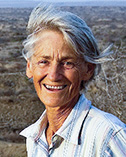 Meave G. Leakey合作论文数Department of Anthropology, Stony Brook University;Turkana Basin Institute2
 Nina G Jablonski合作论文数Penn State Univ, University Pk2T. Yemane合作论文数2Z Assefa合作论文数1Y. Chen合作论文数1Paul Manega合作论文数1
 Nina Jablonski合作论文数Department of Anthropology, College of the Liberal Arts, The Pennsylvania State University1
 Tim D. White合作论文数Department of Integrative Biology, College of Letters & Science, University of California, Berkeley;Human Evolution Research Center, The University of California at Berkeley1Karen Gust Schollmeyer合作论文数Department of Anthropology;Arizona State University;Department of Anthropology, Arizona State University1
 Derek York合作论文数Department of Physics, University of Toronto1
 Curtis William Marean合作论文数School of Human Evolution and Social Change, Arizona State University/Institute of Human Origins, Arizona State University1Prosper Ndessokia合作论文数1
 Yoel Rak合作论文数Institute of Human Origins1
 Louise Leakey合作论文数Department of Anthropology, Stony Brook University1
 Gen Suwa (諏訪元)合作论文数The University Museum, The University of Tokyo1NM Evensen合作论文数1
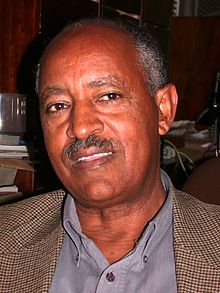 Berhane Asfaw合作论文数Rift Valley Research Service;Centre for Research and Conservation of Cultural Heritage, Ethiopian Ministry of Culture;National Museum of Ethiopia1PE SMITH合作论文数1




