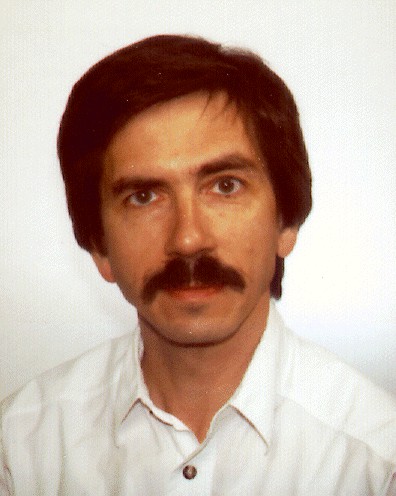
Otto Prokop, born in 1921, numbers among the outstanding representatives of German-speaking forensic medicine/legal medicine of the twentieth century. In addition to discoveries in the fields of blood group research and immunology as well as the processing of topics in toxicology and traffic medicine, his investigations brought fundamental knowledge for the clarification of forensic medical problems. Prokop led an unrelenting battle against charlatanism and occultism. He was director of the Institute for Legal Medicine at the Medical Faculty (Charite) of the Humboldt University in Berlin for three decades (1957-1987). The working climate there was impregnated by the example of the director; his characteristics were in particular diligence, creativity, the maintenance of a hierarchy, an outstanding hospitality, open-mindedness, a subtle sense of humour and the love of classical music. Characteristics that also benefited his 25 habilitation candidates, of whom 18 became full professors. Prokop published around 650 original articles and 60 books, including successful standard works in legal medicine and blood grouping. His books have been published in 10 countries. Although he had to endure political attacks and the closure of his prestigious institute after the German reunification despite the high national and international recognition of his achievements, after being conferred emeritus status in 1987 he worked energetically for many further years in an emeritus room at the Charite. Otto Prokop died on 20 January 2009 in a nursing home in Kiel.
Otto Prokop, geb. 1921, zählt zu den herausragenden Vertretern der deutschsprachigen Gerichtsmedizin/Rechtsmedizin des 20. Jh. Neben Entdeckungen auf den Gebieten der Blutgruppenforschung und Immunologie sowie der Bearbeitung toxikologischer und verkehrsmedizinischer Themen erbrachten seine Untersuchungen grundlegende Erkenntnisse zur Klärung forensisch-medizinischer Probleme. Prokop führte einen unnachsichtigen Kampf gegen Kurpfuschertum und Okkultismus. Über 3 Jahrzehnte (1957–1987) war er Direktor des Instituts für Gerichtliche Medizin an der Medizinischen Fakultät (Charité) der Humboldt-Universität zu Berlin. Das dortige Arbeitsklima war durch das Vorbild des Chefs geprägt; zu seinen Eigenschaften gehörten v. a. Fleiß, Kreativität, die Einhaltung der Hierarchie, eine ausgeprägte Gastfreundschaft, Weltoffenheit, ein feiner Sinn für Humor und die Liebe zur klassischen Musik. Eigenschaften, die auch seinen 25 Habilitanden, von den 18 eine Professur erhielten, zugutekamen. Prokop verfasste rund 650 Originalarbeiten und 60 Bücher, darunter erfolgreiche Standardwerke der Rechtsmedizin sowie der Blutgruppenkunde. Von seinen Büchern sind Ausgaben in 10 Ländern erschienen. Obwohl er trotz der großen nationalen und internationalen Anerkennung seiner fachlichen Leistungen nach der deutschen Wiedervereinigung auch politische Angriffe und die Schließung seines renommierten Instituts erleben musste, arbeitete er nach seiner Emeritierung 1987 noch jahrelang mit großer Tatkraft in einem Emerituszimmer an der Charité weiter. Otto Prokop verstarb am 20.01.2009 in einem Pflegeheim bei Kiel.
Forensic age estimation is requested by courts and other government authorities so that immigrants whose real age is unknown should not suffer unfair disadvantages because of their supposed age, and so that all legal procedures to which an individual's age is relevant can be properly followed. 157 age estimations were requested in Berlin in 2014, more than twice as many as in 2004.This review is based on pertinent articles retrieved by a selective search in the PubMed and MEDPILOT databases, supplemented by relevant recommendations and by the findings of the authors' own research.The essential components of age estimation are the history, physical examination, X-rays of the hands, panorama films of the jaws, and, if indicated, a thin-slice CT of the medial clavicular epiphyses, provided that there is a legal basis for X-ray examinations without a medical indication. Multiple methods are always used in combination, for optimal accuracy. Depending on the legal issues at hand, the examiner may be asked to estimate the individual's minimum age and/or his or her most probable age. The minimum-age concept can be used in determinations whether an individual has reached the age of legal majority. It is designed to ensure that practically all persons classified as adults have, in fact, attained legal majority, even though some other persons will be incorrectly classified as minors.Forensic age estimation lets courts and other government authorities determine the official age of persons whose actual age is unknown-in most cases, unaccompanied refugees who may be minors. The goal is to carry out age-dependent legal procedures appropriately in accordance with the rule of law. The minimum-age concept is designed to prevent the erroneous classification of minors as legal adults.
Manual laterality (handedness) in humans has some significance for forensic practice where it is primarily employed in the form of handedness preference, based on a simplified three-stage classification (right-handed, left-handed and ambidextrous). In cases of homicide or suicide, the pattern of injuries, particularly cutting or stab injuries and gunshot wounds, may provide clues as to the perpetrator's handedness. In injuries inflicted by another person, the pattern of findings can in isolated cases allow to draw conclusions as to the handedness of the perpetrator. In self-inflicted injuries and suicide, the dominant hand is usually used either alone or as the lead hand. If it is found that fatal injuries were inflicted by the non-dominant hand, this gives rise to doubt that the manner of death is suicide. Evidence of handedness is of little value in distinguishing between suicide and homicide. Due to new developments in dentistry, imaging procedures and especially genetics, the utility of handedness in the identification of unknown persons or cadavers has significantly diminished. In living subjects, useful evidence of handedness can be obtained by observing the performance of specific gestures or activities. The subject should be asked to perform tasks involving one and two hands in a specific sequence. Standardised measurements of the morphology of the shoulders and upper extremities are able to make a statistical distinction between right and left. Since the accuracy of this process is, however, only,around 75 %, morphological determination of handedness should not be used in living subjects, but should be restricted to the identification of unknown cadavers or other post-mortem examinations.
The dramatic rise in the number of refugees entering Germany means that age estimation for juveniles and young adults whose age is unclear but relevant to legal and official procedures has become more important than ever. Until now, whether and to what extent the combination of methods recommended by the Study Group on Forensic Age Diagnostics has resulted in a reduction of the range of scatter of the summarized age diagnosis has been unclear. Hand skeletal age, third molar mineralization stage and ossification stage of the medial clavicular epiphyses were determined for 307 individuals aged between 10 and 29 at time of death on whom autopsies were performed at the Institutes of Legal Medicine in Berlin, Frankfurt am Main and Hamburg between 2001 and 2011. To measure the range of scatter, linear regression analysis was used to calculate the standard error of estimate for each of the above methods individually and in combination. It was found that combining the above methods led to a reduction in the range of scatter. Due to various limitations of the study, the statistical parameters determined cannot, however, be used for age estimation practice.
A pedestrian was killed in a road traffic accident by collision with a car coming from the right. The victim’s right femur was observed to have sustained a wedge-shaped fracture with biconcave side edges (so-called Messerer fracture), with the apex of the wedge pointing in the direction opposite to the direction of travel of the car. The absence of skin or soft tissue injuries in the area of the fracture means that it is reasonable to assume that this ‘reverse wedge fracture’ is an indirect fracture. The mechanism by which characteristic wedge-shaped fractures are produced through compression along the longitudinal axis of the bone has long been known. When reconstructing the direction of travel of a car involved in a collision with a pedestrian, forensic pathologists should therefore be cautious of assessing Messerer fractures in isolation.
The characteristic wedge-shaped fracture was first described by Messerer (1880) and Bruns (1884) after performing experiments on long bones. Not much later, Messerer (1885) formulated the forensic significance of the direct bending fracture for the detection of the location and direction of blunt impact trauma. He developed the basic biomechanical theory of the origin of this fracture type, which is therefore called Messerer's fracture in the German-speaking world. In the following decades, the findings concerning the origin, specificity and forensic usability of Messerer's fractures were confirmed and supplemented by experiments and case studies. For forensic examinations, it is important to bear in mind that there are exceptions to the rule according to which the level of the wedge-shaped fracture corresponds exactly to the point of impact. The possibility of "false" or "reversed" wedges must also be considered. Already in the 19th century, authors had pointed out the mechanism of indirect formation of wedge-shaped bone fragments. That is why a forensic examination always has to consider the investigation results and medical findings in their entirety. Autopsy of traffic victims is of paramount importance. It must include a thorough examination of clothing, skin, soft tissues and skeletal system using special preparation techniques. The examination of bone injuries in living victims also requires special expertise. If properly applied, valuable results can be obtained by the forensic expert from the wedge-shaped fracture. Until recently, Messerer's fracture was a typical injury sustained by pedestrians hit by vehicles with protruding frontal elements. In modern car production, not only the dimensions of cars have been changed, but the front-end structures have also been modified, e. g. by integrated bumpers. These constructional changes are likely to reduce the frequency of narrow points of impact in collisions. However, further research on the frequency and significance of Messerer's fractures in road traffic accident victims is required.
Seit den 1980er Jahren werden in zunehmendem Maß Personen ohne gültige Ausweispapiere in verschiedenen Rechtsbereichen von Sachverständigen bezüglich ihres Lebensalters begutachtet. Die Arbeitsgemeinschaft für Forensische Altersdiagnostik (AGFAD) der Deutschen Gesellschaft für Rechtsmedizin hat seit ihrer Gründung im Jahr 2000 durch Empfehlungen, Tagungen, Ringversuche und zahlreiche Studien ihrer Mitglieder die wissenschaftliche Basis forensischer Altersschätzungen signifikant verbessert. Während Altersschätzungen bei Jugendlichen und jungen Erwachsenen in Strafverfahren von der Öffentlichkeit nahezu unbeachtet erfolgen, gab es immer wieder kritische Stimmen zu Altersschätzungen bei unbegleiteten minderjährigen Flüchtlingen (UMF) in ausländerrechtlichen Verfahren. Argumente der aktuellen Diskussion werden erörtert.
Eine 39 Jahre alt gewordene alkoholabhängige Frau habe von ihrem Hausarzt eine Packung Distraneurinkapseln (25 Stück) verschrieben bekommen, sie solle morgens und mittags je 1, abends 2 Kapseln einnehmen. Aus der Apotheke zurückgekehrt, begann sie zu Hause mit ihrem Ehemann Alkohol zu trinken, es sei zu einem Streit gekommen, in dessen Verlauf die Frau die Polizei angerufen habe. Der Ehemann sei daraufhin gegen 17.00 Uhr in Gewahrsam genommen und zur Wache verbracht worden. Ein Atemalkoholtest habe einen Atemalkoholwert von 1,29 mg/l ergeben. Gegen 04.00 Uhr morgens sei der Ehemann wieder entlassen worden (!). Er selbst habe angegeben, seine Ehefrau schlafend auf dem Sofa angetroffen zu haben, er habe sie geweckt, sie habe u.a. zu ihm gesagt, dass sie die Distraneurintabletten eingenommen habe. Ihr Zustand habe sich deutlich von dem bei sonstiger Alkoholisierung unterschieden. Gegen 05.30 Uhr habe er den Notarzt verständigt, der nur noch den Tod feststellen konnte.
The first description in the forensic medical literature of a demarcation line for the localization of head injuries resulting from falling to the ground appears in Kratter (1919). Regarding a similar line, Walcher (1931) later introduced the relation to the hat brim (Hutkrempe), which gave the rule its name: the hat brim line rule (Hutkrempenregel). Thenceforth it was supposed to be called Kratter's and Walcher's hat brim line rule (Kratter-Walcher'sche Hutkrempenregel). Over the following decades, not only its content but also the area of application and the definition of the hat brim line rule were repeatedly, and in part significantly, altered. This could be one of the reasons for the confusing diversity of academic opinions about the rule's applicability. Generally, the hat brim line rule should be retained in its original sense: Fall-related injuries do not lie above the hat brim line if the fall occurred from a standing position to the ground, without intermediary blows to the head. If applied in this way, the rule can be a helpful point of orientation for experts. The demarcation line in the original anatomical definition according to Kratter (1919) should also be used henceforth: the line which connects "the frontal eminence, the parietal eminence and the tip of the occipital plate" and lies "somewhat.above the usual saw-line of the calvarium". This line corresponds roughly to the hat brim line as it is understood by hat makers. The hat brim line rule should not be applied with regard to small children, as they show a different falling behaviour due to their disproportionately large and heavy heads. The rule is also in no way applicable to the assessment of injuries from blows, falls from a height (including from stairs) or traffic accidents. There is an urgent need for research as to the applicability of the hat brim line rule in relation to falling backwards, particularly in cases of high alcohol consumption.
The forensic application of hemogenetic markers became possible after the discovery of human blood groups in 1901. The foundation for their use in kinship analysis was laid by Emil von Dungern and Ludwig Hirschfeld in 1910 by clarification of the inheritance of the AB0 blood groups. Up to the middle of the twentieth century further red cell membrane systems were discovered and from 1955 genetic polymorphisms in serum proteins were described. In the next years followed the complex HLA system and polymorphisms in erythrocyte enzymes. Therefore, from the 1980s it was possible to clarify the majority of kinship cases by testing a combination of conventional markers. Since 1990 the conventional markers have been gradually replaced by the more effective DNA markers. Simultaneous typing shifted from the phenotype level to the genotype level. Hand in hand with the scientific progress the legal situation also changed particularly in the form of the official guidelines for kinship investigations.
Seit 2001 führt die Arbeitsgemeinschaft für Forensische Altersdiagnostik der Deutschen Gesellschaft für Rechtsmedizin zur Qualitätssicherung von Altersgutachten jährliche Ringversuche durch. Es wird über den 10. Ringversuch 2012 berichtet, an dem 34 Arbeitsgruppen aus 9 Ländern teilnahmen. Die Ergebnisse dieses Ringversuchs demonstrieren, dass die Arbeitsgemeinschaft in ihrem Bemühen um eine Harmonisierung der zur forensischen Altersdiagnostik bei lebenden Personen einzusetzenden Methodik große Fortschritte erzielt hat. Keiner der Gutachter erfüllte das Ausschlusskriterium einer zu hohen Altersdiagnose. Allerdings ist kritisch anzumerken, dass von einigen Teilnehmern das Handskelettalter und die Stadien der Weisheitszahnmineralisation und der Schlüsselbeinossifikation falsch bestimmt wurden. Es wird empfohlen, ggf. Radiologen und Zahnärzte in die Begutachtung einzubeziehen sowie in schwierigen Fällen der Beurteilung der Schlüsselbeinossifikation erfahrene Spezialisten zu konsultieren.
The forensic application of hereditary characteristics became possible after the discovery of human blood groups by Karl Landsteiner in 1901. The foundation for their use in kinship investigation was laid by Emil von Dungern and Ludwig Hirschfeld in 1910 by clarification of the inheritance of the ABO groups. Up to the middle of the 20th century further red cell membrane systems were discovered. From the 1920s Fritz Schiff and Georg Strassmann fought for the introduction of blood groups into forensic kinship investigation. A new era of hemogenetics was opened from 1955 as genetic polymorphisms were described in serum proteins. Starting in 1958 there followed the complex HLA system of white blood cells, which from 1963 was joined by polymophisms in erythrocyte enzymes. Therefore, from the 1980s, it was possible to clarify the majority of kinship cases with a combination of conventional markers. From 1990 to 2000 the conventional markers were gradually replaced by the more effective DNA markers. Simultaneously typing shifted from the phenotype level to the genotype level. The genomic structure of conventional genetic markers could also now be explained. As a reflection of scientific progress the legal situation also changed, particularly in the form of the official guidelines for kinship investigation.
As early as 1903, it was pointed out by Puppe that it is possible to determine the sequence of injuries in skull fractures caused by blows to the head: the second fracture ends at the point where a break in cohesion is already present. This finding was confirmed by tests carried out by other forensic pathologists. It soon became clear that the rule also applies to gunshot fractures. In the case of gunshot injuries, it is even possible to make more detailed statements. However, the applicability of Puppe's rule is limited by incomplete ossification or ossification disorders. The priority rule is also found in English-language literature, but without the name of the author who first described it.
 Andreas Schmeling合作论文数Institut fur Rechtsmedizin Rontgenstraße , Universitatsklinikum Munster49
 Andreas Olze合作论文数24I. Wirth合作论文数18Walter Reisinger合作论文数12Hansjurg Strauch合作论文数11Ingo Wirth合作论文数10FW Rosing合作论文数8S. Ritz-Timme合作论文数8Diether Patzelt合作论文数8K. Vendura合作论文数8Krocker Klaus合作论文数7K. Rötzscher合作论文数7Andreas Correns合作论文数7
 Birgit Marre合作论文数7
 Thomas Riepert合作论文数6H.-J. Kaatsch合作论文数5
 Ute Lockemann合作论文数5P Otremba合作论文数4Sven Schmidt合作论文数4C. Grundmann合作论文数4
 B. Knell合作论文数4Marion Nagy合作论文数4Andreas Fuhrmann合作论文数4M Graw合作论文数4S Maluszek合作论文数3W Schimmelpfennig合作论文数3I Schroder合作论文数3C Krüger合作论文数3Schröder H合作论文数3
 Klaus Puschel合作论文数Universitatsklinikum Hamburg-Eppendorf3Klaus-Dieter Wernecke合作论文数3Frank Ramsthaler合作论文数3Klaus Vendura合作论文数3
 Volker Vieth合作论文数3Ingbert Siemens合作论文数3A. Mahlow合作论文数3Ronald Schulz合作论文数3K-D Wernecke合作论文数2M.A. Rothschild合作论文数2S Steppuhn合作论文数2D. Heinze合作论文数2Hitoshi Maeda (前田均)合作论文数Department of Legal Medicine, Osaka City University Medical School2
 Peter M. Schneider合作论文数Institute of Legal Medicine, University of Cologne2Rudolf Ernst合作论文数2Michel Abbal合作论文数2Reinhard B Dettmeyer合作论文数2P. Anders合作论文数2




