We report an improved measurement of the valence u and d quark distributions from the forward-backward asymmetry in the Drell-Yan process using 8.6 fb(-1) of data collected with the D0 detector in p (p) over bar collisions at root s = 1.96. This analysis provides the values of new structure parameters that are directly related to the valence up and down quark distributions in the proton. In other experimental results measuring the quark content of the proton, d quark contributions are mixed with those from other quark flavors. In this measurement, the u and d quark contributions are separately extracted by applying a factorization of the QCD and electroweak portions of the forward-backward asymmetry.
Improved resistive plate chambers (iRPCs) will be installed in the challenging forward region of the compact muon solenoid (CMS) during its Phase-2 upgrade. The design target of iRPC time resolution is 1.5 ns. It will help the Level-1 trigger system distinguish the muons from high backgrounds and improve the trigger efficiency. Studying the time resolution after integrating the new backend electronics boards (BEB) is essential for ensuring timely performance. In this system, a time reference (Tref) signal is distributed by the BEB to several frontend electronics boards (FEB) to reset the time-to-digital converters (TDC). In the CMS experiment, the arrangement of the iRPC chambers and on-chamber FEBs is at different positions, resulting in varying Tref arrival times on the FEB side. This paper describes the measures taken to ensure the time resolution of the single path and adjust the time base for multi-paths. Unique designs were implemented in the chamber, FEB, and BEB to ensure a satisfactory time resolution. Tref adjustments for different paths were performed in bunch crossing steps (24.950 ns) in the BEB using shift registers. And the sub-bunch crossing adjustment steps were performed in the FEB using the TDC correction module. Finally, the arrival time differences of Tref on different FEBs were less than 1.25 ns after adjustment. The time resolution of the FEB–BEB system was observed to be 32 ps. The time resolution of the chamber FEB–BEB system was first measured and is 554 ps at an iRPC working point of 7200 V. In addition, the Tref arrival time differences of different paths were adjusted from − 99.923 (− 90.113) ns to 0.073 (− 0.141) ns. The test results revealed that the system time resolution and Tref adjustment performed by the BEB met the Phase-2 upgrade goals.
In view of the High Luminosity upgrade of the CERN LHC, the forward CMS Muon spectrometer will be extended with two new stations of improved Resistive Plate Chambers (iRPC) covering the pseudorapidity range from 1.8 to 2.4. Compared to the present RPC system, the gap thickness is reduced to lower the avalanche charge, and an innovative 2D strip readout geometry is proposed. These improvements will allow iRPC detector to cope with higher background rates. A new Front-End-Board (FEB) is designed to readout iRPC signals with a threshold as low as 30fC and an integrated Time Digital Converter with a resolution of 30ps. In addition, the communication bandwidth is significantly increased by using optical fibers. The history, final design, certification, and calibration of this FEB are presented.
The CMS detector, including its muon system, has been operating at the CERN LHC in increasingly challenging conditions for about 15 years. The muon detector was designed to provide excellent triggering and track reconstruction for muons produced in proton–proton collisons at an instantaneous luminosity ( ℒ ) of 1 × 10^34 cm ^-2 s ^-1 . During the Run 2 data-taking period (2015–2018), the LHC achieved an instantaneous luminosity of twice its design value, resulting in larger background rates and making the efficient detection of muons more difficult. While some backgrounds result from natural radioactivity, cosmic rays, and interactions of the circulating protons with residual gas in the beam pipe, the dominant source of background hits in the muon system arises from proton–proton interactions themselves. Charged hadrons leaving the calorimeters produce energy deposits in the muon chambers. In addition, high-energy particles interacting in the hadron calorimeter and forward shielding elements generate thermal neutrons, which leak out of the calorimeter and shielding structures, filling the CMS cavern. We describe the method used to measure the background rates in the various muon subsystems. These rates, in conjunction with simulations, can be used to estimate the expected backgrounds in the High-Luminosity LHC. This machine will run for at least 10 years starting in 2029 reaching an instantaneous luminosity of ℒ = 5 ×10^34 cm^-2 s^-1 and increasing ultimately to ℒ = 7.5 ×10^34 cm^-2 s^-1 . These background estimates have been a key ingredient for the planning and design of the muon detector upgrade.
The Compact Muon Solenoid (CMS) experiment will undergo phase-II upgrade to enhance the capacity of detectors in the High-Luminosity Large Hadron Collider era. An important extension involves the installation of the Improved Resistive Plate Chambers (iRPC) in the most forward part of the endcap muon system. The iRPC detector addresses the efficiency drop experienced by the current CMS trigger system for single muon triggers in the high pseudorapidity region. It features a double-ended read-out method, allowing the determination of the hit position along the strip using the time difference between signals from both ends. This feature provides precise spatial information for clustering. To utilize this feature and integrate iRPC cluster information into the CMS trigger system, this paper proposes a 2-Dimensional (2D) cluster-finding algorithm. This algorithm provides the 2D coordinates to CMS trigger system, with each cluster being timestamped to reduce time ambiguity in endcap trajectory reconstruction. The proposed algorithm was implemented in the firmware of the iRPC Back-End Electronics and evaluated using a dedicated cosmic muon setup. The results show a position precision of 2.55 cm and an algorithm efficiency better than 99%, demonstrating the algorithm's potential to improve muon detection and trigger efficiency in the CMS endcap region.
AbstractThe CMS detector, including its muon system, has been operating at the CERN LHC in increasingly challenging conditions for about 15 years. The muon detector was designed to provide excellent triggering and track reconstruction for muons produced in proton–proton collisons at an instantaneous luminosity ($$\mathcal {L}$$ L ) of $$1 \times 10^{34}$$ 1 × 10 34 cm$$^{-2}$$ - 2 s$$^{-1}$$ - 1 . During the Run 2 data-taking period (2015–2018), the LHC achieved an instantaneous luminosity of twice its design value, resulting in larger background rates and making the efficient detection of muons more difficult. While some backgrounds result from natural radioactivity, cosmic rays, and interactions of the circulating protons with residual gas in the beam pipe, the dominant source of background hits in the muon system arises from proton–proton interactions themselves. Charged hadrons leaving the calorimeters produce energy deposits in the muon chambers. In addition, high-energy particles interacting in the hadron calorimeter and forward shielding elements generate thermal neutrons, which leak out of the calorimeter and shielding structures, filling the CMS cavern. We describe the method used to measure the background rates in the various muon subsystems. These rates, in conjunction with simulations, can be used to estimate the expected backgrounds in the High-Luminosity LHC. This machine will run for at least 10 years starting in 2029 reaching an instantaneous luminosity of $$\mathcal {L} = 5 \times \text {10}^\text {34}\,\text {cm}^\text {-2}\,\text {s}^\text {-1}$$ L = 5 × 10 34 cm -2 s -1 and increasing ultimately to $$\mathcal {L} = 7.5 \times \text {10}^\text {34}\,\text {cm}^\text {-2}\,\text {s}^\text {-1}$$ L = 7.5 × 10 34 cm -2 s -1 . These background estimates have been a key ingredient for the planning and design of the muon detector upgrade.
Abstract The CMS detector, including its muon system, has been operating at the CERN LHC in increasingly challenging conditions for about 15 years. The muon detector was designed to provide excellent triggering and track reconstruction for muons produced in proton–proton collisons at an instantaneous luminosity ( $$\mathcal {L}$$ L ) of $$1 \times 10^{34}$$ 1 × 10 34 cm $$^{-2}$$ - 2 s $$^{-1}$$ - 1 . During the Run 2 data-taking period (2015–2018), the LHC achieved an instantaneous luminosity of twice its design value, resulting in larger background rates and making the efficient detection of muons more difficult. While some backgrounds result from natural radioactivity, cosmic rays, and interactions of the circulating protons with residual gas in the beam pipe, the dominant source of background hits in the muon system arises from proton–proton interactions themselves. Charged hadrons leaving the calorimeters produce energy deposits in the muon chambers. In addition, high-energy particles interacting in the hadron calorimeter and forward shielding elements generate thermal neutrons, which leak out of the calorimeter and shielding structures, filling the CMS cavern. We describe the method used to measure the background rates in the various muon subsystems. These rates, in conjunction with simulations, can be used to estimate the expected backgrounds in the High-Luminosity LHC. This machine will run for at least 10 years starting in 2029 reaching an instantaneous luminosity of $$\mathcal {L} = 5 \times \text {10}^\text {34}\,\text {cm}^\text {-2}\,\text {s}^\text {-1}$$ L = 5 × 10 34 cm -2 s -1 and increasing ultimately to $$\mathcal {L} = 7.5 \times \text {10}^\text {34}\,\text {cm}^\text {-2}\,\text {s}^\text {-1}$$ L = 7.5 × 10 34 cm -2 s -1 . These background estimates have been a key ingredient for the planning and design of the muon detector upgrade.
A search is reported for charge-parity D$^0$ $\to$ K$^0_\mathrm{S}$K$^0_\mathrm{S}$ $CP$ violation in D$^0$ $\to$ K$^0_\mathrm{S}$K$^0_\mathrm{S}$ decays, using data collected in proton-proton collisions at $\sqrt{s}$ = 13 TeV recorded by the CMS experiment in 2018. The analysis uses a dedicated data set that corresponds to an integrated luminosity of 41.6 fb$^{-1}$, which consists of about 10 billion events containing a pair of \b hadrons, nearly all of which decay to charm hadrons. The flavor of the neutral D meson is determined by the pion charge in the reconstructed decays D$^{*+}$ $\to$ D$^0\pi^+$ and D$^{*-}$ $\to$ D$^0\pi^-$. The D$^0$ $\to$ K$^0_\mathrm{S}$K$^0_\mathrm{S}$ $CP$ asymmetry in D$^0$ $\to$ K$^0_\mathrm{S}$K$^0_\mathrm{S}$ is measured to be $A_{CP}$( K$^0_\mathrm{S}$K$^0_\mathrm{S}$) = (6.2 $\pm$ 3.0 $\pm$ 0.2 $\pm$ 0.8)%, where the three uncertainties represent the statistical uncertainty, the systematic uncertainty, and the uncertainty in the measurement of the D$^0$ $\to$ K$^0_\mathrm{S}$K$^0_\mathrm{S}$ $CP$ asymmetry in the D$^0$ $\to$ K$^0_\mathrm{S}\pi^+\pi^-$ decay. This is the first D$^0$ $\to$ K$^0_\mathrm{S}$K$^0_\mathrm{S}$ $CP$ asymmetry measurement by CMS in the charm sector as well as the first to utilize a fully hadronic final state.
The CALICE collaboration is developing highly granular electromagnetic and hadronic calorimeters for detectors at future energy frontier electron-positron colliders. After successful tests of a physics prototype, a technological prototype of the Analog Hadron Calorimeter has been built, based on a design and construction techniques scalable to a collider detector. The prototype consists of a steel absorber structure and active layers of small scintillator tiles that are individually read out by directly coupled SiPMs. Each layer has an active area of 72 × 72 cm^2 and a tile size of 3 × 3 cm^2. With 38 active layers, the prototype has nearly 22,000 readout channels, and its total thickness amounts to 4.4 nuclear interaction lengths. The dedicated readout electronics provide time stamping of each hit with an expected resolution of about 1 ns. The prototype was constructed in 2017 and commissioned in beam tests at DESY. It recorded muons, hadron showers and electron showers at different energies in test beams at CERN in 2018. In this paper, the design of the prototype, its construction and commissioning are described. The methods used to calibrate the detector are detailed, and the performance achieved in terms of uniformity and stability is presented.
The present Compact Muon Solenoid Resistive Plate Chambers system has been worked efficiently during Run I and Run II of data taking period (Shah et al., 2020) [1]. In the coming years of operation with the High Luminosity LHC (HL-LHC), the expected rate and integrated charge are expected to be about 600 Hz/cm2 and 840 mC/cm2, respectively (including a safety factor of three). Therefore, the HL-LHC phase will be a challenge for the RPC system since the expected operating conditions are much harsher than those for which the detectors have been designed, and could introduce non-recoverable aging effects which can alter the detector properties. A longevity test has been started at the CERN Gamma Irradiation Facility to estimate the impact of HL-LHC conditions on the RPC detector performance in order to determine whether the RPC system will survive the harsher background conditions expected at HL-LHC. The latest results of the irradiation test will be presented.
The Large Hadron Collider (LHC) at European Organization for Nuclear Research is planned to be upgraded to the high luminosity LHC. Increasing the luminosity makes muon triggering reliable and offline reconstruction very challenging. To enhance the redundancy of the Compact Muon Solenoid (CMS) Muon system and resolve the ambiguity of track reconstruction in the forward region, an improved Resistive Plate Chamber (iRPC) with excellent time resolution will be installed in the Phase-2 CMS upgrade. The iRPC will be equipped with Front-End Electronics (FEE), which can perform high-precision time measurements of signals from both ends of the strip. New Back-End Electronics (BEE) need to be researched and developed to provide sophisticated functionalities such as interacting with FEE with shared links for fast, slow control (SC) and data, in addition to trigger primitives (TPs) generation and data acquisition (DAQ). The BEE prototype uses a homemade hardware board compatible with the MTCA standard, the back-end board (BEB). BEE interacts with FEE via a bidirectional 4.8 Gbps optical paired-link that integrates clock, data, and control information. The clock and fast/slow control commands are distributed from BEB to the FEE via the downlink. The uplink is used for BEB to receive the time information of the iRPC’s fired strips and the responses to the fast/slow control commands. To have a pipelined detector data for cluster finding operation, recover (DeMux) the time relationship of which is changed due to the transmission protocol for the continuous incoming MUXed data from FEE. Then at each bunch crossing (BX), clustering fired strips that satisfy time and spatial constraints to generate TPs. Both incoming raw MUXed detector data and TPs in a time window and latency based on the trigger signal are read out to the DAQ system. Gigabit Ethernet (GbE) of SiTCP and commercial 10-GbE are used as link standards for SC and DAQ, respectively, for the BEB to interact with the server. The joint test results of the BEB with iRPC and Front-End Board (FEB) show a Bit Error Rate of the transmission links less than $$1\times {10^{-16}}$$ , a time resolution of the FEB Time-to-Digital Converter of 16 ps, and the resolution of the time difference between both ends of 160 ps which corresponding a spatial resolution of the iRPC of approximately 1.5 cm. Test results showed the correctness and stable running of the BEB prototype, of which the functionalities fulfill the iRPC requirements.
 H. Thomas Diehl合作论文数Fermilab590
 F. Filthaut (Frank)合作论文数Department of Experimental High Energy Physics, Radboud University526Paul L. G. Lebrun合作论文数Experimental Beam Physics Department, Fermi National Accelerator Laboratory517
 Christopher Tully合作论文数Department of Physics, Princeton University507Carlos Avila合作论文数504Fabrice Couderc合作论文数Particle Physics Division, CEA Paris-Saclay497
 Wade Fisher合作论文数Department of Physics and Astronomy, Michigan State University486
 Vipin Bhatnagar合作论文数Department of Physics, Panjab University483
 M. Titov合作论文数467
 Emanuela Barberis合作论文数College of Science, Northeastern University466
 Alice L. Bean合作论文数Department of Physics & Astronomy, College of Liberal Arts & Sciences, University of Kansas465
 Yuri Gershtein合作论文数Department of Physics and Astronomy, School of Arts and Sciences, Rutgers University463T. Ferbel合作论文数461
 Todd Adams合作论文数Department of Physics, College of Arts and Sciences, Florida State University459A. Grohsjean合作论文数452
 John Ellison合作论文数Department of Physics and Astronomy, University of California, Riverside451R. Demina合作论文数449
 Ia Iashvili合作论文数Department of Physics, College of Arts and Sciences, University at Buffalo447V. Gavrilov合作论文数446
 Michael Hildreth合作论文数Department of Physics and Astronomy, College of Science, University of Notre Dame442D. Lincoln合作论文数441
 Bob Hirosky合作论文数Department of Physics, University of Virginia441
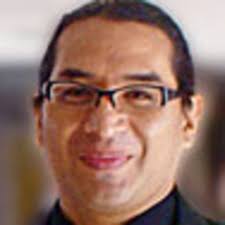 René Luna-García合作论文数Centro de Investigación en Computación, Instituto Politécnico Nacional439
 Gerald C. Blazey合作论文数Department of Physics, College of Liberal Arts and Sciences, Northern Illinois University438
 David Hedin合作论文数Department of Physics, College of Liberal Arts and Sciences, Northern Illinois University438
 Andrew Askew合作论文数Department of Physics, College of Arts and Sciences, Florida State University435Herbert B. Greenlee合作论文数Fermilab435
 Carsten Hensel合作论文数Department of High Energy Physics, Centro Brasileiro de Pesquisas Físicas433A. Ito合作论文数433
 Dmitri Denisov合作论文数Brookhaven National Laboratory432G. Ginther合作论文数431Eric Kajfasz合作论文数Centre de Physique des Particules de Marseille, Aix-Marseille University431
 Philip S. Baringer合作论文数Department of Physics & Astronomy, College of Liberal Arts & Sciences, University of Kansas431
 Arnaud Duperrin合作论文数Centre de Physique des Particules de Marseille, Aix-Marseille Universite431Boris Yu Baldin合作论文数431
 Ulrich Heintz合作论文数Department of Physics, Brown University430
 Stuart Fuess合作论文数Scientific Computing Division, Fermi National Accelerator Laboratory430Daniel Edmunds合作论文数Department of Physics and Astronomy, Michigan State University430
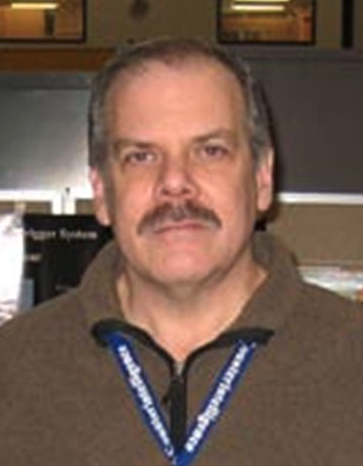 Michael Diesburg合作论文数Fermi National Accelerator Laboratory429
 Eduard De La Cruz Burelo合作论文数Physics Department, Centro de Investigacion y de Estudios Avanzados del IPN429
 Miloš Lokajíček Jr合作论文数Division of Elementary Particle Physics, Particle Physics Department, Institute of Physics of the Czech Academy of Sciences428
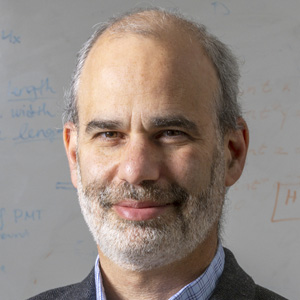 Ken Bloom合作论文数Department of Physics and Astronomy, College of Arts and Sciences, University of Nebraska-Lincoln428
 Sergey Burdin合作论文数Department of Physics, School of Physical Sciences, Faculty of Science and Engineering, University of Liverpool428
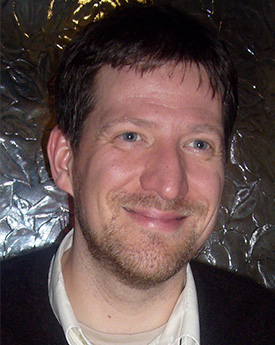 Harald Fox合作论文数Department of Physics, Lancaster University427R. Illingworth合作论文数427
 Alexander Kupčo合作论文数Institute of Physics, Czech Academy of Sciences426H. Eugene Fisk合作论文数Fermilab426
 Nirmalya Parua合作论文数Bank of America426
 Gaston R. Gutierrez合作论文数Fermi National Accelerator Laboratory426




