As nuclear and particle physics facilities move to higher intensities, the detectors used there must be more radiation tolerant. Diamond is in use at many facilities due to its inherent radiation tolerance and ease of use. In this article we present our radiation tolerance measurements of the highest quality polycrystalline Chemical Vapor Deposition (pCVD) diamond material for irradiations from a range of proton energies, pions and neutrons up to a fluence of 2 x 10(16) particles/cm(2). We have measured the damage constant as a function of energy and particle species and compared it with theoretical models. We also present measurements of the rate dependence of pulse height for non-irradiated and irradiated pCVD diamond pad and pixel detectors, including detectors tested over a range of particle fluxes up to 20 MHz/cm(2) with both pad and pixel readout electronics. Our test beam results indicate a 2% upper limit to the pulse height dependence of unirradiated and neutron irradiated pCVD diamond detectors leading to the conclusion that the pulse height in pCVD diamond detectors is, at most, minimally dependent on the particle flux.
We study the processes e+e- -> K+K-a degrees a degrees a degrees y, K degrees SK +/- a -/+ a degrees a degrees y, and K degrees SK +/- a -/+ a+a-y in which an energetic photon is radiated from the initial state. The data were collected with the BABAR detector at the SLAC National Accelerator Laboratory. About 1200, 2600, and 6000 events, respectively, are selected from a data sample corresponding to an integrated luminosity of 469 fb-1. The invariant mass of the hadronic final state defines the effective e+e- center-of-mass energy. The center-of-mass energies range from threshold to 4.5 GeV. From the mass spectra, the first ever measurements of the e+e- -> K+K-a degrees a degrees a degrees, e+e- -> K degrees SK +/- a -/+ a degrees a degrees, and e+e- -> K degrees SK +/- a -/+ a+a- cross sections are performed. The contributions from the intermediate states that include eta, phi, rho, K*(892), and other resonances are presented. We observe the J=psi and psi(2S) in most of these final states and measure the corresponding branching fractions, many of them for the first time.
A new mechanism has been proposed to simultaneously explain the presence of dark matter and the matter-antimatter asymmetry in the universe. This scenario predicts exotic $B$ meson decays into a baryon and a dark sector anti-baryon ($\psi_D$) with branching fractions accessible at $B$ factories. We present a search for $B \rightarrow \Lambda \psi_D$ decays using data collected by the $BABAR$ experiment at SLAC. This reaction is identified by fully reconstructing the accompanying $B$ meson and requiring the presence of a single $\Lambda$ baryon in the remaining particles. No significant signal is observed, and bounds on the $B \rightarrow \Lambda \psi_D$ branching fraction are derived in the range $0.13 - 5.2\times 10^{-5}$ for $1.0 < m_{\psi_D} < 4.2$ GeV/$c^{2}$. These results set strong constraints on the parameter space allowed by the theory.
We study the processes ${e}^{+}{e}^{\ensuremath{-}}\ensuremath{\rightarrow}{K}^{+}{K}^{\ensuremath{-}}{\ensuremath{\pi}}^{0}{\ensuremath{\pi}}^{0}{\ensuremath{\pi}}^{0}\ensuremath{\gamma}$, ${K}_{S}^{0}{K}^{\ifmmode\pm\else\textpm\fi{}}{\ensuremath{\pi}}^{\ensuremath{\mp}}{\ensuremath{\pi}}^{0}{\ensuremath{\pi}}^{0}\ensuremath{\gamma}$, and ${K}_{S}^{0}{K}^{\ifmmode\pm\else\textpm\fi{}}{\ensuremath{\pi}}^{\ensuremath{\mp}}{\ensuremath{\pi}}^{+}{\ensuremath{\pi}}^{\ensuremath{-}}\ensuremath{\gamma}$ in which an energetic photon is radiated from the initial state. The data were collected with the BABAR detector at the SLAC National Accelerator Laboratory. About 1200, 2600, and 6000 events, respectively, are selected from a data sample corresponding to an integrated luminosity of $469\text{ }\text{ }{\mathrm{fb}}^{\ensuremath{-}1}$. The invariant mass of the hadronic final state defines the effective ${e}^{+}{e}^{\ensuremath{-}}$ center-of-mass energy. The center-of-mass energies range from threshold to 4.5 GeV. From the mass spectra, the first ever measurements of the ${e}^{+}{e}^{\ensuremath{-}}\ensuremath{\rightarrow}{K}^{+}{K}^{\ensuremath{-}}{\ensuremath{\pi}}^{0}{\ensuremath{\pi}}^{0}{\ensuremath{\pi}}^{0}$, ${e}^{+}{e}^{\ensuremath{-}}\ensuremath{\rightarrow}{K}_{S}^{0}{K}^{\ifmmode\pm\else\textpm\fi{}}{\ensuremath{\pi}}^{\ensuremath{\mp}}{\ensuremath{\pi}}^{0}{\ensuremath{\pi}}^{0}$, and ${e}^{+}{e}^{\ensuremath{-}}\ensuremath{\rightarrow}{K}_{S}^{0}{K}^{\ifmmode\pm\else\textpm\fi{}}{\ensuremath{\pi}}^{\ensuremath{\mp}}{\ensuremath{\pi}}^{+}{\ensuremath{\pi}}^{\ensuremath{-}}$ cross sections are performed. The contributions from the intermediate states that include $\ensuremath{\eta}$, $\ensuremath{\phi}$, $\ensuremath{\rho}$, ${K}^{*}(892)$, and other resonances are presented. We observe the $J/\ensuremath{\psi}$ and $\ensuremath{\psi}(2S)$ in most of these final states and measure the corresponding branching fractions, many of them for the first time.
Using the entire BaBar Υ(4S) data set, the first two-dimensional unbinned angular analysis of the semileptonic decay B→ D ℓ^- ν_ℓ is performed, employing hadronic reconstruction of the tag-side B meson from Υ(4S)→ BB. Here, ℓ denotes the light charged leptons e and μ. A novel data-driven signal-background separation procedure with minimal dependence on simulation is developed. This procedure preserves all multi-dimensional correlations present in the data. The expected sin^2θ_ℓ dependence of the differential decay rate in the Standard Model is demonstrated, where θ_ℓ is the lepton helicity angle. Including input from the latest lattice QCD calculations and previously available experimental data, the underlying form factors are extracted using both model-independent (BGL) and dependent (CLN) methods. Comparisons with lattice calculations show flavor SU(3) symmetry to be a good approximation in the B_(s)→ D_(s) sector. Using the BGL results, the CKM matrix element |V_cb|=(41.09± 1.16)× 10^-3 and the Standard Model prediction of the lepton-flavor universality violation variable ℛ(D)=0.300± 0.004, are extracted. The value of |V_cb| from B→ D ℓ^- ν_ℓ tends to be higher than that extracted using B→ D ℓ^- ν_ℓ. The Standard Model ℛ(D) calculation is at a 1.97σ tension with the latest HFLAV experimental average.
The CALICE collaboration is developing highly granular electromagnetic and hadronic calorimeters for detectors at future energy frontier electron-positron colliders. After successful tests of a physics prototype, a technological prototype of the Analog Hadron Calorimeter has been built, based on a design and construction techniques scalable to a collider detector. The prototype consists of a steel absorber structure and active layers of small scintillator tiles that are individually read out by directly coupled SiPMs. Each layer has an active area of 72 × 72 cm^2 and a tile size of 3 × 3 cm^2. With 38 active layers, the prototype has nearly 22,000 readout channels, and its total thickness amounts to 4.4 nuclear interaction lengths. The dedicated readout electronics provide time stamping of each hit with an expected resolution of about 1 ns. The prototype was constructed in 2017 and commissioned in beam tests at DESY. It recorded muons, hadron showers and electron showers at different energies in test beams at CERN in 2018. In this paper, the design of the prototype, its construction and commissioning are described. The methods used to calibrate the detector are detailed, and the performance achieved in terms of uniformity and stability is presented.
A dedicated measurement of additional radiation in e+e- -> mu+mu- gamma and e+e- -> pi+ pi- gamma initial-state radiation events is presented using the full BABAR data sample. For the first time results are presented at next -to-and next-to-next-to-leading order, with one and two additional photons, respectively, for radiation from the initial and final states. Comparison with predictions from PHOKHARA and AFKQED Monte Carlo generators is performed, revealing discrepancies in the one-photon rates and angular distributions for the former. This disagreement has a negligible effect on the BABAR measurement of the e+e- -> pi+ pi-(gamma) cross section, but could affect other measurements significantly. This study sheds a new light on the longstanding discrepancy in this channel that affects the theoretical prediction of hadronic vacuum polarization contributions to the muon magnetic moment anomaly.
A new dark sector antibaryon, denoted ψ_{D}, could be produced in decays of B mesons. This Letter presents a search for B^{+}→ψ_{D}+p (and the charge conjugate) decays in e^{+}e^{-} annihilations at 10.58 GeV, using data collected in the BABAR experiment. Data corresponding to an integrated luminosity of 398 fb^{-1} are analyzed. No evidence for a signal is observed. Branching fraction upper limits in the range from 10^{-7}-10^{-5} are obtained at 90% confidence level for masses of 1.0<m_{ψ_{D}}<4.3 GeV/c^{2}. The result is also reinterpreted to provide the first limits on a supersymmetric model with R-parity violation and a light neutralino.
A bstract A search for the exclusive decays of the Higgs and Z bosons to a ϕ or ρ meson and a photon is performed with a pp collision data sample corresponding to an integrated luminosity of up to 35 . 6 fb −1 collected at $$ \sqrt{s}=13 $$ s = 13 TeV with the ATLAS detector at the CERN Large Hadron Collider. These decays have been suggested as a probe of the Higgs boson couplings to light quarks. No significant excess of events is observed above the background, as expected from the Standard Model. Upper limits at 95% confidence level were obtained on the branching fractions of the Higgs boson decays to ϕ γ and ρ γ of 4 . 8 × 10 −4 and 8 . 8 × 10 −4 , respectively. The corresponding 95% confidence level upper limits for the Z boson decays are 0 . 9 × 10 −6 and 25 × 10 −6 for ϕ γ and ρ γ, respectively.
A search for leptoquarks decaying into the bτ final state is performed using Run 2 proton-proton collision data from the Large Hadron Collider, corresponding to an integrated luminosity of 139 fb−1 at √(s) = 13 TeV recorded by the ATLAS detector. The benchmark models considered in this search are vector leptoquarks with electric charge of 2/3e and scalar leptoquarks with an electric charge of 4/3e. No significant excess above the Standard Model prediction is observed, and 95
The total and differential Higgs boson production cross-sections are measured through a combined statistical analysis of the H → ZZ* → 4ℓ and H → γγ decay channels. The results are based on a dataset of 139 fb−1 of proton–proton collisions at a centre-of-mass energy of 13 TeV, recorded by the ATLAS detector at the Large Hadron Collider. The measured total Higgs boson production cross-section is 55.5_-3.8^+4.0 pb, consistent with the Standard Model prediction of 55.6 ± 2.5 pb. All results from the two decay channels are compatible with each other, and their combination agrees with the Standard Model predictions. A combined statistical interpretation of the measured fiducial cross-sections as a function of the Higgs boson transverse momentum is performed in order to probe the Yukawa couplings to the bottom and charm quarks. A similar interpretation is performed by including also the constraints from the measurements of Higgs boson production in association with a W or Z boson in the H → bb and cc decay channels.
We report on the first search for electron-muon lepton flavor violation (LFV) in the decay of a b quark and b antiquark bound state. We look for the LFV decay ϒ(3S)→e^{±}μ^{∓} in a sample of 118 million ϒ(3S) mesons from 27 fb^{-1} of data collected with the BABAR detector at the SLAC PEP-II e^{+}e^{-} collider operating with a 10.36 GeV center-of-mass energy. No evidence for a signal is found, and we set a limit on the branching fraction B[ϒ(3S)→e^{±}μ^{∓}]<3.6×10^{-7} at 90% C. L. This result can be interpreted as a limit Λ_{NP}/g_{NP}^{2}>80 TeV on the energy scale Λ_{NP} divided by the coupling-squared g_{NP}^{2} of relevant new physics (NP).
Diamond is used as detector material in high energy physics experiments due to its inherent radiation tolerance. The RD42 collaboration has measured the radiation tolerance of chemical vapour deposition (CVD) diamond against proton, pion, and neutron irradiation. Results of this study are summarized in this article. The radiation tolerance of diamond detectors can be further enhanced by using a 3D electrode geometry. We present preliminary results of a poly-crystalline CVD (pCVD) diamond detector with a 3D electrode geometry after irradiation and compare to planar devices of roughly the same thickness.
Axionlike particles (ALPs) are predicted in many extensions of the standard model, and their masses can naturally be well below the electroweak scale. In the presence of couplings to electroweak bosons, these particles could be emitted in flavor-changing B meson decays. We report herein a search for an ALP, a, in the reaction B^{±}→K^{±}a, a→γγ using data collected by the BABAR experiment at SLAC. No significant signal is observed, and 90% confidence level upper limits on the ALP coupling to electroweak bosons are derived as a function of ALP mass, improving current constraints by several orders of magnitude in the range 0.175 GeV<m_{a}<4.78 GeV.
Collider searches for dark sectors, new particles interacting only feebly with ordinary matter, have largely focused on identifying signatures of new mediators, leaving much of dark sector structures unexplored. In particular, the existence of dark matter bound states (darkonia) remains to be investigated. This possibility could arise in a simple model in which a dark photon (A^{'}) is light enough to generate an attractive force between dark fermions. We report herein a search for a J^{PC}=1^{--} darkonium state, the ϒ_{D}, produced in the reaction e^{+}e^{-}→γϒ_{D}, ϒ_{D}→A^{'}A^{'}A^{'}, where the dark photons subsequently decay into pairs of leptons or pions, using 514 fb^{-1} of data collected with the BABAR detector. No significant signal is observed, and we set bounds on the γ-A^{'} kinetic mixing as a function of the dark sector coupling constant for 0.001<m_{A^{'}}<3.16 GeV and 0.05<m_{ϒ_{D}}<9.5 GeV.
We study the processes gamma gamma -> eta(c )-> eta'K+K-, eta'pi(+)pi(-), and eta pi(+)pi(-) using a data sample of 519 fb(-1) recorded with the BABAR detector operating at the SLAC PEP-II asymmetric-energy e(+)e(-) collider at center-of-mass energies at and near the Upsilon(nS) (n = 2, 3, 4) resonances. This is the first observation of the decay eta(c)-> eta'K+K- and we measure the branching fraction Gamma (eta(c) -> eta' K+K- )/(Gamma(eta(c) -> eta'pi(+)pi(-)) = 0.644 +/- 0.039(stat) +/- 0.032(sys). Significant interference is observed between gamma gamma ->eta(c)->eta pi(+)pi(-) and the nonresonant two-photon process gamma gamma -> eta pi(+)pi(-). A Dalitz plot analysis is performed of eta(c) decays to eta'K+K-, eta'pi(+)pi(-) and eta pi(+)pi(-). Combined with our previous analysis of eta(c) -> K (K) over bar pi, we measure the K-0*(1430) parameters and the ratio between its eta'K and pi K couplings. The decay eta(c) -> eta'pi(+)pi(-) is dominated by the f(0)(2100) resonance, also observed in J/psi radiative decays. A new a(0) (1700) -> eta pi resonance is observed in the eta(c) -> eta pi(+)pi(-) channel. We also compare eta(c) decays to eta and eta' final states in association with scalar mesons as they relate to the identification of the scalar glueball.
This letter presents a search for narrow, high-mass resonances in the Zγ final state with the Z boson decaying into a pair of electrons or muons. The s=13 TeV pp collision data were recorded by the ATLAS detector at the CERN Large Hadron Collider and have an integrated luminosity of 140 fb−1. The data are found to be in agreement with the Standard Model background expectation. Upper limits are set on the resonance production cross section times the decay branching ratio into Zγ. For spin-0 resonances produced via gluon–gluon fusion, the observed limits at 95% confidence level vary between 65.5 fb and 0.6 fb, while for spin-2 resonances produced via gluon–gluon fusion (or quark–antiquark initial states) limits vary between 77.4 (76.1) fb and 0.6 (0.5) fb, for the mass range from 220 GeV to 3400 GeV.
We study the processes e(+)e(-) -> pi+ pi-pi(0)pi(0)pi(0)pi(0)gamma and pi(+) pi(-) pi(0)pi(0)pi eta gamma in which an energetic photon is radiated from the initial state. The data were collected with the BABAR detector at the SLAC National Accelerator Laboratory. About 7300 and 870 events, respectively, are selected from a data sample corresponding to an integrated luminosity of 469 fb(-1). The invariant mass of the hadronic final state defines the effective e(+)e(-) center-of-mass energy. The center-of-mass energies range from threshold to 4.5 GeV. From the mass spectra, the first ever measurements of the e(+)e(-) -> pi(+)pi(-) pi(0)pi(0)pi(0)pi(0) and the e(+)e(-) -> pi(+)pi(-) pi(0)pi(0)pi(0)eta cross sections are performed. The contributions from omega pi(0)pi(0)pi(0), eta pi(+)pi(-)pi(0), omega eta, and other intermediate states are presented. We observe the J=psi and psi(2S) in most of these final states and measure the corresponding branching fractions, many of them for the first time.
We study the processes $e^+e^-\to 2(\pi^+\pi^-)\pi^0\pi^0\pi^0\gamma$ and $2(\pi^+\pi^-)\pi^0\pi^0\eta\gamma$ in which an energetic photon is radiated from the initial state. The data were collected with the \babar~ detector at SLAC. About 14\,000 and 4700 events, respectively, are selected from a data sample corresponding to an integrated luminosity of 469 fb^{-1}. The invariant mass of the hadronic final state defines the effective \epem center-of-mass energy. The center-of-mass energies range from threshold to 4.5 GeV. From the mass spectra, the first ever measurements of the $e^+e^-\to 2(\pi^+\pi^-)\pi^0\pi^0\pi^0$ and the $e^+e^-\to2(\pi^+\pi^-)\pi^0\pi^0\eta$ cross sections are performed. The contributions from $\omega\pi^+\pi^-\pi^0\pi^0$, $\eta2(\pi^+\pi^-)$, and other intermediate states are presented. We observe the $J/\psi$ and $\psi(2S)$ in most of these final states and measure the corresponding branching fractions, many of them for the first time.
 Bjarne Sandvik Stugu合作论文数Department of Physics and Technology University of Bergen1663
 Antimo Palano合作论文数University of Bari1587
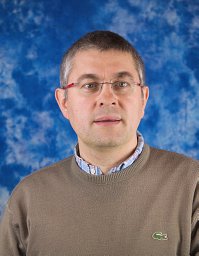 Vincent Tisserand合作论文数Laboratoire de Physique Corpusculaire de Clermont-Ferrand1446
 David Nathan Brown合作论文数Physics Division, Lawrence Berkeley National Laboratory1329
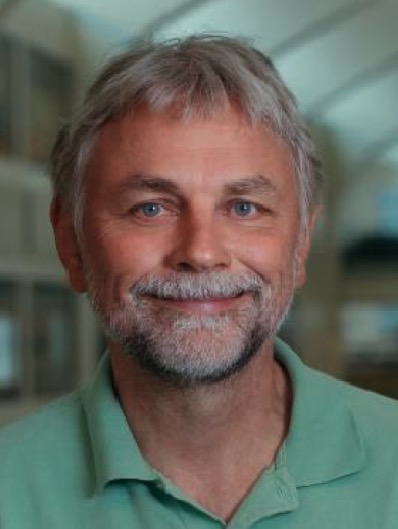 Klaus Honscheid合作论文数Department of Physics, College of Arts and Sciences, The Ohio State University1285
 Jeffrey D. Richman合作论文数Physics Department, University of California, Santa Barbara1242
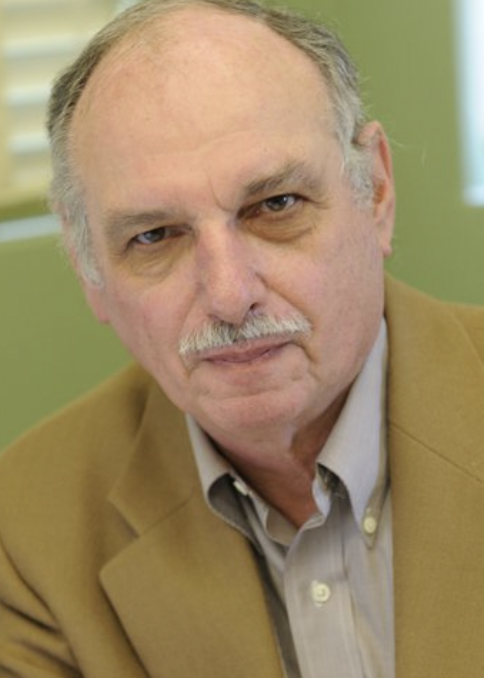 David Hitlin合作论文数Division of Physics Mathematics and Astronomy, California Institute of Technology1240
 Vincent Poireau合作论文数Laboratoire d'Annecy de Physique des Particules, CNRS1240
 Gilbert Grosdidier合作论文数Laboratoire de l'Accélérateur Linéaire, Institut National de Physique Nucléaire et de Physique des Particules1237Jean-Pierre Lees合作论文数Laboratoire d'Annecy-le-Vieux de Physique des Particules1236
 James Cochran合作论文数Department of Physics and Astronomy, College of Liberal Arts and Sciences, Iowa State University1215G. Lynch合作论文数Lawrence Berkeley National Laboratory1205Serednyakov Sergey Ivanovich合作论文数Budker Institute of Nuclear Physics, Siberian Division, Russian Academy of Sciences1198
 Romulus Godang合作论文数Department of Physics, College of Arts and Sciences, University of South Alabama;University of Mississippi1195
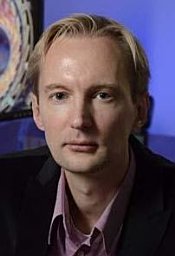 A. V. Gritsan合作论文数Johns Hopkins University1183R. Contri合作论文数1182
 Tim Adye合作论文数Particle Physics Department, Rutherford Appleton Laboratory1181
 Christopher Hearty合作论文数Department of Physics & Astronomy, Faculty of Science, The University of British Columbia1178T. S. Mattison合作论文数1170
 Eugeni Graugés Pous合作论文数Department of Quantum Physics and Astrophysics, Facultat de Física, Universitat de Barcelona1167P. M. Patel合作论文数1163
 Steve Playfer合作论文数School of Physics and Astronomy, University of Edinburgh;Institute for Particle and Nuclear Physics, University of Edinburgh1163
 Roger Barlow合作论文数School of Computing and Engineering, University of Huddersfield1158
 Frank C. Porter合作论文数The Division of Physics, Mathematics and Astronomy, California Institute of Technology1157Y. Karyotakis合作论文数1156Martino Margoni合作论文数Department of Physics and Astronomy, Università degli Studi di Padova1154
 Terry L. Schalk合作论文数Division of Physical & Biological Sciences, Department of Physics, University of California, Santa Cruz;Santa Cruz Institute for Particle Physics, University of California, Santa Cruz1150
 Blair Ratcliff合作论文数SLAC National Accelerator Laboratory;Stanford University1149S. Prell合作论文数1143
 David Leith合作论文数Stanford Linear Accelerator Center1138G. Finocchiaro合作论文数1138
 j a mckenna合作论文数University of British Columbia1137
 Bill Lockman合作论文数Santa Cruz Institute for Particle Physics, Department of Physics, University of California, Santa Cruz1135
 Concezio Bozzi合作论文数Istituto Nazionale di Fisica Nucleare Sezione di Ferrara1135
 Glen Cowan合作论文数Centre for Particle Physics and Astronomy, Department of Physics, Royal Holloway, University of London1132J. D. Lange合作论文数1131
 William T. Ford合作论文数Department of Physics, College of Arts and Sciences, University of Colorado Boulder1129
 Heiko Lacker合作论文数Institut für Physik, Mathematisch-Naturwissenschaftliche Fakultät, Humboldt-Universität zu Berlin;Department of Physics, Humboldt-Universität zu Berlin1127
 Masahiro Morii合作论文数Department of Physics, Harvard University1117
 Fabio Anulli合作论文数Istituto Nazionale di Fisica Nucleare1114
 Ingrid Ofte合作论文数Anello Photonics1112J. G. Smith合作论文数1111
 Abraham Seiden合作论文数Santa Cruz Institute for Particle Physics, University of California, Santa Cruz;Department of Physics, University of California, Santa Cruz1111S. Passaggio合作论文数1103J. Ocariz合作论文数1101George Lafferty合作论文数School of Physics and Astronomy, The University of Manchester1100
 Francesca Di Lodovico合作论文数Department of Physics, Faculty of Natural, Mathematical & Engineering Sciences, King’s College London1099
 Lucien Cremaldi合作论文数Department of Physics and Astronomy, University of Mississippi1098Evgeny Solodov合作论文数1097




