We present the results of a numerical calculation of the B → K∗γ form factors. The results have been obtained by studying the relevant correlation functions at β = 6.0, on an 183 × 64 lattice, using the O(a)-improved fermion action, in the quenched approximation. From the study of the matrix element 〈K∗|sσμνb|B〉 we have obtained the form factor T1(0) which controls the exclusive decay rate. The results are compared with the recent results from CLEO. We also discuss the compatibility between the scaling laws predicted by the Heavy Quark Effective Theory (HQET) and pole dominance, by studying the mass- and q2-dependence of the form factors. From our analysis, it appears that the form factors follow a mass behaviour compatible with the predictions of the HQET and that the q2-dependence of T2 is weaker than would be predicted by pole dominance.
We present the results of a high statistics lattice calculation of hadronic form factors relevant for D- and B-meson semi-leptonic decays into light pseudoscalar and vector mesons. The results have been obtained by averaging over 170 gauge field configurations, generated in the quenched approximation, at β = 6.0, on a 183 × 64 lattice, using the O(α)-improved SW-Clover action. From the study of the matrix element 〈 K−|Jμ|D0 〉, we obtain f+(0) = 0.78 ± 0.08 and from the matrix element 〈 K∗0|Jμ|D+ 〉 we obtain V(0) = 1.08 ± 0.22, Ai(0) = 0.67 ± 0.11 and A2(0) = 0.49 ± 0.34. We also obtain the ratios V(0)A1(0) = 1.6 ± 0.3 and A2(0)A1(0) = 0.7 ± 0.4. Our predictions for the different form factors are in good agreement with the experimental data, although, in the case of A2(0), the errors are still too large to draw any firm conclusion. With the help of the Heavy Quark Effective Theory (HQET) we have also extrapolated the lattice results to B-meson decays. The form factors follow a behaviour compatible with the HQET predictions. Our results are in agreement with a previous lattice calculation, performed at β = 6.4, using the standard Wilson action.
We describe APEmille, the latest generation of the APE parallel processors. This machine, an evolution of the APE100 concept, is very efficient for LGT simulations as well as for a broader class of applications requiring massive floating point computations. Several new features characterise this evolution. In particular local addressing capabilities are added to all computing nodes. APEmille also exhibits a higher degree of integration with a network of workstations acting as a global host system. An APEmille system in the Teraflops range will be completed in three-four years. The architecture proposed in this paper is being currently simulated and evaluated.
This proposal describes APEmille, a 3-D SIMD scalable parallel processor in theTeraflop range. This machine is very efficient for LGT simulations as well as for abroader class of numeric applications requiring massive intensive floating pointcomputations. The proposed architecture satisfies the requirements for a massivelyparallel scientific processor described in [1].The APEmille architecture grows from APE100[2]. Several new features characterisethis evolution. In particular local...
We present numerical results obtained in full QCD with 2 flavors of Wilson fermions. We discuss the relation between the phase of Polyakov loops and the sea quarks boundary conditions. We report preliminary results about the HMC autocorrelation of the hadronic masses, on a 16(3) x 32 lattice volume, at beta = 5.55 with kappa(sea) = 0.1570.
The polarization of Polyakov type loops is responsible for the difference between quenched and unquenched finite size effects on the QCD mass spectrum. With a numerical simulation, using different sea quarks boundary conditions, we show that we can align the spatial Polyakov loops in a predefined direction. Starting from these results, we propose a procedure to partially remove the Polyakov type contributions in the meson propagators.
We present results for the kaon B parameter obtained by APE-100 from a sample of 100 configurations using the Wilson action and 200 configurations using the Clover action, on a 18(3) x 64 lattice at beta = 6.0. We have also compared the results for B-K using two different values for the effective coupling constant g. We observe a strong dependence of B-K on the prescription adopted for g in the Wilson case, contrary to the results of the Clover case which are almost unaffected by the choice of g.
We present results for the Kaon B parameter from a sample of 200 configurations using the Wilson action and 460 configurations using the Clover action, on a 18^3 × 64 lattice at β=6.0. A slight improvement of the chiral behaviour of B_K is observed due to the Clover action. We have also compared the results for B_K obtained from two different procedures for the boosting of the coupling constant g. We observe a strong dependence of B_K on the prescription adopted for g in the Wilson case, contrary to the results of the Clover case which are almost unaffected by the choice of g. Combining some recently obtained non perturbative estimates for the renormalisation constants with our Clover matrix element, we observe a significant improvement in the chiral behaviour of B_K.
We present results for the kaon B parameter obtained by APE-100 from a sample of 100 configurations using the Wilson action and 200 configurations using the Clover action, on a 18 × 64 lattice at β = 6.0. We have also compared the results for BK using two different values for the effective coupling constant g. We observe a strong dependence of BK on the prescription adopted for g in the Wilson case, contrary to the results of the Clover case which are almost unaffected by the choice of g.
We present results for the radiative decay B --> K*gamma, obtained by using the Clover action at beta = 6.0 on APE. The compatibility between the scaling laws predicted by the Heavy Quark Effective Theory (HQET) and pole dominance is discussed. The final result depends crucially on the assumed q(2)-dependence of the form factors.
We present results for the radiative decay B → K * γ, obtained by using the Clover action at β = 6.0 on APE. The compatibility between the scaling laws predicted by the Heavy Quark Effective Theory (HQET) and pole dominance is discussed. The final result depends crucially on the assumed q 2-dependence of the form factors.
We present a high statistics calculation of ƒB in the static limit. The results have been obtained by numerical simulation of quenched QCD, at β = 6.0 on a 183 × 32 lattice. We compare ƒB calculated by using the Wilson and the Clover quark actions. The decay constant is obtained by studying heavy-light correlation functions of different smeared operators, on a sample of 210 gauge field configurations. We find that cubic smearings of size Ls ⩽ 3 or Ls ⩾ 9 are bad projectors on the lightest pseudoscalar state. Combining the information coming from smearing Ls = 5 and Ls = 7, we have obtained ƒB = 370±40 MeV in the clover case and ƒB = 350±40±30 MeV in the Wilson case. Our results support a large value of the pseudoscalar decay constant in the static approximation.
We present a calculation of f(B) in the static limit, obtained by numerical simulation of quenched QCD, at beta = 6.2 on a 18(3) x 64 lattice, using the SW-Clover quark action. The decay constant has been extracted by studying heavy (static)-light correlation functions of different smeared operators, on a sample of 220 gauge field configurations. We have obtained f(B)static = (290 +/- 15 +/- 45) MeV, where the first error comes from the uncertainty in the determination of the matrix element and the second comes from the uncertainty in the lattice spacing. We also obtain M(Bs) - M(Bd) = (70 +/- 10) MeV and f(Bs)stat/f(Bd)stat = 1.11 (3). A comparison of our results with other calculations of the same quantity is made.
The light quark results from three different simulations are summarized. We get consistent results, within our statistics, between smeared and non smeared data. A comparison is performed with similar results from the UKQCD collaboration. All runs have been performed on two 6.4 GF APE computers [1].
Recent results for semi-leptonic decays of D and B mesons at beta = 6.4, using the Wilson action, and at beta = 6.0, using the Clover action, are reported.
The decay constants of the heavy-light pseudoscalar mesons are studied in a high statistics run using the Wilson action at β = 6.0 and β = 6.2, and the clover action at β = 6.0. The systematics of O(a) discretisation errors are discussed.. Our best estimates of the decay constant are: fD = 218(9) MeV, fD/fDs = 1.11(1) and we obtain preliminary values for fB.
 Simone Cabasino合作论文数Univ . di Roma ' La Sapienza;Sezione di Roma42
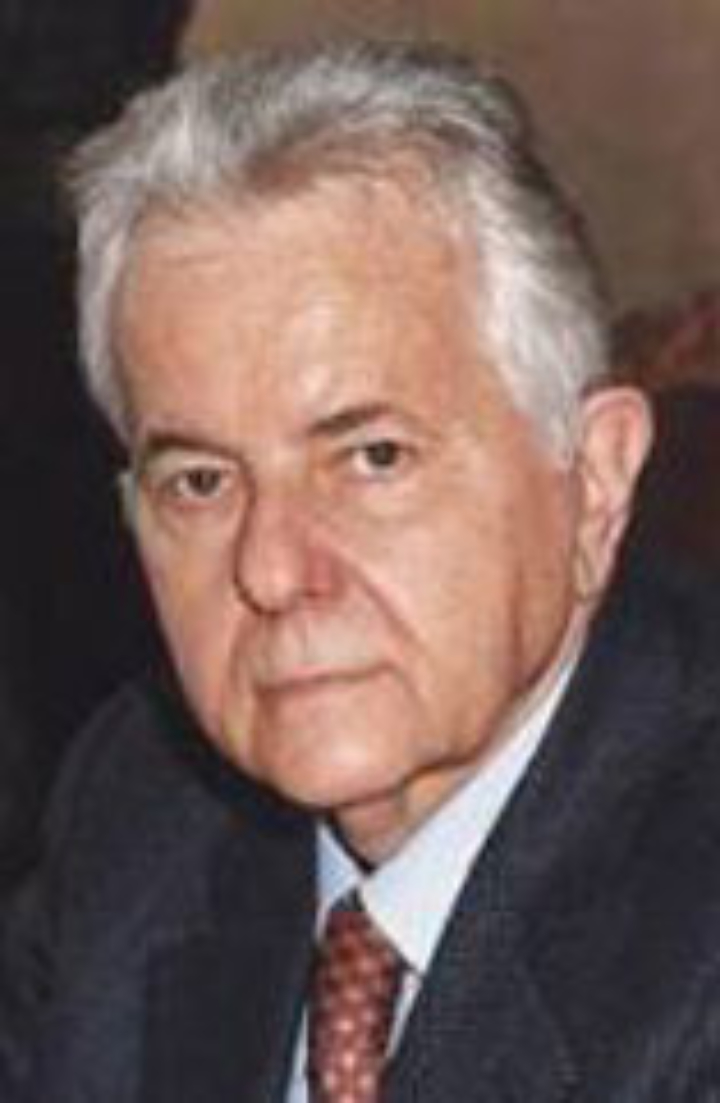 Nicola Cabibbo合作论文数Università la Sapienza di Roma38
 Federico Rapuano合作论文数36r sarno合作论文数35
 Pier Stanislao Paolucci合作论文数WorkPackage;Istituto Nazionale di Fisica Nucleare35m torelli合作论文数30
 Frank Silvio Marzano合作论文数Dipartimento di Ingegneria Dell’Informazione, Elettronica e Telecomunicazioni, Sapienza University Di Rome;CETEMPS of the University of L Aquila29C. Battista合作论文数28
 A. Bartoloni合作论文数Sezione dell’ INFN Roma Italy, Università di Roma I27W. Tross合作论文数25
 P. Vicini合作论文数Sezione di Roma, INFN24J. Pech合作论文数20Raffaele Tripiccione合作论文数19
 Guido Martinelli合作论文数Dipartimento di Fisica, Università degli Studi di Roma "La Sapienza"19
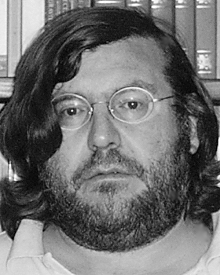 Gaetano Salina合作论文数Università di Roma II “Tor Vergata” and Sezione INFN19
 Vittorio Lubicz合作论文数Universita di Roma Tre18
 Emanuele Panizzi合作论文数"Sapienza, Università di Roma17
 Enzo Marinari合作论文数Dipartimento di Fisica, Universita' di Roma La Sapienza12
 Maria-Paola Lombardo合作论文数Istituto Nazionale di Fisica Nucleare12E. Remiddi合作论文数Sezione di Bologna, Università di Bologna11
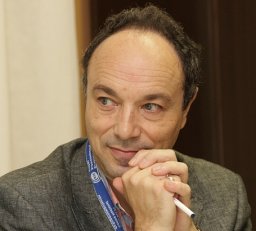 Alfonso Tarancon合作论文数Departamento de F ´ õsica Teorica;Facultad de Ciencias;Universidad de Zaragoza;Facultad de Ciencias, Universidad de Zaragoza11
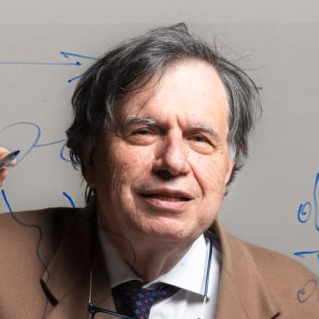 Giorgio Parisi (乔治·帕里西)合作论文数Dipartimento di Fisica, Sapienza Universita di Roma11Anastassios Vladikas合作论文数Sezione di Roma II11
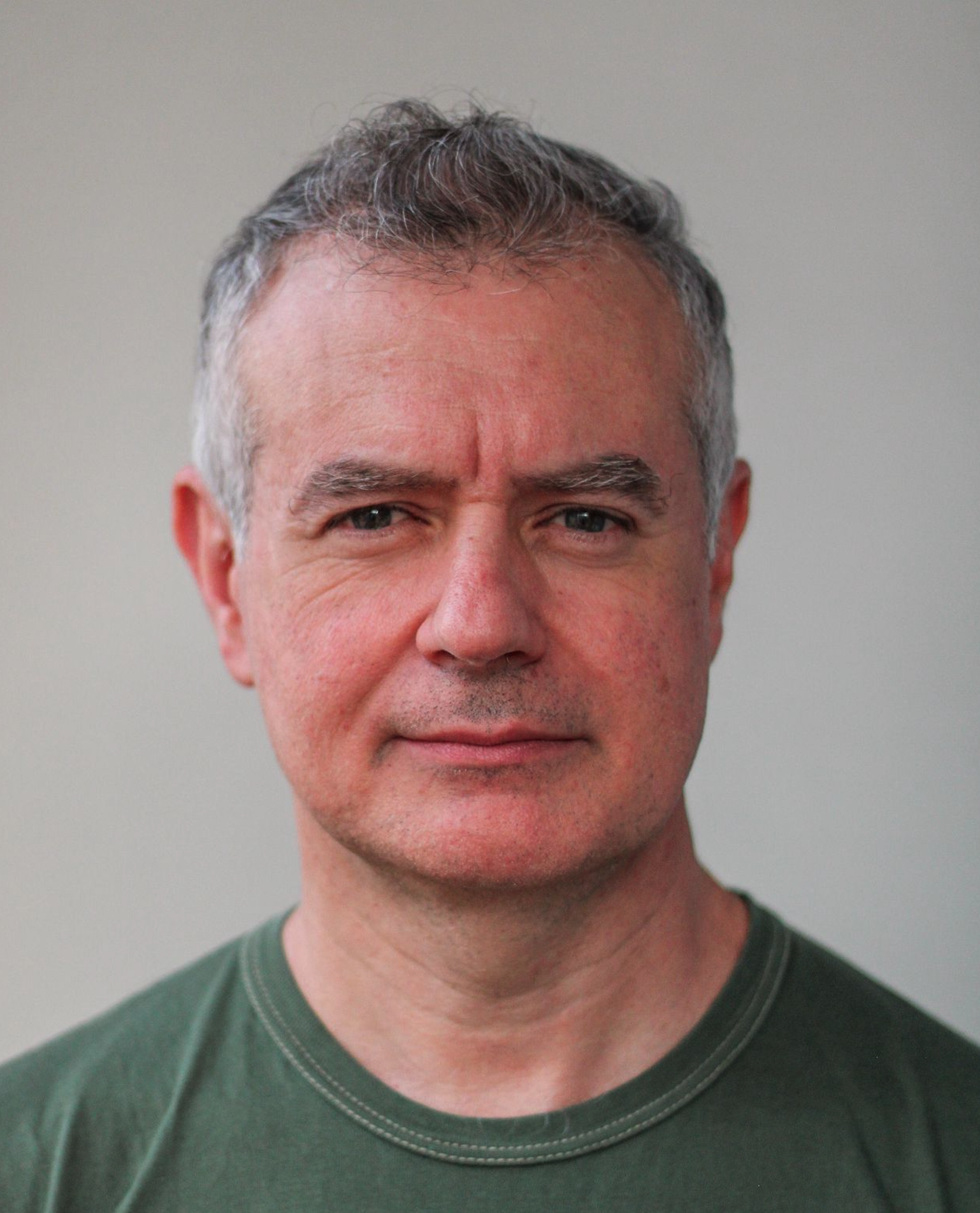 Adriano Lai合作论文数Istituto Nazionale Fisica Nucleare;Università degli Studi di Cagliari10C. R. Allton合作论文数9LA Fernandez合作论文数8P. Bacilieri合作论文数8G. Fiorentini合作论文数Dept Phys & Earth Sci, Univ Ferrara7
 Pierluigi Paolucci合作论文数Istituto Nazionale di Fisica Nucleare;European Organization for Nuclear Research6
 Marco Serone合作论文数International School for Advanced Studies ( SISSA /6nicoletta stella合作论文数5A. Fucci合作论文数5JP Leroy合作论文数5F. Coppola合作论文数5Ester Simeone合作论文数5g bastianello合作论文数4m bellacci合作论文数4
 A. Donini合作论文数4
 Paolo Vicini合作论文数Department of Bioengineering, University of Washington4Ph. Boucaud合作论文数4As. Abada合作论文数4s antonelli合作论文数3w rinaldi合作论文数3
 Massimo Bernaschi合作论文数Istituto per le Applicazioni del Calcolo, National Research Council3
 Philippe Boucaud合作论文数3
 Carlo Ungarelli合作论文数University of Birmingham3M. Cosimi合作论文数3Nephi Stella合作论文数3Luis Antonio Fernández Pérez合作论文数Departamento de Física Teórica, Facultad de Ciencias Físicas, Universidad Complutense Madrid3




