Long-range electrostatic interactions constitute a major computational bottleneck in particle-based simulations, particularly when periodic boundary conditions are employed. Mesh-based Ewald methods, such as the particle-particle particle-mesh (P3M) approach, reduce the computational complexity to O(N log N) but introduce challenges related to parallel scalability, communication overhead, and efficient utilization of modern heterogeneous architectures. While highly optimized implementations exist in established molecular dynamics packages, these are typically tightly coupled to full simulation frameworks, limiting their flexibility and reuse in emerging HPC applications.In this work, we present a performance-portable library for electrostatic solvers, providing implementations of both classical Ewald and P3M methods targeting CPU and GPU architectures. The library is designed to enable efficient execution on multi-GPU systems while maintaining portability across heterogeneous platforms. We investigate scaling and performance characteristics of the P3M method, with particular focus on the FFT-based long-range component, which is known to limit scalability. Strong-scaling experiments demonstrate that small problem sizes are dominated by communication overhead, leading to reduced parallel efficiency, whereas larger systems achieve near-ideal scaling over a wide range of GPU counts.Our results highlight the importance of balancing computation and communication in mesh-based electrostatics and demonstrate that portable, decoupled implementations can achieve competitive performance on modern HPC systems. The presented approach facilitates integration into diverse simulation workflows and provides a foundation for further optimization of long-range solvers in exascale computing environments.
Since Aurora entered the TOP500 list in November 2023, the top ten systems saw some shifts in the ratio of GPU vendors represented. With each vendor supplying their own preferred programming models for their hardware, it becomes relevant to compare the portability of these models on other hardware platforms. For the present paper we implemented the N-body problem with different optimizations using native and portable programming frameworks. For each of those we determined the best performing optimized version on one target architecture and compared the performance achieved for each platform.
The accelerating demand for energy, coupled with the ongoing depletion of conventional energy resources and environmental problems, poses a critical challenge to the scientific community [...]
We perform nanoindentation simulations for both the prototypical face-centered cubic metal copper and the body-centered cubic metal tungsten with an adaptive-precision description of interaction potentials including different accuracy and computational costs. We combine both a computationally efficient embedded atom method (EAM) potential and a precise but computationally less efficient machine learning potential based on the atomic cluster expansion (ACE) into an adaptive precision (AP) potential tailored for the nanoindentation. The numerically more expensive ACE potential is employed selectively only in regions of the computational cell where high precision is required. The comparison with pure EAM and pure ACE simulations shows that for Cu, all potentials yield similar dislocation morphologies under the indenter with only small quantitative differences. In contrast, markedly different plasticity mechanisms are observed for W in simulations performed with the central-force EAM potential compared to results obtained using the ACE potential. ACE is able to describe accurately the angular character of bonding, which is in W due to its half-filled d band. All ACE-specific mechanisms are reproduced in the AP nanoindentation simulations, however, with a significant speedup of 20-30 times compared to the pure ACE simulations. Hence, the AP potential overcomes the performance gap between the precise ACE and the fast EAM potential by combining the advantages of both potentials.
A microscopic understanding of the complex solute-defect interaction is pivotal for optimizing the alloy’s macroscopic mechanical properties. Simulating solute segregation in a plastically deformed crystalline system at atomic resolution remains challenging. The objective is to efficiently model and predict a physically informed segregated solute distribution rather than simulating a series of diffusion kinetics. To address this objective, we coupled molecular dynamics (MD) and Monte Carlo (MC) methods using a novel method based on virtual atoms technique. We applied our MD-MC coupling approach to model off-lattice carbon (C) solute segregation in nanoindented Fe-C samples containing complex dislocation networks. Our coupling framework yielded the final configuration through efficient parallelization and localized energy computations, showing C Cottrell atmospheres near dislocations. Different initial C concentrations resulted in a consistent trend of C atoms migrating from less crystalline distortion to high crystalline distortion regions. Besides unraveling the strong spatial correlation between local C concentration and defect regions, our results revealed two crucial aspects of solute segregation preferences: 1. defect energetics hierarchy and 2. tensile strain fields near dislocations. The proposed approach is generic and can be applied to other material systems as well.
Random walks are considered in a one-dimensional monotonously decreasing energy landscape. To reach the minimum within a region Ωϵ, a number of downhill steps have to be performed. A stochastic model is proposed which captures this random downhill walk and to make a prediction for the average number of steps, which are needed to hit the target. Explicit expressions in terms of a recurrence relation are derived for the density distribution of a downhill random walk as well as probability distribution functions to hit a target region Ωϵ within a given number of steps. For the case of stochastic optimisation, the number of rejected steps between two successive downhill steps is also derived, providing a measure for the average total number of trial steps. Analytical results are obtained for generalised random processes with underlying polynomial distribution functions. Finally the more general case of non-monotonously decreasing energy landscapes is considered for which results of the monotonous case are transferred by applying the technique of decreasing rearrangement. It is shown that the global stochastic optimisation can be fully described analytically, which is verified by numerical experiments for a number of different distribution and objective functions. Finally we discuss the transition to higher dimensional objective functions and discuss the change in computational complexity for the stochastic process.
Large-scale atomistic simulations rely on interatomic potentials providing an efficient representation of atomic energies and forces. Modern machine-learning (ML) potentials provide the most precise representation compared to electronic structure calculations while traditional potentials provide a less precise, but computationally much faster representation and thus allow simulations of larger systems. We present a method to combine a traditional and a ML potential to a multi-resolution description, leading to an adaptive-precision potential with an optimum of performance and precision in large complex atomistic systems. The required precision is determined per atom by a local structure analysis and updated automatically during simulation. We use copper as demonstrator material with an embedded atom model as classical force field and an atomic cluster expansion (ACE) as ML potential, but in principle a broader class of potential combinations can be coupled by this method. The approach is developed for the molecular-dynamics simulator LAMMPS and includes a load-balancer to prevent problems due to the atom dependent force-calculation times, which makes it suitable for large-scale atomistic simulations. The developed adaptive-precision copper potential represents the ACE-forces and -energies with a precision of 10 meV/Å and 0 meV for the precisely calculated atoms in a nanoindentation of 4 million atoms calculated for 100 ps and shows a speedup of 11.3 compared with a full ACE simulation.
With the inclusion of Aurora in the TOP500 list in November 2023 three different GPU (Graphics Processing Unit) vendors are represented in the top 10 of the list. Each vendor has its own preferred model for programming GPUs. For this paper we implemented the Nbody problem using portable programming frameworks and the vendors' preferred APIs. We show how the performance of the portable solutions compares to the performance of the native solution on each hardware both in absolute numbers and as raction of the achievable peak performance.
Most lithium batteries offer a wide range of applications. However, safety issues are still an unresolved issue for several applications. To solve the safety issue of Li-ion batteries, solid polymer electrolyte is a promising candidate to replace commercial liquid electrolyte. A 4-arm star poly(ethylene oxide) polymer with LiTFSI salt as an electrolyte was studied. The dynamics of this polymer were explored with the Quasi-Elastic Neutron Scattering technique. Furthermore, the influence of temperature and Li salt concentration on the polymer dynamics was investigated. The dynamics of the polymer ends of the arm show much higher flexibility than the core parts making those types of polymers attractive for further studies in battery research.
The Kokkos based library Cabana, which has been developed in the Co-design Center for Particle Applications (CoPA), is used for the implementation of Multi-Particle Collision Dynamics (MPCD), a particle-based description of hydrodynamic interactions. Cabana allows for a function portable implementation, which has been used to study the interplay between CPU and GPU usage on a multi-node system as well as analysis of said interplay with performance analysis tools. As a result, we see most advantages in a homogeneous GPU usage, but we also discuss the extent to which heterogeneous applications might be more performant, using both CPU and GPU concurrently.
The Kokkos based library Cabana, which has been developed in the Co-design Center for Particle Applications (CoPA), is used for the implementation of Multi-Particle Collision Dynamics (MPCD), a particle-based description of hydrodynamic interactions. It allows a performance portable implementation, which has been used to study the interplay between CPU and GPU usage on a multi-node system. As a result, we see most advantages in a homogeneous GPU usage, but we also discuss the extent to heterogeneous applications, using both CPU and GPU concurrently.
A parallel hybrid Monte Carlo/molecular statics method is presented for studying segregation of interstitial atoms in the solid state. The method is based on the efficient use of virtual atoms as placeholders to find energetically favorable sites for interstitials in a distorted environment. MC trial moves perform an exchange between a randomly chosen virtual atom with a carbon atom followed by a short energy minimization via MS to relax the lattice distortion. The proposed hybrid method is capable of modeling solute segregation in deformed crystalline metallic materials with a moderate MC efficiency. To improve sampling efficiency, the scheme is extended towards a biased MC approach, which takes into account the history of successful trial moves in the system. Parallelization of the hybrid MC/MS method is achieved by a Manager-Worker model which applies a speculative execution of trial moves, which are asynchronously executed on the cores. The technique is applied to an Fe-C system including a dislocation as a symmetry breaking perturbation in the system.
We have implemented the computation of Coulomb interactions in particle systems using the performance portable C++ framework Kokkos. Coulomb interactions are evaluated with an Ewald-sum-based solver, where the interactions are split into long- and short-range contributions. The short-range contributions are calculated using pair-wise contributions of particles while long-range interactions are calculated using Fourier sums. We evaluate the performance portability of the implementation on Intel CPUs, including Intel Xeon Phi, and Nvidia GPUs.
Many scientific and medical researchers are working towards the creation of a virtual human-a personalized digital copy of an individual-that will assist in a patient's diagnosis, treatment and recovery. The complex nature of living systems means that the development of this remains a major challenge. We describe progress in enabling the HemeLB lattice Boltzmann code to simulate 3D macroscopic blood flow on a full human scale. Significant developments in memory management and load balancing allow near linear scaling performance of the code on hundreds of thousands of computer cores. Integral to the construction of a virtual human, we also outline the implementation of a self-coupling strategy for HemeLB. This allows simultaneous simulation of arterial and venous vascular trees based on human-specific geometries.
We have implemented the computation of Coulomb interactions in particle systems using the performance portable C++ framework Kokkos. For the computation of the electrostatic interactions in particle systems we used an Ewald summation. This implementation we consider as a basis for a performance portability study. As target architectures we used Intel CPUs, including Intel Xeon Phi, as well as Nvidia GPUs. To provide a measure for performance portability we compute the number of needed operations and required cycles, i.e. runtime, and compare these with the measured runtime. Results indicate a similar quality of performance portability on all investigated architectures.
The Material Point Method (MPM) is a continuum-based numerical method which discretises the object as material points. It is particularly well suited for and has shown great success in the community for large deformations. Even though it has been widely adopted, there are still fundamental questions to be addressed. In MPM the material properties are carried on the material points and the dynamics is calculated on an overlaid grid. Afterwards, the material points are integrated according to the grid values using an explicit time integration scheme. The explicit boundary methods are applied on the grid values, such as setting the grid momentum to zero for grid nodes inside a fixed wall. This can cause artefacts in the stress as seen for an object in touch with the wall. These distort the stress multiple grid lengths into the object. In this paper we propose a novel consistent boundary method to reduce these artefacts. The method is based on image particles, an approach originally developed for electrostatic problems. This concept allows a consistent formulation for the momentum field on both the grid and particles. We demonstrate a way of optimization that makes the explicit construction of mirror particles unnecessary. The explicit boundary method and image particle method are then compared using numerical examples featuring stress induced by simple shear and body forces. These numerical examples show a significant reduction of boundary artefacts using the image particle method.
Ideas from multi-level relaxation methods are combined with load balancing techniques to achieve a convergence acceleration for a homogeneous work load distribution over a given set of processors when the underlying work function is inhomogeneously distributed in space. The algorithm is based on an orthogonal recursive bisection approach which is evaluated via a hierarchically refined coarse integration. The method only requires a minimal information transfer across processors during the tree traversal steps. It is described of how to partition the system of processors to geometrical space, when global information is needed for the spatial tesselation.
We analyzed hydrodynamic fluctuations in nematic liquid crystals simulated by Multi-particle Collision Dynamics. Velocity effects on orientation were incorporated by allowing mesoscopic velocity gradients to exert torques on nematic particles. Backflow was included through an explicit application of angular momentum conservation during the collision events. We measured the spectra of hydrodynamic fluctuations and compared them with those derived from a linearized hydrodynamic scheme. Numerical results were found to reproduce the expected coupling between hydrodynamic modes, thus showing that the implementation simulates proper nematodynamic effects at the mesoscopic level.
Low carbon steels undergo strain aging when heat treated, which causes an increased yield strength that can be observed macroscopically. Such strengthening mechanism is driven by atomistic scale processes, i.e., solute segregation of carbon (C) or nitrogen interstitial atoms. Due to its low solubility, alloying elements can diffuse to defects (e.g., dislocations) and form the so-called Cottrell atmospheres. Consequently, the mobility of defects is strongly reduced because of the interaction with solutes, and higher stresses are needed to unpin them from the Cottrell atmosphere. As C segregation and atomistic motion take place at separate timescales, Classical Molecular Dynamics (MD) and Metropolis Monte Carlo (MC) are coupled in a unified framework to capture collective effects with underlying slow dynamics. The number of degrees of freedom and the need for large computational resources in this simulation requires the choice of an optimal parallelization technique for the MC part of such multi-scale simulations using an unbiased sampling of the configuration space. In the present work, two different parallel approaches for the MC routine applied to the simulation of Cottrell atmospheres are implemented and compared: (i) a manager-worker speculative scheme and (ii) a distributed manager-worker over a cell-based domain decomposition approach augmented by an efficient load balancing scheme. The parallel performance of different Fe-C containing defects with several millions of atoms is analyzed, and also the possible optimization of the efficiency of the MC solute segregation process is evaluated regarding energy minimization.
Molecular Dynamics (MD) is a widely used tool for simulations of particle systems with pair-wise interactions. Since large scale MD simulations are very demanding in computation time, parallelisation is an important factor. As in the current HPC environment different heterogeneous computing architectures are emerging, a benchmark tool for a representative number of these architectures is desirable. OpenCL as a platform-overarching standard provides the capabilities for such a benchmark. This paper describes the implementation of an OpenCL MD benchmark code and discusses the results achieved on different types of computing hardware.
 Rene Halver合作论文数Forschungszentrum Julich, Inst Adv Simulat, Julich Supercomp Ctr, D-52425 Julich, Germany18
 Renzo Vallauri合作论文数Laboratorio di Elettronica Quantistica del C.N.R. Firenze9
 Roland G. Winkler合作论文数Institute of Biological Information Processing, Forschungszentrum Julich/Institute for Advanced Simulation, Forschungszentrum Julich9Carlos Teijeiro合作论文数9
 Alexei Kornyshev合作论文数Department of Chemistry, Faculty of Natural Sciences, Imperial College London8
 Humberto Hijar合作论文数Instituto de Física, Universidad NacionalAutónoma de México7Drautz Ralf合作论文数ICAMS, Ruhr Univ Bochum6Johannes Grotendorst合作论文数6
 Gerhard Gompper合作论文数Institute Theoretical Physics of Living Matter, Forschungszentrum Jülich;Center for Data and Simulation Science, University of Cologne6Annika Schiller合作论文数6N. Attig合作论文数5
 Matthias Bolten合作论文数Universitat zu Lubeck5
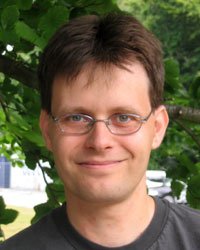 Jan H. Meinke合作论文数Department of Physics;Syracuse University;Department of Physics, Syracuse University5
 Gerald Kneller合作论文数5
 Thomas Hammerschmidt合作论文数4Christoph Begau合作论文数4Umberto Balucani合作论文数4
 Paul Gibbon合作论文数Focused Energy Inc;KU Leuven4
 Giovanni Garberoglio合作论文数Department of Chemical and Petroleum Engineering;University of Pittsburgh;Department of Chemical and Petroleum Engineering, University of Pittsburgh4Marius Lewerenz合作论文数4
 Ralph Vogelsang合作论文数4j grotendorst合作论文数3H. Ganesan合作论文数3Liang Yang合作论文数3Hariprasath Ganesan合作论文数Inst Mat Res, Helmholtz Zentrum Geesthacht3
 Guillermo L. Taboada合作论文数Computer Architecture Group, University of A Coruña3
 Wolfgang E. Nagel合作论文数Center for Information Services and High Performance Computing, Technische Universitat Dresden3Jacqueline Quintana-H合作论文数3
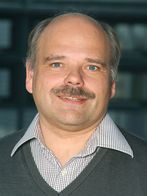 Michael Gerndt合作论文数School of Computation, Information and Technology, Technische Universität München3Donatella Pasqualini合作论文数3
 Vania Calandrini合作论文数Dipartimento di Fisica, Università di Perugia3
 Viorel Chihaia合作论文数Department of Chemical Engineering, Keimyung University3Inge Gutheil合作论文数3
 Dieter An Mey合作论文数Center for Computing and Communication, RWTH Aachen University3
 Bruno Lang合作论文数Wuppertal
Fachbereich C - Mathematik und Naturwissenschaften
Angewandte Informatik - Algorithmik
Bergische Universit?t3W. Homberg合作论文数Julich Supercomputing Centre;Forschungszentrum Julich GmbH3Antonio Deriu合作论文数2Ulrich Detert合作论文数2a monas合作论文数2Sabine Griessbach合作论文数2
Bruno Lang合作论文数Wuppertal
Fachbereich C - Mathematik und Naturwissenschaften
Angewandte Informatik - Algorithmik
Bergische Universit?t3W. Homberg合作论文数Julich Supercomputing Centre;Forschungszentrum Julich GmbH3Antonio Deriu合作论文数2Ulrich Detert合作论文数2a monas合作论文数2Sabine Griessbach合作论文数2 Huang Chien-Cheng合作论文数Physique des Polymères, Université Libre de Bruxelles (ULB),2
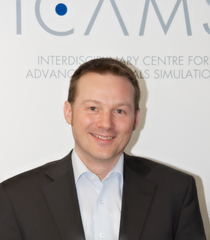 Alexander Hartmaier合作论文数Department of Mechanics of Materials,Ruhr-Universität Bochum2Brian J. N. Wylie合作论文数2B. Steffen合作论文数2Peter Ulmschneider合作论文数Institut fur Theoretische;Astrophysik der, Universitat Heidelberg;Institut fur Theoretische|Astrophysik der, Universitat Heidelberg2Florian Janoschek合作论文数Department of Applied Physics;Centre for Fluid Dynamics;Eindhoven University of Technology;MB Eindhoven;Centre for Fluid Dynamics, Eindhoven University of Technology2Dirk Brommel合作论文数2
 Vladimir V. Stegailov合作论文数Moscow Physicotechnical Institute Institutskii per. 9 Dolgoprudnyi2Konrad Hinsen合作论文数2




