Alexithymia, suicide ideation, affective temperaments and homocysteine levels in drug naïve patients with post-traumatic stress disorder: an exploratory study in the everyday ‘real world’ clinical practice Objective: The present exploratory study aimed to investigate relationships between alexithymia, suicide ideation, affective temperaments and homocysteine levels among drug-naïve adult outpatients with Post- Traumatic Stress Disorder (PTSD) in an everyday ‘real world’ clinical setting. Method: Sixty-four adult outpatients with PTSD were evaluated using the Davidson Trauma Scale (DTS), the Toronto Alexithymia Scale (TAS–20), the Scale of Suicide Ideation (SSI), the Temperament Evaluation of the Memphis, Pisa, Paris and San Diego-Autoquestionnaire. As well, homocysteine levels were measured. Results: Alexithymic subjects showed higher values on all scales but not homocysteine levels. Partial correlations showed that almost all studied variables were correlated with each other, except homocysteine levels. Regression analysis showed that higher disorder severity as measured by DTS and TAS-20 ‘Difficulty in Identifying Feelings’ dimension was associated with higher SSI scores. Conclusions: In conclusion, alexithymic PTSD outpatients may be characterised by higher disorder severity and difficulty in identifying feelings that may be linked to increased suicide ideation, regardless of affective temperaments or homocysteine levels. Homocysteine levels were not related to any studied variable. However, study limitations are discussed and must be considered.
The clinical use of platelet-rich plasma (PRP) containing or deprived of leukocytes remains a subject of debate and a controversial issue. It is not yet clear whether leukocyte content has a positive or negative effect on tissue healing processes. Several studies, conducted mainly in the orthopedic field, support the use of leukocyte-poor (LP) PRP, whereas other studies have not identified any significant differences between the use of LP and leukocyte-rich PRP. In the present study, the role of leukocytes contained in PRP was assessed to verify their in vitro effect on fibroblasts and endothelial cells, which have a leading role in the biological processes associated with wound healing (including angiogenesis and matrix remodeling). The original sample of PRP was divided into two aliquots, one of which remained unaltered, while the other was deprived of leukocytes. The two aliquots were used in in vitro tests in order to verify the effects of leukocytes on proliferation, wound healing and tube formation, and in molecular analyses of growth factor and enzyme content. The present results highlighted a substantial overlap between the two formulations. This may be explained by similar levels of growth factors (vascular endothelial growth factor, thrombospondin-1, interferon-γ, platelet-derived growth factor-BB, -AA and -B, tumor growth factor-β1, fibroblast growth factor 7 and tumor necrosis factor-α) and enzymes (gelatinases and plasminogen activators) in the two formulations. These results support the hypothesis that the ability of the PRP to affect the in vitro biological response of endothelial cells and fibroblasts does not rely on the presence of leukocytes.
BACKGROUND:Agomelatine modulates brain-derived neurotrophic factor expression via its interaction with melatonergic and serotonergic receptors and has shown promising results in terms of brain-derived neurotrophic factor increase in animal models.METHODS:Twenty-seven patients were started on agomelatine (25mg/d). Venous blood was collected and brain-derived neurotrophic factor serum levels were measured at baseline and after 2 and 8 weeks along with a clinical assessment, including Hamilton Depression Rating Scale and Snaith-Hamilton Pleasure Scale.RESULTS:Brain-derived neurotrophic factor serum concentration increased after agomelatine treatment. Responders showed a significant increase in brain-derived neurotrophic factor levels after 2 weeks of agomelatine treatment; no difference was observed in nonresponders. Linear regression analysis showed that more prominent brain-derived neurotrophic factor level variation was associated with lower baseline BDNF levels and greater anhedonic features at baseline.CONCLUSIONS:Patients affected by depressive disorders showed an increase of brain-derived neurotrophic factor serum concentration after a 2-week treatment with agomelatine. The increase of brain-derived neurotrophic factor levels was found to be greater in patients with lower brain-derived neurotrophic factor levels and marked anhedonia at baseline.
Objective: As obsessive-compulsive disorder (OCD) is a relatively common psychiatric disorder with a significant suicide risk, the individuation of potential biomarkers of suicidality, such as cholesterol levels, may enable recognition of at-risk subjects. Therefore, the aims of this study were to: 1) evaluate potential differences in clinical and laboratory parameters between patients with and without alexithymia and compare them with healthy controls; and 2) investigate which clinical and laboratory variables were associated with suicidal ideation. Methods: 79 drug-naïve adult outpatients with a DSM-IV diagnosis of OCD were recruited. Alexithymia was measured with the 20-item Toronto Alexithymia Scale (TAS-20), suicidal ideation was assessed with the Scale for Suicide Ideation, and depressive symptoms were evaluated with the Montgomery-Åsberg Depression Rating Scale (MADRS). Serum lipid levels of 40 healthy controls were also evaluated. Results: Alexithymic patients had altered serum lipid levels in comparison with non-alexithymics and healthy controls. Using a linear regression model, the presence of symmetry/ordering obsessions and compulsions, lower HDL-C levels, and difficulty in identifying feelings dimension of the TAS-20 were associated with higher suicidal ideation. Conclusions: Alexithymic individuals with OCD may exhibit dysregulation of the cholesterol balance, which in turn may be linked to suicidal ideation. Further prospective studies are required to elucidate this potential association.
 Domenico De Berardis合作论文数3
 Paola Annunziata Varasano合作论文数3
 Alessandro Valchera合作论文数3
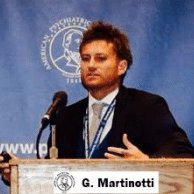 Giovanni Martinotti合作论文数Institute of Psychiatry, Catholic University of the Sacred Heart3Massimo Di Giannantonio合作论文数3
 Giampaolo Perna合作论文数2
 Nicola Serroni合作论文数Psychiat Serv Diag & Treatment, Natl Hlth Serv2Rapini Gabriella合作论文数2Alessandro Carano合作论文数2Massimiliano Bustini合作论文数1
 Monica Mazza合作论文数1
 Luigi Janiri合作论文数1
 Maria Salvina Signorelli合作论文数1
 Valerio Ricci合作论文数Regione Gonzole, San Luigi Gonzaga University Hospital1Sandra D'Ascenzo合作论文数1Luigi Olivieri合作论文数1Marianna Di Francesco合作论文数University of L'Aquila1
 Eugenio Aguglia合作论文数1
 Carmine Tomasetti合作论文数Laboratory of Molecular Psychiatry and Psychopharmacotherapeutics, University School of Medicine “Federico II”,1
 Michele Fornaro合作论文数1
 Laura Orsolini合作论文数1
 Federica Vellante合作论文数1
 Anastasia Annalisa合作论文数1Varasano Paola A合作论文数1Dell'orso Luigi合作论文数1
 Giovanni Biggio合作论文数Dipartimento di Biologia Sperimentale, Università di Cagliari1
 Maurizio Pompili合作论文数Dipartimento di Neuroscienze Salute Mentale e Organi di Senso, Sapienza Università di Roma1
 Paola Palumbo合作论文数Department of Aging Medicine and Science, “G. d'Annunzio” University1Ilaria Giusti合作论文数1Anna Rughetti合作论文数1
 Vincenza Dolo合作论文数Dipartimento di Medicina Sperimentale, Università di L’Aquila1Marco Di Nicola合作论文数1
 Mauro Pettorruso合作论文数1
 Felice Iasevoli合作论文数Laboratory of Molecular Psychiatry and Psychopharmacotherapeutics, University School of Medicine “Federico II”,1
 Gianluca Serafini合作论文数Sant'Andrea Hospital, Sapienza University of Rome1
 Stefano Marini合作论文数Department of Experimental Medicine and Biochemistry Science, University of Rome TorVergata1




