Topologically nontrivial band structure of a material may give rise to special states that are confined to the material's boundary and protected against disorder and scattering. Quantum spin Hall effect (QSHE) is a paradigmatic example of phenomenon in which such states appear in the presence of time-reversal symmetry in two dimensions. Whereas the spatial structure of these helical edge states has been largely studied, their dynamic properties are much less understood. We design a microwave experiment mimicking QSHE and explore the spatiotemporal dynamics of unidirectional transport of optical angular momentum (or pseudospin) by edge states. Pseudospin-polarized signal propagation is shown to be immune to scattering by defects introduced along the edge. Its velocity is 2 to 3 orders of magnitude slower than the speed of light in the free space, which may have important consequences for practical applications of topological edge states in modern optical and quantum-information technologies.
Strong localization of electromagnetic waves in 3D has never been experimentally achieved in uncorrelated disordered systems. By going beyond the paradigm of disordered systems, this goal has been recently reached in deterministic aperiodic planar Vogel spiral arrays in the microwave regime. Here we present a comprehensive description of the experimental details that have been used to observe electromagnetic localization in Vogel spirals beyond 2D. By providing an experimental roadmap to describe microwave transport in Vogel spirals we introduce a novel system platform to demonstrate electromagnetic localization in 3D that outperforms traditional disordered systems for that purpose. (c) 2024 Optica Publishing Group under the terms of the Optica Open Access Publishing Agreement
We carry out dynamical microwave transport experiments in aperiodic Vogel spiral arrays of cylinders with high dielectric permittivity. We experimentally disclose the electromagnetic modal structure of these structures in real space showing that they simultaneously support long-lived modes with Gaussian, exponential, and power law spatial decay. This unique modal structure, which cannot be found in traditional periodic or disordered photonic materials, is shown to be at the origin of strong localization in Vogel spirals that survives even in three dimensions. Altogether our results unveil the manifestations of the rich, unprecedented, spatial structure of electromagnetic modes supported by aperiodic photonic systems in wave transport and localization.
Localization of electronic wave functions in modern two-dimensional (2D) materials such as graphene can impact drastically their transport and magnetic properties. The recent localization landscape (LL) theory has brought many tools and theoretical results to understand such localization phenomena in the continuous setting, but with very few extensions so far to the discrete realm or to tight-binding Hamiltonians. In this paper, we show how this approach can be extended to almost all known 2D lattices and propose a systematic way of designing LL even for higher dimensions. We demonstrate in detail how this LL theory works and predicts accurately not only the locations, but also the energies of localized eigenfunctions in the low- and high-energy regimes for the honeycomb and hexagonal lattices, making it a highly promising tool for investigating the role of disorder in these materials.
We present experiments of microwave transport in planar Vogel spirals arrays of high permittivity dielectric constant. Despite the lack of disorder, wave transport in certain frequency regions is dominated by localized modes. We characterize these modes spatially, and find that in contrary to disorder induced Anderson localization, their radial decay does not only decay exponentially, but some modes are found to decay according to a power law or to a Gaussian profile. Nevertheless, by extracting experimentally the Thouless conductance, we find that the region where these Gaussian and power law modes exist are regions of low Thouless conductance, similarly to what is expected for Anderson localization. This study unveil the rich modal structure associated with these aperiodic point patterns, and pave the way toward a better understanding of wave localization in general.
We numerically study the statistical fluctuations of photonic band gaps in ensembles of stealthy hyperuniform disordered patterns. We find that at low stealthiness, where correlations are weak, band gaps of different system realizations appear over a wide frequency range, are narrow, and generally do not overlap. Interestingly, above a critical value of stealthiness χ≳0.35, the bandgaps become large and overlap significantly from realization to realization, while a second gap appears. These observations extend our understanding of photonic bandgaps in disordered systems and provide information on the robustness of gaps in practical applications.
This publisher's note contains a correction to Opt. Lett.47, 1439 (2022)10.1364/OL.449084.
Disordered dielectric materials with short-range spatial correlations on length scales comparable to the wavelength of light display a rich variety of optical phenomena: photonic band gaps, structural coloring, strong scattering, and whiteness. However, a lack of reliable and straightforward analytical models complicates the rationale design of optical materials for specific applications. Here, we demonstrate how to accurately introduce collective scattering and define the effective medium in single scattering from heterogeneous dielectrics with a substantial refractive index contrast, starting from fundamental principles. Our model captures the effective medium's role in the momentum transfer definition for the particle form and structure factor in the forward scattering regime. We support our claims through transfer matrix calculations scattering from particle clusters.
Recent studies report photonic bandgaps (PBGs) in disordered hyperuniform network structures numerically and experimentally for high enough refractive index contrast. However, the smallest experimental central gap wavelength that one can realize experimentally is not close to the essential near-infrared light spectrum with adverse consequences for specific applications and more advanced experimental studies. Indeed, standard direct laser writing (DLW) lithography does not allow fabrication at a much higher resolution. Here, the authors demonstrate heat-treatment induced uniform shrinkage of the network's polymer template obtained by DLW to reach smaller feature sizes and subsequent silicon coating, resulting in a pronounced gap near telecom wavelengths.
Frequency-dependent intensity correlation function measurements can be employed to determine the optical turbidity of solid disordered dielectrics. Here we demonstrate a speckle frequency correlation experiment with a focused beam and using an area detector. We show how to apply frequency correlation measurements to optically thin solid samples with the aim of determining the light diffusion coefficient and transport mean free path ℓ*. To give a practical example, we extract the optical transport mean free path of PTFE (Teflon) slabs, with a thickness of L = 0.4-3.5 mm, covering optical densities L/ℓ* ∼ 4-15.
Disordered dielectrics with structural correlations on length scales comparable to visible light wavelengths exhibit interesting optical properties. Such materials exist in nature, leading to beautiful structural non-iridescent color, and they are also increasingly used as building blocks for optical materials and coatings. In this article, we explore the angular resolved single-scattering properties of micron-sized, disordered colloidal assemblies. The aggregates act as structurally colored supraparticles or as building blocks for macroscopic photonic glasses. We obtain first experimental data for the differential scattering and transport cross-section. Based on existing macroscopic models, we develop a theoretical framework to describe the scattering from densely packed colloidal assemblies on a hierarchy of length scales.
Photonic crystals display partial or full band gaps that become more pronounced with rising refractive index contrast. However, imperfections in the material cause light scattering and extinction of the interfering propagating waves. Positive as well as negative defect volumes may contribute to this kind of optical perturbation. In this study, 3D woodpile photonic crystals are fabricated and characterized with a pseudo-bandgap for near-infrared optical wavelengths. By direct laser writing, defects are introduced in the periodic structure at selected positions. It is shown that defect scattering can be modeled by considering the difference between the disordered and the regular structure. The findings pave the way toward better control and understanding of the role of defects in photonic materials that will be crucial for their usability in potential applications.
Disordered dielectrics with structural correlations on length scales comparable to visible light wavelengths exhibit complex optical properties. Such materials exist in nature, leading to beautiful structural non-iridescent color, and they are also increasingly used as building blocks for optical materials and coatings. In this article, we study the single-scattering properties of micron-sized, disordered colloidal assemblies. The aggregates act as structurally colored supraparticles or as building blocks for macroscopic photonic glasses. We present experimental data for the differential scattering and transport cross-section. We show how we can adapt existing macroscopic models to describe the scattering from small colloidal assemblies outside the weak-scattering limit and entering the Lorentz-Mie regime.
We present wave transport experiments in hyperuniform disordered arrays of cylinders with high dielectric permittivity. Using microwaves, we show that the same material can display transparency, photon diffusion, Anderson localization, or a full band gap, depending on the frequency ν of the electromagnetic wave. Interestingly, we find a second weaker band gap, which appears to be related to the second peak of the structure factor. Our results emphasize the importance of spatial correlations on different length scales for the formation of photonic band gaps.
Materials with extreme photonic properties such as maximum diffuse reflectance, high albedo, or tunable band gaps are essential in many current and future photonic devices and coatings. While photonic crystals, periodic anisotropic structures, are well established, their disordered counterparts, photonic glasses (PGs), are less understood despite their most interesting isotropic photonic properties. Here, we introduce a controlled high index model PG system. It is made of monodisperse spherical TiO2 colloids to exploit strongly resonant Mie scattering for optimal turbidity. We report spectrally resolved combined measurements of turbidity and light energy velocity from large monolithic crack-free samples. This material class reveals pronounced resonances enabled by the possibility to tune both the refractive index of the extremely low polydisperse constituents and their radius. All our results are rationalized by a model based on the energy coherent potential approximation, which is free of any fitting parameter. Surprisingly good quantitative agreement is found even at high index and elevated packing fraction. This class of PGs may be the key to optimized tunable photonic materials and also central to understand fundamental questions such as isotropic structural colors, random lasing or strong light localization in 3D.
The color of materials usually originates from a combination of wavelength-dependent absorption and scattering. Controlling the color without the use of absorbing dyes is of practical interest, not only because of undesired bleaching properties of dyes but also regarding minimization of environmental and health issues. Color control without dyes can be achieved by tuning the material's scattering properties in controlling size and spatial arrangement of scatterers. Herein, calibrated photonic glasses (PGs), which are isotropic materials made by random aggregation of nonabsorbing, monodisperse colloidal polystyrene spheres, are used to generate a wide spectral range of purely structural, angular-independent colors. Experimental reflectance spectra for different sized spheres compare well with a recent theoretical model, which establishes the latter as a tool for color mapping in PGs. It allows to determine the range of visible colors accessible in PGs as function of size, packing fraction, and refractive index of scatterers. It also predicts color saturation on top of the white reflectance as function of the sample's optical thickness. Blue, green, and red are obtained even with low index, while saturated green, cyan, yellow, and magenta can be reached in higher index PGs over several orders of magnitude of sample thickness.
Transport of coherent waves in multiple-scattering media may exhibit fundamental, non intuitive phenomena such as halt of diffusion by disorder called Anderson localization. For electromagnetic waves, this phenomenon was observed only in one and two dimensions so far. However, none of these experiments studied the contribution of reciprocal paths nor their manipulation by external fields. In order to weaken the effect of reciprocity of coherent wave transport on Anderson localization in one dimension (1D), we studied light propagation through stacks of parallel Faraday-active glass slides exposed to magnetic fields up to 18 Tesla. Measurements of light transmission statistics are presented and compared to 1D transfer-matrix simulations. The latter reveals a self-organization of the polarization states in this system leading to a saturation of the Faraday rotation-induced reciprocity breaking, an increase of the localization length, and a decrease of transmission fluctuations when reciprocity is broken. This is confirmed experimentally for samples containing small numbers of slides while for larger samples a crossover from a 1D to a quasi-1D transport regime is found.
In this Letter, we report on the effects of a vorticity filament on the coherent backscattering cone. Using ultrasonic waves in a strongly reverberating cavity, we experimentally show that the discrete number of loops of acoustic paths around a pointlike vortex located at the center of the cavity drives the cancellation and the potential rebirth of the coherent backscattering enhancement. The vorticity filament behaves, then, as a topological anomaly for wave propagation that provides some new insight between reciprocity and weak localization.
Lukas Schertel,1,2 Ilona Wimmer,1,3 Patricia Besirske,3 Christof M. Aegerter,2 Georg Maret,1 Sebastian Polarz,3,* and Geoffroy J. Aubry1,† 1Fachbereich Physik, Universität Konstanz, Universitätsstraße 10, D-78457 Konstanz, Germany 2Physik-Insitut, Universität Zürich, Winterthurerstrasse 190, CH-8057 Zürich, Switzerland 3Fachbereich Chemie, Universität Konstanz, Universitätsstraße 10, D-78457 Konstanz, Germany
One efficient method to obtain disordered colloidal packing is to reduce the stability of colloidal particles by adding electrolytes to the colloidal dispersions. But the correct amount of additional electrolytes must be found empirically. Here, the effect of CaCl2 on polystyrene colloidal dispersions is studied, and a link between the amount of CaCl2 and the corresponding glassy colloidal structure is quantitatively built. A threshold concentration of CaCl2 is found by dynamic light scattering. When exceeding this threshold, different nanoparticle oligomers are observed in the dispersions by analytical ultracentrifugation. The second objective is to achieve free-standing samples, which is required for many optical measurements. A universal method is established, using a centrifugal field to produce robust samples by polymerizing coassembled hydrophilic monomers to form a network, which traps the glassy colloidal structures. Photon time of flight measurements shows that the CaCl2 concentration threshold should not be exceeded. Otherwise an optical shortcut may take place. Thus, the work provides a feasible universal route to prepare macroscopic free-standing photonic glasses from electrostatically stabilized nanoparticles, suitable for further optical investigation.
 Georg Maret合作论文数Universitat Konstanz10
 Lukas Schertel合作论文数Seprify10
 Frank Scheffold合作论文数Department of Physics, Faculty of Science and Medicine, University of Fribourg9
 Christof M. Aegerter合作论文数Division of Physics and Astronomy;Faculty of Sciences;Vrije Universiteit;Faculty of Sciences, Vrije Universiteit8
 Sebastian Polarz合作论文数Inorganic Functional Materials, Universität Konstanz6
 Fabrice Mortessagne合作论文数Laboratoire de Physique de la Matiere;Universite de Nice-Sophia Antipolis;Laboratoire de Physique de la Matiere, Universite de Nice-Sophia Antipolis6
 Luis Salvador Froufe Perez合作论文数Department of Physics, University of Fribourg;DataJuicers6L A Razo-López合作论文数4
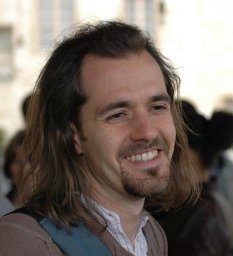 Laurent Guyon合作论文数centre national de la recherche scientifique4
 Mengdi Chen (陈梦迪)合作论文数State Key Laboratory of Precision Spectroscopy, East China Normal University4Florence Despetis合作论文数4
 Helmut Cölfen合作论文数Department of Chemistry, University of Konstanz4
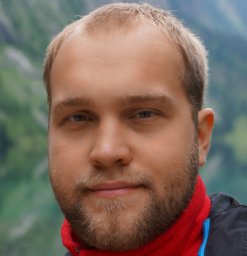 Pavel Yazhgur合作论文数Laboratoire de Physique des Solides, Université Paris Sud 113Wolf Pierre-Etienne合作论文数3Melich Mathieu合作论文数3
 Felipe a Pinheiro合作论文数Laboratoire de Physique et Modélisation des Systèmes Condensés, CNRS/Université Joseph Fourier3
 Sergey E. Skipetrov合作论文数Laboratoire de Physique et Mod´elisation des Milieux Condens´es3
 Fabien Bonnet合作论文数3Patricia Besirske合作论文数2
 Benedikt Hausele合作论文数2Danja Fischli合作论文数2Nathan Fuchs合作论文数2Stefan Aeby合作论文数2Ilona Wimmer合作论文数2Panayotis Spathis合作论文数2t sperling合作论文数1
 Nicolas Muller合作论文数1Oliver Irtenkauf合作论文数1Ulrich Kuhl合作论文数1Magkiriadou Sofia合作论文数1P. Spathis合作论文数1
 Janne-Mieke Meijer合作论文数1
 Nicolas Sator合作论文数Laboratoire de Physique Théorique de la Matière Condensée, Université Pierre et Marie Curie (Paris 6)1
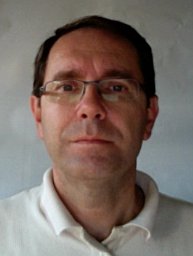 Olivier Legrand合作论文数Laboratoire de Physique de la Matiere;Universite de Nice-Sophia Antipolis;Laboratoire de Physique de la Matiere, Universite de Nice-Sophia Antipolis1
 Philippe Roux合作论文数Institut des Sciences de la Terre, University Grenoble Alpes1Mathias Ackermann合作论文数1
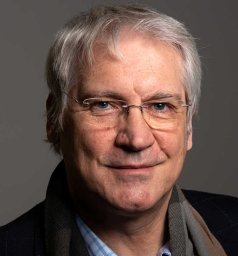 Marcel Filoche合作论文数Laboratoire de Physique de la Matiere1
 Bertrand Guillot合作论文数Laboratoire de Physique Théorique de la Matière Condensée, Sorbonne Université1
 Peter Keim合作论文数Institut fur Theoretische;Fachbereich fur Physik;Universitat Konstanz;Institut fur Theoretische, Universitat Konstanz1P. E. Wolf合作论文数1




