Robotics is a rapidly growing field that is set to play an important role in automating many activities. The requirements that a robot can have for effective use can have large appeals. For example, in the case of its use for transport applications where it moves between people and vehicles, it is necessary to connect to a network with extremely low latency so that its reaction is immediate. In contrast, applications such as video transmission and recording and sending data require high throughput. The different demands on network resources lead to the need to implement flexible networks that can guarantee the necessary resources in the most efficient and reliable way. Slicing is a network capability that can provide specific network characteristics and can be implemented in different 5G network domain elements such as Radio Access Network (RAN), 5G Core or end-to-end. This paper presents the slicing mechanism that was implemented to be utilized for the needs of the use cases described in the 5G-ERA research project. In phase 1 of the implementation, which is described, slicing is focused on the packet core of the network that was integrated based on 5G SA Rel. 16 architecture.
Novel orchestration architectures for 5G networks have primarily focused on enhancing Quality of Service, yet have neglected to address Quality of Experience concerns. Consequently, these systems struggle with intent recognition and End-to-End interpretability, resulting in the possibility of suboptimal control policies being developed. The 5G-ERA project has proposed and demonstrated an AI-driven intent-based networking solution for autonomous robots to address this issue. Specifically, the proposed solution employs a workflow consisting of four tools - Action Sequence Generation, Network Intent Estimation, Resource Usage Forecasting, and OSM Control Policy Generation - to map an individual vertical action's intent to a global OSM control policy. The paper describes how the 5G-ERA platform enables the onboarding and control of 5G-enabled robots and how we demonstrate the platform’s capabilities through the project’s use cases.
Robots are expected to be more intelligent in consuming digital infrastructures during the process of continual learning. The future of connected Robotics should be skillful in maximizing Quality of Experience (QoE) for its vertical users rather than solely reacting to Quality of Service (QoS). The paper provides a detailed use case specification and a network softwarization paradigm for realizing the 6G vision of connected intelligence. It serves as a guidance for developing future network applications to ground the idea of the connected intelligence.
Lately, autonomous robots have been dynamically appearing in the foreground, being the solution to many problems that concern different areas of everyday life. 5G-ERA Project's ambition is to propose solutions based on robotic applications that are targeting vertical sectors such as transport, healthcare, Public Protection and Disaster Relief (PPDR), and Industry 4.0. These sectors require intensive data transmission and processing, offering services that could take advantage from 5G networks capabilities in order to implement robotic collective intelligence approaches that were impossible in the past. However, 5G-ERA does not target a provider-centric 5G architecture. The project aims at a user-centered approach, where the main focus is on the Quality of Experience offered for vertical customers. Based on this approach, the designers of the 5G experimental facility should take into consideration the requirements of vertical sectors in order to be able to meet the new challenges that will arise. In this paper, the 5G-ERA health-care and PPDR use cases will be presented, providing the proposed solution and the scenario that is designed. Additionally, the network design and requirements will be analyzed based on the needs of the use case.
Rapid expansion of 5G affects a number of sectors, including vehicular communications relying on cooperative intelligent transportation systems (C-ITS). More specifically, in the context of the Internet of Vehicles (IoV), a particular emphasis is placed on modern cellular V2X (C-V2X) technologies aiming to further improve road safety. This work originates from the detailed scope of the ongoing 5G-DRIVE research project promoting cooperation between the EU and China, with the aim of demonstrating IoV services that rely on vehicle-to-infrastructure (V2I) communications. With the C-V2X approach serving as a point of departure, we analyze and describe a specific green light-optimized speed advisory (GLOSA) use case, for which we provide a detailed descriptive framework, a proposed architectural framework for trials, as well as specific KPIs for the joint assessment of trials between the EU and China. We also discuss the context for performance test procedures to be conducted as part of the intended trials. GLOSA provides end-users with short-term information on upcoming traffic light status to optimize traffic flows, help prevent speed limit violations, improve fuel efficiency, and reduce pollution
This paper analyzes the spectrum trading problem in virtualized fifth generation networks to enhance the network performance with respect to the spectrum utilization. The problem is modeled as a many‐to‐many matching game with utility‐based preferences and determines the matching between mobile network operators and mobile virtual network operators. The two proposed versions of utility functions for each set aim at maximizing the satisfaction of both sets with conflicting interests and improving the overall spectrum efficiency. In the simulation evaluation, the proposed scheme is compared with three different schemes in terms of the system utility, individual, and pair matching satisfaction. We also investigate the scalability aspects, the strategy plan impact on the matching performance of our proposed scheme, and at the same time, we attempt to make appropriate assumptions closer to reality. Our proposed scheme shows much better performance than the other schemes achieving a quite high level of satisfaction for the matching result on both sets.
5G is promising a drastic change when it comes to providing services to vertical sectors. At technology level, different initiatives are working on finding new or more efficient solutions for solving aspects related to 5G. Those technologies are expected to deeply change the market for all the involved stakeholders. This paper aims to give a view of the 5G-MEDIA project on how the market could change by means of the introduction of technologies for empowering the 5G value, looking at it from the perspective of the vertical domain, specifically for media organizations. The paper presents three business scenarios, as a potential future roadmap for the adoption of the technologies resulting from the project.
This research work describes the role of the Central Controller and Coordinator (C3) entity and its potential techno-economic gain when implemented in the upcoming 5G networks. We investigate how viable could be for a C3 Producer and for a cellular network Operator to produce and implement respectively the C3 entity in its network. The performance of techno-economic analysis is estimated by considering various key parameters and some useful conclusions are drawn.
The 5G will not only be a kind of progress of mobile broadband networks but will also create a set of novel and unique network and service capabilities, structuring a form of a sustainable and scalable technology. Based on the context of the on-going progress of the actual “5G-ESSENCE” EU-funded project and, in particular, upon its innovative architecture that combines a variety of features from network functions virtualisation (NFV), mobile-edge computing (MEC) and cognitive network management resulting in a pure software-driven environment in nature, we identify the importance of telemetry and analytics. These latter features are expected to play an important role in the 5G ecosystem, especially for the realisation and support of dynamic cognitive management of the 5G ESSENCE network architecture. The Cloud Enabled Small Cell Manager (CESCM) which is a “core” element of the corresponding 5G ESSENCE architectural framework encompasses telemetry and analytics as essential tools for automated and fine grained management of the network infrastructures. To this aim, we have proposed the inclusion of three distinct modules (telemetry, analytics and orchestration) to enhance the original 5G ESSENCE architecture.
Future networks including the Fifth Generation (5G) and beyond mobile networks shall manage, control and orchestrate the new services for users especially vertical sectors, thereby they shall maximize the potential of 5G infrastructures and their services. Network slicing has emerged as a major new networking paradigm for meeting the diverse requirements of various vertical businesses in virtualized and softwarised 5G networks. SliceNet is a project of the EU 5G Infrastructure Public Private Partnership (5G PPP) and focuses on network slicing as a cornerstone technology in 5G networks. This article describes how the SliceNet Control Plane shall evolve to meet the end-to-end needs of many different vertical businesses. SliceNet Control Plane shall span across multiple administrative domains, by integrating different technologies in each involved segments (RAN, MEC, CN, inter-connectivity). Moreover, SliceNet Control Plane is able to allow verticals to plug their own control logic on top of provisioned slices and specialize their services characteristics while optimizing the use of shared resources, providing dynamic configuration, dynamic management, resource isolation and scalability.
Media use cases for emergency services require mission-critical levels of reliability for the delivery of media-rich services, such as video streaming. With the upcoming deployment of the fifth generation (5G) networks, a wide variety of applications and services with heterogeneous performance requirements are expected to be supported, and any migration of mission-critical services to 5G networks presents significant challenges in the quality of service (QoS), for emergency service operators. This paper presents a novel SliceNet framework, based on advanced and customizable network slicing to address some of the highlighted challenges in migrating eHealth telemedicine services to 5G networks. An overview of the framework outlines the technical approaches in beyond the state-of-the-art network slicing. Subsequently, this paper emphasizes the design and prototyping of a media-centric eHealth use case, focusing on a set of innovative enablers toward achieving end-to-end QoS-aware network slicing capabilities, required by this demanding use case. Experimental results empirically validate the prototyped enablers and demonstrate the applicability of the proposed framework in such media-rich use cases.
For the revolution way from the current networks to the 5G era and beyond a set of stringent requirements and key performances should be meet. These define the need for more efficient procedures of designing and upgrading the Radio Access Network. In this paper we assess large scale measurements from an existing LTE network of a dense urban area (city) by focusing on the user load. In particular, we examine the spatial correlation of two clusters with different location characteristics by using a mathematical measure based on majorization. Finally we consider the temporal auto- and cross-correlation of the base stations in different locations. The assessment explains certain user and mobility behavior representative for this type of urban environment.
WiFi networks are known to be a cost-efficient traffic offloading solution for mobile networks. The Multi Access Packet Data Network Connectivity is a feature introduced in LTE Release 10 in order to allow users to be simultaneously connected to multiple radio access networks (RAN). Although this feature brings many advantages, such as the possibility to implement QoS-based traffic steering, it poses also many challenges, one of which is distributing traffic among the two radio access technologies. In this paper, we propose a traffic-aware user association algorithm for heterogeneous LTE/WiFi RANs. The proposed algorithm is formulated as an Integer Linear Programming (ILP) problem jointly optimizing user association and resource allocation. A heuristic is also proposed in order to address the scalability issues of the ILP-based algorithm. Numerical simulations are used in order to compare the proposed approaches. Finally, we implemented and tested the heuristic in small-scale testbed using the 5G-EmPOWER platform.
In this research work, we analyze the problem of spectrum trading in virtualized multi-tenant 5G networks using principles from matching theory. More specifically, we deal with the matching problem among the Mobile Network Operators (MNOs) and the Mobile Virtual Network Operators (MVNOs) and we propose a matching scheme that takes into account the preferences of each entity in terms of different utility variables. Our proposal includes a many-to-many matching scheme, that is an extension of the deferred acceptance algorithm, where each MNO and MVNO can cooperate with one or more MVNOs and MNOs, respectively. The performance of our proposed scheme is finally investigated by comparing it with various schemes and some useful conclusions are drawn.
Global data traffic explosion is expected to set stringent requirements for next generation networks in the next decades. Besides, very low latencies will have to be guaranteed for enabling new delay critical services. However, current Software Defined Networking (SDN) solutions have limitations in terms of separating both data and control planes among tenants/operators, and the capability to adapt to new or changing requirements. Moreover, some virtualization schemes do not ensure isolation of resources and do not guarantee bandwidth across the entities. While some others fail to provide flexibility to the slices to customize the resource allocation across the users. Therefore, novel SDN and virtualization techniques should be implemented to realize the upcoming 5G network that will facilitate at least efficient resource allocation and multi-tenancy among the plethora of different requirements.
This paper presents the vision of the 5G STEP-FWD project, funded by the European Commission, with the objective to propose a novel optical-wireless networking solution for the provision of high speed connectivity to end users. The features of the new architecture, based on the utilization of Ultra-Dense Wavelength Division Multiplexing Passive Optical Networks as the backhaul network, providing access to hyper dense mmWave networks, are presented in detail. Moreover, the research challenges to meet the 5G requirements in terms of low latency, spectral and energy efficiency are highlighted, followed by the description of way the project 5G STEP-FWD is going to address them.
The current CPE deployment model, which is based on deploying “intelligent” independent equipment in the customer premises, has important challenges that have been limiting the profitability of services for telecommunications service providers. Cloud CPE model provides a win for cost and service performance for the future, as it reduces onsite CPE complex requirements to a minimum and moves these features into the cloud, under service provider control. The financial analysis proves that the cCPE is a viable solution for the operators and also it is proved that can bring costs down for the operator but also for the end user and can be a viable solution for the 5G ecosystem.
 Ioannis P. Chochliouros合作论文数22
 Konstantinos N. Voudouris合作论文数Dept. of Electronics, Technological Educational Institution (T.E.I.) of Athens12
 Anastasia S. Spiliopoulou合作论文数9Maria Belesioti合作论文数8Panagiotis Matzoros合作论文数OTE SA7
 Ioanna Papafili合作论文数Athens University of Economics and Business7
 G. Heliotis合作论文数Experimental Solid State Group and Centre for Electronic Materials and Devices, Imperial College London7Panagiotis Tsiakas合作论文数E-learning Support Team, Technological Educational Institution (T.E.I.) of Athens7Andreas Rigas合作论文数6
 Christos E. Tsirakis合作论文数6
 Nancy Alonistioti合作论文数Communication Networks Laboratory, University of Athens6
 Evangelos Sfakianakis合作论文数6Christina Lessi合作论文数Hellenic Telecommunications Organization S.A. (OTE),5
 Tinku Rasheed合作论文数CREATE NET5
 Rebecca Steinert合作论文数Swedish Institute of Computer Science5Nikos Athanasopoulos合作论文数4Mario Kind合作论文数4Iraklis Georgas合作论文数4Avishay Mor合作论文数4
 Apostolos Kousaridas合作论文数Athens University of Economics and Business, University of Athens4Andrej Mihailovic合作论文数King\'s College London4
 Antonio Manzalini合作论文数Telecom4
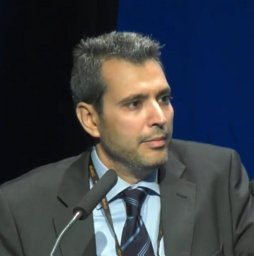 Harilaos Koumaras合作论文数Institute of Informatics and Telecommunications, NCSR “Demokritos”,4
 Tilemachos Doukoglou合作论文数OTE Research, Access and Core Network Laboratory, Hellenic Telecommunications Organization SA4Renxi Qiu合作论文数4
 Giacomo Bernini合作论文数3patrick gelard合作论文数3Marinos Agapiou合作论文数3
 Andreas Gavrielides合作论文数3Manor, D.合作论文数3
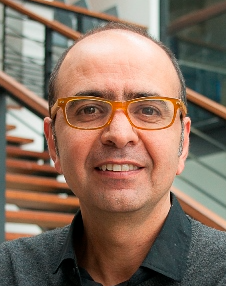 Navid Nikaein合作论文数BubbleRAN;OpenAirInterface Software Alliance;Graduate School and Research Center in Digital Science, EURECOM3
 Armin Dammann合作论文数German Aerospace Center;Institute of Communications and Navigation;German Aerospace Center, Institute of Communications and Navigation3
 Wolfgang John合作论文数Chalmers University of Technology3
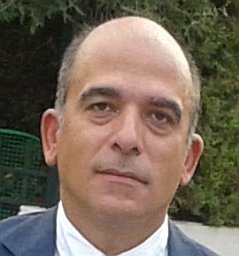 Dimitris Varoutas合作论文数Department of Informatics and Telecommunications, University of Athens3Catalin Meirosu合作论文数CERN, Geneva, Switzerland and The Politehnica University, Bucharest, Romania3
 Alexandros Kostopoulos合作论文数Athens University of Economics and Business3
 Eduardo Jacob合作论文数Departamento de Electr ·;Telecomunicaciones / Elektronika eta Telekomunikazioak Saila;Euskal Herriko Unibertsitatea, Universidad del Pais Vasco;Euskal Herriko Unibertsitatea, Universidad del Pais Vasco3
 Ramon Ferrús合作论文数Signal Theory and Communications Department, Universitat Politècnica de Catalunya3
 András Gulyás合作论文数Budapest University of Technology and Economics3
 Hercules Avramopoulos合作论文数School of Electrical and Computer Engineering, National Technical University of Athens;Photonics Communications Research Laboratory, Department of Electrical and Computer Engineering, National Technical University of Athens3
 Felician Németh合作论文数3
 Joaquim Bastos合作论文数3
 Costas Polychronopoulos合作论文数Department of Informatics & Telecommunications, University of Athens3
 Michail Alexandros Kourtis合作论文数Natl Ctr Sci Res Demokritos, Inst Informat & Telecommun3Hadi Noureddine合作论文数2E. Dimitriadou合作论文数2Pietro G. Giardina合作论文数2
 Stelios Agapiou合作论文数2Mariana Goldhamer合作论文数2




