The environment in which people spend their lives influences their health behaviours and health outcomes. Traditional studies often use fixed descriptions and ad hoc analyses to characterise environmental exposures at static locations, relating a single environmental factor to one health aspect, even though both the environment and the exposures of people who move through it are dynamic. We introduce a digital twinning approach that semantically integrates ontological concepts and data across environmental features into machine-readable knowledge, enabling scalable and context-aware assessment of individual exposures. This work is built on The World Avatar project, which aims to create an all-encompassing digital twin based on a dynamic knowledge graph. The proposed approach deploys a computational agent to calculate exposures based on semantic representations of environmental features in time and space. The time-specific part of the exposure calculation considers both the historical context (i.e. whether features of the environment had been built) and current context (i.e., whether something was open or accessible) of the exposure. The scalability of the approach is illustrated through the construction of interoperable digital twins and the analysis of smartphone data describing movements in both the UK and Singapore. The resulting exposures capture historic year-specific changes in greenspace and time-specific accessibility based on opening hours of the food retail environment. This approach could facilitate large-scale digital studies, yielding critical insights that help create healthy cities.
Data-driven discovery is crucial in scientific domains, yet the lack of standardised data management hinders reproducibility. In chemical science, this is exacerbated by fragmented data formats. The World Avatar (TWA) addresses these challenges via a dynamic knowledge graph historically provided in Java-based toolkits. We present twa, an open-source Python package that lowers the barrier to semantic data management. Its object-graph mapper (OGM) synchronises Python class hierarchies with RDF knowledge graphs, streamlining ontology-driven data integration and automated workflows. We demonstrate twa's capacity to unify fragmented chemical data and accelerate research through use cases in molecular design and AI-assisted synthesis protocol extraction for metal-organic polyhedra (MOPs). Our approach expands the existing OntoMOPs knowledge graph by adding 799 new MOPs derived from combinatorial assembly models. By abstracting complex SPARQL queries behind a user-friendly interface, twa fosters transparent, reproducible knowledge-driven discovery. The package is freely available via pip install twa or https://pypi.org/project/twa/.
This study analyses renewable energy resources, infrastructure, and practical options to accelerate the energy transition and unlock Chile’s potential as an exporter of renewable energy and products. We analyse data on the potential of wind and solar energy to determine the best areas for renewable projects. The progress of the energy transition occurring in Chile is reviewed in the context of historical events. The abundant renewable energy resources far exceed current demand and offer exceptional harvesting conditions. However, geographical limitations and a lack of enabling infrastructure may limit the participation of Chile in the world net-zero economy. A comparison is made with the UK to provide a broader perspective. This identifies order-of-magnitude differences in the power available in different locations, highlighting the importance of considering where best to deploy limited resources. International cooperation is required to make the best use of the available renewable energy. Three practical international options to unlock Chile’s potential are discussed. Further technical-economic assessment of these energy-transition acceleration paths is recommended. The data and results are integrated into a set of 2D/3D visualisations, facilitating visual insights and enabling a comprehensive understanding of the challenges and opportunities facing Chile.
This paper investigates the usage of knowledge graphs to bridge the gap between current data silos in deriving a holistic perspective on the impact of flooding. It builds on the idea of connected digital twins based on the World Avatar dynamic knowledge graph to deploy an ecosystem of autonomous software agents to continuously ingest new real-world information and operate on it. Multiple publicly available yet isolated data sources, including geospatial building information and property sales data as well as real-time river levels, weather observations, and flood warnings, are connected to instantiate a semantically rich ecosystem of knowledge, data, and computational capabilities to provide cross-domain insights in projected flooding events and their potential impact on population and built infrastructure. The extensibility of the proposed approach is highlighted by further integrating power, water, and telecoms infrastructure as part of the very same system, in order to analyse flood-induced asset failures and their propagation across networks. The World Avatar promotes evidence-based decision making during several disaster management phases, supporting both tactical and strategic risk assessments, which supports the United Nations Sustainable Development Goal 11 to improve the assessment of vulnerability, exposure, and risk of communities imposed by flooding events.
This article proposes a framework of linked software agents that continuously interact with an underlying knowledge graph to automatically assess the impacts of potential flooding events. It builds on the idea of connected digital twins based on the World Avatar dynamic knowledge graph to create a semantically rich asset of data, knowledge, and computational capabilities accessible to humans, applications, and artificial intelligence. We develop three new ontologies to describe and link environmental measurements and their respective reporting stations, flood events, and their potential impact on population and built infrastructure as well as the built environment of a city itself. These coupled ontologies are deployed to dynamically instantiate near real-time data from multiple fragmented sources into the World Avatar. Sequences of autonomous agents connected via the derived information framework automatically assess consequences of newly instantiated data, such as newly raised flood warnings, and cascade respective updates through the graph to ensure up-to-date insights into the number of people and building stock value at risk. Although we showcase the strength of this technology in the context of flooding, our findings suggest that this system-of-systems approach is a promising solution to build holistic digital twins for various other contexts and use cases to support truly interoperable and smart cities.
The proliferation of digital building models in recent years has led to a corresponding rise in specialised, non-interoperable models. These models impede sustainable developments by forming data silos that hinder cross-application data exchange and knowledge discovery processes. Although Semantic Web solutions hold promise in addressing these silos, current approaches primarily focus on developing novel ontologies, yielding similar outcomes. But it is unclear how these methodologies could support broader knowledge discovery processes and application requirements. This paper addresses these research challenges by introducing a dynamic knowledge graph as implemented within The World Avatar for interoperable building models. We demonstrate its value through two distinct applications in urban energy management and laboratory automation. The dynamic knowledge graph revolves around a comprehensive structured knowledge model constructed from ontologies and agents. Ontologies semantically annotate data and represent domain knowledge and their relationships with standardised definitions. When augmented with an agent architecture, the resulting knowledge model can align stakeholder perspectives and accommodate the dynamic and scalable nature of urban data. Moreover, the dynamic knowledge graph fosters innovative human-machine interactions through visualisation interfaces to augment knowledge discovery processes in the built environment for greater efficiencies and innovation. As the knowledge model expands, users gain access to a broader spectrum of private and public data sources and technologies, while reducing integration barriers. This is especially pertinent for smaller and less influential entities like municipal and local governments with limited resources, who can realise substantial benefits at reduced costs.
We apply deep kernel learning (DKL), which can be viewed as a combination of a Gaussian process (GP) and a deep neural network (DNN), to compression ignition engine emissions and compare its performance to a selection of other surrogate models on the same dataset. Surrogate models are a class of computationally cheaper alternatives to physics-based models. High-dimensional model representation (HDMR) is also briefly discussed and acts as a benchmark model for comparison. We apply the considered methods to a dataset, which was obtained from a compression ignition engine and includes as outputs soot and NOx emissions as functions of 14 engine operating condition variables. We combine a quasi-random global search with a conventional grid-optimization method in order to identify suitable values for several DKL hyperparameters, which include network architecture, kernel, and learning parameters. The performance of DKL, HDMR, plain GPs, and plain DNNs is compared in terms of the root mean squared error (RMSE) of the predictions as well as computational expense of training and evaluation. It is shown that DKL performs best in terms of RMSE in the predictions whilst maintaining the computational cost at a reasonable level, and DKL predictions are in good agreement with the experimental emissions data.
Parameters describing soot particle processes are generally derived from a limited number of experimental studies. These parameters then have to be carefully calibrated for different operating conditions in internal combustion engine applications. This paper presents an innovative calibration procedure for soot simulation in Diesel engines. A Diesel engine is simulated using the Stochastic Reactor Model engine code, which is implemented with the Moment Projection Method for handling the soot particle dynamics. The main advantage of the engine-soot model is its low computational cost. The model is then coupled with an advanced statistical toolkit, Model Development Suite, where the Hooke-Jeeves algorithm is adopted to calibrate seven soot model parameters automatically based on the measurement data. The ability of the integrated code for soot model calibration is evaluated by simulating the soot formation and oxidation processes in a heavy-duty Diesel engine which is operated under 18 different conditions. Results suggest that the integrated code is able to calibrate the soot model parameters effectively. A significant improvement in the match between the simulation results and experimental soot emission is obtained after calibration.
This paper presents a methodology that combines physicochemical modeling with advanced statistical analysis algorithms as an efficient workflow, which is then applied to the optimization and design of biomass pyrolysis and gasification processes. The goal was to develop an automated flexible approach for the analyses and optimization of such processes. The approach presented here can also be directly applied to other biomass conversion processes and, in general, to all those processes for which a parametrized model is available. A flexible physicochemical model of the process is initially formulated. Within this model, a hierarchy of sensitive model parameters and input variables (process conditions) is identified, which are then automatically adjusted to calibrate the model and to optimize the process. Through the numerical solution of the underlying mathematical model of the process, we can understand how species concentrations and the thermodynamic conditions within the reactor evolve for the two processes studied. The flexibility offered by the ability to control any model parameter is critical in enabling optimization of both efficiency of the process as well as its emissions. It allows users to design and operate feedstock-flexible pyrolysis and gasification processes, accurately control product characteristics, and minimize the formation of unwanted byproducts (e.g., tar in biomass gasification processes) by exploiting various productivity-enhancing simulation techniques, such as parameter estimation, computational surrogate (reduced order model) generation, uncertainty propagation, and multi-response optimization.
In this article, we extensively evaluate the smart sampling algorithm (SSA) developed by Garud et al. (2017a) for constructing multidimensional surrogate models. Our numerical evaluation shows that SSA outperforms Sobol sampling (QS) for polynomial and kriging surrogates on a diverse test bed of 13 functions. Furthermore, we compare the robustness of SSA against QS by evaluating them over ranges of domain dimensions and edge length/s. SSA shows consistently better performance than QS making it viable for a broad spectrum of applications. Besides this, we show that SSA performs very well compared to the existing adaptive techniques, especially for the high dimensional case. Finally, we demonstrate the practicality of SSA by employing it for three case studies. Overall, SSA is a promising approach for constructing multidimensional surrogates at significantly reduced computational cost.
This paper presents results of parameterisation of typical input–output relations within process flow sheet of a biodiesel plant and assesses parameterisation accuracy. A variety of scenarios were considered: 1, 2, 6 and 11 input variables (such as feed flow rate or a heater's operating temperature) were changed simultaneously, 3 domain sizes of the input variables were considered and 2 different surrogates (polynomial and high dimensional model representation (HDMR) fitting) were used. All considered outputs were heat duties of equipment within the plant. All surrogate models achieved at least a reasonable fit regardless of the domain size and number of dimensions. Global sensitivity analysis with respect to 11 inputs indicated that only 4 or fewer inputs had significant influence on any one output. Interaction terms showed only minor effects in all of the cases.
This paper presents results of parameterisation of typical input-output relations within process flow sheet of a biodiesel plant and assesses parameterisation accuracy. A variety of scenarios were considered: 1, 2, 6 and 11 input variables (such as feed flow rate or a heater’s operating temperature) were changed simultaneously, 3 domain sizes of the input variables were considered and 2 different surrogates (polynomial and High Dimensional Model Representation (HDMR) fitting) were used. All considered outputs were heat duties of equipment within the plant. All surrogate models achieved at least a reasonable fit regardless of the domain size and number of dimensions. Global sensitivity analysis with respect to 11 inputs indicated that only 4 or fewer inputs had significant influence on any one output. Interaction terms showed only minor effects in all of the cases.
We present simulation results for the production of algae-derived syngas using dual fluidized bed (DFB) gasifiers.
We present a detailed microkinetic analysis of the Fischer-Tropsch synthesis on a Co/gamma-Al2O3 catalyst over the full range of syngas conversions. The experiments were performed in a Carberry spinning basket batch reactor at initial H-2/CO ratios between 1.8 and 2.9, temperatures of 469 and 484 K, and initial pressures of 2 MPa. A reaction mechanism based on the H-2-assisted CO activation pathway, which comprises 128 elementary reactions with 85 free parameters, was proposed to explain the experimental results. Each of these elementary re-actions belongs to one of the following reaction groups: adsorption-desorption, monomer formation, chain growth, hydrogenation-hydrogen abstraction, or water-gas shift. A two-stage parameter estimation method, based on a quasi-random global search followed by a gradient-free local optimization, has been used to calculate the values of pre-exponential factors and activation energies. The use of data obtained from batch experiments enabled an effective analysis of dominating reactions at different stages of syngas conversions.
We determine the environmental impact of different biodiesel production strategies from algae feedstock in terms of greenhouse gas (GHG) emissions and non-renewable energy consumption, we then benchmark the results against those of conventional and synthetic diesel obtained from fossil resources. The algae cultivation in open pond raceways and the transesterification process for the conversion of algae oil into biodiesel constitute the common elements among all considered scenarios. Anaerobic digestion and hydrothermal gasification are considered for the conversion of the residues from the wet oil extraction route; while integrated gasification-heat and power generation and gasification-Fischer-Tropsch processes are considered for the conversion of the residues from the dry oil extraction route. The GHG emissions per unit energy of the biodiesel are calculated as follows: 41 g e-CO2/MJ(b) for hydrothermal gasification, 86 g e-CO2/MJ(b) for anaerobic digestion, 109 g e-CO2/MJ(b) for gasification-power generation, and 124 g e-CO2/MJ(b) for gasification-Fischer-Tropsch. As expected, non-renewable energy consumptions are closely correlated to the GHG values. Also, using the High Dimensional Model Representation (HDMR) method, a global sensitivity analysis over the entire space of input parameters is performed to rank them with respect to their influence on key sustainability metrics. Considering reasonable ranges over which each parameter can vary, the most influential input parameters for the wet extraction route include extractor energy demand and methane yield generated from anaerobic digestion or hydrothermal gasification of the oil extracted-algae. The dominant process input parameters for the dry extraction route include algae oil content, dryer energy demand, and algae annual productivity. The results imply that algal biodiesel production from a dried feedstock may only prove sustainable if a low carbon solution such as solar drying is implemented to help reducing the water content of the feedstock. (C) 2013 Elsevier Ltd. All rights reserved.
This paper presents a global sensitivity analysis of the detailed population balance model for silicon nanoparticle synthesis of Menz & Kraft [2013a, A new model for silicon nanoparticle synthesis, Combustion & Flame, 160:947–958]. The model consists of a gas-phase kinetic model, fully coupled with a particle population balance. The sensitivity of the model to its seven adjusted parameters was analysed in this work using a High Dimensional Model Representation (HDMR). An algorithm is implemented to generate response surface polynomials with automatically selected order based on their coefficient of determination. A response surface is generated for 19 different experimental cases across a range of process conditions and reactor configurations. This enables the sensitivity of individual experiments to certain parameters to be assessed. The HDMR reveals that particle size was most sensitive to the heterogeneous growth process, while the particle size distribution width is also strongly dependent on the rate of nucleation.
We present simulation results for the production of algae-derived hydrogen and syngas using a dual fluidized bed (DFB) gasifier. A global sensitivity analysis is performed to determine the impact of key process parameters (i.e. gasification temperature, feed water content, steam to biomass ratio, and air equivalence ratio) on the product yield and cold gas efficiency. Also, in order to account for different algae strains and varying extents of oil extraction prior to the gasification process the algae oil content was varied from 0 to 40 wt%. The results presented here can help to benchmark gasification against other algae conversion strategies in terms of process efficiency, feasibility and impact on the environment.
We apply a Bayesian parameter estimation technique to a chemical kinetic mechanism for n-propylbenzene oxidation in a shock tube to propagate errors in experimental data to errors in Arrhenius parameters and predicted species concentrations. We find that, to apply the methodology successfully, conventional optimization is required as a preliminary step. This is carried out in two stages: First, a quasi-random global search using a Sobol low-discrepancy sequence is conducted, followed by a local optimization by means of a hybrid gradient-descent/Newton iteration method. The concentrations of 37 species at a variety of temperatures, pressures, and equivalence ratios are optimized against a total of 2378 experimental observations. We then apply the Bayesian methodology to study the influence of uncertainties in the experimental measurements on some of the Arrhenius parameters in the model as well as some of the predicted species concentrations. Markov chain Monte Carlo algorithms are employed to sample from the posterior probability densities, making use of polynomial surrogates of higher order fitted to the model responses. We conclude that the methodology provides a useful tool for the analysis of distributions of model parameters and responses, in particular their uncertainties and correlations. Limitations of the method are discussed. For example, we find that using second-order response surfaces and assuming normal distributions for propagated errors is largely adequate, but not always.
 Markus Kraft合作论文数Department of Chemical Engineering and Biotechnology, University of Cambridge;Churchill College, University of Cambridge25
 Sebastian Mosbach合作论文数Department of Chemical Engineering and Biotechnology, University of Cambridge18
 Jethro Akroyd合作论文数Computational Modelling Group, Department of Chemical Engineering and Biotechnology, University of Cambridge;CMCL;Churchill College7
 Pooya Azadi合作论文数Department of Chemical Engineering and Applied Chemistry, University of Toronto6
 Amit Bhave合作论文数5
 Catharine Kastner合作论文数4Markus Hofmeister合作论文数4Andrew Smallbone合作论文数4Michael Hillman合作论文数3Sushant S. Garud合作论文数3
 Iftekhar Abubakar Karimi合作论文数Department of Chemical and Biomolecular Engineering, National University of Singapore3
 Oliver R Inderwildi合作论文数Smith School of Enterprise and the Environment, University of Oxford3Janusz J. Sikorski合作论文数2Vivian Page合作论文数2Peter L. W. Man合作论文数2William J. Menz合作论文数School of Chemical Engineering, The University of Adelaide2Andreas Braumann合作论文数2Chrismono Himawan合作论文数1Owen Parry合作论文数1
 Ahmed Salem合作论文数1Nicola Bianco合作论文数1
 Shaohua Wu (吴少华)合作论文数School of Energy and Power Engineering, Dalian University of Technology1
 Daniel Nurkowski合作论文数1
 Simon D. Rihm合作论文数1
 Jiaru Bai合作论文数Dept Chem Engn & Biotechnol, Univ Cambridge1
 Jiawei Lai合作论文数CMCL Innovations1
 Je Hyeong Hong合作论文数1Kok Foong Lee合作论文数1
 Wenming Yang合作论文数Department of Mechanical Engineering, College of Design and Engineering, National University of Singapore1
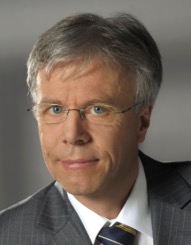 Wolfgang Peukert合作论文数Department Chemie- und Bioingenieurwesen, Technische Fakultät, Friedrich-Alexander-Universität1
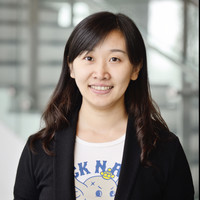 Jingya Yan (严静雅)合作论文数Cambridge Centre for Advanced Research and Education, University of Cambridge1
 Changmin Yu (于昌民)合作论文数Computational and Biological Learning Lab, Department of Engineering, University of Cambridge1
 Kondinski Aleksandar合作论文数1
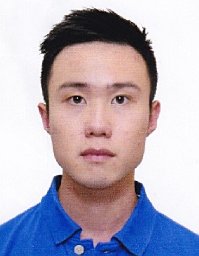 Tan Yong Ren合作论文数1
 John Dennis合作论文数Interdisciplinary Research Centre, University of Cambridge;School of Technology, University of Cambridge1Taylor Benjamin合作论文数1
 Feroz Farazi合作论文数Department of Chemical Engineering and Biotechnology, University of Cambridge1Weerapong Phadungsukanan合作论文数1Richard Kormer合作论文数1
 Kenneth Brezinsky合作论文数Department of Mechanical and Industrial Engineering, College of Engineering, University of Illinois, Chicago1
 Bengt Johansson合作论文数King Abdullah University of Science and Tehnology1
 Umesh Kumar Phd合作论文数1
 Soumya Gudiyella合作论文数Department of Chemical Engineering, University of Illinois at Chicago1
 Manosh C. Paul合作论文数Department of Mechanical Engineering;University of Glasgo;Department of Mechanical Engineering, University of Glasgo1Shraddha Shekar合作论文数1




