Improved low-frequency sensitivity of gravitational wave observatories would unlock study of intermediate-mass black hole mergers and binary black hole eccentricity and provide early warnings for multimessenger observations of binary neutron star mergers. Today's mirror stabilization control injects harmful noise, constituting a major obstacle to sensitivity improvements. We eliminated this noise through Deep Loop Shaping, a reinforcement learning method using frequency domain rewards. We proved our methodology on the LIGO Livingston Observatory (LLO). Our controller reduced control noise in the 10- to 30-hertz band by over 30x and up to 100x in subbands, surpassing the design goal motivated by the quantum limit. These results highlight the potential of Deep Loop Shaping to improve current and future gravitational wave observatories and, more broadly, instrumentation and control systems.
In this report, we introduce the Gemini 1.5 family of models, representing the next generation of highly compute-efficient multimodal models capable of recalling and reasoning over fine-grained information from millions of tokens of context, including multiple long documents and hours of video and audio. The family includes two new models: (1) an updated Gemini 1.5 Pro, which exceeds the February version on the great majority of capabilities and benchmarks; (2) Gemini 1.5 Flash, a more lightweight variant designed for efficiency with minimal regression in quality. Gemini 1.5 models achieve near-perfect recall on long-context retrieval tasks across modalities, improve the state-of-the-art in long-document QA, long-video QA and long-context ASR, and match or surpass Gemini 1.0 Ultra's state-of-the-art performance across a broad set of benchmarks. Studying the limits of Gemini 1.5's long-context ability, we find continued improvement in next-token prediction and near-perfect retrieval (>99 as Claude 3.0 (200k) and GPT-4 Turbo (128k). Finally, we highlight real-world use cases, such as Gemini 1.5 collaborating with professionals on completing their tasks achieving 26 to 75 categories, as well as surprising new capabilities of large language models at the frontier; when given a grammar manual for Kalamang, a language with fewer than 200 speakers worldwide, the model learns to translate English to Kalamang at a similar level to a person who learned from the same content.
This report introduces a new family of multimodal models, Gemini, that exhibit remarkable capabilities across image, audio, video, and text understanding. The Gemini family consists of Ultra, Pro, and Nano sizes, suitable for applications ranging from complex reasoning tasks to on-device memory-constrained use-cases. Evaluation on a broad range of benchmarks shows that our most-capable Gemini Ultra model advances the state of the art in 30 of 32 of these benchmarks - notably being the first model to achieve human-expert performance on the well-studied exam benchmark MMLU, and improving the state of the art in every one of the 20 multimodal benchmarks we examined. We believe that the new capabilities of the Gemini family in cross-modal reasoning and language understanding will enable a wide variety of use cases. We discuss our approach toward post-training and deploying Gemini models responsibly to users through services including Gemini, Gemini Advanced, Google AI Studio, and Cloud Vertex AI.
We investigate the optimal model size and number of tokens for training a transformer language model under a given compute budget. We find that current large language models are significantly undertrained, a consequence of the recent focus on scaling language models whilst keeping the amount of training data constant. By training over 400 language models ranging from 70 million to over 16 billion parameters on 5 to 500 billion tokens, we find that for compute-optimal training, the model size and the number of training tokens should be scaled equally: for every doubling of model size the number of training tokens should also be doubled. We test this hypothesis by training a predicted compute-optimal model, Chinchilla, that uses the same compute budget as Gopher but with 70B parameters and 4$\times$ more data. Chinchilla uniformly and significantly outperformsGopher (280B), GPT-3 (175B), Jurassic-1 (178B), and Megatron-Turing NLG (530B) on a large range of downstream evaluation tasks. This also means that Chinchilla uses substantially less compute for fine-tuning and inference, greatly facilitating downstream usage. As a highlight, Chinchilla reaches a state-of-the-art average accuracy of 67.5% on the MMLU benchmark, a 7% improvement over Gopher.
We investigate the optimal model size and number of tokens for training a transformer language model under a given compute budget. We find that current large language models are significantly undertrained, a consequence of the recent focus on scaling language models whilst keeping the amount of training data constant. By training over 400 language models ranging from 70 million to over 16 billion parameters on 5 to 500 billion tokens, we find that for compute-optimal training, the model size and the number of training tokens should be scaled equally: for every doubling of model size the number of training tokens should also be doubled. We test this hypothesis by training a predicted compute-optimal model, Chinchilla, that uses the same compute budget as Gopher but with 70B parameters and 4$\times$ more more data. Chinchilla uniformly and significantly outperforms Gopher (280B), GPT-3 (175B), Jurassic-1 (178B), and Megatron-Turing NLG (530B) on a large range of downstream evaluation tasks. This also means that Chinchilla uses substantially less compute for fine-tuning and inference, greatly facilitating downstream usage. As a highlight, Chinchilla reaches a state-of-the-art average accuracy of 67.5% on the MMLU benchmark, greater than a 7% improvement over Gopher.
We enhance auto-regressive language models by conditioning on document chunks retrieved from a large corpus, based on local similarity with preceding tokens. With a $2$ trillion token database, our Retrieval-Enhanced Transformer (RETRO) obtains comparable performance to GPT-3 and Jurassic-1 on the Pile, despite using 25$\times$ fewer parameters. After fine-tuning, RETRO performance translates to downstream knowledge-intensive tasks such as question answering. RETRO combines a frozen Bert retriever, a differentiable encoder and a chunked cross-attention mechanism to predict tokens based on an order of magnitude more data than what is typically consumed during training. We typically train RETRO from scratch, yet can also rapidly RETROfit pre-trained transformers with retrieval and still achieve good performance. Our work opens up new avenues for improving language models through explicit memory at unprecedented scale.
The performance of a language model has been shown to be effectively modeled as a power-law in its parameter count. Here we study the scaling behaviors of Routing Networks: architectures that conditionally use only a subset of their parameters while processing an input. For these models, parameter count and computational requirement form two independent axes along which an increase leads to better performance. In this work we derive and justify scaling laws defined on these two variables which generalize those known for standard language models and describe the performance of a wide range of routing architectures trained via three different techniques. Afterwards we provide two applications of these laws: first deriving an Effective Parameter Count along which all models scale at the same rate, and then using the scaling coefficients to give a quantitative comparison of the three routing techniques considered. Our analysis derives from an extensive evaluation of Routing Networks across five orders of magnitude of size, including models with hundreds of experts and hundreds of billions of parameters.
Language modelling (LM) is an unsupervised task that consists of modelling the probability of text, usually by factorising it into conditional next-token predictions p(x1, . . . , xn) = ∏ i p(xi |x<i). Neural networks have proven to be powerful language models, first in the form of recurrent architectures (Graves, 2013; Jozefowicz et al., 2016; Mikolov et al., 2010) and more recently in the form of Transformers (Vaswani et al., 2017), that use attention to contextualise the past. Large performance improvements have come from increasing the amount of data, training compute, or model parameters. Transformers have been scaled from 100 million parameter models in seminal work to over hundred billion parameters (Brown et al., 2020; Radford et al., 2019) in the last two years which has led to models that do very well on a wide array of tasks in a zero or few-shot formulation. Increasing model size predictably improves performance on a wide range of downstream tasks (Kaplan et al., 2020). The benefits of increasing the number of parameters come from two factors: additional computations at training and inference time, and increased memorization of the training data.
Language modelling provides a step towards intelligent communication systems by harnessing large repositories of written human knowledge to better predict and understand the world. In this paper, we present an analysis of Transformer-based language model performance across a wide range of model scales -- from models with tens of millions of parameters up to a 280 billion parameter model called Gopher. These models are evaluated on 152 diverse tasks, achieving state-of-the-art performance across the majority. Gains from scale are largest in areas such as reading comprehension, fact-checking, and the identification of toxic language, but logical and mathematical reasoning see less benefit. We provide a holistic analysis of the training dataset and model's behaviour, covering the intersection of model scale with bias and toxicity. Finally we discuss the application of language models to AI safety and the mitigation of downstream harms.
The recently-developed WaveNet architecture is the current state of the art in realistic speech synthesis, consistently rated as more natural sounding for many different languages than any previous system. However, because WaveNet relies on sequential generation of one audio sample at a time, it is poorly suited to today's massively parallel computers, and therefore hard to deploy in a real-time production setting. This paper introduces Probability Density Distillation, a new method for training a parallel feed-forward network from a trained WaveNet with no significant difference in quality. The resulting system is capable of generating high-fidelity speech samples at more than 20 times faster than real-time, and is deployed online by Google Assistant, including serving multiple English and Japanese voices.
The volume and complexity of diagnostic imaging is increasing at a pace faster than the availability of human expertise to interpret it. Artificial intelligence has shown great promise in classifying two-dimensional photographs of some common diseases and typically relies on databases of millions of annotated images. Until now, the challenge of reaching the performance of expert clinicians in a real-world clinical pathway with three-dimensional diagnostic scans has remained unsolved. Here, we apply a novel deep learning architecture to a clinically heterogeneous set of three-dimensional optical coherence tomography scans from patients referred to a major eye hospital. We demonstrate performance in making a referral recommendation that reaches or exceeds that of experts on a range of sight-threatening retinal diseases after training on only 14,884 scans. Moreover, we demonstrate that the tissue segmentations produced by our architecture act as a device-independent representation; referral accuracy is maintained when using tissue segmentations from a different type of device. Our work removes previous barriers to wider clinical use without prohibitive training data requirements across multiple pathologies in a real-world setting.
A long-standing goal of artificial intelligence is an algorithm that learns, tabula rasa, superhuman proficiency in challenging domains. Recently, AlphaGo became the first program to defeat a world champion in the game of Go. The tree search in AlphaGo evaluated positions and selected moves using deep neural networks. These neural networks were trained by supervised learning from human expert moves, and by reinforcement learning from self-play. Here we introduce an algorithm based solely on reinforcement learning, without human data, guidance or domain knowledge beyond game rules. AlphaGo becomes its own teacher: a neural network is trained to predict AlphaGo's own move selections and also the winner of AlphaGo's games. This neural network improves the strength of the tree search, resulting in higher quality move selection and stronger self-play in the next iteration. Starting tabula rasa, our new program AlphaGo Zero achieved superhuman performance, winning 100-0 against the previously published, champion-defeating AlphaGo.
There are almost two million people in the United Kingdom living with sight loss, including around 360,000 people who are registered as blind or partially sighted. Sight threatening diseases, such as diabetic retinopathy and age related macular degeneration have contributed to the 40% increase in outpatient attendances in the last decade but are amenable to early detection and monitoring. With early and appropriate intervention, blindness may be prevented in many cases. Ophthalmic imaging provides a way to diagnose and objectively assess the progression of a number of pathologies including neovascular (“wet”) age-related macular degeneration (wet AMD) and diabetic retinopathy. Two methods of imaging are commonly used: digital photographs of the fundus (the ‘back’ of the eye) and Optical Coherence Tomography (OCT, a modality that uses light waves in a similar way to how ultrasound uses sound waves). Changes in population demographics and expectations and the changing pattern of chronic diseases creates a rising demand for such imaging. Meanwhile, interrogation of such images is time consuming, costly, and prone to human error. The application of novel analysis methods may provide a solution to these challenges. This research will focus on applying novel machine learning algorithms to automatic analysis of both digital fundus photographs and OCT in Moorfields Eye Hospital NHS Foundation Trust patients. Through analysis of the images used in ophthalmology, along with relevant clinical and demographic information, DeepMind Health will investigate the feasibility of automated grading of digital fundus photographs and OCT and provide novel quantitative measures for specific disease features and for monitoring the therapeutic success.
The game of Go has long been viewed as the most challenging of classic games for artificial intelligence owing to its enormous search space and the difficulty of evaluating board positions and moves. Here we introduce a new approach to computer Go that uses 'value networks' to evaluate board positions and 'policy networks' to select moves. These deep neural networks are trained by a novel combination of supervised learning from human expert games, and reinforcement learning from games of self-play. Without any lookahead search, the neural networks play Go at the level of state-of-the-art Monte Carlo tree search programs that simulate thousands of random games of self-play. We also introduce a new search algorithm that combines Monte Carlo simulation with value and policy networks. Using this search algorithm, our program AlphaGo achieved a 99.8% winning rate against other Go programs, and defeated the human European Go champion by 5 games to 0. This is the first time that a computer program has defeated a human professional player in the full-sized game of Go, a feat previously thought to be at least a decade away.
 Laurent Sifre合作论文数DeepMind9
 Tom Hennigan合作论文数Google DeepMind8
 Diego de Las Casas合作论文数Mistral AI8
 Eliza Rutherford合作论文数DeepMind8
 Sebastian Borgeaud合作论文数DeepMind8
 Karen Simonyan合作论文数Microsoft AI8
 Oriol Vinyals合作论文数Google DeepMind8
 Bogdan Damoc合作论文数DeepMind7
 Jack Rae合作论文数Meta7
 Katie Millican合作论文数DeepMind7
 Demis Hassabis (戴密斯·哈萨比斯)合作论文数DeepMind;Isomorphic Labs7
 Arthur Mensch合作论文数Mistral AI7
 Erich Elsen合作论文数Databricks7
 Jordan Hoffmann合作论文数Inflection AI6
 Elena Buchatskaya合作论文数DeepMind6
 Aurelia Guy合作论文数OpenAI6
 Michela Paganini合作论文数Google DeepMind6Trevor Cai合作论文数OpenAI6
 Albin Cassirer合作论文数OpenAI6
 Aidan Clark合作论文数OpenAI6
 Simon Osindero合作论文数DeepMind6
 Roman Ring合作论文数DeepMind;University of Tartu5Jean-Baptiste Lespiau合作论文数DeepMind5
 Kareem Ayoub合作论文数Google DeepMind5
 Lisa Anne Hendricks合作论文数Language Team, DeepMind5
 Koray Kavukcuoglu合作论文数Google DeepMind;Google5Chris Jones合作论文数4
 Nenad Tomasev合作论文数Google DeepMind4
 Eric Noland合作论文数DeepMind4
 Clemens Meyer合作论文数Google DeepMind4
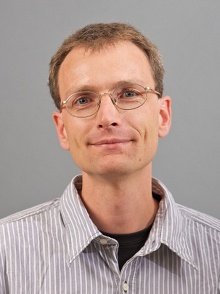 Olaf Ronneberger合作论文数Google DeepMind;Department of Computer Science, Faculty of Engineering, Albert-Ludwigs-Universität Freiburg4
 David Silver合作论文数Department of Computer Science, University College London;Ineffable Intelligence4
 Ioannis Antonoglou合作论文数Reflection AI4
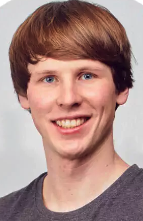 Julian Schrittwieser合作论文数Google DeepMind4
 Timothy Lillicrap合作论文数Google DeepMind4
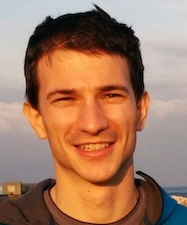 Arthur Guez合作论文数Google DeepMind4
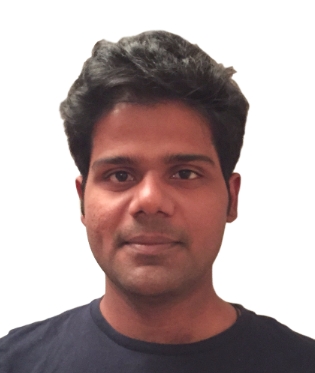 Balaji Lakshminarayanan合作论文数Google DeepMind4Daniel Visentin合作论文数3Seb Noury合作论文数DeepMind3
 Elena Gribovskaya合作论文数DeepMind3
 Zhitao Gong合作论文数DeepMind3Loren Maggiore合作论文数3
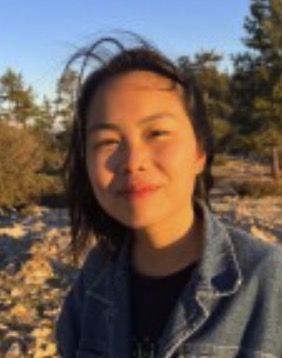 Saffron Huang合作论文数Anthropic3
 Trevor Back合作论文数DeepMind, London, England3
 Dominik Grewe合作论文数3
 Jeffrey De Fauw合作论文数Meli.im3
 Pearse Keane合作论文数Institute of Ophthalmology, University College London3
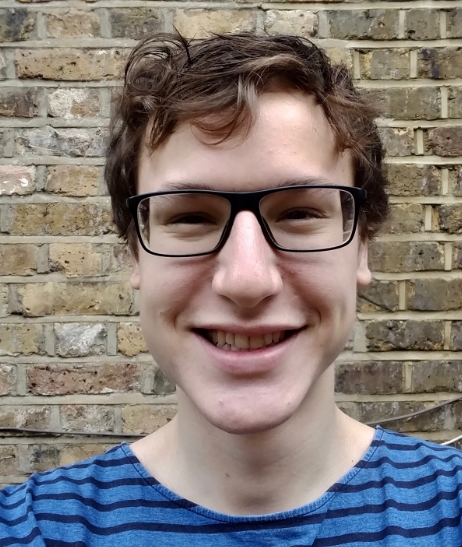 Johannes Welbl合作论文数Google;DeepMind3
 Yujia Li (李宇佳)合作论文数3




