We introduce Gemma 4, a new generation of open-weight, natively multimodal language models in the Gemma model family. Designed to advance compute efficiency and reasoning, the Gemma 4 model suite features dense and Mixture-of-Experts architectures, ranging from 2.3B to 31B parameters. Alongside improved vision and audio encoders for all model sizes, we propose a unified, encoder-free architecture for our 12B model, which ingests raw audio and image patches. Furthermore, we integrate a thinking mode, enabling Gemma models to generate reasoning traces prior to responding. We improve inference speed, memory, and compute efficiency, as well as long-context abilities through critical design choices. Gemma 4 establishes a leap in performance across STEM, multimodal, and long-context benchmarks, and rivals larger, frontier open models in human-rated tasks.
Recent advances in foundational models have yielded reasoning systems capable of achieving a gold-medal standard at the International Mathematical Olympiad. The transition from competition-level problem-solving to professional research, however, requires navigating vast literature and constructing long-horizon proofs. In this work, we introduce Aletheia, a math research agent that iteratively generates, verifies, and revises solutions end-to-end in natural language. Specifically, Aletheia is powered by an advanced version of Gemini Deep Think for challenging reasoning problems, a novel inference-time scaling law that extends beyond Olympiad-level problems, and intensive tool use to navigate the complexities of mathematical research. We demonstrate the capability of Aletheia from Olympiad problems to PhD-level exercises and most notably, through several distinct milestones in AI-assisted mathematics research: (a) a research paper (Feng26) generated by AI without any human intervention in calculating certain structure constants in arithmetic geometry called eigenweights; (b) a research paper (LeeSeo26) demonstrating human-AI collaboration in proving bounds on systems of interacting particles called independent sets; and (c) an extensive semi-autonomous evaluation (Feng et al., 2026a) of 700 open problems on Bloom's Erdos Conjectures database, including autonomous solutions to four open questions. In order to help the public better understand the developments pertaining to AI and mathematics, we suggest quantifying standard levels of autonomy and novelty of AI-assisted results, as well as propose a novel concept of human-AI interaction cards for transparency. We conclude with reflections on human-AI collaboration in mathematics and share all prompts as well as model outputs at https://github.com/google-deepmind/superhuman/tree/main/aletheia.
We introduce Gemma 3, a multimodal addition to the Gemma family of lightweight open models, ranging in scale from 1 to 27 billion parameters. This version introduces vision understanding abilities, a wider coverage of languages and longer context - at least 128K tokens. We also change the architecture of the model to reduce the KV-cache memory that tends to explode with long context. This is achieved by increasing the ratio of local to global attention layers, and keeping the span on local attention short. The Gemma 3 models are trained with distillation and achieve superior performance to Gemma 2 for both pre-trained and instruction finetuned versions. In particular, our novel post-training recipe significantly improves the math, chat, instruction-following and multilingual abilities, making Gemma3-4B-IT competitive with Gemma2-27B-IT and Gemma3-27B-IT comparable to Gemini-1.5-Pro across benchmarks. We release all our models to the community.
We introduce RecurrentGemma, a family of open language models which uses Google's novel Griffin architecture. Griffin combines linear recurrences with local attention to achieve excellent performance on language. It has a fixed-sized state, which reduces memory use and enables efficient inference on long sequences. We provide two sizes of models, containing 2B and 9B parameters, and provide pre-trained and instruction tuned variants for both. Our models achieve comparable performance to similarly-sized Gemma baselines despite being trained on fewer tokens.
We introduce Imagen 3, a latent diffusion model that generates high quality images from text prompts. We describe our quality and responsibility evaluations. Imagen 3 is preferred over other state-of-the-art (SOTA) models at the time of evaluation. In addition, we discuss issues around safety and representation, as well as methods we used to minimize the potential harm of our models.
Excellence in a wide variety of medical applications poses considerable challenges for AI, requiring advanced reasoning, access to up-to-date medical knowledge and understanding of complex multimodal data. Gemini models, with strong general capabilities in multimodal and long-context reasoning, offer exciting possibilities in medicine. Building on these core strengths of Gemini, we introduce Med-Gemini, a family of highly capable multimodal models that are specialized in medicine with the ability to seamlessly use web search, and that can be efficiently tailored to novel modalities using custom encoders. We evaluate Med-Gemini on 14 medical benchmarks, establishing new state-of-the-art (SoTA) performance on 10 of them, and surpass the GPT-4 model family on every benchmark where a direct comparison is viable, often by a wide margin. On the popular MedQA (USMLE) benchmark, our best-performing Med-Gemini model achieves SoTA performance of 91.1 strategy. On 7 multimodal benchmarks including NEJM Image Challenges and MMMU (health medicine), Med-Gemini improves over GPT-4V by an average relative margin of 44.5 capabilities through SoTA performance on a needle-in-a-haystack retrieval task from long de-identified health records and medical video question answering, surpassing prior bespoke methods using only in-context learning. Finally, Med-Gemini's performance suggests real-world utility by surpassing human experts on tasks such as medical text summarization, alongside demonstrations of promising potential for multimodal medical dialogue, medical research and education. Taken together, our results offer compelling evidence for Med-Gemini's potential, although further rigorous evaluation will be crucial before real-world deployment in this safety-critical domain.
In this report, we introduce the Gemini 1.5 family of models, representing the next generation of highly compute-efficient multimodal models capable of recalling and reasoning over fine-grained information from millions of tokens of context, including multiple long documents and hours of video and audio. The family includes two new models: (1) an updated Gemini 1.5 Pro, which exceeds the February version on the great majority of capabilities and benchmarks; (2) Gemini 1.5 Flash, a more lightweight variant designed for efficiency with minimal regression in quality. Gemini 1.5 models achieve near-perfect recall on long-context retrieval tasks across modalities, improve the state-of-the-art in long-document QA, long-video QA and long-context ASR, and match or surpass Gemini 1.0 Ultra's state-of-the-art performance across a broad set of benchmarks. Studying the limits of Gemini 1.5's long-context ability, we find continued improvement in next-token prediction and near-perfect retrieval (>99 as Claude 3.0 (200k) and GPT-4 Turbo (128k). Finally, we highlight real-world use cases, such as Gemini 1.5 collaborating with professionals on completing their tasks achieving 26 to 75 categories, as well as surprising new capabilities of large language models at the frontier; when given a grammar manual for Kalamang, a language with fewer than 200 speakers worldwide, the model learns to translate English to Kalamang at a similar level to a person who learned from the same content.
This work introduces Gemma, a family of lightweight, state-of-the art open models built from the research and technology used to create Gemini models. Gemma models demonstrate strong performance across academic benchmarks for language understanding, reasoning, and safety. We release two sizes of models (2 billion and 7 billion parameters), and provide both pretrained and fine-tuned checkpoints. Gemma outperforms similarly sized open models on 11 out of 18 text-based tasks, and we present comprehensive evaluations of safety and responsibility aspects of the models, alongside a detailed description of model development. We believe the responsible release of LLMs is critical for improving the safety of frontier models, and for enabling the next wave of LLM innovations.
In this work, we introduce Gemma 2, a new addition to the Gemma family of lightweight, state-of-the-art open models, ranging in scale from 2 billion to 27 billion parameters. In this new version, we apply several known technical modifications to the Transformer architecture, such as interleaving local-global attentions (Beltagy et al., 2020a) and group-query attention (Ainslie et al., 2023). We also train the 2B and 9B models with knowledge distillation (Hinton et al., 2015) instead of next token prediction. The resulting models deliver the best performance for their size, and even offer competitive alternatives to models that are 2-3 times bigger. We release all our models to the community.
Nuclear fusion using magnetic confinement, in particular in the tokamak configuration, is a promising path towards sustainable energy. A core challenge is to shape and maintain a high-temperature plasma within the tokamak vessel. This requires high-dimensional, high-frequency, closed-loop control using magnetic actuator coils, further complicated by the diverse requirements across a wide range of plasma configurations. In this work, we introduce a previously undescribed architecture for tokamak magnetic controller design that autonomously learns to command the full set of control coils. This architecture meets control objectives specified at a high level, at the same time satisfying physical and operational constraints. This approach has unprecedented flexibility and generality in problem specification and yields a notable reduction in design effort to produce new plasma configurations. We successfully produce and control a diverse set of plasma configurations on the Tokamak à Configuration Variable1,2, including elongated, conventional shapes, as well as advanced configurations, such as negative triangularity and 'snowflake' configurations. Our approach achieves accurate tracking of the location, current and shape for these configurations. We also demonstrate sustained 'droplets' on TCV, in which two separate plasmas are maintained simultaneously within the vessel. This represents a notable advance for tokamak feedback control, showing the potential of reinforcement learning to accelerate research in the fusion domain, and is one of the most challenging real-world systems to which reinforcement learning has been applied.
We present Sparrow, an information-seeking dialogue agent trained to be more helpful, correct, and harmless compared to prompted language model baselines. We use reinforcement learning from human feedback to train our models with two new additions to help human raters judge agent behaviour. First, to make our agent more helpful and harmless, we break down the requirements for good dialogue into natural language rules the agent should follow, and ask raters about each rule separately. We demonstrate that this breakdown enables us to collect more targeted human judgements of agent behaviour and allows for more efficient rule-conditional reward models. Second, our agent provides evidence from sources supporting factual claims when collecting preference judgements over model statements. For factual questions, evidence provided by Sparrow supports the sampled response 78% of the time. Sparrow is preferred more often than baselines while being more resilient to adversarial probing by humans, violating our rules only 8% of the time when probed. Finally, we conduct extensive analyses showing that though our model learns to follow our rules it can exhibit distributional biases.
Programming is a powerful and ubiquitous problem-solving tool. Systems that can assist programmers or even generate programs themselves could make programming more productive and accessible. Recent transformer-based neural network models show impressive code generation abilities yet still perform poorly on more complex tasks requiring problem-solving skills, such as competitive programming problems. Here, we introduce AlphaCode, a system for code generation that achieved an average ranking in the top 54.3% in simulated evaluations on recent programming competitions on the Codeforces platform. AlphaCode solves problems by generating millions of diverse programs using specially trained transformer-based networks and then filtering and clustering those programs to a maximum of just 10 submissions. This result marks the first time an artificial intelligence system has performed competitively in programming competitions.
The performance of a language model has been shown to be effectively modeled as a power-law in its parameter count. Here we study the scaling behaviors of Routing Networks: architectures that conditionally use only a subset of their parameters while processing an input. For these models, parameter count and computational requirement form two independent axes along which an increase leads to better performance. In this work we derive and justify scaling laws defined on these two variables which generalize those known for standard language models and describe the performance of a wide range of routing architectures trained via three different techniques. Afterwards we provide two applications of these laws: first deriving an Effective Parameter Count along which all models scale at the same rate, and then using the scaling coefficients to give a quantitative comparison of the three routing techniques considered. Our analysis derives from an extensive evaluation of Routing Networks across five orders of magnitude of size, including models with hundreds of experts and hundreds of billions of parameters.
We describe the operation and improvement of AlphaFold, the system that was entered by the team AlphaFold2 to the "human" category in the 14th Critical Assessment of Protein Structure Prediction (CASP14). The AlphaFold system entered in CASP14 is entirely different to the one entered in CASP13. It used a novel end-to-end deep neural network trained to produce protein structures from amino acid sequence, multiple sequence alignments, and homologous proteins. In the assessors' ranking by summed z scores (>2.0), AlphaFold scored 244.0 compared to 90.8 by the next best group. The predictions made by AlphaFold had a median domain GDT_TS of 92.4; this is the first time that this level of average accuracy has been achieved during CASP, especially on the more difficult Free Modeling targets, and represents a significant improvement in the state of the art in protein structure prediction. We reported how AlphaFold was run as a human team during CASP14 and improved such that it now achieves an equivalent level of performance without intervention, opening the door to highly accurate large-scale structure prediction.
Proteins are essential to life, and understanding their structure can facilitate a mechanistic understanding of their function. Through an enormous experimental effort 1–4 , the structures of around 100,000 unique proteins have been determined 5 , but this represents a small fraction of the billions of known protein sequences 6,7 . Structural coverage is bottlenecked by the months to years of painstaking effort required to determine a single protein structure. Accurate computational approaches are needed to address this gap and to enable large-scale structural bioinformatics. Predicting the three-dimensional structure that a protein will adopt based solely on its amino acid sequence—the structure prediction component of the ‘protein folding problem’ 8 —has been an important open research problem for more than 50 years 9 . Despite recent progress 10–14 , existing methods fall far short of atomic accuracy, especially when no homologous structure is available. Here we provide the first computational method that can regularly predict protein structures with atomic accuracy even in cases in which no similar structure is known. We validated an entirely redesigned version of our neural network-based model, AlphaFold, in the challenging 14th Critical Assessment of protein Structure Prediction (CASP14) 15 , demonstrating accuracy competitive with experimental structures in a majority of cases and greatly outperforming other methods. Underpinning the latest version of AlphaFold is a novel machine learning approach that incorporates physical and biological knowledge about protein structure, leveraging multi-sequence alignments, into the design of the deep learning algorithm.
Language modelling provides a step towards intelligent communication systems by harnessing large repositories of written human knowledge to better predict and understand the world. In this paper, we present an analysis of Transformer-based language model performance across a wide range of model scales -- from models with tens of millions of parameters up to a 280 billion parameter model called Gopher. These models are evaluated on 152 diverse tasks, achieving state-of-the-art performance across the majority. Gains from scale are largest in areas such as reading comprehension, fact-checking, and the identification of toxic language, but logical and mathematical reasoning see less benefit. We provide a holistic analysis of the training dataset and model's behaviour, covering the intersection of model scale with bias and toxicity. Finally we discuss the application of language models to AI safety and the mitigation of downstream harms.
 Demis Hassabis (戴密斯·哈萨比斯)合作论文数DeepMind;Isomorphic Labs30
 Oriol Vinyals合作论文数Google DeepMind27
 Yann LeCun合作论文数Department of Electrical and Computer Engineering, Tandon School of Engineering, New York University;AMI Labs25
 David Silver合作论文数Department of Computer Science, University College London;Ineffable Intelligence23
 Volodymyr Mnih合作论文数Google DeepMind22
 Karen Simonyan合作论文数Microsoft AI20
 Alex Graves合作论文数DeepMind15
 Raia Hadsell合作论文数Google DeepMind15
 Laurent Sifre合作论文数DeepMind12
 Clément Farabet合作论文数DeepMind11
 Stig Petersen合作论文数DeepMind, London, England10
 Tim Green合作论文数DeepMind, London, England10
 Remi Munos合作论文数Meta10
 Aäron Van Den Oord合作论文数Google DeepMind10
 Pushmeet Kohli合作论文数Google DeepMind9
 Razvan Pascanu合作论文数Google DeepMind9
 Max Jaderberg合作论文数Isomorphic Labs9
 Sebastian Borgeaud合作论文数DeepMind8
 Pierre Sermanet合作论文数Google DeepMind8
 Marc'Aurelio Ranzato合作论文数DeepMind8
 Andrew W. Senior合作论文数Google DeepMind8
 Nal Kalchbrenner合作论文数Google DeepMind8
 Timothy Lillicrap合作论文数Google DeepMind8
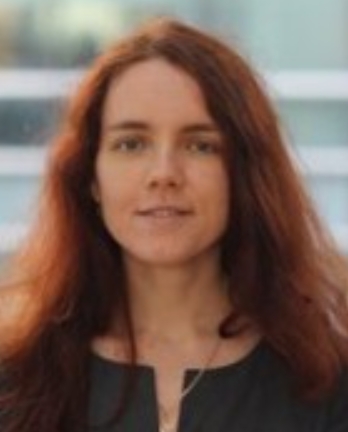 Elena Buchatskaya合作论文数DeepMind7
 Alex Bridgland合作论文数DeepMind, London, England7Augustin Žídek合作论文数DeepMind, London, England7
 Wojciech Marian Czarnecki合作论文数Google DeepMind7
 John Jumper合作论文数Google DeepMind7
 Richard Evans合作论文数DeepMind;Department of Computing, Faculty of Engineering, Imperial College London7Ivo Danihelka合作论文数DeepMind7Alek Andreev合作论文数6
 Alexander Pritzel合作论文数DeepMind6King Helen合作论文数6
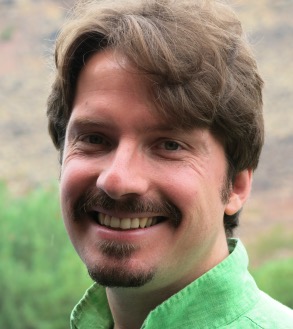 Piotr Mirowski合作论文数Google DeepMind6
 Simon Osindero合作论文数DeepMind6Karol Gregor合作论文数Google DeepMind6
 Ronan Collobert合作论文数Facebook6
 Sander Dieleman合作论文数DeepMind6
 Daan Wierstra合作论文数DeepMind6Charlie Chen合作论文数5Tris Warkentin合作论文数5Minh Giang合作论文数5Cassidy Hardin合作论文数5Eli Collins合作论文数5Joelle K. Barral合作论文数5
 Jonas Adler合作论文数Google DeepMind5Kathleen Kenealy合作论文数Google DeepMind5
 Eric Noland合作论文数DeepMind5
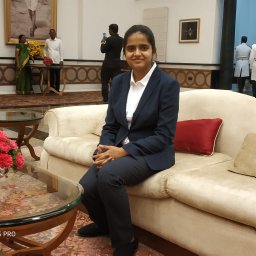 Shreya Pathak合作论文数Department of Computer Science and Engineering, IIT Bombay5