ADVERTISEMENT RETURN TO ISSUEEditorialNEXTLight-Driven and Electrochemical CO2 ReductionElizabeth GibsonElizabeth GibsonChemistry, Newcastle University, Newcastle upon Tyne NE1 7RU, United KingdomMore by Elizabeth Gibsonhttps://orcid.org/0000-0002-6032-343X, Anne CoAnne CoDepartment of Chemistry and Biochemistry, The Ohio State University, Columbus, Ohio 43210, United StatesMore by Anne Cohttps://orcid.org/0000-0002-3546-1582, and Gerald MeyerGerald MeyerDepartment of Chemistry, University of North Carolina at Chapel Hill, Chapel Hill, North Carolina 27599, United StatesMore by Gerald Meyerhttps://orcid.org/0000-0002-4227-6393Cite this: ACS Appl. Energy Mater. 2024, 7, 5, 1684–1686Publication Date (Web):February 24, 2024Publication History Received3 January 2024Published online24 February 2024Published inissue 11 March 2024https://doi.org/10.1021/acsaem.4c00013Copyright © 2024 American Chemical Society. This publication is available under these Terms of Use. Request reuse permissions This publication is free to access through this site. Learn MoreArticle Views856Altmetric-Citations-LEARN ABOUT THESE METRICSArticle Views are the COUNTER-compliant sum of full text article downloads since November 2008 (both PDF and HTML) across all institutions and individuals. These metrics are regularly updated to reflect usage leading up to the last few days.Citations are the number of other articles citing this article, calculated by Crossref and updated daily. Find more information about Crossref citation counts.The Altmetric Attention Score is a quantitative measure of the attention that a research article has received online. Clicking on the donut icon will load a page at altmetric.com with additional details about the score and the social media presence for the given article. Find more information on the Altmetric Attention Score and how the score is calculated. Share Add toView InAdd Full Text with ReferenceAdd Description ExportRISCitationCitation and abstractCitation and referencesMore Options Share onFacebookTwitterWechatLinked InRedditEmail PDF (962 KB) Get e-AlertscloseSUBJECTS:Catalysts,Electrochemical reduction,Electrodes,Fossil fuels,Materials Get e-Alerts
ADVERTISEMENT RETURN TO ISSUEEditorialNEXTACS Publications and the ACS Energy and Fuels (ENFL) Division Announce Two Energy Lectureship AwardsPrashant V. KamatPrashant V. KamatUniversity of Notre Dame, Notre Dame, Indiana 46556, United StatesMore by Prashant V. Kamathttps://orcid.org/0000-0002-2465-6819, Gerald MeyerGerald MeyerUniversity of North Carolina at Chapel Hill, Chapel Hill, North Carolina 27599, United StatesMore by Gerald Meyerhttps://orcid.org/0000-0002-2816-749X, and Hongwei WuHongwei WuWestern Australian School of Mines: Minerals, Energy and Chemical Engineering, Curtin University, Perth, Western Australia 6102, AustraliaMore by Hongwei Wuhttps://orcid.org/0000-0002-4227-6393Cite this: Energy Fuels 2024, 38, 4, 2525Publication Date (Web):January 26, 2024Publication History Received22 January 2024Published online26 January 2024Published inissue 15 February 2024https://doi.org/10.1021/acs.energyfuels.4c00365Copyright © 2024 American Chemical Society. This publication is available under these Terms of Use. Request reuse permissions This publication is free to access through this site. Learn MoreArticle Views390Altmetric-Citations-LEARN ABOUT THESE METRICSArticle Views are the COUNTER-compliant sum of full text article downloads since November 2008 (both PDF and HTML) across all institutions and individuals. These metrics are regularly updated to reflect usage leading up to the last few days.Citations are the number of other articles citing this article, calculated by Crossref and updated daily. Find more information about Crossref citation counts.The Altmetric Attention Score is a quantitative measure of the attention that a research article has received online. Clicking on the donut icon will load a page at altmetric.com with additional details about the score and the social media presence for the given article. Find more information on the Altmetric Attention Score and how the score is calculated. Share Add toView InAdd Full Text with ReferenceAdd Description ExportRISCitationCitation and abstractCitation and referencesMore Options Share onFacebookTwitterWechatLinked InRedditEmail PDF (2 MB) Get e-AlertscloseSUBJECTS:Energy,Energy storage,Fuels,Materials,Students Get e-Alerts
The absolute band-edge potentials of semiconductors and their positions relative to solution redox potentials are often invoked as design principles for photoelectrochemical devices and particulate photocatalysts. Here we show that these criteria are not necessary and limit the exploration of materials that may advance the fields of photoelectrochemistry, photochemistry and photocatalysis. We discuss how band-edge energies are not singular parameters and instead shift with pH, electrolyte type and surface chemistry. The free energies of electrons and holes, rather than those of solution redox couples, dictate overall reaction spontaneity and thus reactivity. Favourable charge-transfer kinetics can occur even when the relevant electrolyte redox potential(s) appear outside the bandgap, enabled by the inversion or accumulation of electronic charge at the semiconductor surface. This discussion informs design principles for photocatalytic systems engineering for both one-electron and multi-electron redox reactions (for example, H2 evolution, H2O oxidation and CO2 reduction). The absolute position of band edges is widely considered an indispensable design principle for selection of appropriate semiconductors for a given photo(electro)catalytic reaction. In this Perspective, the authors re-examine this idea from a viewpoint of semiconductor physics and make the case that alignment of band edges with chemical redox potentials is of limited importance.
The reaction steps for the selective conversion of a transition metal carbonyl complex to a hydroxymethyl complex that releases methanol upon irradiation with visible light have been successfully quantified in acetonitrile solution with dihydrobenzimidazole organic hydride reductants. Dihydrobenzimidazole reductants have been shown to be inactive toward H-2 generation in the presence of a wide range of proton sources and have been regenerated electrochemically or photochemically. Specifically, the reaction of cis-[Ru(bpy)(2)(CO)(2)](2+) (bpy = 2,2 '-bipyridine) with one equivalent of a dihydrobenzimidazole quantitatively yields a formyl complex, cis-[Ru(bpy)(2)(CO)(CHO)](+), and the corresponding benzimidazolium on a seconds time scale. Kinetic experiments revealed a first-order dependence on the benzimidazole hydride concentration and an unusually large kinetic isotope effect, inconsistent with direct hydride transfer and more likely to occur by an electron transfer-proton-coupled electron transfer (E Tau-PCET) or related mechanism. Further reduction/protonation of cis-[Ru(bpy)(2)(CO)(CHO)](+) with two equivalents of the organic hydride yields the hydroxymethyl complex cis-[Ru(bpy)(2)(CO)(CH2OH)](+). Visible light excitation of cis-[Ru(bpy)(2)(CO)(CH2OH)](+) in the presence of excess organic hydride was shown to yield free methanol. Identification and quantification of methanol as the sole CO reduction product was confirmed by H-1 NMR spectroscopy and gas chromatography. The high selectivity and mild reaction conditions suggest a viable approach for methanol production from CO, and from CO2 through cascade catalysis, with renewable organic hydrides that bear similarities to Nature's NADPH/NADP(+).
Core/shell nanoparticles comprised of a SnO2 core and a TiO2 shell, SnO2/TiO2, present in a mesoporous thin film, are of practical interest for applications in dye-sensitized water splitting as they outperform sensitized materials based on SnO2 or TiO2 (anatase or rutile polymorphs) for the water oxidation half reaction. Here we report electroabsorption studies designed to quantify the surface electric field and the ability of the shell to screen an electric field from a surface anchored dye. The metal-toligand charge transfer (MLCT) absorbance of [Ru(bpy)2(4,4 '- (PO3H2)2-2,2 '-bipyridine)](PF6)2, abbreviated RuP, was indeed sensitive to electron injection into the oxide support. When a fixed charge of 1 mC was injected, the electric field magnitude (in MV/cm) increased in the order 0.15 TiO2 (rutile) < 0.35 TiO2 (anatase) MUCH LESS-THAN 1.4 SnO2 (rutile). This order tracks the reported bulk dielectric constants of the oxide materials. Comparative studies with SnO2/TiO2 core/shell materials, fabricated by atomic layer deposition (ALD) of a TiO2 shell on a mesoporous SnO2 thin film, diminished the field strength by about a factor of 4 to values less than or about equal to that measured for anatase TiO2. Heat treating some SnO2/TiO2 core/shell materials at 450 degrees C resulted in a crystalline rutile TiO2 shell that screened the field most effectively, more so even than rutile TiO2 alone. Taken together, the data indicate that injected electrons reside within the SnO2 core region.
Photoexcitation of molecular radicals can produce strong reducing agents; however, the limited lifetimes of the doublet excited states preclude many applications. Herein, we propose and demonstrate a general strategy to translate a highly energetic electron from a doublet excited state to a ZrO2 insulator, thereby increasing the lifetime by about 6 orders of magnitude while maintaining a reducing potential less than -2.4 V vs SCE. Specifically, red light excitation of a salicylic acid modified perylene diimide radical anion PDI•- anchored to a ZrO2 insulator yields a ZrO2(e-)|PDI charge separated state with an ∼10 μs lifetime in 23% yield. The ZrO2(e-)s were shown to drive CO2 → CO reduction with a Re catalyst present in micromolar concentrations. More broadly, this strategy provides new opportunities to reduce important reagents and catalysts at low concentrations through diffusional electron transfer.
A series of ruthenium polypyridyl photocatalysts bearing amide functional groups were designed that successfully promoted halide assembly in CH2Cl2 and CH3CN solution. In CH2Cl2, halide assembly was accompanied by a visible color change, and the spectral changes presented clear evidence for two halide binding events, yielding a 1:2 ruthenium:halide assembly. In the more polar solvent CH3CN, 1:2 assembly structures were also observed with chloride, bromide, and iodide, and large equilibrium constants were measured for association of the first and second halide (K11 = 0.04 – 2 × 10⁶ M−1, K12 = 0.01 – 3 × 10⁵ M−1). Varying the functional groups on the ancillary ligands tuned the excited-state reduction potentials (Ru2+⁎/+), resulting in a photocatalyst capable of performing iodide oxidation. Quenching of the photocatalyst excited state resulted in static and dynamic quenching, and a Stern-Volmer analysis yielded two linear regions at low and high iodide concentrations. The dynamic quenching rate constants (kq = 6.8 and 4.0 × 10¹⁰ M−1 s−1) and static quenching constants (KS = 2.4 and 0.13 × 10⁴ M−1) at low and high iodide concentrations, respectively, were consistent with dynamic quenching of Ru2+ and [Ru2+,I−]+, and static quenching of [Ru2+,I−]+and [Ru2+,2I−]. Transient absorption spectroscopy revealed that the quenching reaction yielded a reduced ruthenium (Ru+) as the primary photoproduct and diiodide (I2•−) as a secondary photoproduct. The second-order rate constant for I2•− formation was measured to be 2.5 × 10¹⁰ M−1 s−1, a value consistent with the diffusion limited reaction. The transient absorption data indicates that oxidized halide photoproducts only result from the diffusional quenching reactions, and not from static quenching with an associated iodide ion. Fast back-electron transfer rates and low cage-escape yields in the ruthenium:iodide assemblies are invoked to explain why the static quenching pathway does not lead to measurable photoproduct yields.
Stabilization of ions and radicals often determines reaction kinetics and thermodynamics, but experimental determination of the stabilization magnitude remains difficult, especially when the species is short-lived. Herein, a competitive kinetic approach to quantify the stabilization of a halide ion toward oxidation imparted by specific stabilizing groups relative to a solvated halide ion is reported. This approach provides the increase in the formal reduction potential, ΔE°'(Χ•/-), where X = Br and I, that results from the noncovalent interaction with stabilizing groups. The [Ir(dF-(CF3)-ppy)2(tmam)]3+ photocatalyst features a dicationic ligand tmam [4,4'-bis[(trimethylamino)methyl]-2,2'-bipyridine]2+ that is shown by 1H NMR spectroscopy to associate a single halide ion, K eq = 7 × 10⁴ M-1 (Br-) and K eq = 1 × 10⁴ M-1 (I-). Light excitation of the photocatalyst in halide-containing acetonitrile solutions results in competitive quenching by the stabilized halide and the more easily oxidized diffusing halide ion. Marcus theory is used to relate the rate constants to the electron-transfer driving forces for oxidation of the stabilized and unstabilized halide, the difference of which provides the increase in reduction potentials of ΔE°'(Br•/-) = 150 ± 24 meV and ΔE°'(I•/-) = 67 ± 13 meV. The data reveal that K eq is a poor indicator of these reduction potential shifts. Furthermore, the historic and widely used assumption that Coulombic interactions alone are responsible for stabilization must be reconsidered, at least for polarizable halogens.
John B. Goodenough proposed that interfacial electron transfer kinetics from main group metal oxides should be fundamentally different from that of transition metal oxides, an expectation that has not been widely tested. Herein, the kinetics for interfacial electron transfer from mesoporous transparent conductive oxide Tin-doped Indium Oxide (ITO) to four photoredox catalysts (PCs) were characterized in acetonitrile electrolytes. The photocatalysts had the form: [Ru(4,4ʹ-R 2 -2,2′-bipyridine) 2 (4,4ʹ-(PO 3 H 2 ) 2 -2,2′-bipyridine)] 2+ , where R was H, methoxy, tert -butyl, and Br. The impact of the surface binding group was characterized with [Ru(2,2′-bipyridine) 2 (4,4ʹ-(CO 2 H) 2 -bpy)] 2+ . The interfacial electron transfer reaction ITO(e − )∣PC + → ITO∣PC was quantified by nanosecond absorption spectroscopy as a function of the applied potential (and hence ‒Δ G° ). Specific conditions of applied potential were identified where the kinetics were sensitive to the incident irradiance. A layer-by-layer method was used to insert ionic methylene bridge(s) between the PC and the oxide surface. Marcus-Gerischer analysis of the kinetic data indicates non-adiabatic interfacial electron transfer with total reorganization energies that increase when bridges were placed between the photocatalyst and the ITO surface.
Inspired by natural photosynthesis, the mission of the AMPED EFRC was to develop the fundamental molecular basis for solar-driven water oxidation and carbon dioxide reduction catalysis with dye-sensitized photoelectrodes. From 2014-2022, the Center advanced the state-of-the-art in molecule-decorated photoanodes for water oxidation and broke new ground in the development of photocathodes for CO2 reduction. A collaborative approach brought together experts in inorganic synthesis, organometallic catalysis, interfacial materials synthesis, photoelectrochemistry, and time-resolved dynamics to address by Grand Challenges in the 2007 DOE BESAC report. Since 2009, the UNC EFRC has published 314 peer-reviewed journal articles, and 2 book chapters. More specifically there were 146 peer-reviewed publications,1-146 during the 2014-20 funding cycle, with 80% supported solely by the EFRC, and about half resulting from collaborations among multiple PIs. Three major scientific research areas emerged from AMPED that are described below with details of the most impactful advances for solar energy research.
ADVERTISEMENT RETURN TO ISSUEPREVEditorialNEXTVirtual Special Issue: Halide Perovskite Materials and ApplicationsGerald J. MeyerGerald J. MeyerMore by Gerald J. Meyerhttps://orcid.org/0000-0002-4227-6393 and Hyun Jae KimHyun Jae KimMore by Hyun Jae Kimhttps://orcid.org/0000-0002-6879-9256Cite this: ACS Appl. Electron. Mater. 2022, 4, 7, 3325–3326Publication Date (Web):June 21, 2022Publication History Published online21 June 2022Published inissue 26 July 2022https://pubs.acs.org/doi/10.1021/acsaelm.2c00725https://doi.org/10.1021/acsaelm.2c00725editorialACS PublicationsCopyright © 2022 American Chemical Society. This publication is available under these Terms of Use. Request reuse permissions This publication is free to access through this site. Learn MoreArticle Views878Altmetric-Citations-LEARN ABOUT THESE METRICSArticle Views are the COUNTER-compliant sum of full text article downloads since November 2008 (both PDF and HTML) across all institutions and individuals. These metrics are regularly updated to reflect usage leading up to the last few days.Citations are the number of other articles citing this article, calculated by Crossref and updated daily. Find more information about Crossref citation counts.The Altmetric Attention Score is a quantitative measure of the attention that a research article has received online. Clicking on the donut icon will load a page at altmetric.com with additional details about the score and the social media presence for the given article. Find more information on the Altmetric Attention Score and how the score is calculated. Share Add toView InAdd Full Text with ReferenceAdd Description ExportRISCitationCitation and abstractCitation and referencesMore Options Share onFacebookTwitterWechatLinked InRedditEmail PDF (639 KB) Get e-AlertscloseSUBJECTS:Diodes,Insulators,Materials,Perovskites,Solar energy Get e-Alerts
ADVERTISEMENT RETURN TO ISSUEEditorialNEXTACS Applied Energy Materials Enters Its Fifth YearGerald J. MeyerGerald J. MeyerMore by Gerald J. Meyerhttps://orcid.org/0000-0002-4227-6393Cite this: ACS Appl. Energy Mater. 2022, 5, 1, 1–2Publication Date (Web):January 24, 2022Publication History Published online24 January 2022Published inissue 24 January 2022https://pubs.acs.org/doi/10.1021/acsaem.1c04037https://doi.org/10.1021/acsaem.1c04037editorialACS PublicationsCopyright © 2022 American Chemical Society. This publication is available under these Terms of Use. Request reuse permissions This publication is free to access through this site. Learn MoreArticle Views2050Altmetric-Citations-LEARN ABOUT THESE METRICSArticle Views are the COUNTER-compliant sum of full text article downloads since November 2008 (both PDF and HTML) across all institutions and individuals. These metrics are regularly updated to reflect usage leading up to the last few days.Citations are the number of other articles citing this article, calculated by Crossref and updated daily. Find more information about Crossref citation counts.The Altmetric Attention Score is a quantitative measure of the attention that a research article has received online. Clicking on the donut icon will load a page at altmetric.com with additional details about the score and the social media presence for the given article. Find more information on the Altmetric Attention Score and how the score is calculated. Share Add toView InAdd Full Text with ReferenceAdd Description ExportRISCitationCitation and abstractCitation and referencesMore Options Share onFacebookTwitterWechatLinked InRedditEmail PDF (921 KB) Get e-AlertscloseSUBJECTS:Energy,Energy storage,Materials,Solar energy,Thermoelectric materials Get e-Alerts
ADVERTISEMENT RETURN TO ISSUEEditorialNEXTACS Applied Energy Materials Introduces Early Career Energy ScientistsGerald J. Meyer*Gerald J. MeyerACS Applied Energy MaterialsMore by Gerald J. Meyerhttps://orcid.org/0000-0002-4227-6393Cite this: ACS Appl. Energy Mater. 2022, 5, 4, 3886–3887Publication Date (Web):April 25, 2022Publication History Published online25 April 2022Published inissue 25 April 2022https://pubs.acs.org/doi/10.1021/acsaem.2c00955https://doi.org/10.1021/acsaem.2c00955editorialACS PublicationsCopyright © 2022 American Chemical Society. This publication is available under these Terms of Use. Request reuse permissions This publication is free to access through this site. Learn MoreArticle Views1017Altmetric-Citations-LEARN ABOUT THESE METRICSArticle Views are the COUNTER-compliant sum of full text article downloads since November 2008 (both PDF and HTML) across all institutions and individuals. These metrics are regularly updated to reflect usage leading up to the last few days.Citations are the number of other articles citing this article, calculated by Crossref and updated daily. Find more information about Crossref citation counts.The Altmetric Attention Score is a quantitative measure of the attention that a research article has received online. Clicking on the donut icon will load a page at altmetric.com with additional details about the score and the social media presence for the given article. Find more information on the Altmetric Attention Score and how the score is calculated. Share Add toView InAdd Full Text with ReferenceAdd Description ExportRISCitationCitation and abstractCitation and referencesMore Options Share onFacebookTwitterWechatLinked InRedditEmail PDF (569 KB) Get e-AlertscloseSUBJECTS:Batteries,Doping,Electrodes,Materials,Photovoltaics Get e-Alerts
A dual-sensitizer mesoporous thin-film photoanode has been characterized for visible light-driven bromide oxidation in an aqueous pH 5.6 solution. The thin film is composed of interconnected nanopa...
The performance of dye-sensitized solar cells (DSSC) and dye-sensitized photoelectrosynthesis cells (DSPEC)—and their constituent chromophores, catalysts, and substrates—is commonly evaluated by photocurrents, product fluxes, and time-resolved spectroscopies. Kinetic models of solar harvesting systems are often built from the data using phenomenological methods (i.e. sum-of-exponential or global fit analyses). Such models cannot be predictive, and therefore offer limited fundamental insights to the efficiencies of charge injection and photocatalysis. We describe an approach to modeling the molecular photophysics, interfacial electron transfer, and charge separation that yields a comprehensive kinetic framework for these processes. Simulations of femtosecond to steady-state dynamics using this framework provide a detailed picture of dye cycling under both pulsed-monochromatic and continuous broadband illumination at 1 sun intensity. The competition between molecular transitions and charge injection will be discussed, including the potential implications for the design of chromophore-catalyst assemblies.
The standard one-electron reduction potentials of halogen atoms, E°'(X•/-), and many other radical or unstable species, are not accessible through standard electrochemical methods. Here, we report the use of two Ir(III) photoredox catalysts to initiate chloride, bromide, and iodide oxidation in organic solvents. The kinetic rate constants were critically analyzed through a derived diffusional model with Marcus theory to estimate E°'(X•/-) in propylene carbonate, acetonitrile, butyronitrile, and dichloromethane. The approximations commonly used to determine diffusional rate constants in water gave rise to serious disagreements with the experiment, particularly in high-ionic-strength dichloromethane solutions, indicating the need to utilize the exact Debye expression. The Fuoss equation was adequate for determining photocatalyst-halide association constants with photocatalysts that possessed +2, +1, and 0 ionic charges. Similarly, the work term contribution in the classical Rehm-Weller expression, necessary for E°'(X•/-) determination, accounted remarkably well for the stabilization of the charged reactants as the solution ionic strength was increased. While a sensitivity analysis indicated that the extracted reduction potentials were all within experimental error the same, use of fixed parameters established for aqueous solution provided the periodic trend expected, E°'(I•/-) <E°'(Br•/-) <E°'(Cl•/-), in all of the organic solvents investigated; however, the potentials were more closely spaced than what would have been predicted based on gas-phase electron affinities or aqueous reduction potentials. The origin(s) of such behavior are discussed that provide new directions for future research.
Efficient excited-state electron transfer between an iron(III) photosensitizer and organic electron donors was realized with green light irradiation. This advance was enabled by the use of the previously reported iron photosensitizer, [Fe(phtmeimb)2]+ (phtmeimb = {phenyl[tris(3-methyl-imidazolin-2-ylidene)]borate}, that exhibited long-lived and luminescent ligand-to-metal charge-transfer (LMCT) excited states. A benchmark dehalogenation reaction was investigated with yields that exceed 90% and an enhanced stability relative to the prototypical photosensitizer [Ru(bpy)3]2+. The initial catalytic step is electron transfer from an amine to the photoexcited iron sensitizer, which is shown to occur with a large cage-escape yield. For LMCT excited states, this reductive electron transfer is vectorial and may be a general advantage of Fe(III) photosensitizers. In-depth time-resolved spectroscopic methods, including transient absorption characterization from the ultraviolet to the infrared regions, provided a quantitative description of the catalytic mechanism with associated rate constants and yields.
The identification of reaction mechanisms unique to the iron, ruthenium, and iridium PS represents progress towards the long-sought goal of utilizing earth-abundant, first-row transition metals for emerging energy and environmental applications.
ADVERTISEMENT RETURN TO ISSUEEditorialNEXTNew Faces of ACS Applied Energy MaterialsGerald J. MeyerGerald J. MeyerMore by Gerald J. Meyerhttps://orcid.org/0000-0002-4227-6393Cite this: ACS Appl. Energy Mater. 2021, 4, 12, 13374–13375Publication Date (Web):December 27, 2021Publication History Published online27 December 2021Published inissue 27 December 2021https://pubs.acs.org/doi/10.1021/acsaem.1c03585https://doi.org/10.1021/acsaem.1c03585editorialACS PublicationsCopyright © 2021 American Chemical Society. This publication is available under these Terms of Use. Request reuse permissions This publication is free to access through this site. Learn MoreArticle Views713Altmetric-Citations-LEARN ABOUT THESE METRICSArticle Views are the COUNTER-compliant sum of full text article downloads since November 2008 (both PDF and HTML) across all institutions and individuals. These metrics are regularly updated to reflect usage leading up to the last few days.Citations are the number of other articles citing this article, calculated by Crossref and updated daily. Find more information about Crossref citation counts.The Altmetric Attention Score is a quantitative measure of the attention that a research article has received online. Clicking on the donut icon will load a page at altmetric.com with additional details about the score and the social media presence for the given article. Find more information on the Altmetric Attention Score and how the score is calculated. Share Add toView InAdd Full Text with ReferenceAdd Description ExportRISCitationCitation and abstractCitation and referencesMore Options Share onFacebookTwitterWechatLinked InRedditEmail PDF (2 MB) Get e-AlertscloseSUBJECTS:Batteries,Climate change,Energy,Energy storage,Materials Get e-Alerts
 Renato N Sampaio合作论文数Dept Chem, Univ North Carolina Chapel Hill34
 Ke Hu (胡可)合作论文数School of Chemical Science and Engineering, Tongji University33
 Troian-Gautier Ludovic合作论文数Laboratoire de Chimie Organique et Photochimie, Université Libre de Bruxelles (ULB),31
 Shane Ardo合作论文数Department of Chemistry, School of Physical Sciences, University of California, Irvine25
 Curtis P. Berlinguette合作论文数Department of Chemistry, Faculty of Science, The University of British Columbia;Department of Chemical & Biological Engineering, Faculty of Science, The University of British Columbia23
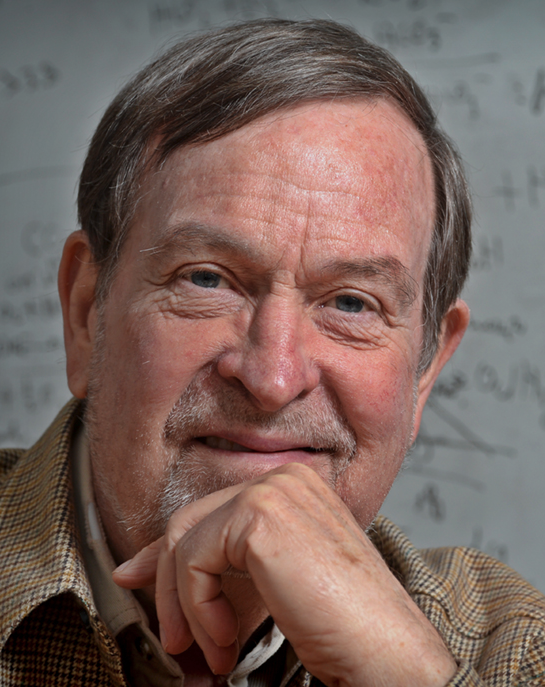 Thomas J. Meyer合作论文数Department of Applied Physical Sciences, The University of North Carolina at Chapel Hill23
 Kenneth Karlin合作论文数The Karlin Group, Department of Chemistry, Krieger School of Arts & Sciences, Johns Hopkins University22
 Phil Castellano合作论文数Department of Chemistry, College of Sciences, North Carolina State University19
 Carlo Alberto Bignozzi合作论文数Department of Chemical and Pharmaceutical Sciences, University of Ferrara19
 Wesley Swords合作论文数Department of Chemistry, University of North Carolina at Chapel Hill18Ta Heimer合作论文数17M. Kyle Brennaman合作论文数Dept Chem, Univ N Carolina15
 Brian Dimarco合作论文数Chem Div, Brookhaven Natl Lab14
 Farnum Byron H合作论文数Department of Chemistry, Johns Hopkins University14
 Maria Abrahamsson合作论文数Department of Physical Chemistry, Uppsala University14David W. Thompson合作论文数13Ca Kelly合作论文数13
 Guocan Li合作论文数13
 Ryan M O'Donnell合作论文数Center for Intelligent Chemical Instrumentation, Ohio University13
 Elena Galoppini合作论文数12
 Matthew D Brady合作论文数Dept Chem, Univ N Carolina12Eric J Piechota合作论文数Department of Chemistry and Biochemistry, The Ohio State University12
 Peter Searson合作论文数Department of Materials Science and Engineering, Whiting School of Engineering, Johns Hopkins University12Andras Marton合作论文数12
 Arthur B. Ellis合作论文数University of Wisconsin-Madison12H. Christopher Fry合作论文数12Dv Scaltrito合作论文数11
 Daniel H. Reich合作论文数William H. Miller III Department of Physics & Astronomy, Krieger School of Arts & Sciences, Johns Hopkins University11Amy A. Narducci Sarjeant合作论文数10
 Rowley John G合作论文数Department of Chemistry and School of Energy Resources, University of Wyoming10Marquard Seth L合作论文数10Kiyoshi C. D. Robson合作论文数10George C. Lisensky合作论文数Department of Chemistry, Beloit College10F Farzad合作论文数9Aaron Staniszewski合作论文数9Pg Hoertz合作论文数9
 Rachel E Bangle合作论文数Dept Chem, Univ N Carolina9Roberto Argazzi合作论文数9JM Stipkala合作论文数9John M. Papanikolas合作论文数Department of Chemistry, University of North Carolina at Chapel Hill9Timothy J. Barr合作论文数Department of Chemistry, University of North Carolina at Chapel Hill8Tyler C Motley合作论文数Dept Chem, Univ N Carolina8Heather R. Lucas合作论文数8Michael D Turlington合作论文数Univ N Carolina, Dept Chem, Murray Hall 2202B, Chapel Hill, NC 27599 USA8
 Sara A M Wehlin合作论文数Lab Chim Organ CP160 06, Univ Libre Bruxelles8
 Patrik Johansson合作论文数Department of Physics, Chalmers University of Technology;Alistore-ERI8
 William Heuer合作论文数US Naval Academy, US Naval Academy8
 James Gardner合作论文数Division of Applied Physical Chemistry, Department of Chemistry, School of Engineering Sciences in Chemistry, Biotechnology and Health, KTH Royal Institute of Technology8Bv Bergeron合作论文数7




