The aim of colour constancy is to discount the effect of the scene illumination from the image colours and restore the colours of the objects as captured under a ‘white’ illuminant. For the majority of colour constancy methods, the first step is to estimate the scene illuminant colour. Generally, it is assumed that the illumination is uniform in the scene. However, real world scenes have multiple illuminants, like sunlight and spot lights all together in one scene. We present in this paper a simple yet very effective framework using a deep CNN-based method to estimate and use multiple illuminants for colour constancy. Our approach works well in both the multi and single illuminant cases. The output of the CNN method is a region-wise estimate map of the scene which is smoothed and divided out from the image to perform colour constancy. The method that we propose outperforms other recent and state of the art methods and has promising visual results.
The ColorChecker dataset is one of the most widely used image sets for evaluating and ranking illuminant estimation algorithms. However, this single set of images has at least 3 different sets of ground-truth (i.e., correct answers) associated with it. In the literature it is often asserted that one algorithm is better than another when the algorithms in question have been tuned and tested with the different ground-truths. In this short correspondence we present some of the background as to why the 3 existing ground-truths are different and go on to make a new single and recommended set of correct answers. Experiments reinforce the importance of this work in that we show that the total ordering of a set of algorithms may be reversed depending on whether we use the new or legacy ground-truth data.
The Chromagenic color constancy algorithm estimates the light color given two images of the same scene, one filtered and one unfiltered. The key insight underpinning the chromagenic method is that the filtered and unfiltered images are linearly related and that this linear relationship correlates strongly with the illuminant color. In the original method the best linear relationship was found based on the assumption that the filtered and unfiltered images were registered. Generally, this is not the case and implies an expensive image registration step. This paper makes three contributions. First, we use the Monge-Kantorovich (MK) method to find the best linear transform without the need for image registration. Second, we apply this method on chromagenic pairs of facial images (used for Kampo pathophysiology diagnosis). Lastly, we show that the MK method supports better color correction compared with solving for a 3 × 3 correction matrix using the least squares linear regression method when the images are not registered.
In a previous work, it was shown that there is a curious problem with the benchmark ColorChecker dataset for illuminant estimation. To wit, this dataset has at least 3 different sets of ground-truths. Typically, for a single algorithm a single ground-truth is used. But then different algorithms, whose performance is measured with respect to different ground-truths, are compared against each other and then ranked. This makes no sense. We show in this paper that there are also errors in how each ground-truth set was calculated. As a result, all performance rankings based on the ColorChecker dataset - and there are scores of these - are inaccurate. In this paper, we re-generate a new 'recommended' set of ground-truth based on the calculation methodology described by Shi and Funt. We then review the performance evaluation of a range of illuminant estimation algorithms. Compared with the legacy ground-truths, we find that the difference in how algorithms perform can be large, with many local rankings of algorithms being reversed. Finally, we draw the readers attention to our new 'open' data repository which, we hope, will allow the ColorChecker set to be rehabilitated and once again to become a useful benchmark for illuminant estimation algorithms.
In illuminant estimation, we attempt to estimate the RGB of the light. We then use this estimate on an image to correct for the light's colour bias. Illuminant estimation is an essential component of all camera reproduction pipelines. How well an illuminant estimation algorithm works is determined by how well it predicts the ground truth illuminant colour. Typically, the ground truth is the RGB of a white surface placed in a scene. Over a large set of images an estimation error is calculated and different algorithms are then ranked according to their average estimation performance. Perhaps the most widely used publically available dataset used in illuminant estimation is Gehler's Colour Checker set that was reprocessed by Shi and Funt. This image set comprises 568 images of typical everyday scenes. Curiously, we have found three different ground truths for the Shi-Funt Colour Checker image set. In this paper, we investigate whether adopting one ground truth over another results in different rankings of illuminant estimation algorithms. We find that, depending on the ground truth used, the ranking of different algorithms can change, and sometimes dramatically. Indeed, it is entirely possible that much of the recent 'advances' made in illuminant estimation were achieved because authors have switched to using a ground truth where better estimation performance is possible.
 Graham Finlayson合作论文数University of East Anglia;Norwegian University of Science and Technology;Apple;Simon Fraser University4
 Peter Gehler合作论文数Zalando3
 Arjan Gijsenij合作论文数Akzo Nobel Decorative Coatings3
 Simone Bianco合作论文数Imaging and Vision Laboratory, Department of Informatics, Systems and Communication, University of Milano-Bicocca;Imaging and Vision Solutions S.r.l2
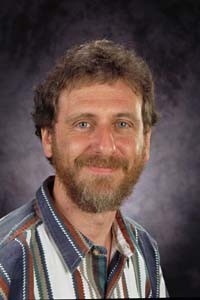 Mark S. Drew合作论文数School of Computing Science, Simon Fraser University2
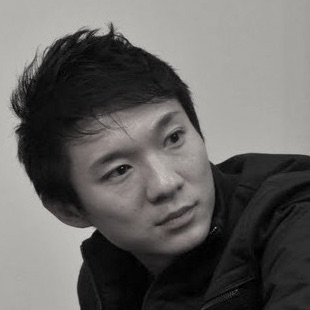 Lilong Shi合作论文数Apple2
 Brian Funt合作论文数School of Computing Science, Faculty of Applied Sciences, Simon Fraser University2
 Futa Matsushita合作论文数1Mihiro Uchida合作论文数1Han Gong合作论文数the University of East Anglia1
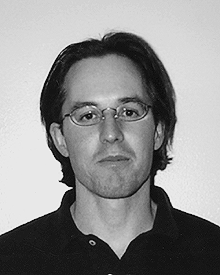 Meehan, J.合作论文数1
 Norimichi Tsumura合作论文数Department of Imaging Sciences, Chiba Univetristy1
 Javier Vazquez-Corral合作论文数Computer Vision Center;Universitat Autònoma de Barcelona1




