Lancé en 2020 par l’Agence nationale pour la rénovation urbaine (ANRU), le dispositif Quartiers fertiles vise à revitaliser les quartiers prioritaires via l’agriculture urbaine. L’objectif de cet article est d’identifier une typologie de projets d’agriculture urbaine émergents via ce dispositif de politique publique. En combinant analyse factorielle et analyse qualitative des 83 dossiers lauréats, 4 types de projets sont identifiés : participation sociale, production spécialisée, approche systémique et transformation alimentaire. Ce résultat permet d’avoir un aperçu inédit sur les projets dans la phase d’instruction. La typologie des Quartiers fertiles proposée dans l’article reflète la multifonctionnalité des agricultures urbaines au sein des quartiers populaires, promue dans le cahier des charges de l’appel à projets. Cependant, on remarque que les acteurs territoriaux se sont surtout emparés du dispositif Quartiers fertiles pour développer des projets en lien avec les fonctions sociales et environnementales que peuvent apporter ces projets, et pas avec les fonctions productives et marchandes initialement visées par le dispositif. Ces projets diversifiés montrent ainsi un fort potentiel socio-environnemental, malgré des vulnérabilités économiques. Des études d’impacts devront être conduites par la suite pour pouvoir observer les trajectoires de ces projets et leur ancrage au sein des territoires d’implantation.
L’agriculture urbaine apparaît aujourd’hui comme un levier de la transition écologique des villes et un outil d’éducation, voire de contribution, à l’alimentation durable. De nombreux acteurs de l’aménagement urbain mettent en place des projets sur leurs territoires : jardins collectifs, écopâturage, microfermes participatives, champignonnières, ruches, etc. Toutefois, ces acteurs sont souvent démunis pour définir les formes d’agriculture urbaine adéquates au regard de la spécificité des espaces urbains dont ils disposent et des dynamiques territoriales qui les traversent. L’article porte sur le récit du processus de coconstruction d’un outil adapté pour définir des projets d’agriculture urbaine à l’échelle territoriale.
Launched in 2020 by the French National State Agency for Urban Renovation (ANRU), the Quartiers fertiles (QF) initiative aims to revitalize priority neighborhoods through urban agriculture. The aim of this article is to identify a typology of urban agriculture projects emerging under this public policy scheme. Combining factor analysis and qualitative analysis of the 83 elected projects, four types of projects are identified: social participation, specialized production, systemic approach, and food transformation. This result provides an unprecedented insight into the projects at the preliminary stage. The typology presented in this article reflects the multifunctionality of urban agriculture in working-class neighborhoods, as promoted in the specifications for the QF call for project. However, the QF scheme has mainly been taken up by local stakeholders to develop projects related to the social and environmental functions that these projects can provide, rather than the productive and commercial functions initially targeted by the scheme. These diversified projects thus show strong socio-environmental potential, despite economic vulnerabilities. Impact studies will have to be carried out later to be able to observe the trajectories of these projects and their anchoring within the areas in which they are set up.
Le 12 juin 2024, dans le cadre de la réalisation de ce numéro de Territoires en Mouvement, consacré aux Agricultures urbaines au Nord et au Sud, et également dans la perspective de la tenue des Journées Internationales Francophones de l'Agriculture Urbaine (JIFAU), en 2025 à Dakar au Sénégal, les autrices (Giulia Giacchè, Joëlle Salomon Cavin et Christine Aubry) ont souhaité réaliser un entretien avec Awa Ba, une chercheuse sénégalaise spécialiste de l’agriculture urbaine. Elle mène actuellement une recherche dressant le bilan de 20 ans de recherches sur l’agriculture urbaine en Afrique de l’Ouest francophone et à Madagascar. Cet entretien revient sur son parcours, les origines et les principaux enseignements qu’elle tire de cette recherche.
Repères À Events & books Sélection thématique de livresCette rubrique signale des ouvrages récemment parus.Ils sont classés en trois catégories : les ouvrages thématiques par objet d'étude ; les ouvrages sur la science et ses rapports avec la société ; les ouvrages de réflexion sur les sciences.Pour une description plus détaillée, cliquez sur le titre.
Over the past two decades, urban agriculture (UA) has boomed. A wide variety of forms have developed, from allotment gardens to UA rooftop greenhouses. Yet local authorities often struggle to define the specificities of the urban spaces and territorial dynamics involved. We propose a multi-phase method based on territorial analysis. This framework may be used to help landowners select the most appropriate forms of urban agriculture in the light of overarching territorial characteristics. We have applied our method, stemming from an action research approach, to three case studies: the town of Montrouge, a priority district in Lille, and a new district in Bordeaux. These reveal its potential and its shortcomings. We demonstrate how the structural, technical, and social characteristics of the spaces and agents concerned can rule out certain forms of UA which do not correspond to the territory’s (current) needs.
Since two decades urban agriculture has been booming and a wide range of forms, from urban allotment gardens to rooftop farming under greenhouse are developing. However, local authorities are often powerless to define forms of urban agriculture with regard to the specificity of the urban spaces and the territorial dynamics. We propose a methodological itinerary, based on the territorial analysis. This framework is a useful tool to orient and guide the choice of forms of urban agriculture with regard to the territorial characteristics as a whole. Designed and tested within the framework of a research-action dispositive, this methodological itinerary was implemented on three case studies: the city of Montrouge, a priority district within Lille municipality and a new district in Bordeaux. These applications allowed to test the itinerary and to reveal its potential but also its limits. We demonstrate how the structural, technical and social characteristics of the spaces and actors concerned can lead to the exclusion of certain forms of UA which do not correspond, or not already, to the needs of the territory.
Since two decades, urban agriculture has been booming and a wide range of forms, from urban allotment gardens to rooftop farming under greenhouse, is developing. Various benefits are recognized for urban agriculture integration within the city and a specific consideration is dedicated to ecosystem services. In this article, we have focused on cultural ecosystem services provided by urban micro-farms. The state of the art reveals that urban agriculture delivers cultural ecosystem services that are well perceived and evaluated by users, but there are still few studies on this topic. Based on the analysis of specific literature on cultural ecosystems and micro-farms in parallel to a period of observation and documentary research of five urban micro-farms either on rooftop or at soil level, located in Paris and its surroundings, we proposed a specific methodology. This methodology aimed at quantitative and qualitative evaluation of the cultural ecosystem services provided by urban micro-farms and is based on a framework, which distinguishes exogenous and endogenous cultural ecosystem services.
 Biancamaria Torquati合作论文数Dept Agr Food & Environm Sci, Univ Perugia22
 Christine Aubry合作论文数16
 Jean-Noël Consalès合作论文数UMR TELEMME 7303, Aix Marseille Univ9
 Salma Loudiyi合作论文数8
 Anne-Cecile Daniel合作论文数6
 Francesco Musotti合作论文数5
 Taglioni C合作论文数5Sylvie Lardon合作论文数5
 Gustavo Nagib合作论文数4
 Lya Porto合作论文数4Joëlle Salomon Cavin合作论文数4
 Camille Dumat合作论文数4
 Claire Chenu合作论文数INRA AgroParisTech4Antoine Lagneau合作论文数3Gwen Christiansen合作论文数3Laurence Granchamp合作论文数3Cyril Feidt合作论文数3Axelle Tortosa合作论文数3J.-Y. Léna合作论文数3Olivier Bories合作论文数3Magali Rault合作论文数3Wilkens Jules合作论文数3Paolo Crivellari合作论文数3Louiza Boukharaeva合作论文数3Mélanie Collé合作论文数3Yoann Durrieu合作论文数3Marie Souvestre合作论文数3Fenintsoa Andriamasinoro合作论文数3Anne-Claire Savy合作论文数3
 Veronique Saint-Ges合作论文数3didier busca合作论文数3
 Myriam Kessari合作论文数3
 Morgane Retière合作论文数Universidade de São Paulo;Université;Universidade de São Paulo, Université Paris 8 Vincennes-Saint-Denis3
 Baptiste Grard合作论文数AgroParisTech, Univ Paris Saclay3
 Paola Branduini合作论文数3Sonia Venanzi合作论文数3Sobanska Sophie合作论文数Laboratoire de Spectrochimie Infrarouge et Raman, Université de Lille 13
 Alexis Annes合作论文数3
 Mombo Stéphane合作论文数INP-ENSAT, Université de Toulouse;EcoLab (Laboratoire d'écologie fonctionnelle),, UMR 5245 CNRS-INP-UPS;EcoLab (Laboratoire d'écologie fonctionnelle),, Université de Toulouse3
 Eva Schreck合作论文数IRD, Université de Toulouse3
 Xiong Tiantian合作论文数3
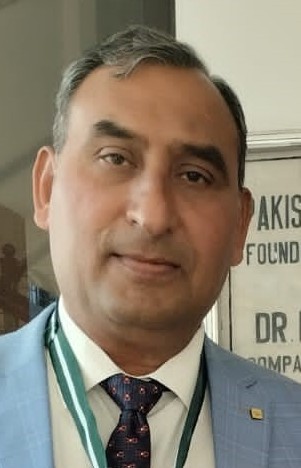 Muhammad Shahid合作论文数Department of Biochemistry, University of Agriculture, Faisalabad3
 Bessiere Jacinthe合作论文数3raffaella di napoli合作论文数2Sabine El Moualy合作论文数2Gabriele Ghiglioni合作论文数2Leonardo Gioffre合作论文数2Wolf Lorleberg合作论文数2
 Xavier Recasens合作论文数2




