Ted Peters has emphasized the theological concept of prolepsis and a ''retroactive ontology'' in which God creates from the future. We consider here possible connections between prolepsis and scientific theories about transmission of signals backwards in time. After considering objections to time travel, we discuss putative means of achieving it-tachyons, ''time machine'' solutions of Einstein's equations, waves in dark energy, and advanced solutions of wave equations. We then reflect on ways those theoretical constructs, if realized, might be of theological interest. Applications to the resurrection of Jesus, predictive prophecy and the creation of the universe will be discussed.
BACKGROUND:Bystander cardiopulmonary resuscitation (CPR) improves survival. The authors attempted to determine whether the rates at which CPR is performed differ when a cardiac arrest is witnessed by someone known or unknown to the victim.METHODS:Retrospective observational cohort study of all witnessed nontraumatic cardiac arrests (Utstein) from Boston from 1994 to 1998. Cardiac arrests were excluded if the original record was unavailable or if medical or public safety personnel witnessed the cardiac arrest. The relationship between the provider of CPR and the victim was determined by the emergency medical technicians at the scene and later categorized as known or unknown. Survival (survival to hospital discharge) was determined through telephone follow-up with the arrest victim's caregivers.RESULTS:Known bystanders performed CPR 15.5% (42 of 271) of the time (95% confidence interval (95% CI], 11.2%, 19.8%). Unknown bystanders performed CPR 45.8% (66 of 144) (95% CI, 37.6%, 54.1%) of the time. The odds ratio of receiving CPR if an unknown bystander witnessed a cardiac arrest was 4.61 (95% CI, 2.89, 7.34). Arrests witnessed by unknown bystanders had a 24.3% (35 of 144) (95% CI, 17.2%, 31.4%) survival rate. Those witnessed by known bystanders had a 17.7% (95% CI, 13.1%, 22.3%) survival rate (p = 0.110). In a logistic regression model including both bystander status and location of arrest, unknown bystander status remained statistically significantly associated with having CPR performed regardless of location (OR = 3.56, p = 0.01; 95% CI, 1.64, 7.72). Location was not statistically significant in the presence of bystander status (OR = 1.17, p = 0.686).CONCLUSION:Victims of cardiac arrest are more likely to receive CPR when the event is witnessed by bystanders unknown to the victim than if the arrest is witnessed by friends or family.
An assessment was performed by the Nuclear Operations Analysis Center (NOAC) staff at Oak Ridge National Laboratory of the information available from operation of United States nuclear power plants in their Licensee Event Reports (LERs) which is pertinent to identifying failures due to age-related degradation. LERs from commercial power plants submitted from 1969 to 1982 were surveyed, yielding 3098 events that were considered to be age-related failures. Wear, corrosion, fatigue, vibration, stress corrosion, and erosion were identified as the structural failure cause mechanisms in over half of the events. The study contains data on failed components, the age-related failure mechanisms responsible, the severity of the failures, and the failure detection methods of failures from possible age-related causes.
Pesticide ScienceVolume 9, Issue 2 p. 161-161 Article The relevance of auxin binding to plant membrane fractions† George Murphy, George Murphy Unit of Developmental Botany, CambridgeSearch for more papers by this author George Murphy, George Murphy Unit of Developmental Botany, CambridgeSearch for more papers by this author First published: April 1978 https://doi.org/10.1002/ps.2780090212Citations: 1 † Presented at a meeting Physical mechanisms involved in plant growth regulation on 1 March 1977, organised by the Physicochemical and Biophysical Panel (Pesticides Group), Society of Chemical Industry. AboutPDF ToolsRequest permissionExport citationAdd to favoritesTrack citation ShareShare Give accessShare full text accessShare full-text accessPlease review our Terms and Conditions of Use and check box below to share full-text version of article.I have read and accept the Wiley Online Library Terms and Conditions of UseShareable LinkUse the link below to share a full-text version of this article with your friends and colleagues. Learn more.Copy URL Share a linkShare onFacebookTwitterLinked InRedditWechat No abstract is available for this article.Citing Literature Volume9, Issue2April 1978Pages 161-161 RelatedInformation
Exact plane-wave solutions of the Einstein equations which correspond to monochromatic superpositions of plane waves in the linearized theory are studied. The metric involves solutions of the Mathieu equation, and it is shown that it can be interpreted in terms of harmonics of the linearized solution.
The general topic of geometric unified field theories is discussed in the first section. Some reasons are given for pursuing such theories, and some criticisms are considered. The second section develops the fundamental equations of a purely affine theory which is invariant under projective transformations of the affine connection. This theory is a generalization of that of Schr\"odinger. Possible identifications for the space-time metric are considered in Sec. III. Sections IV and V deal with the limits of pure gravitation and electrodynamics. In the symmetric limit, Einstein's vacuum equations with cosmological term are recovered. The theory also contains a generalized electrodynamic set of equations which is very similar to the Born-Infeld set. In the weak-field approximation, a finite mass must be attributed to the photon. The problem of motion for charges is discussed here, and it is argued that criticisms of unified field theories because of a supposed inability to produce the Lorentz force law are probably not justified. Three more speculative sections deal with possible explanations of nuclear forces, the spin-torsion relation, and particle structure.
A uniform cosmological model filled with fluid which possesses pressure and second viscosity is developed. The Einstein equations can be integrated exactly. One solution is the steady-state cosmology, but this is unstable. Other solutions start from the steady-state one in the infinite past but expand more and more slowly as viscosity dies out. At any finite proper time in the past the curvature is finite. Some comments on possible origins of this viscosity are given.
Views Icon Views Article contents Figures & tables Video Audio Supplementary Data Peer Review Share Icon Share Twitter Facebook Reddit LinkedIn Tools Icon Tools Reprints and Permissions Cite Icon Cite Search Site Citation George M. Murphy, E. Rubin; The Entropy of Fluorine. J. Chem. Phys. 1 July 1952; 20 (7): 1179–1180. https://doi.org/10.1063/1.1700699 Download citation file: Ris (Zotero) Reference Manager EasyBib Bookends Mendeley Papers EndNote RefWorks BibTex toolbar search Search Dropdown Menu toolbar search search input Search input auto suggest filter your search All ContentAIP Publishing PortfolioThe Journal of Chemical Physics Search Advanced Search |Citation Search
Views Icon Views Article contents Figures & tables Video Audio Supplementary Data Peer Review Share Icon Share Twitter Facebook Reddit LinkedIn Tools Icon Tools Reprints and Permissions Cite Icon Cite Search Site Citation George M. Murphy, L. Schoen; Isotope Effect in Hydrocarbon Flame Spectra. J. Chem. Phys. 1 March 1951; 19 (3): 380–381. https://doi.org/10.1063/1.1748218 Download citation file: Ris (Zotero) Reference Manager EasyBib Bookends Mendeley Papers EndNote RefWorks BibTex toolbar search Search Dropdown Menu toolbar search search input Search input auto suggest filter your search All ContentAIP Publishing PortfolioThe Journal of Chemical Physics Search Advanced Search |Citation Search
Discussions are included on the general theory of pile operation, physical and thermodynamic properties of the uranium oxides, physical properties of uramium oxidewater slurries, reactions of the uranium oxides, and stability of construction materials (2S and 17S-T aluminums; 18-8-S, 18-8-S-Mo, Worthite, Durimet, A-20, Hastelloy A and 18-8 stainless steels; Be--Al alloys; Be; and BeO). (A.G.)
Views Icon Views Article contents Figures & tables Video Audio Supplementary Data Peer Review Share Icon Share Twitter Facebook Reddit LinkedIn Tools Icon Tools Reprints and Permissions Cite Icon Cite Search Site Citation George M. Murphy, L. Schoen; Vibrational Structure of the Hydrocarbon Flame Bands. J. Chem. Phys. 1 September 1951; 19 (9): 1214–1215. https://doi.org/10.1063/1.1748518 Download citation file: Ris (Zotero) Reference Manager EasyBib Bookends Mendeley Papers EndNote RefWorks BibTex toolbar search Search Dropdown Menu toolbar search search input Search input auto suggest filter your search All ContentAIP Publishing PortfolioThe Journal of Chemical Physics Search Advanced Search |Citation Search
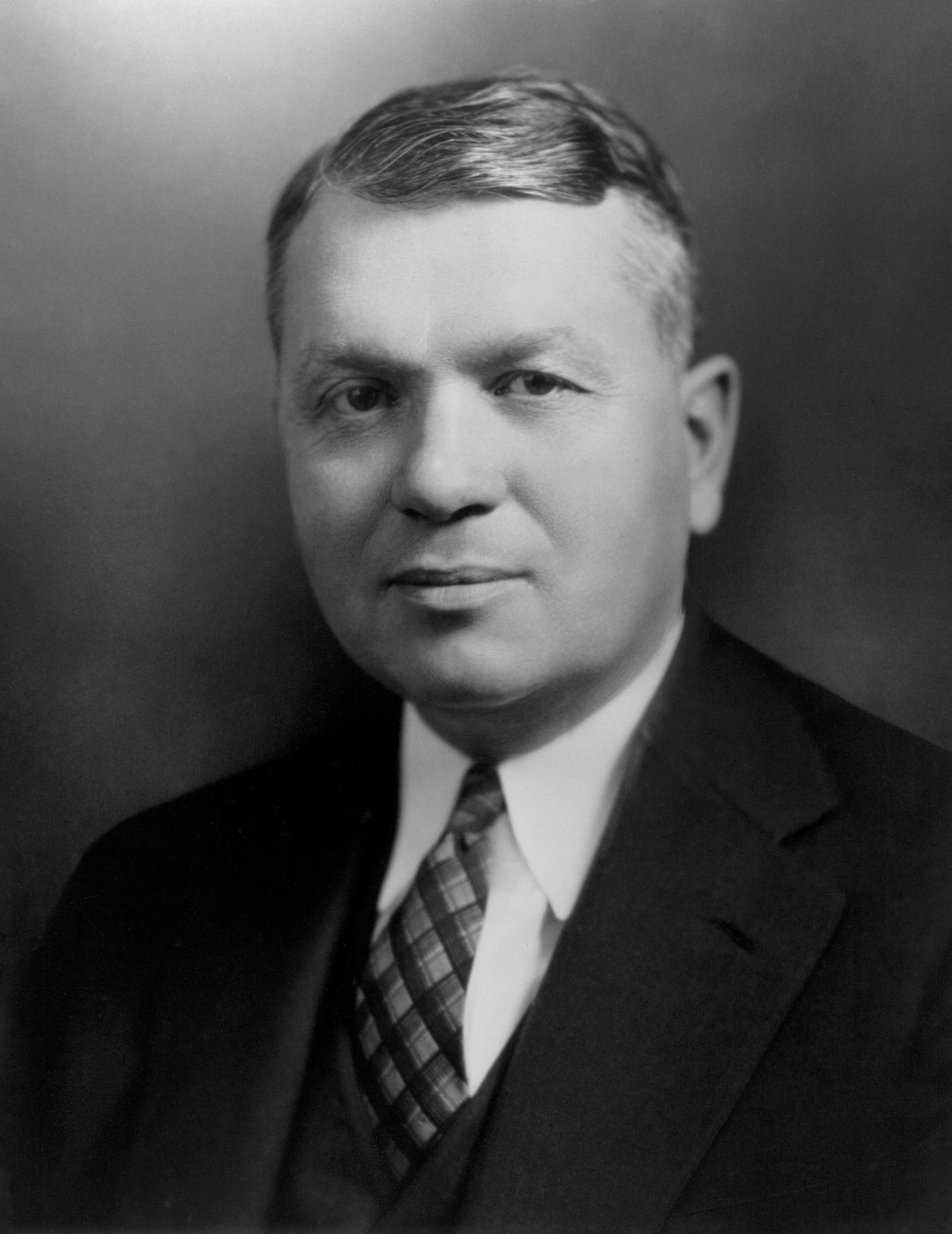 Harold Urey合作论文数University of California, San Diego5
 Louis J. Schoen合作论文数3Je Vance合作论文数3isidor kirshenbaum合作论文数3john wayne合作论文数1Dave Walvoord合作论文数1Karen Casper合作论文数1KATHRYN BRINSFIELD合作论文数1clara actor bow合作论文数1Bela Lugosi合作论文数1George Raft合作论文数1Agnes Moorehead合作论文数1Linda Lovelace合作论文数1faye dunaway合作论文数1judd hirsch合作论文数1tom mix合作论文数1warner oland合作论文数1Lon Chaney合作论文数1clark gable合作论文数1Craig Barron合作论文数1Robert W. Tayler合作论文数1Stuart Feldman合作论文数1Ginger Rogers合作论文数1Carl Weinstein合作论文数1Tony Kavanagh合作论文数1Stan Laurel合作论文数1Ephraim L. Rubin合作论文数1Greta Garbo合作论文数1Boris Karloff合作论文数1Scott Lelieur合作论文数1Joseph Cotten合作论文数1Jobeth Williams合作论文数1Marilyn Monroe合作论文数1Ray Milland合作论文数1Ronald Reagan合作论文数1Donald O'Connor合作论文数1William S Hart合作论文数1Lillian Gish合作论文数1Mary Pickford合作论文数1Buster Keaton合作论文数1Debbie Reynolds合作论文数1Roy Rogers合作论文数1Charlie Chaplin合作论文数1Jack Nicholson合作论文数1
 Dustin Hoffman合作论文数1Orson Welles合作论文数1Marlon Brando合作论文数1Jeff Chandler合作论文数1Harry Langdon合作论文数1




