Abstract The paper describes a sensitivity function calculation method for few-view X-ray computed tomography of strongly absorbing objects. It is based on a probabilistic interpretation of energy transport through the object from a source to a detector. A PRIZMA code package is used to track photons. The code is developed at FSUE “RFNC–VNIITF named after Academ. E. I. Zababakhin” and implements a stochastic Monte Carlo method. The value of the sensitivity function in a discrete cell of the reconstruction region is assumed to be directly proportional to the fraction of photon trajectories which cross the cell from all those recorded by the detector. The method’s efficiency is validated through a numerical experiment on the reconstruction of a section of a spherical heavy-metal phantom with an air cavity and a density difference of 25 Ṫhe proposed method is shown to outperform the method based on projection approximation in case of reconstruction from 9 views.
A neutron-beam-shaping assembly consisting of a moderator, a reflector, and an absorber is used to form a therapeutic neutron beam for the boron neutron-capture therapy of malignant tumors at accelerator neutron sources. A new structure of the moderator and reflector is proposed in the present article, and the results of a numerical simulation of the neutron spectrum and of the absorbed dose in a modified Snyder head phantom are presented. The application of a compositemoderator and of a composite reflector and the implementation of neutron production at the proton energy of 2.3MeVare shown to permit obtaining a high-quality therapeutic neutron beam.
The paper describes PRIZMA capabilities for modeling radiation transport in random disperse media by the Monte Carlo method. It proposes a method for simulating radiation transport in binary media with variable volume fractions.
For more than thirty years the code PRIZMA has been used at RFNC-VNIITF for solving radiation transport problems with the Monte Carlo method. The code models the separate and coupled transport of neutrons, photons, electrons, positrons and ions in one-, two-, and three-dimensional geometry. For criticality calculations the code implements the method of generations with a constant number of fission sites in one generation. Now the code is extending its capabilities for nuclear reactor calculations. The paper describes the current status of the code and gives examples of its application to particle transport in nuclear reactors and other physical facilities.
The paper describes a technique implemented in the PRIZMA code for calculating neutron flux in a large number of small detectors arranged in the core of the VVER-1000 reactor.
An accelerator-driven source of epithermal neutrons has been developed by the Budker Institute of Nuclear Physics for carrying out investigations into neutron capture therapy of malignant tumors. Safe handling of targets with 7Be radionuclide accumulated in them is one of the problems encountered in generation of neutrons in the 7Li(p, n)7Be reaction. It is proposed that targets will be decontaminated in a natural course, being placed in a subsurface container located in the room of the accelerating facility. The maximum activity of the targets enclosed in the container after scheduled generation of neutrons at the facility is estimated. Analytical estimates and Monte Carlo calculation of γ-ray transport are performed to determine the optimum container size, such that the γ-ray flux from its contents is reduced to the acceptable level. The preliminary design of the container and its embodiment are presented.
Pilot innovative facility for neutron capture therapy was built at Budker Institute of Nuclear Physics, Novosibirsk. This facility is based on a compact vacuum insulation tandem accelerator (VITA) which is designed to produce proton current up to 10 mA. Epithermal neutrons are proposed to be generated by 1.915 MeV protons bombarding a lithium target using Li(p, n)Be threshold reaction. Experiments on neutron generation have been started in the March of 2008. Gamma-ray spectrometer based on NaI scintillator was used for measuring gamma rays emitted by lithium under the action of protons, and by other nuclei under the action of neutrons. The gamma-ray spectrometer was calibrated by radioactive sources Со, Cs, Be and K. This spectrometer was used as activation detector due to capture of epithermal neutrons by iodine also. Bubble detectors were used for registration of fast and thermal neutrons. Total yield of neutrons was defined by Be activity. Simulation of flux and spectrum of both gamma-ray and neutrons at 50 μm lithium thickness and 1.915 MeV proton beam were performed by means of PRIZMA code. Calculation of speed of detector activation had been carried out. In the report the results of the first experiments on neutron generation and results of simulations are presented and discussed. Prospect of accelerator based facility and near threshold regime of neutron generation for boron neutron capture therapy had been confirmed by current experiment. The immediate plans of target improvement and using of time-of-flight technique for neutron spectra measurement are declared.
A pilot accelerator-based source of epithermal neutrons, which is intended for wide application in clinics for boron neutron capture therapy, has been constructed at the Budker Institute of Nuclear Physics (Novosibirsk). A stationary proton beam has been obtained and near-threshold neutron generation regime has been realized. Results of the first experiments on neutron generation using the proposed source are described.
We describe a method of determining the neutron flux of an NG-12I neutron generator, using Al and F activation detectors. The numerical computation data used were obtained by the Monte Carlo method.
The paper considers designs of moderators where fast positron stopping medium consists of very fine tungsten strips separated by vacuum gaps and the strips are arranged into Venetian blinds- or honeycomb-type structures. Moderator efficiency is evaluated through Monte-Carlo simulations. According to the maximal estimate, the efficiency of conversion of fast positrons into slow ones in the Venetian blinds and honeycomb-type moderators is ∼5×10⁻³ for the reasonable thickness of the tungsten foil. If such moderator is used, the intensity of slow positron source on the hard synchrotron of SPring-8 storage ring can reach the level of ∼5×10¹⁰e+/s.
The paper presents Monte-Carlo simulations of characteristics of the scattered radiation produced in the target–moderator system to be used in the slow positron source when irradiated by synchrotron radiation beam from SPring-8 storage ring with superconducting 10T wiggler.
The paper provides results of numeric simulations of in-target positron production process, processes of moderation, thermalization, diffusion, and reemission of positrons in high-efficiency multi-wire moderator made of tungsten monocrystalline wire with regular wire spacing. The paper looks into dynamics of slow positrons in the moderator's vacuum gaps taking into account of external fields. The feasibility of using multi-wire moderator with non-regular structure - multi-layer “wire felt” moderator is discussed. According to maximal estimate the multi-wire moderators can reach very high efficiency of fast-slow positron transformation ∼10−2. Using such moderator the intensity of slow positron source on hard synchrotron radiation of SPring-8 can reach the level of ∼1011e+/s.
 Ya. Z. Kandiev合作论文数11Elena a Kashaeva合作论文数8S. I. Samarin合作论文数8
 Sergey Taskaev合作论文数7N. V. Gorin合作论文数4A. P. Vasil'Ev合作论文数4V.M Shmakov合作论文数4R. M. Kozybaev合作论文数4V. A. Pakhnits合作论文数3Yu. M. Kaz'min合作论文数3r f mukhamadiev合作论文数3Valentina I Litvin合作论文数3V.V Plokhoi合作论文数3A. S. Skivka合作论文数2b f bayanov合作论文数2G. V. Baidin合作论文数2V.P Nikitin合作论文数2
 Sergei Kuznetsov合作论文数2
 Lilia Zaidi合作论文数2k e khatuntsev合作论文数2T. V. Sycheva合作论文数2S. A. Frolov合作论文数2
 Aleksandr Makarov合作论文数2
 Yu. S. Sulyaev合作论文数2
 Valeri Orlov合作论文数Russian Research Center “Kurchatov Institute”,2I. A. Litvinenko合作论文数2
 Sergey I. Lezhnin合作论文数2I. N. Sorokin合作论文数2E.S. Kuropatenko合作论文数1L. V. Lobanova合作论文数1V. A. Pavshuk合作论文数1V. A. Gaidaichuk合作论文数1K. I. Mekler合作论文数1С. Ю. Таскаев合作论文数1
 Alexander Konovalov合作论文数1D. G. Modestov合作论文数1O. V. Zatsepin合作论文数1Mokichev G V合作论文数1
 A.A. Ivanov合作论文数Budker Institute for Nuclear Physics1E. V. Serova合作论文数1
 Sergey Germanovich Konstantinov合作论文数1Yu. S. Cherepnin合作论文数1
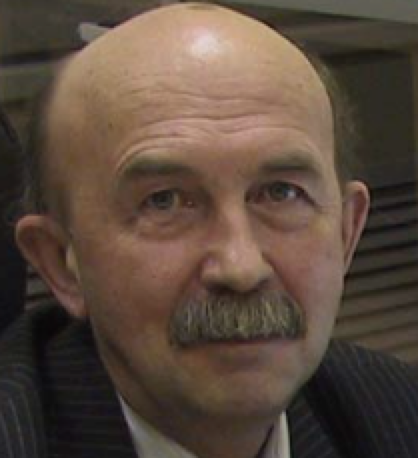 Alexander Vladimirovich Burdakov合作论文数G.I. Budker Institute of Nuclear Physics, Siberian Branch of RAS;Novosibirsk State Technical University1Vitaly V. Vlasov合作论文数1N.A. Voronina合作论文数1




