In the adolescent idiopathic scoliosis (AIS) treatment, a brace is prescribed to the patients who have 20 to 45° curves on their spines to prevent the disorder's advancement. For the analysis of Milwaukee brace effects during time, finite element models (FEMs) of the spine (the thoracolumbar region) and the ribcage (contained 10 pairs of the ribs and the sternum) were prepared for two patients. For modeling the spine part, a new element was used in which a disc (as viscoelastic 3D beam) and a vertebra (as rigid link) were modeled as an element and the ribs and the sternum modeled by 3D elastic beams. The gravity, Milwaukee brace constraints and the forces of the brace's different regions were considered as the FEM boundary conditions. By running the patients' FEMs, the spine deformities of each patient were predicted for 24 h. For AIS patients, the brace should not only correct the deformity of the spine by inserting the forces, but also support the spine from the bending moments being caused by the gravity forces in different spine regions. Moreover, in studying scoliosis pathomechanisms, the stresses in different levels of the vertebra are important. Therefore, the bending moments and compressive stresses, caused by the gravity forces, were calculated in each level of the vertebra and the brace forces effects on them were analyzed. According to the patients' FEM responses, for the female patient: lumbar scoliosis was increased, thoracic scoliosis was decreased and kyphosis and lordosis were increased, and for the male patient: lumbar scoliosis was increased, kyphosis was increased and lordosis was decreased. In standing position, the brace forces reduced the bending moment and the compressive stress in vertebral levels of thoracolumbar region for the female patient and increased them for the male patient.
Aims: The reaction forces of the Milwaukee Braces (MBs) several areas were measured during normal daily activities (24 hr) by a new measurement device improved in order to force acquisition by groups of sensors distributed in all of the MBs internal areas. Methodology: In the current study, a new measurement system using Force Sensitive Resistance (FSRs) distributed on the different areas of MB for scoliosis patients. Sensitivity OriginalResearch Article
In this study, a nonlinear poroelastic model of intervertebral disc as an infrastructure was developed. Moreover, a new element was defined consisting a disc (Viscoelastic Euler Beam Element) and a vertebra (Rigid Link) as a unit element. Using the new element, three different viscoelastic finite element models were prepared for lumbar motion segment (L4/L5). Prolonged loading (short-term and longterm creep) and cyclic loading were applied to the models and the results were compared with results of in vivo tests. Simplification of the models by using the new element leads to reduction of the runtime of the models in dynamic analyses to few minutes without losing the accuracy in the results.
There are extensive differences in the structure and composition between cervical and thoracolumbar discs. There is no comparison between the time-dependent "creep" behavior of different regions of spine. In this study, three different finite element models of motion segments in spine different regions (Lumbar, Thoracic and Cervical) were prepared. All of the models were prepared by using a new element. The new element consists a disc (Viscoelastic Euler Beam Element) and a vertebra (Rigid Link) as a unit element. The hire of new element leads to reduction of the runtime of the models. For validating the models, prediction of the lumbar segment motion model for short creep test was compared with in-vivo result. After validation of the model predictions, other models were subjected to the same boundary conditions. The results show that although the creep results for the models of lumbar region and thoracic region are near to each other, they are differences from cervical region results.
1 Iran University of Science and Technology, Tehran, IRAN 2 Islamic Azad University, Science and Research Branch, Tehran, IRAN 3 Hanyang University, Ansan, South KOREA 4 Sharif University of Technology, Tehran, IRAN 5 Iran Medical University, Tehran, IRAN * mhaghpanahi@yahoo.com SUMMARY The finite element method is used to analysis the spine’s issue invasively. In this study, a new element is defined which consists a disc (Viscoelastic Euler Beam Element) and a vertebra (Rigid Link) as a unit element. The new element leads to reduce the run time of the models. Therefore, the models, made by the new element, can be easily analyzed for long time. A lumbar motion segment’s model (L4/L5) was made by using the new element. For validating the model, prediction of it for circadian test was compared with in vivo result. After proving the model’s validation, it was subjected to short term creep loading. The result of this part was compared with in vivo result. The validated FE model was employed to investigate the biomechanical response of the disc during daily cycles of loading and unloading. The regime of loading during a day was simulated with an eight hours resting period followed by sixteen hours diurnal activities. To compare the effect of different prolonged and cyclic loadings, four different loading regimes were applied to the model.
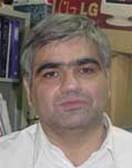 Parnianpour Mohamad合作论文数Department of Mechanical Engineering, Sharif University of Technology4
 Mohammad Haghpanahi合作论文数4
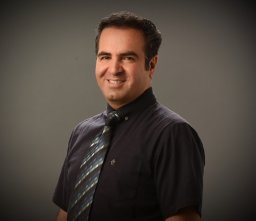 Mojtaba Kamyab合作论文数School of Rehabilitation Sciences, Iran University of Medical sciences2
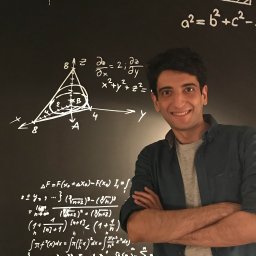 Nikkhoo Mohammad合作论文数Islamic Azad University, National Taiwan University2
 Ganjavian Mohammad Saleh合作论文数Shafa Yahyaiian Hospital, Iran University of Medical Sciences2
 Zeinab Kamal合作论文数Faculty of Biomedical Engineering, Amirkabir University of Technology1




