1,4-Dicarbonyls are versatile synthons for the construction of diverse pharmacophores and natural products. However, the stereoselective synthesis of densely functionalized 1,4-dicarbonyls is challenging. Here, we report a versatile biocatalytic route to access chiral 2,3-dihydroxy-1,4-diketones in high yields and up to gram scale using d-fructose-6-phosphate aldolase (EcFSA). The utility of these compounds as synthons is exemplified in enzyme cascades with subsequent regio- and stereoselective enzymatic transamination to form densely functionalized homochiral 1-pyrrolines followed by chemical or enzymatic reduction to tetrasubstituted pyrrolidines.
We report the development of an engineered aminotransferase for the synthesis of a key chiral intermediate of the anti-HIV drug Lenacapavir. Due to the sterically demanding nature of the ketone substrate, a substrate walking approach was adopted during directed evolution to unlock desired aminotransferase activity starting from a parent template (TA25) with no observable activity for the target reaction. Introduction of 6 mutations into TA25 over 4 rounds of directed evolution led to the development of an engineered aminotransferase that affords the target chiral amine product with 90% conversion and >99% e.e. in favor of the desired S-enantiomer. The enzyme serves as a valuable template for the development of an industrial biocatalyst for the manufacture of Lenacapavir
We report the development of an engineered P450 monooxygenase that mediates a chemo- and stereo-selective alkene epoxidation to generate a key chiral precursor of the anti-tuberculosis drug delamanid. Screening of an in-house P450 monooxygenase panel led to the identification of a BM3 variant, containing five mutations, with activity for the target transformation. Over a single round of laboratory evolution and gene shuffling, three further beneficial mutations were introduced leading to an order of magnitude increase in the de-sired activity, with a total turnover number (TON) of >3000. This newly engineered enzyme generates a chiral epoxide intermediate from an alkene precursor in a single step with 98% e.e. and >97% conversion. Initial efforts to scale the biocatalytic transformation high-lights the potential of the engineered enzyme to provide a more efficient and sustainable route for the manufacture of delamanid.
Despite the increasing use of biocatalysis for organic synthesis, there are currently no databases that adequately capture synthetic biotransformations. The lack of a biocatalysis database prevents accelerating biocatalyst characterization efforts from being leveraged to quickly identify candidate enzymes for reactions or cascades, slowing their development. The RetroBioCat Database (available at retrobiocat.com) addresses this gap by capturing information on synthetic biotransformations and providing an analysis platform that allows biocatalysis data to be searched and explored through a range of highly interactive data visualization tools. This database makes it simple to explore available enzymes, their substrate scopes, and how characterized enzymes are related to each other and the wider sequence space. Data entry is facilitated through an openly accessible curation platform, featuring automated tools to accelerate the process. The RetroBioCat Database democratizes biocatalysis knowledge and has the potential to accelerate biocatalytic reaction development, making it a valuable resource for the community.
Iminosugar scaffolds are highly sought-after pharmaceutical targets, but their chemical synthesis is lengthy and can suffer from poor scalability and purification. Here we report protecting-group-free chemoenzymatic and biocatalytic cascades to synthesize iminosugars from sugar-derived aminopolyols in two steps. Using galactose oxidase variant F2 followed by a chemical or enzymatic reduction provided an efficient one-pot route to these targets, with product formation >70%. Key to success of this strategy was the application of genome mining, which identified bacterial shikimate dehydrogenases as promiscuous iminosugar reductases. The cell-free protocols allowed for isolation of highly polar iminosugar products from biotransformations in a single step through development of a gradient-elution cation exchange purification. The two-step pathway provides a short synthetic route that can be used as a cell-free platform for broader iminosugar synthesis.
Amino-polyols represent attractive chemical building blocks but can be challenging to synthesize because of the high density of asymmetric functionalities and the need for extensive protecting-group strategies. Here we present a three-component strategy for the stereoselective enzymatic synthesis of amino-diols and amino-polyols using a diverse set of prochiral aldehydes, hydroxy ketones, and amines as starting materials. We were able to combine biocatalytic aldol reactions, using variants of d-fructose-6-phosphate aldolase (FSA), with reductive aminations catalyzed by IRED-259, identified from a metagenomic library. A two-step process, without the need for intermediate isolation, was developed to avoid cross-reactivity of the carbonyl components. Stereoselective formation of the 2R,3R,4R enantiomers of amino-polyols was observed and confirmed by X-ray crystallography.
A key aim of biocatalysis is to mimic theability of eukaryotic cells to carry out compartmentalized multistep cascadesin a controlled and selective way. As biocatalytic cascades get longer and morecomplex, reactions become unattainable under typical batch conditions. Here acontinuous flow multipoint injection reactor was combined with switching valvesto overcome batch incompatibility, thus allowing for successful biocatalyticreaction cascades. As proof-of-principle, several reactive carbonyl intermediateswere generated in situ using galactose oxidase and engineered cholineoxidases, then passed directly to a series of packed-bed modules containingdifferent aminating biocatalysts which accordingly produced a range ofstructurally distinct amines. The method was expanded to employ a batchincompatible sequential amination cascade viaan oxidase-transaminase-imine reductase sequence, introducing differentamine reagents at each step without cross reactivity. Thecombined approaches allowed for the biocatalytic synthesis of the naturalproduct alkaloid precursor 4O-methylnorbelladine. Theflow biocatalysis platform shown here significantly increases the scope of novelbiocatalytic cascades, removing previous limitations due to reaction andreagent batch incompatibility.
A key aim of biocatalysis is to mimic the ability of eukaryotic cells to carry out multistep cascades in a controlled and selective way. As biocatalytic cascades get more complex, reactions become unattainable under typical batch conditions. Here a number of continuous flow systems were used to overcome batch incompatibility, thus allowing for successful biocatalytic cascades. As proof-of-principle, reactive carbonyl intermediates were generated in situ using alcohol oxidases, then passed directly to a series of packed-bed modules containing different aminating biocatalysts which accordingly produced a range of structurally distinct amines. The method was expanded to employ a batch incompatible sequential amination cascade via an oxidase/transaminase/imine reductase sequence, introducing different amine reagents at each step without cross-reactivity. The combined approaches allowed for the biocatalytic synthesis of the natural product 4O-methylnorbelladine.
Multi-enzyme cascades utilising variants of galactose oxidase and imine reductase led to the successful conversion of N-Cbz-protected l-ornithinol and l-lysinol to l-3-N-Cbz-aminopiperidine and l-3-N-Cbz-aminoazepane respectively, in up to 54% isolated yield. Streamlining the reactions into one-pot prevented potential racemisation of key labile intermediates and led to products with high enantiopurity.
 Sabine Flitsch合作论文数The University of Manchester7
 Ashley Mattey合作论文数Manchester Inst Biotechnol MIB, Univ Manchester6
 NJ Turner合作论文数School of Chemistry, The University of Manchester5
 Christopher Baldwin合作论文数4
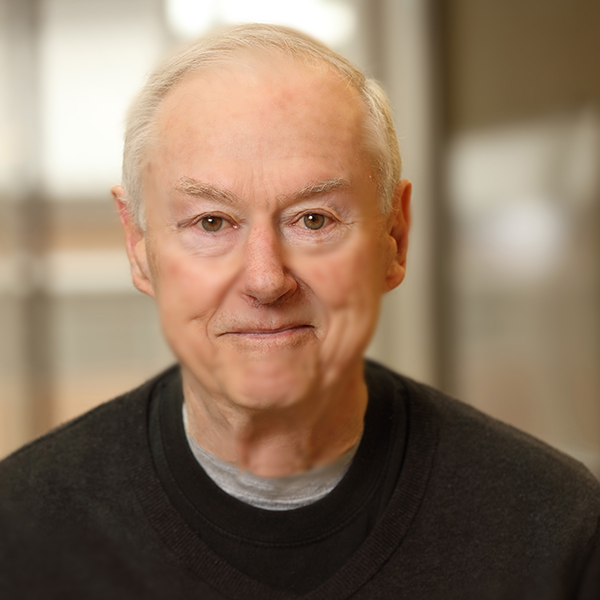 James A. Marshall合作论文数Department of Chemistry, College and Graduate School of Arts & Sciences, University of Virginia4
 Sebastian C. Cosgrove合作论文数Lennard Jones Lab, Keele Univ3
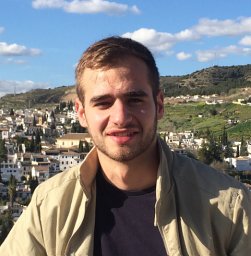 Joan Citoler合作论文数Manchester Inst Biotechnol, Univ Manchester3
 William Finnigan合作论文数Manchester Inst Biotechnol, Univ Manchester3
 Pere Clapes合作论文数2
 Lorna J. Hepworth合作论文数Manchester Inst Biotechnol, Univ Manchester2
 Matthew Thompson合作论文数Manchester Inst Biotechnol, Univ Manchester2Anthony Green合作论文数Department of Chemistry, School of Natural Sciences, Faculty of Science and Engineering, The University of Manchester2Rowles Ian合作论文数2
 Nicholas Turner合作论文数Manchester Institute of Biotechnology, University of Manchester2Jack J Sangster合作论文数1Lisa S Seibt合作论文数1Ryan B. Palmer合作论文数1Yuqi Yu合作论文数1Pamer R合作论文数1Ruth T. Bradshaw Allen合作论文数Manchester Institute of Biotechnology, University of Manchester1
 Lea Gourbeyre合作论文数1Thomas Thorpe合作论文数Ingenza Ltd, Edinburgh, Midlothian, Scotland1
 Max Lubberink合作论文数Chemical and Pharmaceutical Biology, University of Groningen1
 William R Birmingham合作论文数1
 Bruna Costa合作论文数Institute of Chemistry, University of Campinas1Rachel Heath合作论文数1Kress Nico合作论文数1




