The x86_64 instruction set architecture is not a single, consistent, compatible interface to execute computer programs. Since the initial release in 1999, every new generation has added new instructions, some of which were later removed. Most of these new instructions are intended to improve the performance of those programs which explicitly take advantage of them. However, running such a program on older CPUs without appropriate support, results in Linux SIGILL exception signal, which is difficult for end users to diagnose. On the other hand, compiling scientific code for the least common denominator ISA can leave significant performance on the table. High Throughput systems, containing very large number of machines, cannot require a single CPU version across hundreds of thousands of machines operating in dozens of sites. The OSG Open Science Pool alone consists of more than 20 different, subtly incompatible X86_64 implementations. In 2020, Intel, AMD and RedHat proposed new terminology and partitioned these dozens of microarchitectures into a strict hierarchy of four groups. The HTCondor Software Suite and the OSG now have first class support for these microarchitectures. This paper discusses the advantages for users and future work around microarchitecture support.
Creating new materials, discovering new drugs, and simulating systems are essential processes for research and innovation and require substantial computational power. While many applications can be split into many smaller independent tasks, some cannot and may take hours or weeks to run to completion. To better manage those longer-running jobs, it would be desirable to stop them at any arbitrary point in time and later continue their computation on another compute resource; this is usually referred to as checkpointing. While some applications can manage checkpointing programmatically, it would be preferable if the batch scheduling system could do that independently. This paper evaluates the feasibility of using CRIU (Checkpoint Restore in Userspace), an open-source tool for the GNU/Linux environments, emphasizing the OSG's OSPool HTCondor setup. CRIU allows checkpointing the process state into a disk image and can deal with both open files and established network connections seamlessly. Furthermore, it can checkpoint traditional Linux processes and containerized workloads. The functionality seems adequate for many scenarios supported in the OSPool. However, some limitations prevent it from being usable in all circumstances.
Open Science Grid (OSG) is a consortium that enables many scientific breakthroughs by providing researchers with access to shared High Throughput Computing (HTC) compute clusters in support of large-scale collaborative research. To meet the demand on campus, Georgia Institute of Technology (GT)’s Partnership for an Advanced Computing Environment (PACE) team launched a centralized OSG support project, powered by Buzzard, an NSF-funded OSG cluster. We describe Buzzard’s unique multi-tenant architecture, which supports multiple projects on a single CPU/GPU pool, for the benefit of other institutions considering a similar approach to support OSG on their campuses.
Abstract The rapid spread of COVID-19 is motivating development of antivirals targeting conserved SARS-CoV-2 molecular machinery. The SARS-CoV-2 genome includes conserved RNA elements that offer potential small-molecule drug targets, but most of their 3D structures have not been experimentally characterized. Here, we provide a compilation of chemical mapping data from our and other labs, secondary structure models, and 3D model ensembles based on Rosetta's FARFAR2 algorithm for SARS-CoV-2 RNA regions including the individual stems SL1-8 in the extended 5′ UTR; the reverse complement of the 5′ UTR SL1-4; the frameshift stimulating element (FSE); and the extended pseudoknot, hypervariable region, and s2m of the 3′ UTR. For eleven of these elements (the stems in SL1–8, reverse complement of SL1–4, FSE, s2m and 3′ UTR pseudoknot), modeling convergence supports the accuracy of predicted low energy states; subsequent cryo-EM characterization of the FSE confirms modeling accuracy. To aid efforts to discover small molecule RNA binders guided by computational models, we provide a second set of similarly prepared models for RNA riboswitches that bind small molecules. Both datasets (‘FARFAR2-SARS-CoV-2’, https://github.com/DasLab/FARFAR2-SARS-CoV-2; and ‘FARFAR2-Apo-Riboswitch’, at https://github.com/DasLab/FARFAR2-Apo-Riboswitch’) include up to 400 models for each RNA element, which may facilitate drug discovery approaches targeting dynamic ensembles of RNA molecules.
During the first observation run the LIGO collaboration needed to offload some of its most, intense CPU workflows from its dedicated computing sites to opportunistic resources. Open Science Grid enabled LIGO to run PyCbC, RIFT and Bayeswave workflows to seamlessly run in a combination of owned and opportunistic resources. One of the challenges is enabling the workflows to use several heterogeneous resources in a coordinated and effective way.
The Legacy Survey of Space and Time, operated by the Vera C. Rubin Observatory, is a 10-year astronomical survey due to start operations in 2022 that will image half the sky every three nights. LSST will produce ~20TB of raw data per night which will be calibrated and analyzed in almost real time. Given the volume of LSST data, the traditional subset-download-process paradigm of data reprocessing faces significant challenges. We describe here, the first steps towards a gateway for astronomical science that would enable astronomers to analyze images and catalogs at scale. In this first step we focus on executing the Rubin LSST Science Pipelines, a collection of image and catalog processing algorithms, on Amazon Web Services (AWS). We describe our initial impressions on the performance, scalability and cost of deploying such a system in the cloud.
Biologists and environmental scientists now routinely solve computational problems that were unimaginable a generation ago. Examples include processing geospatial data, analyzing -omics data, and running large-scale simulations. Conventional desktop computing cannot handle these tasks when they are large, and high-performance computing is not always available nor the most appropriate solution for all computationally intense problems. High-throughput computing (HTC) is one method for handling computationally intense research. In contrast to high-performance computing, which uses a single "supercomputer," HTC can distribute tasks over many computers (e.g., idle desktop computers, dedicated servers, or cloud-based resources). HTC facilities exist at many academic and government institutes and are relatively easy to create from commodity hardware. Additionally, consortia such as Open Science Grid facilitate HTC, and commercial entities sell cloud-based solutions for researchers who lack HTC at their institution. We provide an introduction to HTC for biologists and environmental scientists. Our examples from biology and the environmental sciences use HTCondor, an open source HTC system.
We implement a dynamic programming algorithm on a computational grid consisting of loosely coupled processors, possibly including clusters and individual workstations. The grid changes dynamically during the computation, as processors enter and leave the pool of workstations. The algorithm is implemented using the Master-Worker library running on the HTCondor grid computing platform. We implement value function iteration for several large dynamic programming problems of two kinds: optimal growth problems and dynamic portfolio problems. We present examples that solve in hours on HTCondor but would take weeks if executed on a single workstation. The use of HTCondor can increase a researcher's computational productivity by at least two orders of magnitude.
A number of recent enhancements to the Condor batch system have been stimulated by the challenges of LHC computing. The result is a more robust, scalable, and flexible computing platform. One product of this effort is the Condor Job Router, which serves as a high-throughput scheduler for feeding multiple (e.g. grid) queues from a single input job queue. We describe its principles and how it has been used at large scale in CMS production on the Open Science Grid. Improved scalability of Condor is another welcome advance. We describe the scaling characteristics of the Condor batch system under large workloads and when integrating large pools of resources; we then detail how LHC physicists have directly profited under the expanded scaling regime.
The football pool problem, which gets its name from a lottery-type game where participants predict the outcome of soccer matches, is to determine the smallest covering code of radius 1 of ternary words of length v. For v = 6, the optimal solution is not known. Using a combination of isomorphism pruning, subcode enumeration, and linear programming-based bounding, running on a high-throughput computational grid consisting of thousands of processors, we are able to improve the lower bound on the size of the optimal code from 65 to 71.
The Grid accounting and auditing mechanisms were designed under the assumption that users would submit their jobs directly to the Grid gatekeepers. However, many groups are starting to use pilot-based systems, where users submit jobs to a centralized queue and are successively transferred to the Grid resources by the pilot infrastructure. While this approach greatly improves the user experience, it does disrupt the established accounting and auditing procedures. Open Science Grid deploys gLExec on the worker nodes to keep the pilot-related accounting and auditing information and centralizes the accounting collection with GRATIA.
Symmetry Reduction and High-Throughput Computing Jeff Linderoth Department of Industrial and Systems Engineering, The University of Wisconsin-Madison, 3226 Mechanical Engineering Building, 1513 University Ave., Madison, WI 53706, USA, linderoth@wisc.edu François Margot Tepper School of Business, Carnegie Mellon University, 5000 Forbes Ave., Pittsburgh, PA 15213-3890, USA, fmargot@andrew.cmu.edu Greg Thain Department of Computer Science, The University of Wisconsin-Madison, 1210 W. Dayton St., Madison, WI 53706, USA, gthain@cs.wisc.edu
Teragrid resources are often used when high-performance computing is required. We describe our experiences in using Teragrid resources in a high-throughput manner, generating a significant number of CPU cycles over a long time span. In particular, we discuss using Teragrid resources as part of a larger computational grid to perform computations in an ongoing attempt to solve an open problem in mathematical coding theory—the Football Pool Problem.
 Igor Sfiligoi合作论文数Laboratori Nazionali di Frascati3
 F. Margot合作论文数Tepper School of Business;Carnegie Mellon University3
 Peter Couvares合作论文数Syracuse University2James Clark合作论文数2
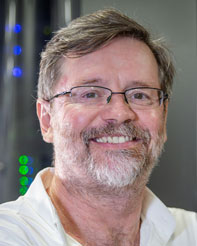 Frank Würthwein合作论文数San Diego Supercomputer Center, University of California San Diego;Halıcıoğlu Data Science Institute, University of California San Diego2
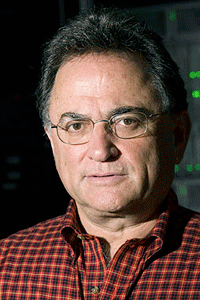 Miron Livny合作论文数Department of Computer Sciences, School of Computer, Data & Information Sciences, University of Wisconsin-Madison;Wisconsin Institute for Discovery, University of Wisconsin-Madison2
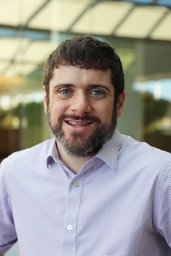 Brian Bockelman合作论文数Department of Mathematics, State University of West Georgia2
 Todd Tannenbaum合作论文数Computer Sciences Department
University of Wisconsin-Madison2
Todd Tannenbaum合作论文数Computer Sciences Department
University of Wisconsin-Madison2 Jeffrey T. Linderoth合作论文数Department of Industrial and Systems Engineering, College of Engineering, University of Wisconsin-Madison2Ruben Lara合作论文数1Kenneth J. Suda合作论文数1A. Mohapatra合作论文数1Dino Bektesevic合作论文数1Ronald Rahaman合作论文数1Brian Lin合作论文数1Pam Buffington合作论文数1Andre McNeill合作论文数1Judith Lorraine Stephen合作论文数1Trever Nightingale合作论文数1Deirdre Womack合作论文数1Jonathan Guiang合作论文数1Andrei Salnikov合作论文数1Paul Manno合作论文数Partnership Adv Comp Environm, Georgia Inst Technol1Aashay Arora合作论文数Department of Physics, UC San Diego1Dan Zhou合作论文数1D Bradley合作论文数1Rachael Kretsch合作论文数1Jill Townley合作论文数1Jose Chacon合作论文数1Michael D Weiner合作论文数1Peter Wan合作论文数1Lincoln Bryant合作论文数Enrico Fermi Inst, Univ Chicago1
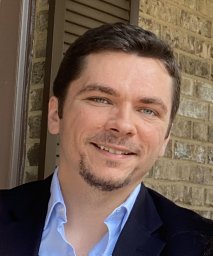 Semir Sarajlic合作论文数Partnership for an Advanced Computing Environment, Georgia Institute of Technology1
 S. Grace Mccalla合作论文数Wisconsin Inst Discovery, Univ Wisconsin Madison1
 Edgar Fajardo合作论文数Corresponding author.1
 J. Eric Coulter合作论文数Science Gateways Research Center, Pervasive Technology Institute, Indiana University, Bloomington, Indiana1
 Diego Davila合作论文数University of California1
 Mehmet Belgin合作论文数Georgia Inst Technol, PACE, Atlanta, GA 30332 USA1robert gardner合作论文数1Aaron Jezghani合作论文数1Ramya Rangan合作论文数Biophysics Program, Stanford University1Ivan N Zheludev合作论文数Department of Biochemistry, Stanford University1
 Andrew M. Watkins合作论文数Department of Chemistry, New York University1
 Rhiju Das合作论文数Biochemistry Department, Stanford University1
 Richard Arlin Erickson合作论文数1
 Kenneth L. Judd合作论文数Hoover Institution on War, Revolution and Peace, Stanford University;National Bureau of Economic Research1
 Emily L. Weiser合作论文数Allan Wilson Centre for Molecular Ecology and Evolution, University of Otago1C. Green合作论文数1
 Greg Quinn合作论文数1




