We report on the observation and measurement of astrometry, photometry, morphology, and activity of the interstellar object 3I/ATLAS, also designated C/2025 N1 (ATLAS) with the NSF-DOE Vera C. Rubin Observatory. Comet 3I/ATLAS, the third known interstellar object, was discovered on UT 2025 July 1. Rubin Observatory had coincidentally collected images of the object's region of the sky during routine commissioning. Facilitated by Rubin's high resolution and large aperture, we successfully recovered object detections from Rubin observations spanning UT 2025 June 21 (10 days before discovery, when 3I/ATLAS was 4.5 au from the Sun) through the date of discovery, and we acquired additional images through UT 2025 July 20 as part of commissioning. We measure on-sky locations of 3I/ATLAS in Rubin ugrizy bands, with a typical precision of similar to 70 mas, and briefly describe the reason this is coarser than our measured static source astrometric precision of similar to 3 mas in Rubin images. We measure grizy magnitudes of 3I/ATLAS photometry at similar to 0.01 mag precision, detecting no short-term photometric variability above 0.01 mag. We derive an estimated near-nucleus dust-to-nucleus scattering cross-sectional ratio of eta greater than or similar to 13 on UT 2025 July 2 based on Rubin photometry and an upper limit nucleus size computed from Hubble Space Telescope observations. We find Rubin colors of g - r = (0.657 +/- 0.013) mag, r - i = (0.235 +/- 0.018) mag, i - z = (0.147 +/- 0.042) mag, and z - y = (0.047 +/- 0.052) mag. These data represent the earliest observations of this object by a large (greater than or similar to 8 m class) telescope and illustrate the type of measurements (and discoveries) Rubin's Legacy Survey of Space and Time will provide after it begins in early 2026.
Due to their short timescale, stellar flares are a challenging target for the most modern synoptic sky surveys. The upcoming Vera C. Rubin Legacy Survey of Space and Time (LSST), a project designed to collect more data than any precursor survey, is unlikely to detect flares with more than one data point in its main survey. We developed a methodology to enable LSST studies of stellar flares, with a focus on flare temperature and temperature evolution, which remain poorly constrained compared to flare morphology. By leveraging the sensitivity expected from the Rubin system, differential chromatic refraction (DCR) can be used to constrain flare temperature from a single-epoch detection, which will enable statistical studies of flare temperatures and constrain models of the physical processes behind flare emission using the unprecedentedly high volume of data produced by Rubin over the 10 yr LSST. We model the refraction effect as a function of the atmospheric column density, photometric filter, and temperature of the flare, and show that flare temperatures at or above ∼4000 K can be constrained by a single g -band observation at air mass X ≳ 1.2, given the minimum specified requirement on the single-visit relative astrometric accuracy of LSST, and that a surprisingly large number of LSST observations are in fact likely be conducted at X ≳ 1.2, in spite of image quality requirements pushing the survey to preferentially low X . Having failed to measure flare DCR in LSST precursor surveys, we make recommendations on survey design and data products that enable these studies in LSST and other future surveys.
The Vera C. Rubin Observatory's Data Butler provides a way for science users to retrieve data without knowing where or how it is stored. In order to support the 10,000 science users in a hybrid cloud environment, we have to modify the Data Butler to use a client/server architecture such that we can share authentication and authorization controls with the Rubin Science Platform and more easily support standard tooling for scaling up backend services. In this paper we describe the changes being made to support this and some of the difficulties that are being encountered.
We present the Rubin Observatory system for data storage/retrieval and pipelined code execution. The layer for data storage and retrieval is named the Butler. It consists of a relational database, known as the registry, to keep track of metadata and relations, and a system to manage where the data is located, named the datastore. Together these systems create an abstraction layer that science algorithms can be written against. This abstraction layer manages the complexities of the large data volumes expected and allows algorithms to be written independently, yet be tied together automatically into a coherent processing pipeline. This system consists of tools which execute these pipelines by transforming them into execution graphs which contain concrete data stored in the Butler. The pipeline infrastructure is designed to be scalable in nature, allowing execution on environments ranging from a laptop all the way up to multi-facility data centers. This presentation will focus on the data management aspects as well as an overview on the creation of pipelines and the corresponding execution graphs.
We present cosmological parameter constraints from a blind joint analysis of three two-point correlation functions measured from the Year 3 Hyper Suprime-Cam (HSC-Y3) imaging data, covering about 416 deg(2), and the SDSS DR11 spectroscopic galaxies spanning the redshift range [0.15, 0.70]. We subdivide the SDSS galaxies into three luminosity-cut, and therefore nearly volume-limited samples separated in redshift, each of which acts as a large-scale structure tracer characterized by the measurement of the projected correlation function, w(p)(R). We also use the measurements of the galaxy-galaxy weak-lensing signal Delta Sigma(R) for each of these SDSS samples which act as lenses for a secure sample of source galaxies selected from the HSC-Y3 shape catalog based on their photometric redshifts. We combine these measurements with the cosmic shear correlation functions, xi(+/-)(theta) measured for our HSC source sample. We model these observables with the minimal bias model of the galaxy clustering observables in the context of a flat Lambda CDM cosmology. We use conservative scale cuts, R > 12 and 8h(-1) Mpc for Delta Sigma and w(p), respectively, where the minimal bias model is valid, in addition to conservative prior on the residual bias in the mean redshift of the HSC photometric source galaxies. We present various validation tests of our model as well as analysis methods. Our baseline analysis yields S-8 = 0.775(-0.038)(+0.043) (68% C.I.) for the.CDM model, after marginalizing over uncertainties in other parameters. Our value of S-8 is consistent with that from the Planck 2018 data, but the credible interval of our result is still relatively large. We show that various internal consistency tests based on different splits of the data are passed. Our results are statistically consistent with those of a companion paper, which extends this analysis to smaller scales with an emulator-based halo model, using Delta Sigma(R) and w(p)(R) down to R > 3 and 2h(-1) Mpc, respectively.
We measure weak lensing cosmic shear power spectra from the three-year galaxy shear catalog of the Hyper Suprime-Cam (HSC) Subaru Strategic Program imaging survey. The shear catalog covers $416 \ \mathrm{deg}^2$ of the northern sky, with a mean $i$-band seeing of 0.59 arcsec and an effective galaxy number density of 15 $\mathrm{arcmin}^{-2}$ within our adopted redshift range. With an $i$-band magnitude limit of 24.5 mag, and four tomographic redshift bins spanning $0.3 \leq z_{\mathrm{ph}} \leq 1.5$ based on photometric redshifts, we obtain a high-significance measurement of the cosmic shear power spectra, with a signal-to-noise ratio of approximately 26.4 in the multipole range $300<\ell<1800$. The accuracy of our power spectrum measurement is tested against realistic mock shear catalogs, and we use these catalogs to get a reliable measurement of the covariance of the power spectrum measurements. We use a robust blinding procedure to avoid confirmation bias, and model various uncertainties and sources of bias in our analysis, including point spread function systematics, redshift distribution uncertainties, the intrinsic alignment of galaxies and the modeling of the matter power spectrum. For a flat $\Lambda$CDM model, we find $S_8 \equiv \sigma_8 (\Omega_m/0.3)^{0.5} =0.776^{+0.032}_{-0.033}$, which is in excellent agreement with the constraints from the other HSC Year 3 cosmology analyses, as well as those from a number of other cosmic shear experiments. This result implies a $\sim$$2\sigma$-level tension with the Planck 2018 cosmology. We study the effect that various systematic errors and modeling choices could have on this value, and find that they can shift the best-fit value of $S_8$ by no more than $\sim$$0.5\sigma$, indicating that our result is robust to such systematics.
We provide a detailed exploration of the connection between choice of coaddition schemes and the point-spread function (PSF) of the resulting coadded images. In particular, we investigate what properties of the coaddition algorithm lead to the final coadded image having a well-defined PSF. The key elements of this discussion are as follows: 1. We provide an illustration of how linear coaddition schemes can produce a coadd that lacks a well-defined PSF even for relatively simple scenarios and choices of weight functions. 2. We provide a more formal demonstration of the fact that a linear coadd only has a well-defined PSF in the case that either (a) each input image has the same PSF or (b) the coadd is produced with weights that are independent of the signal. 3. We discuss some reasons that two plausible nonlinear coaddition algorithms (median and clipped-mean) fail to produce a consistent PSF profile for stars. 4. We demonstrate that all nonlinear coaddition procedures fail to produce a well-defined PSF for extended objects. In the end, we conclude that, for any purpose where a well-defined PSF is desired, one should use a linear coaddition scheme with weights that do not correlate with the signal and are approximately uniform across typical objects of interest.
We present the quasar luminosity function (LF) at z = 7, measured with 35 spectroscopically confirmed quasars at 6.55 < z < 7.15. The sample of 22 quasars from the Subaru High- z Exploration of Low-Luminosity Quasars (SHELLQs) project, combined with 13 brighter quasars in the literature, covers an unprecedentedly wide range of rest-frame ultraviolet magnitudes over −28 < M 1450 < −23. We found that the binned LF flattens significantly toward the faint end populated by the SHELLQs quasars. A maximum likelihood fit to a double power-law model has a break magnitude M 1450 * = − 25.60 − 0.30 + 0.40 , a characteristic density Φ * = 1.35 − 0.30 + 0.47 Gpc −3 mag −1 , and a bright-end slope β = − 3.34 − 0.57 + 0.49 , when the faint-end slope is fixed to α = −1.2 as observed at z ≤ 6. The overall LF shape remains remarkably similar from z = 4 to 7, while the amplitude decreases substantially toward higher redshifts, with a clear indication of an accelerating decline at z ≥ 6. The estimated ionizing photon density, 10 48.2±0.1 s −1 Mpc −3 , is less than 1% of the critical rate to keep the intergalactic medium ionized at z = 7, and thus indicates that quasars are not a major contributor to cosmic reionization.
We utilize the Sloan Digital Sky Survey Baryon Oscillation Spectroscopic Survey (SDSS-BOSS) galaxies and its overlap with approximately 416 sq degrees of deep grizy-band imaging from the Subaru Hyper Suprime-Cam Survey (HSC). We perform measurements of three two-point correlations which form the basis of the cosmological inference presented in our companion papers, Miyatake et al. and Sugiyama et al. We use three approximately volume limited subsamples of spectroscopic galaxies by their i-band magnitude from the SDSS-BOSS: LOWZ (0.1 < z < 0.35), CMASS1 (0.43 < z < 0.55) and CMASS2 (0.55 < z < 0.7), respectively. We present high signal-to-noise ratio measurements of the projected correlation functions of these galaxies, which is expected to be proportional to the projected matter correlation function on large scales with a proportionality constant dependent on the bias of galaxies. In order to help break the degeneracy between the amplitude of the matter correlation and the bias of these spectroscopic galaxies, we use the distortions of the shapes of fainter galaxies in HSC due to weak gravitational lensing, to measure the galaxy-galaxy lensing signal, which probes the projected galaxy-matter cross-correlation function of the SDSS-BOSS galaxies. We also measure the cosmic shear correlation functions from HSC galaxies which is related to the projected matter correlation function. We demonstrate the robustness of our measurements by subjecting each of them to a variety of systematic tests. Our use of a single sample of HSC source galaxies is crucial to calibrate any residual systematic biases in the inferred redshifts of our galaxies. We also describe the construction of a suite of mocks: (i) spectroscopic galaxy catalogs which obey the clustering and abundance of each of the three SDSS-BOSS subsamples, and (ii) galaxy shape catalogs which obey the footprint of the HSC survey and have been appropriately sheared by the large-scale structure expected in a Lambda Cold Dark Matter model. We use these mock catalogs to compute the covariance of each of our observables.
We present the spectroscopic discovery of 69 quasars at 5.8 < z < 7.0, drawn from the Hyper Suprime-Cam (HSC) Subaru Strategic Program (SSP) imaging survey data. This is the 16th publication from the Subaru High-z Exploration of Low-Luminosity Quasars (SHELLQs) project, and it completes identification of all but the faintest candidates (i.e., i-band dropouts with z AB < 24 and y-band detections, and z-band dropouts with y AB < 24) with Bayesian quasar probability PQB>0.1 in the HSC-SSP third public data release (PDR3). The sample reported here also includes three quasars with PQB<0.1 at z ∼ 6.6, which we selected in an effort to completely cover the reddest point sources with simple color cuts. The number of high-z quasars discovered in SHELLQs has now grown to 162, including 23 type II quasar candidates. This paper also presents identification of seven galaxies at 5.6 < z < 6.7, an [O iii] emitter at z = 0.954, and 31 Galactic cool stars and brown dwarfs. High-z quasars and galaxies compose 75% and 16%, respectively, of all the spectroscopic SHELLQs objects that pass our latest selection algorithm with the PDR3 photometry. That is, a total of 91% of the objects lie at z > 5.6. This demonstrates that the algorithm has very high efficiency, even though we are probing an unprecedentedly low luminosity population down to M 1450 ∼ −21 mag.
Data processing pipelines need to be executed at scales ranging from small runs up through large production data release runs resulting in millions of data products. As part of the Rubin Observatory's pipeline execution system, BPS is the abstraction layer that provides an interface to different Workflow Management Systems (WMS) such as HTCondor and PanDA. During the submission process, the pipeline execution system interacts with the Data Butler to produce a science-oriented execution graph from algorithmic tasks. BPS converts this execution graph to a workflow graph and then uses a WMS-specific plugin to submit and manage the workflow. Here we will discuss the architectural design of this interface and report briefly on the recent production of the Data Preview 0.2 release and how the system is used by pipeline developers.
This paper presents the third data release of the Hyper Suprime-Cam Subaru Strategic Program (HSC-SSP), a wide-field multi-band imaging survey with the Subaru 8.2 m telescope. HSC-SSP has three survey layers (Wide, Deep, and UltraDeep) with different area coverages and depths, designed to address a wide array of astrophysical questions. This third release from HSC-SSP includes data from 278 nights of observing time and covers about 670 deg(2) in all five broad-band filters (grizy) at the full depth (similar to 26 mag at 5 sigma depending on filter) in the Wide layer. If we include partially observed areas, the release covers 1470 deg(2). The Deep and UltraDeep layers have similar to 80% of the originally planned integration times, and are considered done, as we have slightly changed the observing strategy in order to compensate for various time losses. There are a number of updates in the image processing pipeline. Of particular importance is the change in the sky subtraction algorithm; we subtract the sky on small scales before the detection and measurement stages, which has significantly reduced the number of false detections. Thanks to this and other updates, the overall quality of the processed data has improved since the previous release. However, there are limitations in the data (for example, the pipeline is not optimized for crowded fields), and we encourage the user to check the quality assurance plots as well as a list of known issues before exploiting the data. The data release website is < https://hsc-release.mtk.nao.ac.jp >.
This report is the result of a joint discussion between the Rubin and Euclid scientific communities. The work presented in this report was focused on designing and recommending an initial set of Derived Data products (DDPs) that could realize the science goals enabled by joint processing. All interested Rubin and Euclid data rights holders were invited to contribute via an online discussion forum and a series of virtual meetings. Strong interest in enhancing science with joint DDPs emerged from across a wide range of astrophysical domains: Solar System, the Galaxy, the Local Volume, from the nearby to the primaeval Universe, and cosmology.
We present measurements of cosmic shear two-point correlation functions (TPCFs) from Hyper Suprime-Cam Subaru Strategic Program (HSC) first-year data, and derive cosmological constraints based on a blind analysis. The HSC first-year shape catalog is divided into four tomographic redshift bins ranging from z= 0.3 to 1.5 with equal widths of Delta z= 0.3. The unweighted galaxy number densities in each tomographic bin are 5.9, 5.9, 4.3, and 2.4 arcmin(-2) from the lowestto highest redshifts, respectively. We adopt the standard TPCF estimators, xi(+/-) for our cosmological analysis, given that we find no evidence of significant B-mode shear. The TPCFs are detected at high significance for all 10 combinations of auto- and cross-tomographic bins over a wide angular range, yielding a total signal-tonoise ratio of 19 in the angular ranges adopted in the cosmological analysis, 7' < theta < 56' for xi(+) and 28' < theta < 178' for xi(-). We perform the standard Bayesian likelihood analysis for cosmological inference from the measured cosmic shear TPCFs, including contributions from intrinsic alignment of galaxies as well as systematic effects from PSF model errors, shear calibration uncertainty, and source redshift distribution errors. We adopt a covariance matrix derived from realistic mock catalogs constructed from full-sky gravitational lensing simulations that fully account for survey geometry and measurement noise. For a flat Lambda cold dark matter model, we find S-8 (math) sigma(8)root Omega(m)/0.3 = 0.8041(-0.029)(+0.032) and Omega(m) = 0.346(-0.100)(+0.052). We carefully check the robustness of the cosmological results against astrophysical modeling uncertainties and systematic uncertainties in measurements, and find that none of them has a significant impact on the cosmological constraints.
The Rubin Observatory's Data Butler is designed to allow data file location and file formats to be abstracted away from the people writing the science pipeline algorithms. The Butler works in conjunction with the workflow graph builder to allow pipelines to be constructed from the algorithmic tasks. These pipelines can be executed at scale using object stores and multi-node clusters, or on a laptop using a local file system. The Butler and pipeline system are now in daily use during Rubin construction and early operations.
We present the spectroscopic discovery of 69 quasars at 5.8 0.1 in the HSC-SSP third public data release (PDR3). The sample reported here also includes three quasars with Pq 5.6. This demonstrates that the algorithm has very high efficiency, even though we are probing an unprecedentedly low-luminosity population down to M1450 ~ -21 mag.
The Legacy Survey of Space and Time, operated by the Vera C. Rubin Observatory, is a 10-year astronomical survey due to start operations in 2022 that will image half the sky every three nights. LSST will produce ~20TB of raw data per night which will be calibrated and analyzed in almost real time. Given the volume of LSST data, the traditional subset-download-process paradigm of data reprocessing faces significant challenges. We describe here, the first steps towards a gateway for astronomical science that would enable astronomers to analyze images and catalogs at scale. In this first step we focus on executing the Rubin LSST Science Pipelines, a collection of image and catalog processing algorithms, on Amazon Web Services (AWS). We describe our initial impressions on the performance, scalability and cost of deploying such a system in the cloud.
We report the discovery of a quasar at z = 7.07, which was selected from the deep multi-band imaging data collected by the Hyper Suprime-Cam (HSC) Subaru Strategic Program survey. This quasar, HSC J124353.93+010038.5, has an order of magnitude lower luminosity than do the other known quasars at z > 7. The rest-frame ultraviolet absolute magnitude is M1450 = -24.13 +/- 0.08 mag and the bolometric luminosity is Lbol = (1.4 +/- 0.1) x 10^{46} erg/s. Its spectrum in the optical to near-infrared shows strong emission lines, and shows evidence for a fast gas outflow, as the C IV line is blueshifted and there is indication of broad absorption lines. The Mg II-based black hole mass is Mbh = (3.3 +/- 2.0) x 10^8 Msun, thus indicating a moderate mass accretion rate with an Eddington ratio 0.34 +/- 0.20. It is the first z > 7 quasar with sub-Eddington accretion, besides being the third most distant quasar, known to date. The luminosity and black hole mass are comparable to, or even lower than, those measured for the majority of low-z quasars discovered by the Sloan Digital Sky Survey, and thus this quasar likely represents a z > 7 counterpart to quasars commonly observed in the low-z universe.
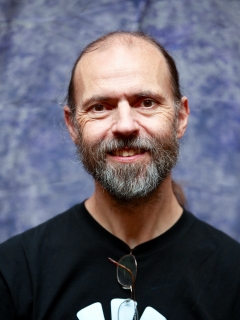 Robert Lupton合作论文数Department of Astrophysical Sciences, Princeton University33
 Satoshi Miyazaki合作论文数National Astronomical Observatory of Japan;The Graduate University for Advanced Studies30
 Yutaka Komiyama合作论文数27
 Michael Strauss合作论文数Department of Astrophysical Sciences, Princeton University25
 Masamune Oguri (大栗真宗)合作论文数Center for Frontier Science, Chiba University;Department of Physics, Chiba University24
 Atsushi J. Nishizawa合作论文数DX centre, Gifu Shotoku Gakuen University;Institute for Advanced Research, Nagoya University24Masayuki Tanaka合作论文数23Paul Price合作论文数22
 Masahiro Takada (高田昌広)合作论文数Institute for the Physics of the Universe, The University of Tokyo22Robert Armstrong合作论文数Lawrence Livermore Natl Lab19
 Hitoshi Murayama (村山齐)合作论文数Department of Physics, University of California, Berkeley;Berkeley Center for Theoretical Physics, University of California, Berkeley19
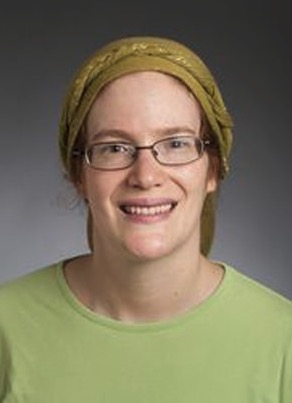 Rachel Mandelbaum合作论文数Department of Physics, Mellon College of Science, Carnegie Mellon University19Yousuke Utsumi合作论文数18Hiroyuki Ikeda合作论文数Wakayama Coll, Natl Inst Technol18
 Hironao Miyatake合作论文数Kobayashi Maskawa Inst Origin Particles & Univers, Nagoya Univ18Tadafumi Takata合作论文数Subaru Telescope18Hisanori Furusawa合作论文数17Yoshiki Toba合作论文数17Masafusa Onoue合作论文数16
 Yoshiki Matsuoka (松岡良樹)合作论文数Research Center for Space and Cosmic Evolution, Ehime University16
 Masami Ouchi (大内正己)合作论文数Institute for Cosmic Ray Research, The University of Tokyo16Philip J. Tait合作论文数16
 Naoshi Sugiyama (杉山直)合作论文数Cosmology Group, Department of Physics, Nagoya University;Kobayashi Maskawa Institute, Graduate School of Science, Nagoya University16Yuichi Harikane合作论文数Institute for Cosmic Ray Research, The University of Tokyo15
 Masatoshi Imanishi (今西昌俊)合作论文数Optical and Infrared Astronomy Division, National Astronomical Observatory of Japan15Nate B. Lust合作论文数14Tohru Nagao (長尾透)合作论文数Research Division of Cosmic Large-Scale Structure, Research Center for Space and Cosmic Evolution, Organization for the Promotion of Advanced Research and Science, Ehime University14Yoshiaki Ono合作论文数14Surhud More合作论文数14
 Shiang-Yu Wang (王祥宇)合作论文数Institute of Astronomy and Astrophysics, Academia Sinica14
 Chien-Hsiu Lee (李見修)合作论文数NOIRLab;W. M. Keck Observatory;Hobby-Eberly Telescope of Mcdonald Observatory13Nobunari Kashikawa合作论文数Department of Astronomy, Gruduate School of Science, University of Tokyo13Toshihiro Kawaguchi合作论文数Department of Physics;Aoyama Gakuin University;Department of Physics, Aoyama Gakuin University12
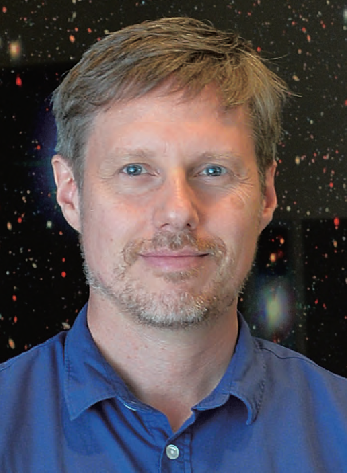 John Silverman合作论文数Kavli Institute for the Physics and Mathematics of the Universe, The University of Tokyo Institutes for Advanced Study;Department of Astronomy, University of Tokyo12
 Tomotsugu Goto (後藤友嗣)合作论文数Institute of Astronomy, College of Science, National Tsing Hua University;Department of Physics, College of Science, National Tsing Hua University12Yuki Okura合作论文数12Satoshi Kikuta合作论文数11Yoshihiko Yamada合作论文数11Masayuki Akiyama合作论文数11
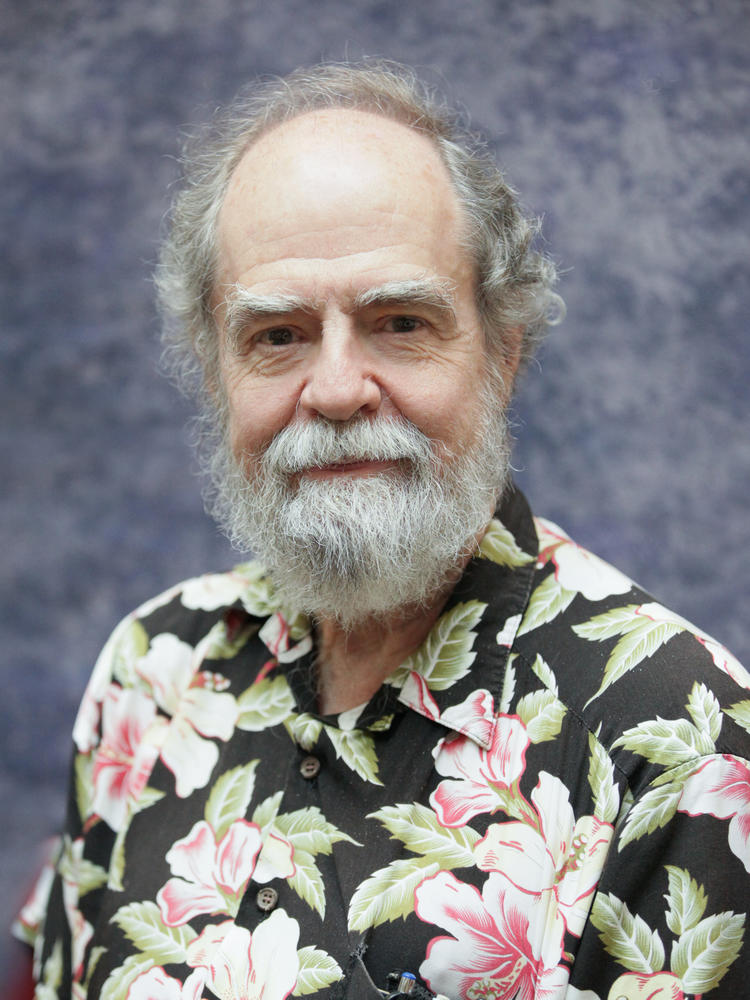 James Gunn合作论文数Department of Astrophysical Sciences, Princeton University11Tim Jenness合作论文数11Mana Niida合作论文数10
 Melanie Simet合作论文数10
 Kazushi Iwasawa合作论文数ICREA;Institut de Ciències del Cosmos, Facultat de Física, Universitat de Barcelona10Sogo Mineo合作论文数10
 Alexie S Leauthaud‑Harnett合作论文数Division of Physical & Biological Sciences, Department of Astronomy & Astrophysics, University of California, Santa Cruz10Ryoma Murata合作论文数The University of Tokyo Institutes for Advanced Study, The University of Tokyo;Department of Physics, The University of Tokyo;ryoma.murata@ipmu.jp;The University of Tokyo, The University of Tokyo9Naoko Asami合作论文数9
 Takuji Yamashita合作论文数Res Ctr Space & Cosm Evolut, Ehime Univ9




