Despite deep neural networks' powerful representation learning capabilities, theoretical understanding of how networks can simultaneously achieve meaningful feature learning and global convergence remains elusive. Existing approaches like the neural tangent kernel (NTK) are limited because features stay close to their initialization in this parametrization, leaving open questions about feature properties during substantial evolution. In this paper, we investigate the training dynamics of infinitely wide, L-layer neural networks using the tensor program (TP) framework. Specifically, we show that, when trained with stochastic gradient descent (SGD) under the Maximal Update parametrization (mu P) and mild conditions on the activation function, SGD enables these networks to learn linearly independent features that substantially deviate from their initial values. This rich feature space captures relevant data information and ensures that any convergent point of the training process is a global minimum. Our analysis leverages both the interactions among features across layers and the properties of Gaussian random variables, providing new insights into deep representation learning. We further validate our theoretical findings through experiments on real-world datasets.
By classifying infinite-width neural networks and identifying the *optimal* limit, Tensor Programs IV and V demonstrated a universal way, called $\mu$P, for *widthwise hyperparameter transfer*, i.e., predicting optimal hyperparameters of wide neural networks from narrow ones. Here we investigate the analogous classification for *depthwise parametrizations* of deep residual networks (resnets). We classify depthwise parametrizations of block multiplier and learning rate by their infinite-width-then-depth limits. In resnets where each block has only one layer, we identify a unique optimal parametrization, called Depth-$\mu$P that extends $\mu$P and show empirically it admits depthwise hyperparameter transfer. We identify *feature diversity* as a crucial factor in deep networks, and Depth-$\mu$P can be characterized as maximizing both feature learning and feature diversity. Exploiting this, we find that absolute value, among all homogeneous nonlinearities, maximizes feature diversity and indeed empirically leads to significantly better performance. However, if each block is deeper (such as modern transformers), then we find fundamental limitations in all possible infinite-depth limits of such parametrizations, which we illustrate both theoretically and empirically on simple networks as well as Megatron transformer trained on Common Crawl.
Empirical studies have consistently demonstrated that increasing the size of neural networks often yields superior performance in practical applications. However, there is a lack of consensus regarding the appropriate scaling strategy, particularly when it comes to increasing the depth of neural networks. In practice, excessively large depths can lead to model performance degradation. In this paper, we introduce Depth-$\mu$P, a principled approach for depth scaling, allowing for the training of arbitrarily deep architectures while maximizing feature learning and diversity among nearby layers. Our method involves dividing the contribution of each residual block and the parameter update by the square root of the depth. Through the use of Tensor Programs, we rigorously establish the existence of a limit for infinitely deep neural networks under the proposed scaling scheme. This scaling strategy ensures more stable training for deep neural networks and guarantees the transferability of hyperparameters from shallow to deep models. To substantiate the efficacy of our scaling method, we conduct empirical validation on neural networks with depths up to $2^{10}$.
Recent works have developed detailed understanding of large neural networks' behaviors via their infinite-width limits, e.g., the neural tangent kernel (NTK) and the feature learning ($\mu$) limits. These theories were developed for stochastic gradient descent. Yet, in practice, all large NN are trained using Adam or other adaptive gradient optimizers (AGO), which are not covered by such previous works. Here, we close this gap via the Tensor Programs framework. Specifically, for deep MLPs, we derive the NTK and $\mu$ parametrizations as well as their infinite-width limits. We find 1) The NTK limit of AGO, in contrast to that of SGD, now depends nonlinearly on the loss derivative but nevertheless still fails to learn features; 2) this is fixed by the $\mu$ limit of AGO (as in the case of SGD). To obtain these results, we extend the Tensor Programs language with a new instruction that allows one to express the gradient processing done by AGOs.
We show that taking the width and depth to infinity in a deep neural network with skip connections, when branches are scaled by $1/\sqrt{depth}$ (the only nontrivial scaling), result in the same covariance structure no matter how that limit is taken. This explains why the standard infinite-width-then-depth approach provides practical insights even for networks with depth of the same order as width. We also demonstrate that the pre-activations, in this case, have Gaussian distributions which has direct applications in Bayesian deep learning. We conduct extensive simulations that show an excellent match with our theoretical findings.
The push to train ever larger neural networks has motivated the study of initialization and training at large network width. A key challenge is to scale training so that a network's internal representations evolve nontrivially at all widths, a process known as feature learning. Here, we show that feature learning is achieved by scaling the spectral norm of weight matrices and their updates like $\sqrt{\texttt{fan-out}/\texttt{fan-in}}$, in contrast to widely used but heuristic scalings based on Frobenius norm and entry size. Our spectral scaling analysis also leads to an elementary derivation of \emph{maximal update parametrization}. All in all, we aim to provide the reader with a solid conceptual understanding of feature learning in neural networks.
of any computation graph involving adaptive optimizers and the calculation of their large width limits. Our work lays a path to study the implicit bias of adaptive optimizers by studying their evolution equations in the infinite-width limit
Going beyond stochastic gradient descent (SGD), what new phenomena emerge in wide neural networks trained by adaptive optimizers like Adam? Here we show: The same dichotomy between feature learning and kernel behaviors (as in SGD) holds for general optimizers as well, including Adam -- albeit with a nonlinear notion of "kernel." We derive the corresponding "neural tangent" and "maximal update" limits for any architecture. Two foundational advances underlie the above results: 1) A new Tensor Program language, NEXORT, that can express how adaptive optimizers process gradients into updates. 2) The introduction of bra-ket notation to drastically simplify expressions and calculations in Tensor Programs. This work summarizes and generalizes all previous results in the Tensor Programs series of papers.
While a popular limit of infinite-width neural networks, the Neural Tangent Kernel (NTK) often exhibits performance gaps from finite-width neural networks on standard datasets, due to lack of feature learning. Although the feature learning *maximal update limit*, or *μ-limit* (Yang and Hu, 2020) of wide networks has closed the gap for 1-hidden-layer linear models, no one has been able to demonstrate this for deep nonlinear multi-layer perceptrons (MLP) because of μ-limit’s computational difficulty in this setting. Here, we solve this problem by proposing a novel feature learning limit, the *π-limit*, that bypasses the computational issues. The π-limit, in short, is the limit of a form of projected gradient descent, and the π-limit of an MLP is roughly another MLP where gradients are appended to weights during training. We prove its almost sure convergence with width using the Tensor Programs technique. We evaluate it on CIFAR10 and Omniglot against NTK as well as finite networks, finding the π-limit outperform finite-width models trained normally (without projection) in both settings, closing the performance gap between finite- and infinite-width neural networks previously left by NTK. Code for this work is available at github.com/santacml/pilim.
We study the first gradient descent step on the first-layer parameters $\boldsymbol{W}$ in a two-layer neural network: $f(\boldsymbol{x}) = \frac{1}{\sqrt{N}}\boldsymbol{a}^\top\sigma(\boldsymbol{W}^\top\boldsymbol{x})$, where $\boldsymbol{W}\in\mathbb{R}^{d\times N}, \boldsymbol{a}\in\mathbb{R}^{N}$ are randomly initialized, and the training objective is the empirical MSE loss: $\frac{1}{n}\sum_{i=1}^n (f(\boldsymbol{x}_i)-y_i)^2$. In the proportional asymptotic limit where $n,d,N\to\infty$ at the same rate, and an idealized student-teacher setting, we show that the first gradient update contains a rank-1 "spike", which results in an alignment between the first-layer weights and the linear component of the teacher model $f^*$. To characterize the impact of this alignment, we compute the prediction risk of ridge regression on the conjugate kernel after one gradient step on $\boldsymbol{W}$ with learning rate $\eta$, when $f^*$ is a single-index model. We consider two scalings of the first step learning rate $\eta$. For small $\eta$, we establish a Gaussian equivalence property for the trained feature map, and prove that the learned kernel improves upon the initial random features model, but cannot defeat the best linear model on the input. Whereas for sufficiently large $\eta$, we prove that for certain $f^*$, the same ridge estimator on trained features can go beyond this "linear regime" and outperform a wide range of random features and rotationally invariant kernels. Our results demonstrate that even one gradient step can lead to a considerable advantage over random features, and highlight the role of learning rate scaling in the initial phase of training.
We introduce 3DB: an extendable, unified framework for testing and debugging vision models using photorealistic simulation. We demonstrate, through a wide range of use cases, that 3DB allows users to discover vulnerabilities in computer vision systems and gain insights into how models make decisions. 3DB captures and generalizes many robustness analyses from prior work, and enables one to study their interplay. Finally, we find that the insights generated by the system transfer to the physical world. We are releasing 3DB as a library (https://github.com/3db/3db) alongside a set of example analyses, guides, and documentation: https://3db.github.io/3db/ .
Does it matter whether one randomly initializes a neural network (NN) from Gaussian, uniform, or other distributions? We show the answer is ”yes” in some parameter tensors (the so-called matrix-like parameters) but ”no” in others when the NN is wide. This is a specific instance of a more general universality principle for Tensor Programs (TP) that informs precisely when the limit of a program depends on the distribution of its initial matrices and vectors. To obtain this principle, we develop the theory of non-Gaussian Tensor Programs. As corollaries, we obtain all previous consequences of the TP framework (such as NNGP/NTK correspondence, Free Independence Principle, Dynamical Dichotomy Theorem, and μ-parametrization) for NNs with non-Gaussian weights.
Hyperparameter (HP) tuning in deep learning is an expensive process, prohibitively so for neural networks (NNs) with billions of parameters. We show that, in the recently discovered Maximal Update Parametrization ($\mu$P), many optimal HPs remain stable even as model size changes. This leads to a new HP tuning paradigm we call *$\mu$Transfer*: parametrize the target model in $\mu$P, tune the HP indirectly on a smaller model, and *zero-shot transfer* them to the full-sized model, i.e., without directly tuning the latter at all. We verify $\mu$Transfer on Transformer and ResNet. For example, 1) by transferring pretraining HPs from a model of 13M parameters, we outperform published numbers of BERT-large (350M parameters), with a total tuning cost equivalent to pretraining BERT-large once; 2) by transferring from 40M parameters, we outperform published numbers of the 6.7B GPT-3 model, with tuning cost only 7% of total pretraining cost. A Pytorch implementation of our technique can be found at github.com/microsoft/mup. See arxiv.org for the full, up-to-date version of this work.
Yang (2020a) recently showed that the Neural Tangent Kernel (NTK) at initialization has an infinite-width limit for a large class of architectures including modern staples such as ResNet and Transformers. However, their analysis does not apply to training. Here, we show the same neural networks (in the so-called NTK parametrization) during training follow a kernel gradient descent dynamics in function space, where the kernel is the infinite-width NTK. This completes the proof of the *architectural universality* of NTK behavior. To achieve this result, we apply the Tensor Programs technique: Write the entire SGD dynamics inside a Tensor Program and analyze it via the Master Theorem. To facilitate this proof, we develop a graphical notation for Tensor Programs.
We analyze the learning dynamics of infinitely wide neural networks with a finite sized bottle-neck. Unlike the neural tangent kernel limit, a bottleneck in an otherwise infinite width network al-lows data dependent feature learning in its bottle-neck representation. We empirically show that a single bottleneck in infinite networks dramatically accelerates training when compared to purely in-finite networks, with an improved overall performance. We discuss the acceleration phenomena by drawing similarities to infinitely wide deep linear models, where the acceleration effect of a bottleneck can be understood theoretically.
Hyperparameter (HP) tuning in deep learning is an expensive process, prohibitively so for neural networks (NNs) with billions of parameters. We show that, in the recently discovered Maximal Update Parametrization (muP), many optimal HPs remain stable even as model size changes. This leads to a new HP tuning paradigm we call muTransfer: parametrize the target model in muP, tune the HP indirectly on a smaller model, and zero-shot transfer them to the full-sized model, i.e., without directly tuning the latter at all. We verify muTransfer on Transformer and ResNet. For example, 1) by transferring pretraining HPs from a model of 13M parameters, we outperform published numbers of BERT-large (350M parameters), with a total tuning cost equivalent to pretraining BERT-large once; 2) by transferring from 40M parameters, we outperform published numbers of the 6.7B GPT-3 model, with tuning cost only 7% of total pretraining cost. A Pytorch implementation of our technique can be found at github.com/microsoft/mup and installable via `pip install mup`.
As its width tends to infinity, a deep neural network’s behavior under gradient descent can become simplified and predictable (e.g. given by the Neural Tangent Kernel (NTK)), if it is parametrized appropriately (e.g. the NTK parametrization). However, we show that the standard and NTK parametrizations of a neural network do not admit infinite-width limits that can learn features, which is crucial for pretraining and transfer learning such as with BERT. We propose simple modifications to the standard parametrization to allow for feature learning in the limit. Using the Tensor Programs technique, we derive explicit formulas for such limits. On Word2Vec and few-shot learning on Omniglot via MAML, two canonical tasks that rely crucially on feature learning, we compute these limits exactly. We find that they outperform both NTK baselines and finite-width networks, with the latter approaching the infinite-width feature learning performance as width increases. See arXiv:2011.14522 for the full version of this paper.
Most recent progress in natural language understanding (NLU) has been driven, in part, by benchmarks such as GLUE, SuperGLUE, SQuAD, etc. In fact, many NLU models have now matched or exceeded "human-level" performance on many tasks in these benchmarks. Most of these benchmarks, however, give models access to relatively large amounts of labeled data for training. As such, the models are provided far more data than required by humans to achieve strong performance. That has motivated a line of work that focuses on improving few-shot learning performance of NLU models. However, there is a lack of standardized evaluation benchmarks for few-shot NLU resulting in different experimental settings in different papers. To help accelerate this line of work, we introduce CLUES (Constrained Language Understanding Evaluation Standard), a benchmark for evaluating the few-shot learning capabilities of NLU models. We demonstrate that while recent models reach human performance when they have access to large amounts of labeled data, there is a huge gap in performance in the few-shot setting for most tasks. We also demonstrate differences between alternative model families and adaptation techniques in the few shot setting. Finally, we discuss several principles and choices in designing the experimental settings for evaluating the true few-shot learning performance and suggest a unified standardized approach to few-shot learning evaluation. We aim to encourage research on NLU models that can generalize to new tasks with a small number of examples. Code and data for CLUES are available at https://github.com/microsoft/CLUES.
Most recent progress in natural language understanding (NLU) has been driven, in 1 part, by benchmarks such as GLUE, SuperGLUE, SQuAD, etc. In fact, many NLU 2 models have now matched or exceeded “human-level” performance on many tasks 3 in these benchmarks. Most of these benchmarks, however, give models access 4 to relatively large amounts of labeled data for training. As such, the models are 5 provided far more data than required by humans to achieve strong performance. That has motivated a line of work that focuses on improving few-shot learning performance of NLU models. However, there is a lack of standardized evalua- tion benchmarks for few-shot NLU resulting in different experimental settings 9 in different papers. To help accelerate this line of work, we introduce CLUES 1 , 10 a benchmark for evaluating the few-shot learning capabilities of NLU models. 11 We demonstrate that while recent models reach human performance when they 12 have access to large amounts of labeled data, there is a huge gap in performance 13 in the few-shot setting for most tasks. We also demonstrate differences between 14 alternative model families and adaptation techniques in the few shot setting. Finally, 15 we discuss several principles and choices in designing the experimental settings for 16 evaluating the true few-shot learning performance and suggest a unified standard- 17 ized approach to few-shot learning evaluation. We aim to encourage research on 18 NLU models that can generalize to new tasks with a small number of examples. 19
 Edward Hu合作论文数Woodside AI Venture Studio7
 Etai Littwin合作论文数Apple7
 Hadi Salman合作论文数Massachusetts Institute of Technology7
 Samuel S. Schoenholz合作论文数Founding Team, Thinking Machines Lab5
 Jianfeng Gao (高剑峰)合作论文数Microsoft Research4
 Xiaodong Liu (刘晓东)合作论文数Microsoft Research4
 Jeffrey Pennington合作论文数Google Brain4
 Soufiane Hayou合作论文数Department of Applied Mathematics and Statistics, The Johns Hopkins University3
 Pengchuan Zhang合作论文数3
 Saghar Hosseini合作论文数Meta2
 Igor Babuschkin合作论文数xAI2
 Szymon Sidor合作论文数OpenAI2
 David Farhi合作论文数2Dar Gilboa合作论文数Columbia University2
 Dingli Yu (俞鼎力)合作论文数Department of Computer Science, Princeton University2
 Nick Ryder合作论文数OpenAI2
 Chen Zhu (朱晨)合作论文数NVIDIA2
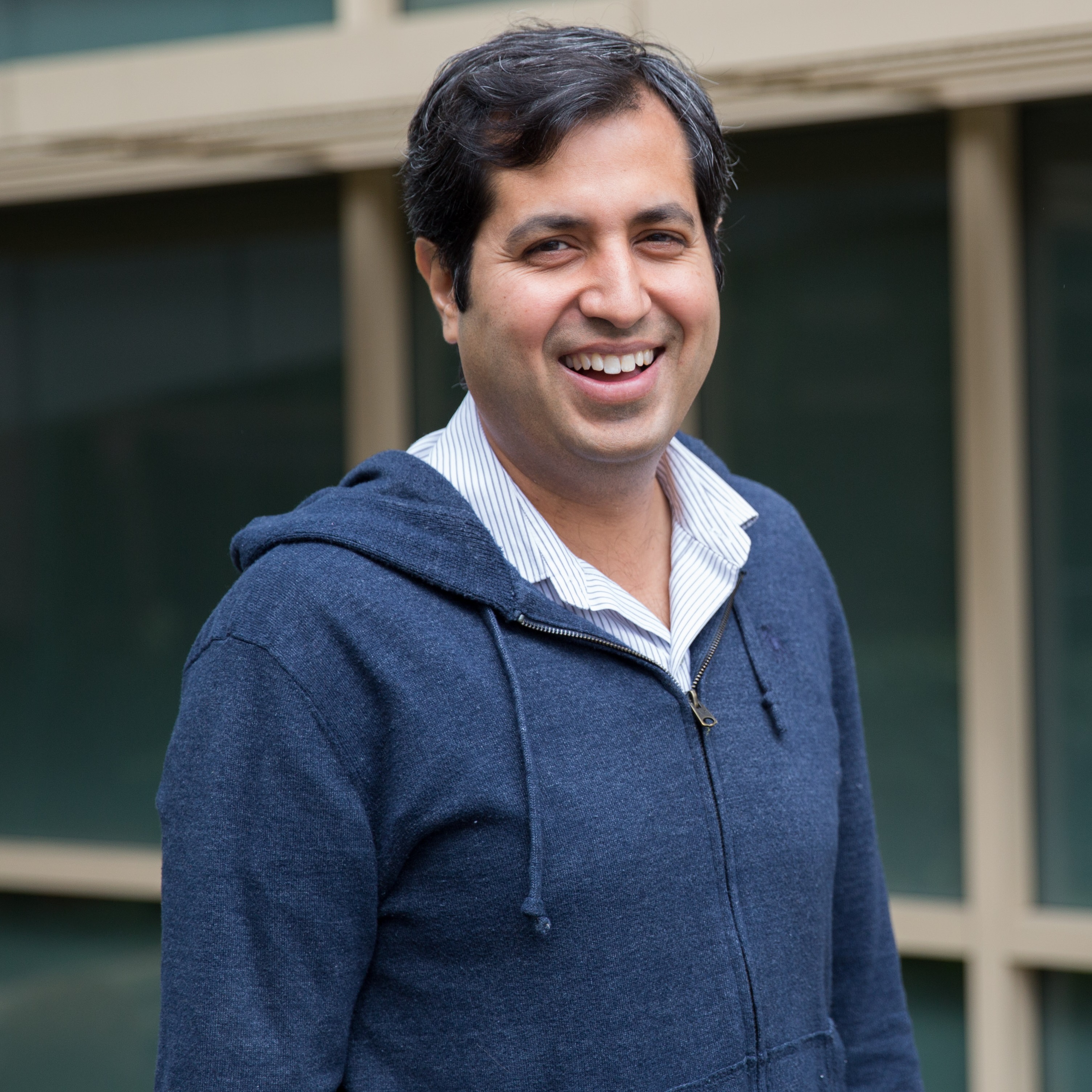 Ashish Kapoor合作论文数Scaled Foundations2
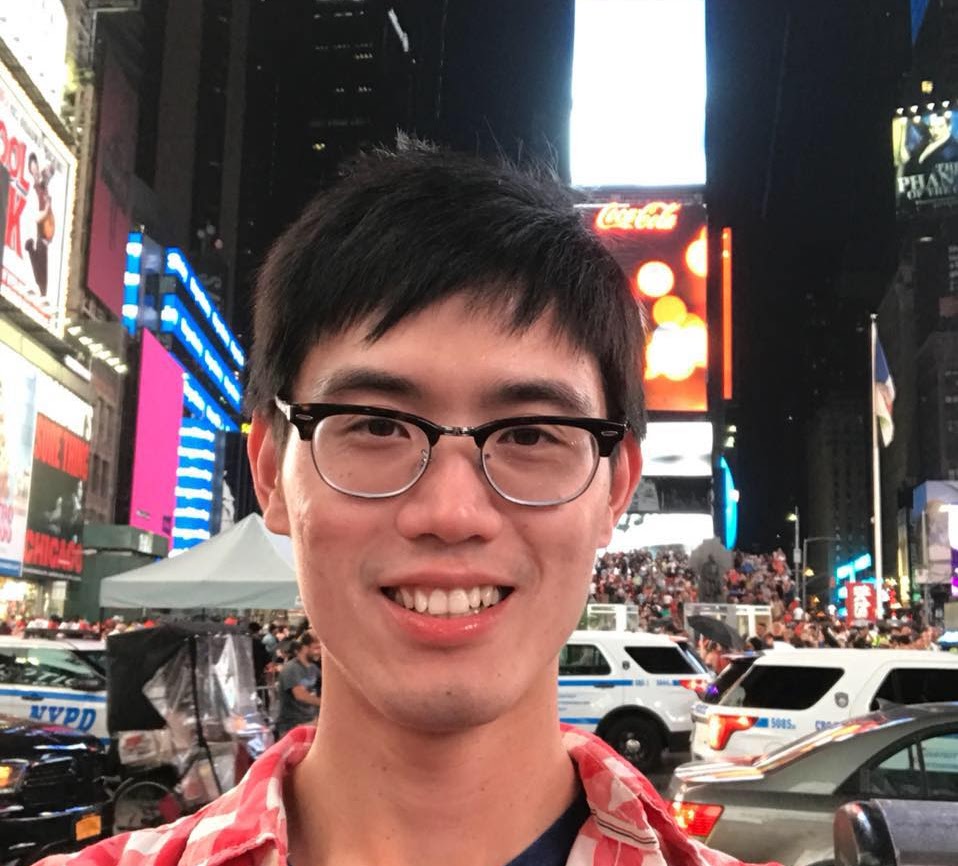 Hao Cheng (程浩)合作论文数Microsoft Research2
 Huan Zhang合作论文数Department of Electrical and Computer Engineering, The Grainger College of Engineering, University of Illinois Urbana-Champaign;Department of Computer Science, University of Illinois Urbana-Champaign2
 Guoqing Zheng合作论文数Microsoft Research2
 Chris Meek合作论文数Department of Statistics, College of Arts & Sciences, University of Washington2
 Ed H. Chi (紀懷新)合作论文数Google DeepMind2
 Subhabrata (Subho) Mukherjee合作论文数Hippocratic AI2
 Ahmed Awadallah合作论文数Microsoft Research2
 Jerry Li合作论文数Paul G. Allen School of Computer Science and Engineering, College of Engineering, University of Washington2
 Ilya Razenshteyn合作论文数OpenAI2
 Bo Chang合作论文数Google DeepMind2
 Jakub Pachocki合作论文数OpenAI2
 Jascha Sohl-Dickstein合作论文数Anthropic2
 Weizhu Chen合作论文数Microsoft GenAI2
 Adith Swaminathan合作论文数Netflix2Minmin Chen合作论文数2Qingyue Zhao (赵晴岳)合作论文数Department of Computer Science and Technology, Tsinghua University1
 Taiji Suzuki (鈴木大慈)合作论文数Department of Mathematical Informatics, Graduate School of Information Science and Technology, The University of Tokyo1
 Justin Chen合作论文数1Duan Tony合作论文数1
 Jamie Simon合作论文数Department of Physics, University of California, Berkeley;Imbue1Mengyuan Zhang合作论文数1James Brister合作论文数1
 Chris Eur合作论文数Department of Mathematical Sciences, Carnegie Mellon University1
 Zixiang Chen合作论文数1
 Michael Santacroce合作论文数Microsoft1Omid Saremi合作论文数1Guillaume Leclerc合作论文数MIT1
 Daniel A Abolafia合作论文数Google1
 Yasaman Bahri合作论文数Google DeepMind1
 Murat A. Erdogdu合作论文数Department of Computer Science, Faculty of Arts and Science, University of Toronto1
 Sai H Vemprala合作论文数Department of Mechanical Engineering, Texas A M University1




