Vision-Language-Action (VLA) models demonstrate promising generalization in robotic manipulation, driven by advances in large-scale vision and language pre-training. This progress can be misleading. Despite the zero-shot perception and language capabilities of VLAs, their overall task performance often degrades under distribution shifts, revealing gaps in how these systems translate high-level understanding into robust behavior. To systematically study this gap, we introduce Colosseum V2, a large-scale simulation benchmark for evaluating VLA generalization in robot learning across diverse conditions. The benchmark comprises 28 tasks spanning 13 task categories and two robot morphologies, covering a wide range of manipulation primitives and long-horizon behaviors. Built on the ManiSkill simulator, Colosseum V2 enables fast, GPU-parallelized evaluation and supports both in-domain and out-of-domain testing at scale. We evaluate state-of-the-art methods, including Action Chunking Transformers (ACT) and Pi0.5, and reveal limitations in both base performance and generalization. We demonstrate strong correlations between simulation and real-world metrics that support the ecological validity of the benchmark. By standardizing tasks, metrics, and evaluation protocols within a unified benchmark, Colosseum V2 enables reproducible and fair comparisons, reduced evaluation overhead, and accelerated progress toward general-purpose robot policies.
Bimanual robot learning from demonstrations is fundamentally limited by the cost and narrow visual diversity of real-world data, which constrains policy robustness across viewpoints, object configurations, and embodiments. We present Canny-guided Robot Data Generation using Video Diffusion Transformers (CRAFT), a video diffusion-based framework for scalable bimanual demonstration generation that synthesizes temporally coherent manipulation videos while producing action labels. By conditioning video diffusion on edge-based structural cues extracted from simulator-generated trajectories, CRAFT produces physically plausible trajectory variations and supports a unified augmentation pipeline spanning object pose changes, camera viewpoints, lighting and background variations, cross-embodiment transfer, and multi-view synthesis. We leverage a pre-trained video diffusion model to convert simulated videos, along with action labels from the simulation trajectories, into action-consistent demonstrations. Starting from only a few real-world demonstrations, CRAFT generates a large, visually diverse set of photorealistic training data, bypassing the need to replay demonstrations on the real robot (Sim2Real). Across simulated and real-world bimanual tasks, CRAFT improves success rates over existing augmentation strategies and straightforward data scaling, demonstrating that diffusion-based video generation can substantially expand demonstration diversity and improve generalization for dual-arm manipulation tasks. Our project website is available at: https://craftaug.github.io/
Simulation-based learning has enabled policies for precise, contact-rich tasks (e.g., robotic assembly) to reach high success rates (~80%) under high levels of observation noise and control error. Although such performance may be sufficient for research applications, it falls short of industry standards and makes policy chaining exceptionally brittle. A key limitation is the high variance in individual policy performance across diverse initial conditions. We introduce Refinery, an effective framework that bridges this performance gap, robustifying policy performance across initial conditions. We propose Bayesian Optimization-guided fine-tuning to improve individual policies, and Gaussian Mixture Model-based sampling during deployment to select initializations that maximize execution success. Using Refinery, we improve mean success rates by 10.98% over state-of-the-art methods in simulation-based learning for robotic assembly, reaching 91.51% in simulation and comparable performance in the real world. Furthermore, we demonstrate that these fine-tuned policies can be chained to accomplish long-horizon, multi-part assemblysuccessfully assembling up to 8 parts without requiring explicit multi-step training.
Reinforcement learning has enabled significant progress in complex domains such as coordinating and navigating multiple quadrotors. However, even well-trained policies remain vulnerable to collisions in obstacle-rich environments. Addressing these infrequent but critical safety failures through retraining or fine-tuning is costly and risks degrading previously learned skills. Inspired by activation steering in large language models and latent editing in computer vision, we introduce a framework for inference-time Latent Activation Editing (LAE) that refines the behavior of pre-trained policies without modifying their weights or architecture. The framework operates in two stages: (i) an online classifier monitors intermediate activations to detect states associated with undesired behaviors, and (ii) an activation editing module that selectively modifies flagged activations to shift the policy towards safer regimes. In this work, we focus on improving safety in multi-quadrotor navigation. We hypothesize that amplifying a policys internal perception of risk can induce safer behaviors. We instantiate this idea through a latent collision world model trained to predict future pre-collision activations, thereby prompting earlier and more cautious avoidance responses. Extensive simulations and real-world Crazyflie experiments demonstrate that LAE achieves statistically significant reduction in collisions (nearly 90% fewer cumulative collisions compared to the unedited baseline) and substantially increases the fraction of collision-free trajectories, while preserving task completion. More broadly, our results establish LAE as a lightweight paradigm, feasible on resource-constrained hardware, for post-deployment refinement of learned robot policies. Our project page with videos and code is available at https://lae-robotics.github.io/.
Training robust bimanual manipulation policies via imitation learning requires demonstration data with broad coverage over robot poses, contacts, and scene contexts. However, collecting diverse and precise real-world demonstrations is costly and time-consuming, which hinders scalability. Prior works have addressed this with data augmentation, typically for either eye-in-hand (wrist camera) setups with RGB inputs or for generating novel images without paired actions, leaving augmentation for eye-to-hand (third-person) RGB-D training with new action labels less explored. In this paper, we propose Synthetic Robot Pose Generation for RGB-D Bimanual Data Augmentation (ROPA), an offline imitation learning data augmentation method that fine-tunes Stable Diffusion to synthesize third-person RGB and RGB-D observations of novel robot poses with up to four camera viewpoints. Our approach simultaneously generates corresponding joint-space action labels while employing constrained optimization to enforce physical consistency through appropriate gripper-to-object contact constraints in bimanual scenarios. We evaluate our method on 5 simulated and 3 real-world tasks. Our results across 2625 simulation trials and 300 real-world trials demonstrate that ROPA outperforms baselines and ablations, showing its potential for scalable RGB and RGB-D data augmentation in eye-to-hand bimanual manipulation. Our project website is available at: https://ropaaug.github.io/.
Nonprehensile manipulation, such as pushing and pulling, enables robots to move, align, or reposition objects that may be difficult to grasp due to their geometry, size, or relationship to the robot or the environment. Much of the existing work in nonprehensile manipulation relies on parallel-jaw grippers or tools such as rods and spatulas. In contrast, multi-fingered dexterous hands offer richer contact modes and versatility for handling diverse objects to provide stable support over the objects, which compensates for the difficulty of modeling the dynamics of nonprehensile manipulation. Therefore, we propose Geometry-aware Dexterous Pushing and Pulling(GD2P) for nonprehensile manipulation with dexterous robotic hands. We study pushing and pulling by framing the problem as synthesizing and learning pre-contact dexterous hand poses that lead to effective manipulation. We generate diverse hand poses via contact-guided sampling, filter them using physics simulation, and train a diffusion model conditioned on object geometry to predict viable poses. At test time, we sample hand poses and use standard motion planners to select and execute pushing and pulling actions. We perform extensive real-world experiments with an Allegro Hand and a LEAP Hand, demonstrating that GD2P offers a scalable route for generating dexterous nonprehensile manipulation motions with its applicability to different hand morphologies. Our project website is available at: https://geodex2p.github.io/.
Learning bimanual manipulation is challenging due to its high dimensionality and tight coordination required between two arms. Eye-in-hand imitation learning, which uses wrist-mounted cameras, simplifies perception by focusing on task-relevant views. However, collecting diverse demonstrations remains costly, motivating the need for scalable data augmentation. While prior work has explored visual augmentation in single-arm settings, extending these approaches to bimanual manipulation requires generating viewpoint-consistent observations across both arms and producing corresponding action labels that are both valid and feasible. In this work, we propose Diffusion for COordinated Dual-arm Data Augmentation (D-CODA), a method for offline data augmentation tailored to eye-in-hand bimanual imitation learning that trains a diffusion model to synthesize novel, viewpoint-consistent wrist-camera images for both arms while simultaneously generating joint-space action labels. It employs constrained optimization to ensure that augmented states involving gripper-to-object contacts adhere to constraints suitable for bimanual coordination. We evaluate D-CODA on 5 simulated and 3 real-world tasks. Our results across 2250 simulation trials and 300 real-world trials demonstrate that it outperforms baselines and ablations, showing its potential for scalable data augmentation in eye-in-hand bimanual manipulation. Our project website is at: https://dcodaaug.github.io/D-CODA/.
Multi-robot coordination has traditionally relied on a mission-specific and expert-driven pipeline, where natural language mission descriptions are manually translated by domain experts into mathematical formulation, algorithm design, and executable code. This conventional process is laborintensive, inaccessible to non-experts, and inflexible to changes in mission requirements. Here, we propose LAN2CB (Language to Collective Behavior), a novel framework that leverages large language models (LLMs) to streamline and generalize the multi-robot coordination pipeline. LAN2CB transforms natural language (NL) mission descriptions into executable Python code for multi-robot systems through two core modules: (1) Mission Analysis, which parses mission descriptions into behavior trees, and (2) Code Generation, which leverages the behavior tree and a structured knowledge base to generate robot control code. We further introduce a dataset of natural language mission descriptions to support development and benchmarking. Experiments in both simulation and real-world environments demonstrate that LAN2CB enables robust and flexible multi-robot coordination from natural language, significantly reducing manual engineering effort and supporting broad generalization across diverse mission types. Website: https://sites.google.com/view/lan-cb
The classical Model Predictive Path Integral (MPPI) control framework lacks reliable safety guarantees since it relies on a risk-neutral trajectory evaluation technique, which can present challenges for safety-critical applications such as autonomous driving. Additionally, if the majority of MPPI sampled trajectories concentrate in high-cost regions, it may generate an infeasible control sequence. To address this challenge, we propose the U-MPPI control strategy, a novel methodology that can effectively manage system uncertainties while integrating a more efficient trajectory sampling strategy. The core concept is to leverage the Unscented Transform (UT) to propagate not only the mean but also the covariance of the system dynamics, going beyond the traditional MPPI method. As a result, it introduces a novel and more efficient trajectory sampling strategy, significantly enhancing state-space exploration and ultimately reducing the risk of being trapped in local minima. Furthermore, by leveraging the uncertainty information provided by UT, we incorporate a risk-sensitive cost function that explicitly accounts for risk or uncertainty throughout the trajectory evaluation process, resulting in a more resilient control system capable of handling uncertain conditions. By conducting extensive simulations of 2D aggressive autonomous navigation in both known and unknown cluttered environments, we verify the efficiency and robustness of our proposed U-MPPI control strategy compared to the baseline MPPI. We further validate the practicality of U-MPPI through real-world demonstrations in unknown cluttered environments, showcasing its superior ability to incorporate both the UT and local costmap into the optimization problem without introducing additional complexity.
We consider a new variant of the multi-robot task allocation problem - Inverse Risk-sensitive Multi-Robot Task Allocation (IR-MRTA). "Forward" MRTA - the process of deciding which robot should perform a task given the reward (cost)-related parameters, is widely studied in the multi-robot literature. In this setting, the reward (cost)-related parameters are assumed to be already known: parameters are first fixed offline by domain experts, followed by coordinating robots online. What if we need these parameters to be adjusted by non-expert human supervisors who oversee the robots during tasks to adapt to new situations? We are interested in the case where the human supervisor's perception of the allocation risk may change and suggest different allocations for robots compared to that from the MRTA algorithm. In such cases, the robots need to change the parameters of the allocation problem based on evolving human preferences. We study such problems through the lens of inverse task allocation, i.e., the process of finding parameters given solutions to the problem. Specifically, we propose a new formulation IR-MRTA, in which we aim to find a new set of parameters of the human behavioral risk model that minimally deviates from the current MRTA parameters and can make a greedy task allocation algorithm allocate robot resources in line with those suggested by humans. We show that even in the simple case such a problem is a non-convex optimization problem. We propose a Branch $\&$ Bound algorithm (BB-IR-MRTA) to solve such problems. In numerical simulations of a case study on multi-robot target capture, we demonstrate how to use BB-IR-MRTA and we show that the proposed algorithm achieves significant advantages in running time and peak memory usage compared to a brute-force baseline.
Multi-robot target tracking finds extensive applications in different scenarios, such as environmental surveillance and wildfire management, which require the robustness of the practical deployment of multi-robot systems in uncertain and dangerous environments. Traditional approaches often focus on the performance of tracking accuracy with no modeling and assumption of the environments, neglecting potential environmental hazards which result in system failures in real-world deployments. To address this challenge, we investigate multi-robot target tracking in the adversarial environment considering sensing and communication attacks with uncertainty. We design specific strategies to avoid different danger zones and proposed a multi-agent tracking framework under the perilous environment. We approximate the probabilistic constraints and formulate practical optimization strategies to address computational challenges efficiently. We evaluate the performance of our proposed methods in simulations to demonstrate the ability of robots to adjust their risk-aware behaviors under different levels of environmental uncertainty and risk confidence. The proposed method is further validated via real-world robot experiments where a team of drones successfully track dynamic ground robots while being risk-aware of the sensing and/or communication danger zones.
We investigate the problem of automatic domain generation for the Planning Domain Definition Language (PDDL) using Large Language Models (LLMs), with a particular focus on unmanned aerial vehicle (UAV) tasks. Although PDDL is a widely adopted standard in robotic planning, manually designing domains for diverse applications such as surveillance, delivery, and inspection is labor-intensive and error-prone, which hinders adoption and real-world deployment. To address these challenges, we propose SPAR, a framework that leverages the generative capabilities of LLMs to automatically produce valid, diverse, and semantically accurate PDDL domains from natural language input. To this end, we first introduce a systematically formulated and validated UAV planning dataset, consisting of ground-truth PDDL domains and associated problems, each paired with detailed domain and action descriptions. Building on this dataset, we design a prompting framework that generates high-quality PDDL domains from language input. The generated domains are evaluated through syntax validation, executability, feasibility, and interpretability. Overall, this work demonstrates that LLMs can substantially accelerate the creation of complex planning domains, providing a reproducible dataset and evaluation pipeline that enables application experts without prior experience to leverage it for practical tasks and advance future research in aerial robotics and automated planning.
Multi-robot collaboration for target tracking in adversarial environments poses significant challenges, including system failures, dynamic priority shifts, and other unpredictable factors. These challenges become even more pronounced when the environment is unknown. In this paper, we propose a resilient coordination framework for multi-robot, multi-target tracking in environments with unknown sensing and communication danger zones. We consider scenarios where failures caused by these danger zones are probabilistic and temporary, allowing robots to escape from danger zones to minimize the risk of future failures. We formulate this problem as a nonlinear optimization with soft chance constraints, enabling real-time adjustments to robot behaviors based on varying types of dangers and failures. This approach dynamically balances target tracking performance and resilience, adapting to evolving sensing and communication conditions in real-time. To validate the effectiveness of the proposed method, we assess its performance across various tracking scenarios, benchmark it against methods without resilient adaptation and collaboration, and conduct several real-world experiments.
Behavior cloning (BC) is a widely-used approach in imitation learning, where a robot learns a control policy by observing an expert supervisor. However, the learned policy can make errors and might lead to safety violations, which limits their utility in safety-critical robotics applications. While prior works have tried improving a BC policy via additional real or synthetic action labels, adversarial training, or runtime filtering, none of them explicitly focus on reducing the BC policy's safety violations during training time. We propose SAFE-GIL, a design-time method to learn safety-aware behavior cloning policies. SAFE-GIL deliberately injects adversarial disturbance in the system during data collection to guide the expert towards safety-critical states. This disturbance injection simulates potential policy errors that the system might encounter during the test time. By ensuring that training more closely replicates expert behavior in safety-critical states, our approach results in safer policies despite policy errors during the test time. We further develop a reachability-based method to compute this adversarial disturbance. We compare SAFE-GIL with various behavior cloning techniques and online safety-filtering methods in three domains: autonomous ground navigation, aircraft taxiing, and aerial navigation on a quadrotor testbed. Our method demonstrates a significant reduction in safety failures, particularly in low data regimes where the likelihood of learning errors, and therefore safety violations, is higher. See our website here: https://y-u-c.github.io/safegil/
Generalizing vision-based reinforcement learning (RL) agents to novel environments remains a difficult and open challenge. Current trends are to collect large-scale datasets or use data augmentation techniques to prevent overfitting and improve downstream generalization. However, the computational and data collection costs increase exponentially with the number of task variations and can destabilize the already difficult task of training RL agents. In this work, we take inspiration from recent advances in computational neuroscience and propose a model, Associative Latent DisentAnglement (ALDA), that builds on standard off-policy RL towards zero-shot generalization. Specifically, we revisit the role of latent disentanglement in RL and show how combining it with a model of associative memory achieves zero-shot generalization on difficult task variations without relying on data augmentation. Finally, we formally show that data augmentation techniques are a form of weak disentanglement and discuss the implications of this insight.
Training vision-based manipulation policies that are robust across diverse visual environments remains an important and unresolved challenge in robot learning. Current approaches often sidestep the problem by relying on invariant representations such as point clouds and depth, or by brute-forcing generalization through visual domain randomization and/or large, visually diverse datasets. Disentangled representation learning - especially when combined with principles of associative memory - has recently shown promise in enabling vision-based reinforcement learning policies to be robust to visual distribution shifts. However, these techniques have largely been constrained to simpler benchmarks and toy environments. In this work, we scale disentangled representation learning and associative memory to more visually and dynamically complex manipulation tasks and demonstrate zero-shot adaptability to visual perturbations in both simulation and on real hardware. We further extend this approach to imitation learning, specifically Diffusion Policy, and empirically show significant gains in visual generalization compared to state-of-the-art imitation learning methods. Finally, we introduce a novel technique adapted from the model equivariance literature that transforms any trained neural network policy into one invariant to 2D planar rotations, making our policy not only visually robust but also resilient to certain camera perturbations. We believe that this work marks a significant step towards manipulation policies that are not only adaptable out of the box, but also robust to the complexities and dynamical nature of real-world deployment. Supplementary videos are available at https://sites.google.com/view/vis-gen-robotics/home.
Collision-free navigation in cluttered environments with static and dynamic obstacles is essential for many multi-robot tasks. Dynamic obstacles may also be interactive, i.e., their behavior varies based on the behavior of other entities. We propose a novel representation for interactive behavior of dynamic obstacles and a decentralized real-time multi-robot trajectory planning algorithm allowing inter-robot collision avoidance as well as static and dynamic obstacle avoidance. Our planner simulates the behavior of dynamic obstacles, accounting for interactivity. We account for the perception inaccuracy of static and prediction inaccuracy of dynamic obstacles. We handle asynchronous planning between teammates and message delays, drops, and re-orderings. We evaluate our algorithm in simulations using 25400 random cases and compare it against three state-of-the-art baselines using 2100 random cases. Our algorithm achieves up to 1.68x success rate using as low as 0.28x time in single-robot, and up to 2.15x success rate using as low as 0.36x time in multi-robot cases compared to the best baseline. We implement our planner on real quadrotors to show its real-world applicability.
Training generally capable agents that thoroughly explore their environment and learn new and diverse skills is a long-term goal of robot learning. Quality Diversity Reinforcement Learning (QD-RL) is an emerging research area that blends the best aspects of both fields -- Quality Diversity (QD) provides a principled form of exploration and produces collections of behaviorally diverse agents, while Reinforcement Learning (RL) provides a powerful performance improvement operator enabling generalization across tasks and dynamic environments. Existing QD-RL approaches have been constrained to sample efficient, deterministic off-policy RL algorithms and/or evolution strategies, and struggle with highly stochastic environments. In this work, we, for the first time, adapt on-policy RL, specifically Proximal Policy Optimization (PPO), to the Differentiable Quality Diversity (DQD) framework and propose additional improvements over prior work that enable efficient optimization and discovery of novel skills on challenging locomotion tasks. Our new algorithm, Proximal Policy Gradient Arborescence (PPGA), achieves state-of-the-art results, including a 4x improvement in best reward over baselines on the challenging humanoid domain.
End-to-end deep reinforcement learning (DRL) for quadrotor control promises many benefits -- easy deployment, task generalization and real-time execution capability. Prior end-to-end DRL-based methods have showcased the ability to deploy learned controllers onto single quadrotors or quadrotor teams maneuvering in simple, obstacle-free environments. However, the addition of obstacles increases the number of possible interactions exponentially, thereby increasing the difficulty of training RL policies. In this work, we propose an end-to-end DRL approach to control quadrotor swarms in environments with obstacles. We provide our agents a curriculum and a replay buffer of the clipped collision episodes to improve performance in obstacle-rich environments. We implement an attention mechanism to attend to the neighbor robots and obstacle interactions - the first successful demonstration of this mechanism on policies for swarm behavior deployed on severely compute-constrained hardware. Our work is the first work that demonstrates the possibility of learning neighbor-avoiding and obstacle-avoiding control policies trained with end-to-end DRL that transfers zero-shot to real quadrotors. Our approach scales to 32 robots with 80% obstacle density in simulation and 8 robots with 20% obstacle density in physical deployment. Website: https://sites.google.com/view/obst-avoid-swarm-rl.
 Maja J Matarić合作论文数Department of Computer Science, Viterbi School of Engineering, University of Southern California;Embodied66
 David Caron合作论文数College of Letters, Arts and Sciences, University of Southern California;Department of Biological Sciences, University of Southern California56
 Carl Oberg合作论文数41
 Karol Hausman合作论文数Physical Intelligence39
 Arvind Pereira合作论文数Computer Science Department, University of Southern California Los Angeles38
 Beth Stauffer合作论文数University of Southern California36
 William Kaiser合作论文数Electrical Engineering Department, University of California at Los Angeles34Amit Dhariwal合作论文数Computer Science Department, University of Southern California Los Angeles33
 Deborah Estrin合作论文数Cornell Tech, Cornell University;Weill Cornell Medical College, Cornell University32
 Stefan Schaal合作论文数Intrinsic;SKS Autonomous Systems31
 Jnaneshwar Das合作论文数School of Earth and Space Exploration, Arizona State University;Center for Global Discovery and Conservation Science, Arizona State University29Bin Zhang合作论文数28
 Ramesh Govindan合作论文数Thomas Lord Department of Computer Science, Viterbi School of Engineering, University of Southern California;Ming Hsieh Department of Electrical and Computer Engineering, Viterbi School of Engineering, University of Southern California28
 Maxim A. Batalin合作论文数Center for Embedded Networked Sensing, University of California27
 Harshvardhan Vathsangam合作论文数26
 Andrew Howard合作论文数Space Exploration Technologies25
 Hordur Heidarsson合作论文数Department of Computer Science;Department of Biological;Sciences, University of Southern California;Department of Biological, University of Southern California23
 Ryan N. Smith合作论文数Fort Lewis College21
 Urbashi Mitra合作论文数Ming Hsieh Department of Electrical and Computer Engineering, Viterbi School of Engineering, University of Southern California;Thomas Lord Department of Computer Science, Viterbi School of Engineering, University of Southern California20
 Eric A. Heiden合作论文数University of Southern California20
 Karthik Dantu合作论文数Distributed RObotics and Networked Embedded Sensing Lab, Department of Computer Science and Engineering, University at Buffalo, State University of New York20
 Mani Srivastava合作论文数Networked & Embedded Systems Laboratory, University of California, Los Angeles;Electrical and Computer Engineering Department, Samueli School of Engineering, University of California, Los Angeles;Amazon19
 Burton Jones合作论文数Biological and Environmental Science and Engineering Division, King Abdullah University of Science and Technology;Red Sea Research Center19
 Oliver Kroemer合作论文数Intelligent Autonomous Manipulation Lab, The Robotics Institute, School of Computer Science, Carnegie Mellon University19
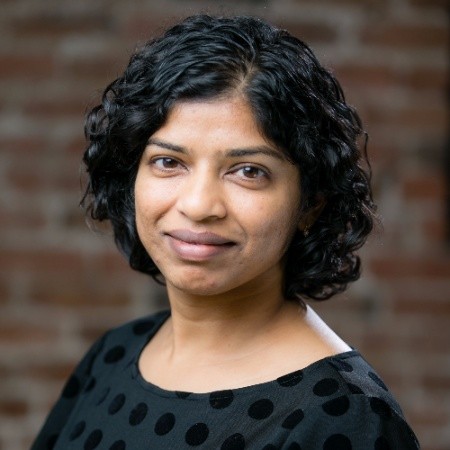 Sameera Poduri合作论文数Uber18
 Yevgen Chebotar合作论文数NVIDIA18
 Geoff Hollinger合作论文数Robotic Decision Making Laboratory18
 Ryan Williams合作论文数Department of Electrical Engineering and Computer Science, Massachusetts Institute of Technology17
 Jonathan Kelly合作论文数Institute for Aerospace Studies, University of Toronto17
 Marcos Augusto M. Vieira合作论文数Department of Computer Science;Federal University of Minas Gerais;Department of Computer Science, Federal University of Minas Gerais17
 James Alan Preiss合作论文数Computer Science Department, University of California, Santa Barbara16
 Srikanth Saripalli合作论文数Unmanned Systems Lab, Department of Mechanical Engineering, College of Engineering, Texas A&M University16
 Artem Molchanov合作论文数University of Southern California15Boyoon Jung合作论文数University of Southern California15George Bekey合作论文数Computer Science Department
University of Southern California15
Artem Molchanov合作论文数University of Southern California15Boyoon Jung合作论文数University of Southern California15George Bekey合作论文数Computer Science Department
University of Southern California15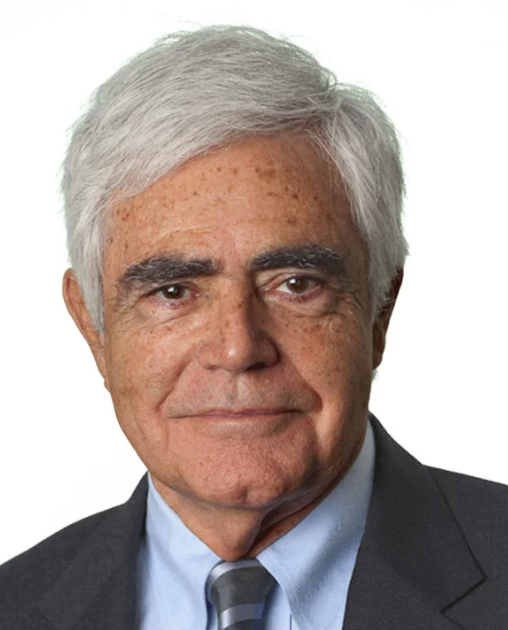 Aristides A. G. Requicha合作论文数Viterbi School of Engineering, University of Southern California14
 Vijay Kumar合作论文数Department of Mechanical Engineering and Applied Mechanics, School of Engineering and Applied Science, University of Pennsylvania;General Robotics, Automation, Sensing and Perception Lab, University of Pennsylvania;Exyn Technologies13Lindsay Darjany合作论文数13
 Ryan Julian合作论文数NVIDIA13
 Joseph J. Lim合作论文数Kim Jaechul School of Artificial Intelligence, Korea Advanced Institute of Science and Technology;Cognitive Learning for Vision and Robotics Lab, Korea Advanced Institute of Science and Technology;Stealth Startup13
 Govind Thattai合作论文数12
 Chris Denniston合作论文数University of Southern California12
 Ragesh kumar Ramachandran合作论文数University of Southern California12
 Lantao Liu合作论文数Department of Intelligent Systems Engineering, Luddy School of Informatics, Computing, and Engineering, Indiana University;Department of Computer Science, Indiana University;Vehicle Autonomy and Intelligence Lab12Jonathan Binney合作论文数12
 Stephanie Kemna合作论文数NATO Undersea Research Centre12
 Andrea Gasparri合作论文数Dipartimento di Informatica ed Automazione Via della Vasca Navale, Università degli studi “Roma Tre”12
 Filippo Arrichiello合作论文数Elettromagnetismo, Ingegneria dell’Informazione e Matematica Industriale, Università degli Studi di Cassino12
 David Millard合作论文数University of Southern California11